


Orders

Profile


Wallet

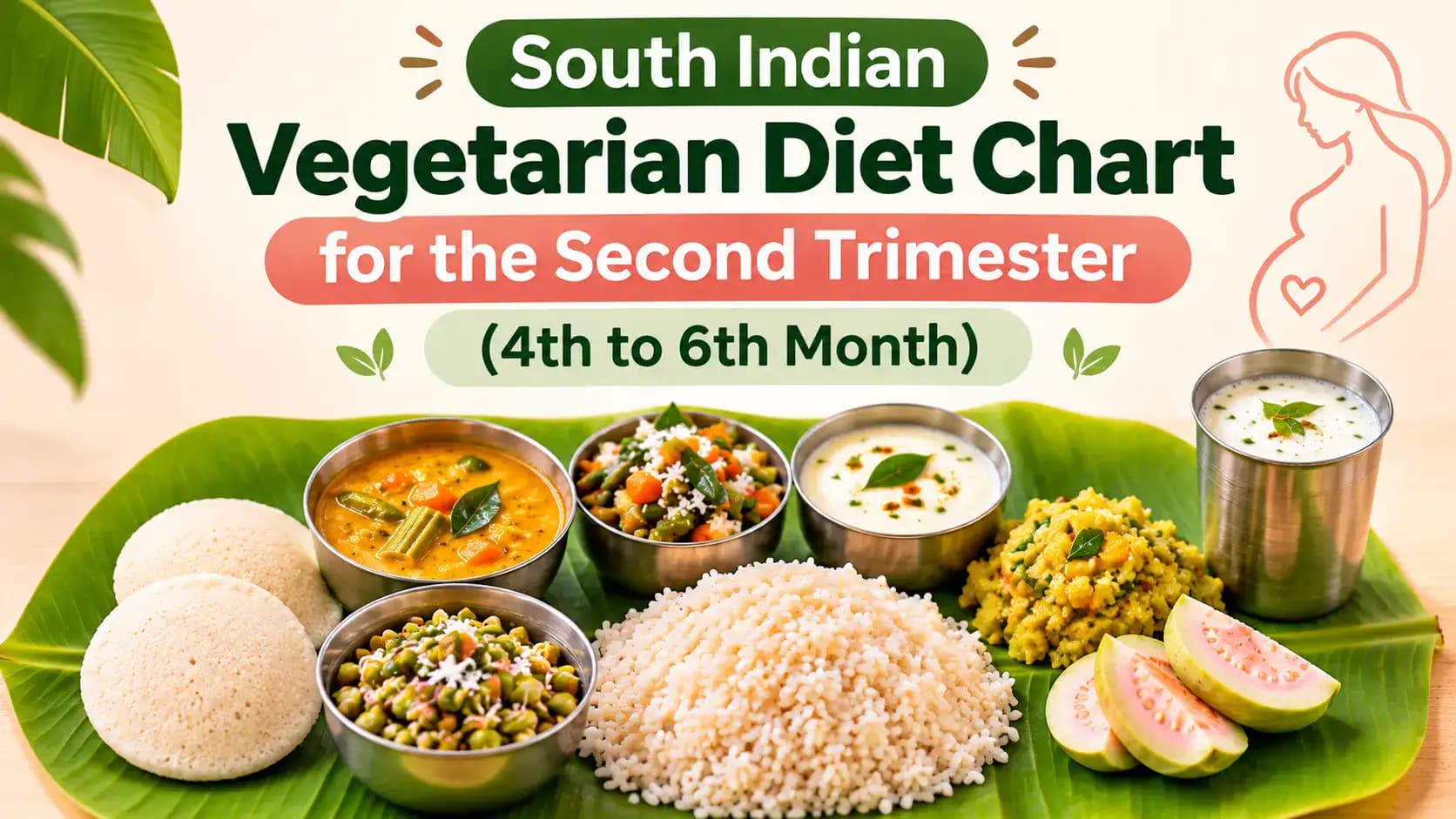
South Indian Vegetarian Diet Chart for the Second Trimester (4th to 6th Month)
 1.3K Likes|
 18 min


M.Sc. (Food & Nutrition) · 3 years experience
Key Takeaways
Quick overview in 30 seconds
- A balanced South Indian vegetarian plate during the second trimester pairs grains with pulses like idli-sambar, rice-dal, or ragi-sundal to deliver complete protein naturally.
- ICMR-NIN recommends about 350 extra kcal and 9.5 g extra protein daily in the second trimester — a small snack or two, not doubling portions.
- Include ragi, horse gram, drumstick leaves, sesame and paneer for iron and calcium, and pair iron-rich meals with vitamin C foods like lemon or guava.
- Need a tasty protein snack for your pregnancy cravings? Explore our MamaGro™ Protein Diskettes - High Protein & No Added Sugar - 250gm (50 Vanilla Diskettes).
 4.7
 4.6
 4.5
Quick Answer
A good South Indian vegetarian diet in the second trimester pairs a grain with a pulse (idli with sambar, rice with dal, ragi with sundal) and adds greens, curd or milk, and a vitamin C fruit. For a handy protein snack, try MamaGro™ Protein Diskettes - 250gm - Vanilla. ICMR-NIN suggests about 350 extra kcal a day in pregnancy.
The nausea of the early weeks has probably eased, your appetite is back, and now everyone at home has an opinion on what you should eat. If you are vegetarian, you may also be quietly wondering whether idli, sambar and curd rice are really enough for your growing baby.
The good news: a well-planned South Indian vegetarian plate can cover protein, iron and calcium very well. Below is a simple 7-day chart built from foods you already cook, followed by the "why" behind it, so you can swap dishes without losing nutrition.
How much more do you need to eat in the second trimester?
You need a little more food, not double portions. ICMR-NIN's 2020 nutrient requirements add about 350 kcal a day for pregnant women, adjusted for your weight, weight gain and activity, and about 9.5 g of extra protein a day in the second trimester over your pre-pregnancy needs [1]. The NHS also says you may feel hungrier but you do not need to "eat for 2" [9].
In everyday terms, that is a modest extra snack or two, not a second plate. Your doctor may adjust this if you started pregnancy underweight or overweight, or if you are carrying twins.
For a trimester-by-trimester breakdown of protein, see How much protein do you need in pregnancy? Trimester-wise chart (ICMR-based).
7-day South Indian vegetarian diet chart for the second trimester
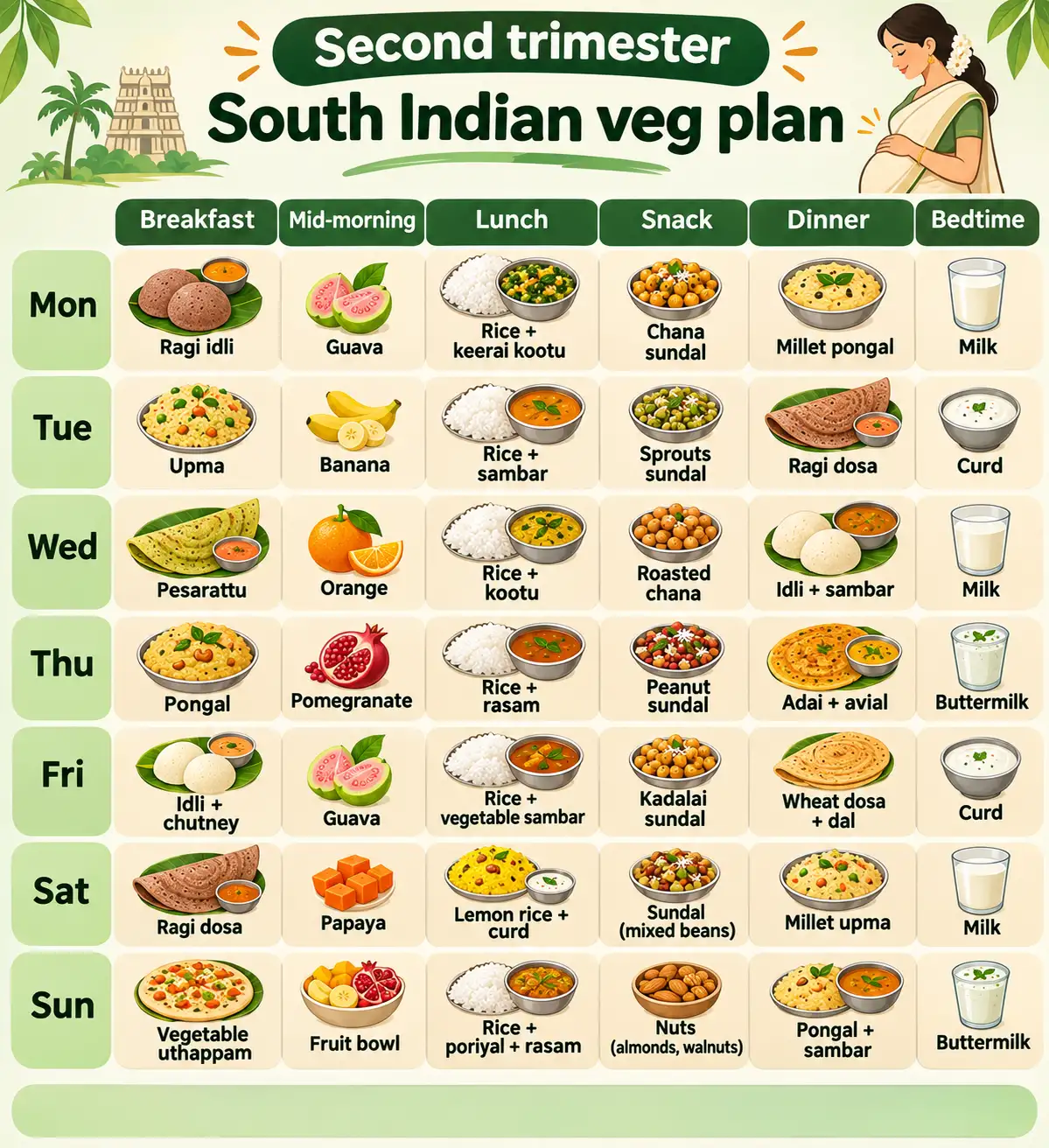
This chart keeps the same six-slot day as before (breakfast, mid-morning, lunch, evening snack, dinner and bedtime) but leans more on South Indian staples, adds a vitamin C food near iron-rich meals, and brings in ragi, horse gram, greens and sesame for iron and calcium.
Portions are a general guide for a healthy pregnancy. If you have diabetes, gestational diabetes, thyroid problems, anaemia or any other condition, ask your doctor or a dietitian to adjust them.
Day | Breakfast | Mid-morning | Lunch | Evening snack | Dinner | Bedtime |
|---|---|---|---|---|---|---|
Monday | 2 to 3 ragi idli with drumstick sambar and coconut chutney | 1 guava | Rice (1 katori), keerai (amaranth) kootu, beans poriyal, curd (1 katori) | Chana sundal (1 katori) with lemon and grated carrot, buttermilk (1 glass) | Foxtail millet pongal (1 bowl), tomato rasam, cucumber kosambari | Warm milk (1 cup) |
Tuesday | 2 pesarattu (green moong dosa) with ginger chutney | 1 orange | Rice (1 katori), horse gram (kollu) rasam, cabbage poriyal, curd (1 katori) | Salted ragi kanji made with buttermilk (1 glass), a small handful of roasted peanuts | 2 vegetable adai with avial (1 katori) | Warm milk (1 cup) |
Wednesday | Ven pongal (1 bowl) with sambar and tomato chutney | Sprouted moong salad (1 katori) with lemon and tomato | Rice (1 katori), murungai keerai (drumstick leaves) poriyal, dal (1 katori), curd (1 katori) | Paneer and capsicum stir-fry (1 small katori), buttermilk (1 glass) | 2 to 3 idli with sesame (ellu) podi and vegetable kurma | Warm milk (1 cup) |
Thursday | Vegetable rava upma (1 bowl) with pottukadalai (roasted gram) chutney | 1 sweet lime (mosambi) | Red or brown rice (1 katori), sambar, avial, curd (1 katori) | Kala chana sundal (1 katori) with raw mango or lemon | Ragi mudde (1 medium ball) with soppu saaru (greens and dal curry) | Warm milk (1 cup) |
Friday | 2 plain dosa with sambar and mint chutney | 1 guava, a small handful of roasted peanuts | Rice (1 katori), mor kuzhambu, beans paruppu usili, rasam | Steamed sweet potato chaat with lemon (1 katori) | Little millet (samai) vegetable khichdi (1 bowl) with cucumber raita | Warm milk (1 cup) |
Saturday | 2 ragi dosa with peanut chutney | Tender coconut water (1 glass) | Bisi bele bath (1 bowl) with cucumber raita and a vegetable poriyal | Green moong sundal (1 katori) with lemon | 2 chapati with paneer and peas kurma, carrot salad | Warm milk (1 cup) |
Sunday | 2 to 3 idli with sambar and coconut chutney | 1 amla or 1 orange | Rice (1 katori), keerai masiyal, rajma or kollu kuzhambu, curd (1 katori) | MamaGro™ Protein Diskettes - 250gm - Vanilla (a small serving) with buttermilk (1 glass) | Vegetable uthappam (2 small) with tomato chutney | Warm milk (1 cup) |
A few practical notes on the chart:
Tea or coffee: if you drink it, the evening snack slot or mid-afternoon is a better time than with breakfast, lunch or dinner (see the iron section below).
Swaps: any dal can replace another; any keerai can replace drumstick leaves; dosa, idli, adai and uthappam are interchangeable at breakfast and dinner.
Oil, salt and sugar: cook with modest oil, and go easy on pickles, papad, fried snacks and sweets. ICMR-NIN advises a maximum of 5 g added salt a day, iodised salt, and limiting foods high in fat, sugar and salt [2].
Whole fruit over juice: the WHO notes that even unsweetened fruit juices contain free sugars that should be limited, so a whole orange or guava is a better pick than a glass of juice [11].
Why does the grain plus pulse pattern matter for vegetarians?
Pairing a cereal with a pulse improves the quality of the protein you get from a vegetarian meal. ICMR-NIN's dietary guidelines say combining cereals with pulses in a ratio of about 3:1 improves protein quality, and the RDA note adds that a cereal, legume and milk mix of 3:1:2.5 gives good protein quality [1][2].
South Indian cooking does this naturally. Idli and dosa combine rice with urad dal, pongal combines rice with moong dal, and rice with sambar or rasam with dal follows the same logic. Adding a cup of milk or curd through the day completes the pattern.
ICMR-NIN also advises using a combination of whole grains, pulses and millets, and eating plenty of fresh, locally available vegetables [2]. Rotating rice with ragi, foxtail millet and little millet is an easy way to follow this. You can read more in Is millet safe during pregnancy? Benefits, types and how much to eat.
Which South Indian vegetarian foods give the most protein, iron and calcium?
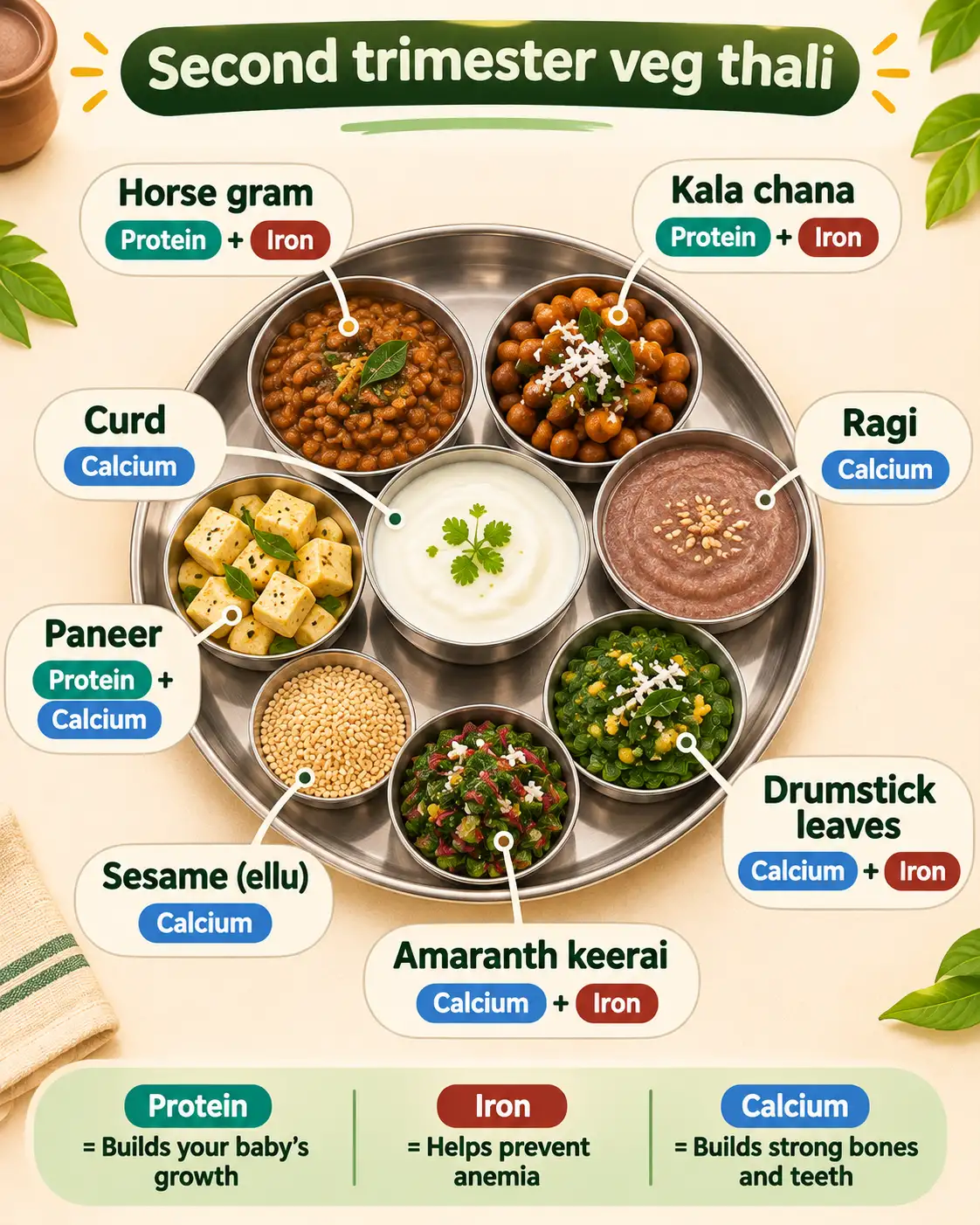
Pulses, horse gram, ragi, sesame, greens and paneer do most of the heavy lifting. The values below come from the Indian Food Composition Tables 2017 by ICMR-NIN and are per 100 g of the raw food [4]. Cooked portions weigh more because of water, so a katori of cooked dal or a ball of ragi mudde will contain less per spoon than these figures.
Food (per 100 g raw) | Protein (g) | Calcium (mg) | Iron (mg) |
|---|---|---|---|
Horse gram, whole (kollu, hurali) | 21.7 | 269 | 8.8 |
Bengal gram, whole (kala chana) | 18.8 | 150 | 6.8 |
Rajma, brown | 19.5 | 134 | 6.3 |
Ragi (finger millet) | 7.2 | 364 | 4.6 |
Drumstick leaves (murungai keerai) | 6.4 | 314 | 4.6 |
Amaranth leaves, green (thotakura, harive) | 3.3 | 330 | 4.6 |
Sesame seeds, white (ellu, til) | 21.7 | 1283 | 15.0 |
Paneer | 18.9 | 476 | Low |
Cow milk, whole | 3.3 | 118 | Low |
Source: Indian Food Composition Tables 2017, ICMR-NIN [4]. Values rounded.
Sesame looks dramatic per 100 g, but you will usually eat only a spoon or two as podi or chutney, so treat it as a helpful top-up rather than a main source. Paneer from pasteurised milk is safe in pregnancy [5]; read more in Is paneer safe during pregnancy? Benefits, risks and how much to eat.
How do you get more iron from a vegetarian meal?
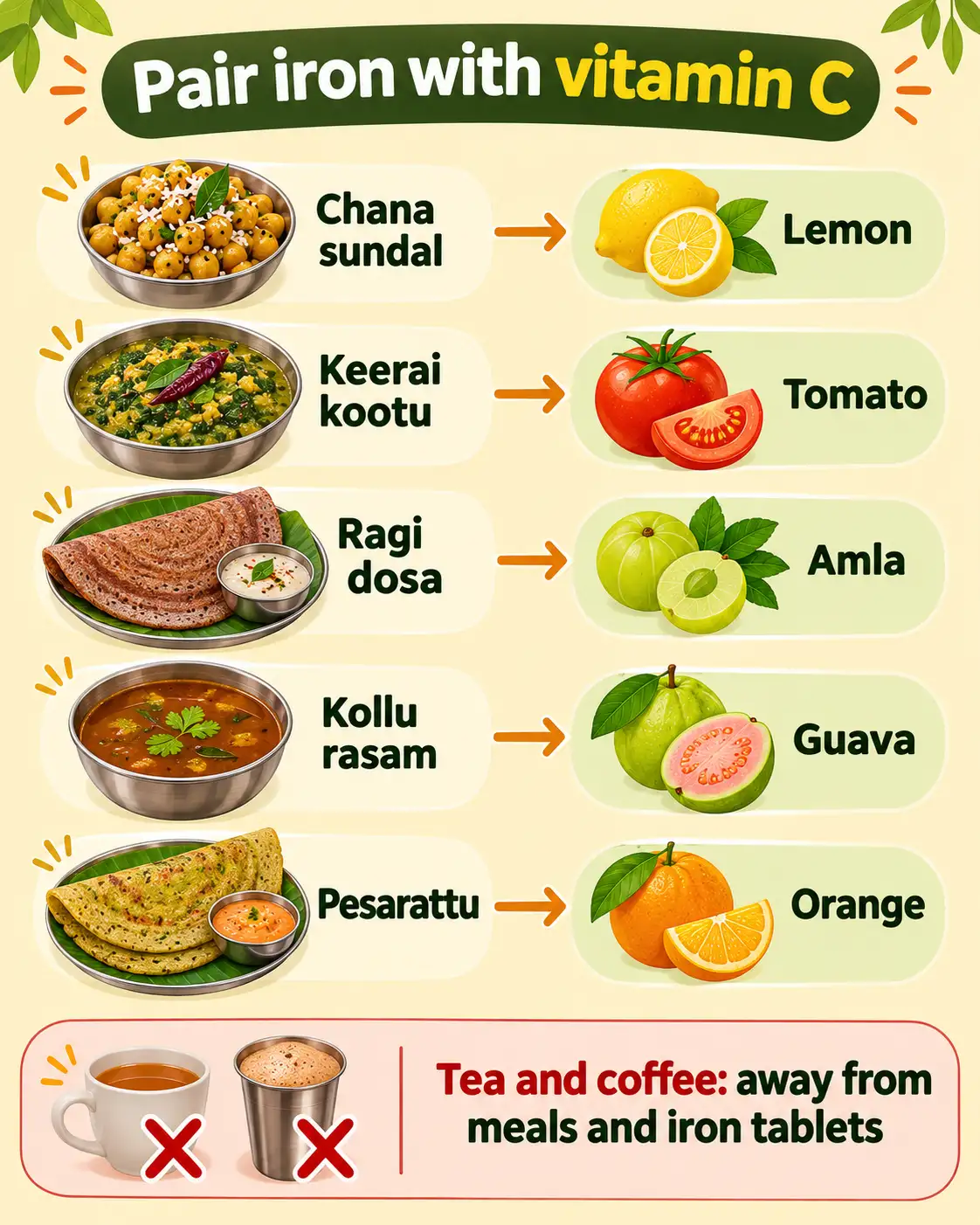
Add a vitamin C food to iron-rich meals and keep tea and coffee away from them. Iron from plant foods is absorbed less easily than iron from animal foods, so vegetarians need to include good sources regularly, such as pulses and green leafy vegetables [7]. Foods rich in vitamin C, such as citrus fruits and tomatoes, increase iron absorption, while black tea contains substances that bind iron so the body cannot use it [10].
Easy South Indian pairings:
Iron-rich food | Vitamin C partner |
|---|---|
Chana or moong sundal | A squeeze of lemon, grated raw mango |
Keerai kootu or drumstick leaves poriyal | Tomato rasam, a guava or orange after the meal |
Ragi dosa or ragi mudde | Tomato chutney, a slice of amla |
Horse gram rasam | Tomato in the rasam, lemon on the side |
Pesarattu | Tomato or ginger chutney, an orange mid-morning |
The NHS lists tea, coffee, and milk and dairy among foods that, in large amounts, make it harder for your body to absorb iron [6]. Practically, this means:
Have your tea or filter coffee between meals, not with your main meals or your iron tablet.
Do not swallow your iron tablet with tea, coffee or milk. The NHS notes that drinking orange juice after taking an iron tablet may help your body absorb it [6].
Take the iron tablets your doctor prescribes. ICMR-NIN recommends calcium and iron supplements after 12 weeks of pregnancy [2][3]; your doctor will tell you which ones and how to take them.
The NHS says iron deficiency anaemia in pregnancy is most often caused by a lack of iron in the diet, and your doctor can check for it with a simple blood test [6][7].
Do vegetarians need to worry about vitamin B12 in pregnancy?
If you have milk, curd and paneer every day, you are likely getting enough B12, but if you avoid dairy you need a fortified food or a supplement your doctor recommends. The NHS explains that vitamin B12 is found naturally mainly in animal foods, that vegetarians who regularly eat dairy and eggs should be getting enough, and that vegans may not, since fortified foods are their only reliable source [7]. It also notes studies have found low B12 intake and blood levels in some vegetarians and vegans.
That is why this chart includes milk or curd at least three times a day. If you are lactose intolerant, vegan, or simply do not like dairy, tell your doctor; they may check your B12 level and suggest a suitable option.
What about calcium if you do not drink much milk?
Ragi, sesame, drumstick leaves, amaranth leaves and paneer are good vegetarian calcium sources (see the table above). The NHS also lists dairy as a good calcium source for vegetarians, and calcium-fortified foods and calcium-set tofu for those who avoid dairy [7].
A practical South Indian approach: one ragi item a day, one keerai dish a day, curd or buttermilk with lunch, and sesame podi or ellu chutney a few times a week.
What if you are at risk of gestational diabetes?
Gestational diabetes often has no symptoms and is usually found through screening, so do not skip your glucose test. The NHS says the oral glucose tolerance test (OGTT) is done between 24 and 28 weeks of pregnancy, and earlier as well if you have had gestational diabetes before [8]. Your doctor will tell you when your test is due.
Portion tips that suit South Indian meals, whether or not you have been diagnosed:
Keep rice, ragi or millet to one measured katori at lunch and fill the rest of the plate with sambar, dal, keerai and poriyal.
Choose a whole fruit instead of fruit juice, and skip sweetened drinks [11].
Pair any grain-based snack with protein (sundal, paneer, a few peanuts) rather than having it alone.
If you are diagnosed with gestational diabetes, follow the meal plan your doctor or dietitian gives you; it will replace the portions in this general chart.
Foods and drinks to limit or avoid in the second trimester
Most home-cooked South Indian vegetarian food is safe, but a few things need care. These points come from the NHS foods to avoid in pregnancy guidance [5]:
Caffeine: no more than 200 mg a day. One cup of instant coffee has about 100 mg and a cup of tea about 75 mg; filter coffee and cafe coffee can contain more.
Unpasteurised milk and products: avoid raw milk and curd, butter or cheese made from it. Packet (pasteurised) milk and paneer made from it are fine.
Herbal teas: limit to no more than 4 cups a day and avoid teas containing liquorice root.
Unwashed fruit and vegetables: wash them thoroughly before eating to remove soil.
Myths vs facts
Myth | Fact |
|---|---|
"You are eating for two now, so double your portions." | You do not need to eat for 2 [9]. ICMR-NIN adds about 350 kcal a day in pregnancy, not a second set of meals [1]. |
"Paneer is unsafe in pregnancy." | Pasteurised soft cheeses, including paneer, are listed as safe by the NHS [5]. |
"A vegetarian diet cannot give enough protein." | Combining cereals and pulses (about 3:1) improves protein quality, and dal, chana, horse gram and paneer are protein-rich [2][4]. |
"Tea with breakfast does not matter." | Tea and coffee can reduce iron absorption, so keep them away from iron-rich meals and iron tablets [6][10]. |
"Fruit juice is as good as fruit." | Fruit juices contain free sugars that WHO advises limiting; whole fruit is the better choice [11]. |
"Vegetarians always run short of B12." | Vegetarians who regularly eat dairy should be getting enough B12; vegans need fortified foods or a supplement [7]. |
When should you see a doctor?
See your doctor or visit your antenatal clinic if you notice any of the following:
Signs that could mean anaemia: tiredness and lack of energy, shortness of breath, noticeable heartbeats (palpitations), paler skin than usual, or headaches [6].
Signs of high blood sugar: increased thirst, needing to pee more than usual, a dry mouth, tiredness or blurred eyesight. Some of these are common in pregnancy, so mention them rather than worry alone [8].
Trouble eating enough: you are still vomiting often, cannot keep food down, or feel you are losing weight instead of gaining.
Restricted diet: you are vegan, avoid dairy, or have food allergies, and are unsure about B12, calcium or protein.
Side effects from iron tablets that make it hard to keep taking them. Do not stop or change any tablet on your own.
FAQs
Is this diet chart suitable for the 4th, 5th and 6th month of pregnancy?
Yes. The second trimester covers roughly the 4th to 6th month, and this chart is designed for that stage. Your appetite and portions may grow slightly as you move through it, so adjust with your hunger and your doctor's advice on weight gain.
How much protein do I need in the second trimester?
ICMR-NIN's 2020 requirements add about 9.5 g of protein a day in the second trimester over your pre-pregnancy needs, rising to about 22 g a day extra in the third trimester [1]. An extra serving of dal or sundal and a cup of milk are easy ways to add protein.
Can I drink filter coffee during pregnancy?
Yes, within the limit. The NHS advises no more than 200 mg of caffeine a day across coffee, tea, cola and chocolate [5]. South Indian filter coffee can be strong, so keep cups small, count your tea too, and have them away from meals and iron tablets.
Is curd rice good in the second trimester?
Curd rice made with curd from pasteurised (packet) milk is a comforting, calcium-friendly meal. Add grated carrot or cucumber, and have a dal or sundal elsewhere in the day for protein. Avoid curd made from raw, unpasteurised milk [5].
Can I eat ragi every day during pregnancy?
Ragi is a nutritious millet that is rich in calcium (364 mg per 100 g raw) [4], and ICMR-NIN encourages including millets with other whole grains [2]. One ragi item a day, such as ragi dosa, ragi mudde or kanji, fits well in a varied diet.
I am vegan. Can I still follow this chart?
Mostly yes: swap curd and milk for calcium-fortified plant drinks or yoghurts, and paneer for calcium-set tofu or more pulses [7]. Speak to your doctor about vitamin B12, since vegans may not get enough from food alone [7].
Can I get this diet chart as a PDF?
You can save this page as a PDF from your phone or browser's share or print option and keep the 7-day table handy in the kitchen. Remember it is a general guide; your doctor's advice comes first.
More from Mylo
References
ICMR-National Institute of Nutrition. A Brief Note on Nutrient Requirements for Indians, the Recommended Dietary Allowances (RDA) and the Estimated Average Requirements (EAR), 2020. https://www.nin.res.in/rdabook/brief_note.pdf
ICMR-National Institute of Nutrition. Dietary Guidelines for Indians, 2024 (booklet). https://www.nin.res.in/downloads/DGI_Booklet_English_CMYK.pdf
ICMR-National Institute of Nutrition. Dietary Guidelines for Indians 2024 (overview page). https://www.nin.res.in/dietaryguidelines2024.html
Longvah T, Ananthan R, Bhaskarachary K, Venkaiah K. Indian Food Composition Tables 2017. ICMR-National Institute of Nutrition. https://www.nin.res.in/ebooks/IFCT2017.pdf
NHS. Foods to avoid in pregnancy. https://www.nhs.uk/pregnancy/keeping-well/foods-to-avoid/
NHS. Iron deficiency anaemia. https://www.nhs.uk/conditions/iron-deficiency-anaemia/
NHS. Vegetarian or vegan and pregnant. https://www.nhs.uk/pregnancy/keeping-well/vegetarian-or-vegan-and-pregnant/
NHS. Gestational diabetes. https://www.nhs.uk/conditions/gestational-diabetes/
NHS. Have a healthy diet in pregnancy. https://www.nhs.uk/pregnancy/keeping-well/have-a-healthy-diet/
MedlinePlus, U.S. National Library of Medicine. Iron in diet. https://medlineplus.gov/ency/article/002422.htm
World Health Organization. Healthy diet (fact sheet). https://www.who.int/news-room/fact-sheets/detail/healthy-diet
Disclaimer: This article is for general information only and does not replace advice from your doctor, dietitian or antenatal care team. Every pregnancy is different; please check with your doctor before making changes to your diet, especially if you have anaemia, diabetes, thyroid problems, food allergies or any other medical condition.
Trusted by Expecting Mamas in Their Second Trimester
A convenient, nourishing protein snack to support your growing baby between balanced South Indian meals.
Pregnancy Massage Oil + Coconut Oil - 200 ml each



MamaGro™ Protein Diskettes - 250gm - Vanilla
Supports Healthy Placenta | Supports Fetal Development
Compression Stocking Socks - S
Compression Stockings for Varicose Veins | Reduces Swelling | Boosts Blood Circulation


Article Posted Under
Related Articles
Watery Eyes in Babies: Blocked Tear Duct Causes, Care and When to See a Doctor
 9 min
Second Baby Planning: How Long Should You Wait Between Pregnancies?
 11 min
Baby Kidney Swelling on Ultrasound (Antenatal Hydronephrosis): Will It Go Away?
 8 min
Foods for Height Growth in Toddlers and Kids: What Really Helps (Indian Guide)
 11 min
Related Topics

Medical Disclaimer
This content is for informational purposes only and should not replace professional medical advice. Consult with a physician or other health care professional if you have any concerns or questions about your health. If you rely on the information provided here, you do so solely at your own risk.


AWARDS AND RECOGNITION

Mylo wins Forbes D2C Disruptor award

Mylo wins The Economic Times Promising Brands 2022
AS SEEN IN













- Mylo Care: Effective and science-backed personal care and wellness solutions for a joyful you.
- Mylo Baby: Science-backed, gentle and effective personal care & hygiene range for your little one.
- Mylo Community: Trusted and empathetic community of 10mn+ parents and experts.


Product Categories
Baby Carrier | Baby Soap | Stretch Marks Cream | Baby Cream | Baby Shampoo | Baby Massage Oil | Baby Hair Oil | Stretch Marks Oil | Baby Body Wash | Baby Powder | Baby Lotion | Diaper Rash Cream | Teether | Baby Kajal |