


Orders
.png&w=48&q=75 "login")
Profile


Wallet

Foods to Introduce and Avoid for Toddlers
 19 min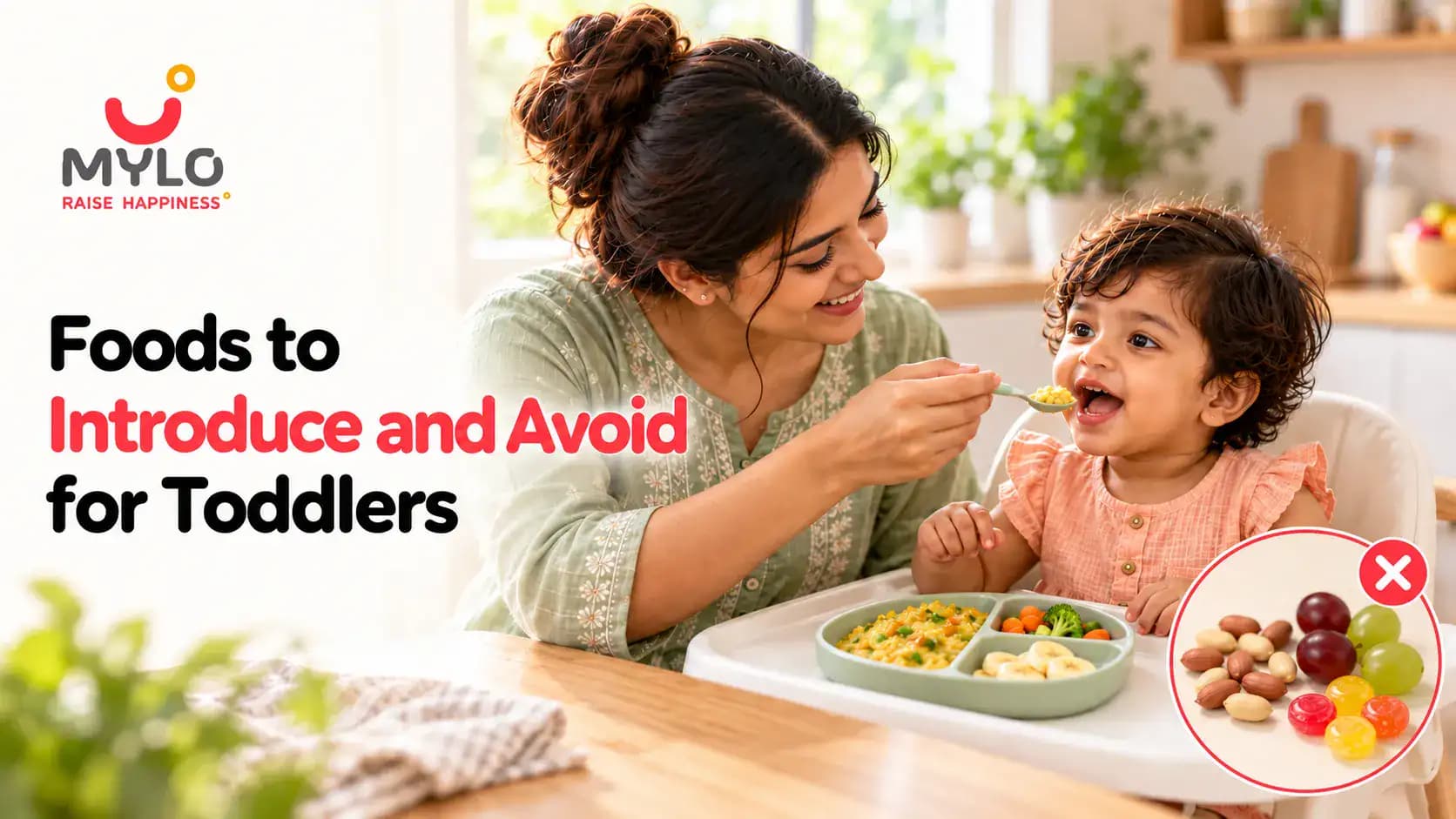
Quick Answer
Foods to avoid for toddlers are foods that can cause choking, allergic reactions or harm in children aged 1 to 3, like whole nuts, whole grapes, popcorn, added sugar and too much salt. Most family foods are safe if cut small, cooked soft and lightly salted. Introduce common allergens one at a time.
Foods to Avoid at a Glance
Question | Short Answer |
|---|---|
Biggest choking hazards | Whole nuts and peanuts, whole grapes, popcorn, hard sweets, chewing gum, raw carrot or apple chunks, whole litchi and jamun |
How to make food safer | Cut round foods into quarters, cook hard foods soft, and grind nuts |
Common food allergens | Milk, egg, peanut, tree nuts, wheat, soy, sesame, fish and shellfish |
How much salt? | No more than about 2 g a day (about a third of a teaspoon), including salt already in food |
How much sugar? | None added under 2 years. As little as possible after 2 |
Honey? | Safe after 1 year. Never under 1 |
Tea and coffee? | Avoid. They reduce iron absorption and contain caffeine |
Key Facts Every Parent Should Know
Choking is a real risk until 4 or 5: Toddlers' airways are small, and they haven't fully learned to chew and grind food
Gagging is not the same as choking: Gagging is noisy and normal. Choking is often silent and is an emergency
Most toddlers can eat family food: Just take out their portion before adding extra salt, chilli and sugar
Delaying allergens doesn't prevent allergies: Experts now advise introducing common allergens early, one at a time
Hidden salt is everywhere: Papad, pickles, namkeen, chips and instant noodles have a lot of salt
Sweet habits start early: Toddlers who eat less added sugar are less likely to develop a strong sweet tooth and tooth decay
Which Foods Are Choking Hazards for Toddlers?
Short answer: Foods that are small and round, hard, sticky or slippery are the biggest choking risks. Many can be made safer by cutting, cooking or grinding them.
Choking Hazard | Why It's Risky | Make It Safer |
|---|---|---|
Whole nuts and peanuts | Small and hard, can block the airway | Grind into powder or use smooth nut butter, spread thinly |
Whole grapes, cherry tomatoes, berries | Round and slippery | Cut into quarters lengthwise |
Whole litchi, jamun, ber | Slippery with a large seed | Remove the seed and cut into small pieces |
Popcorn | Hard kernels and husks | Avoid until 4 years |
Hard sweets, toffees, chikki | Hard and sticky | Avoid |
Chewing gum, supari | Can be swallowed or inhaled | Avoid completely |
Raw carrot, apple chunks, raw cucumber sticks | Hard to chew | Grate, steam or cut very thin |
Whole chana, rajma, corn kernels | Small and round | Mash or squash |
Large chunks of meat, paneer or cheese | Too big to swallow | Cut into small, thin pieces |
Sausages and hot dogs | Round and firm | Cut lengthwise, then into small pieces |
Fish with bones | Bones can get stuck | Remove all bones carefully |
Spoonfuls of thick peanut butter | Sticky, can block the throat | Spread thinly on roti or toast |
Ice cubes and dry fruit chunks | Hard or sticky | Avoid ice cubes. Chop or soak dry fruit |
Dry chia seeds | Can swell and stick | Soak in water or milk first |
Size rule: Cut food into pieces about 1 cm or smaller, or into thin strips your toddler can chew easily.
Safe eating habits
Always sit your toddler upright to eat
Stay with your toddler during meals and snacks
No eating while walking, running, playing, lying down or in a moving vehicle
Don't force food or put food in a crying toddler's mouth
Keep small objects like coins, buttons, button batteries and marbles out of reach
Gagging vs Choking: What's the Difference?
Short answer: Gagging is noisy. Your toddler coughs, splutters and moves food forward on their own. Choking is often silent: they can't breathe, cry or cough properly, and need help right away.
Gagging | Choking |
|---|---|
Coughing, spluttering, red face | Silent, or weak, high-pitched sounds |
Can still breathe and cry | Can't breathe, cry or speak |
Usually clears on its own | Lips or face may turn blue |
Watch calmly | Emergency: Start choking first aid and call 108 or 112 |
Learn the steps in our guide on child first aid for choking, falls and burns.
Food Allergies: Which Foods to Introduce Carefully?
Short answer: Common food allergens include milk, egg, peanut, tree nuts, wheat, soy, sesame, fish and shellfish. If your toddler hasn't tried them yet, introduce them one at a time in small amounts.
Common Allergen | Indian Ways to Introduce It |
|---|---|
Milk | Curd, paneer, kheer |
Egg | Well-cooked scrambled egg or omelette |
Peanut | Ground peanut powder in porridge, or thin peanut butter |
Tree nuts (almond, cashew, walnut) | Nut powder mixed into porridge or milk |
Wheat | Roti, dalia, upma |
Soy | Soaked and cooked soya chunks (chopped), tofu |
Sesame (til) | Ground til mixed into food |
Fish and prawns | Soft, boneless cooked fish. Prawns well cooked and chopped |
How to introduce a new allergen
Give a small amount at home, in the morning, when your toddler is well.
Introduce only one new allergen at a time.
Watch for 2 to 3 hours for any reaction.
If there's no reaction, keep giving it regularly, a few times a week.
Wait 2 to 3 days before trying the next new allergen.
Talk to your pediatrician first if your toddler has severe eczema, a known food allergy, or a parent or sibling with food allergies.
Signs of a food allergy
Mild to Moderate | Severe (Emergency) |
|---|---|
Hives or red, itchy rash | Swelling of lips, tongue or face |
Itching around the mouth | Trouble breathing, wheezing or noisy breathing |
Vomiting or tummy pain | Repeated vomiting with paleness or floppiness |
Mild swelling around the eyes | Fainting or very sleepy |
If you see severe signs, call 108 or 112 right away. For mild reactions, stop the food and call your pediatrician. Read more about cow's milk protein allergy.
How Much Salt Can a Toddler Have?
Short answer: Toddlers aged 1 to 3 should have no more than about 2 g of salt a day. That's about a third of a teaspoon, including salt already in food.
Hidden salt in Indian foods:
High-Salt Food | Try Instead |
|---|---|
Papad | Plain roasted makhana (crushed) |
Pickles (achar) | Fresh chutney with very little salt |
Namkeen, chips, bhujia | Homemade roasted snacks |
Instant noodles and soup packets | Homemade vegetable soup |
Cheese slices, bread, biscuits | Paneer, homemade roti |
Sauces and ketchup | Fresh tomato chutney |
Tips:
Take out your toddler's portion before adding salt to the family's food
Use herbs, jeera, haldi, hing and lemon for flavour instead of extra salt
Don't add salt to curd, fruit or salads for your toddler
How Much Sugar Can a Toddler Have?
Short answer: Children under 2 shouldn't have any added sugar. After 2, keep added sugar as low as possible, well under 6 teaspoons (25 g) a day.
What counts as added sugar: White sugar, jaggery (gur), honey, sugar syrups, and sugar in biscuits, cakes, mithai, packaged juices, flavoured milk and health drink powders.
High-Sugar Food | Try Instead |
|---|---|
Biscuits and cakes | Banana, homemade ragi or besan ladoo with dates |
Mithai and chocolates | A small piece on festival days only |
Packaged juices and soft drinks | Whole fruit and water |
Flavoured milk and health drink powders | Plain milk, or milk blended with banana |
Sweetened breakfast cereals | Dalia, ragi porridge, poha |
Honey: Never give honey to babies under 1 year, because of the risk of infant botulism. After 1, it counts as added sugar, so use it rarely.
Other Foods to Avoid or Limit
Food | Why | Age |
|---|---|---|
Tea, coffee, cola, energy drinks | Caffeine, and tea reduces iron absorption | Avoid for toddlers |
Raw (unboiled) milk | Can carry germs | Avoid. Use boiled or pasteurised milk |
Raw or runny eggs | Risk of salmonella | Cook eggs fully |
Undercooked meat or fish | Risk of infection | Cook fully |
Shark, swordfish, king mackerel | High in mercury | Avoid. Choose rohu, pomfret, salmon or sardines |
Raw sprouts | Can carry bacteria | Cook or steam sprouts |
Very spicy food | Can upset the tummy | Introduce mild spices slowly |
Fried and packaged junk food | Unhealthy fats, salt and sugar | Keep as rare treats |
Foods with alcohol (like rum cake) | Alcohol is unsafe for children | Avoid |
Leftovers kept out in the heat | Food poisoning risk | Refrigerate within 2 hours |
What about drinks? Water and plain milk are the best drinks for toddlers. Avoid tea, coffee, soft drinks and packaged juices. For daily amounts of milk and water, and which other drinks are okay, read our guide on how much milk and water a toddler needs.
Can My 1-Year-Old Eat This?
Short answer: Most fresh foods are safe from 1 year when prepared the right way. Here's a quick guide to common questions.
Food | Can a 1 Year Old Eat It? | How to Give It |
|---|---|---|
Paneer | Yes | Soft, small cubes or crumbled |
Pineapple | Yes | Ripe, cut into small soft pieces. It may cause a mild rash around the mouth |
Pomegranate | Yes | Squeeze the juice or crush the seeds for younger toddlers |
Dragon fruit | Yes | Small soft pieces |
Mushrooms | Yes | Well cooked and chopped small |
Soya chunks | Yes | Soaked, boiled soft and chopped small |
Oats | Yes | Cooked as porridge |
Chia seeds | Yes | Always soaked, never dry |
Chocolate | Best avoided under 2 | High in sugar, and contains a little caffeine |
Honey | Yes, after 1 year | Small amounts, rarely |
Whole nuts | No | Ground or as smooth nut butter only, until 4 to 5 years |
Eggs | Yes | Fully cooked |
Fish | Yes | Boneless, soft, low-mercury fish |
Curd | Yes | Plain, full-fat, no added sugar or salt |
How Do Food Textures Change With Age?
Age | What Toddlers Can Usually Eat |
|---|---|
12 to 18 months | Soft, mashed or finely chopped family food. Soft finger foods |
18 months to 2 years | Most family foods, cut into small pieces |
2 to 3 years | Regular family meals with mild spices, still avoiding high-risk choking foods |
4 to 5 years | Whole nuts and popcorn can usually be introduced, with supervision |
When Should I Worry?
Short answer: See your pediatrician if your toddler has signs of a food allergy, often gags or chokes, or has trouble chewing and swallowing.
Sign | What to Do |
|---|---|
Swelling, breathing trouble after food | Emergency. Call 108 or 112 |
Hives or vomiting after a new food | Stop the food and see your pediatrician |
Often gags, chokes or vomits during meals | Ask for a feeding check |
Can't chew lumpy food by 18 months | Ask for a feeding or speech therapy check |
Eczema that gets worse after certain foods | Talk to your pediatrician or an allergist |
Choked on food, even if they seem fine now | See a doctor if coughing, wheezing or breathing trouble continues |
Who Can Help?
Who | When to See Them |
|---|---|
Pediatrician | Any worry about allergies, choking or diet |
Pediatric allergist | Suspected or known food allergies |
Feeding therapist or speech therapist | Chewing, gagging or swallowing problems |
Pediatric dietitian | Planning meals around allergies |
Free government support in India
RBSK (Rashtriya Bal Swasthya Karyakram): Free health checks for children from birth to 18 years
Anganwadi centres: Nutrition advice for young children
Emergency: Call 108 or 112
What Should Indian Parents Keep in Mind?
Short answer: Many Indian snacks and festival foods, like peanuts, chikki, ladoos with whole nuts and namkeen, can be choking or salt risks for toddlers. Small changes keep traditional foods safe.
Festival sweets and prasad: Ladoos with whole nuts, chikki and hard sweets are choking risks. Offer a small soft piece instead
Peanuts and chana: Popular snacks, but unsafe whole for toddlers. Grind or mash them
Litchi and jamun season: Always remove the seed and cut into small pieces
Papad and pickles: Very high in salt. Keep them for adults
Chai with biscuits: A common habit that adds sugar and reduces iron absorption
Grandparents and sweets: Gently explain why toddlers need less sugar and salt
Supari and paan: Keep completely out of reach
Myths vs Facts
Myth | Fact |
|---|---|
Delaying allergens prevents allergies | Early, careful introduction may help prevent some allergies |
A little salt in curd or fruit is fine | Toddlers already get enough salt from other foods |
Jaggery and honey are healthy sugars | They still count as added sugar |
If my toddler is gagging, they're choking | Gagging is normal and noisy. Choking is often silent |
Toddlers can eat whole nuts once they have teeth | Whole nuts are a choking risk until about 4 to 5 years |
Biscuits are a good snack for toddlers | Most are high in sugar, salt and fat |
Frequently Asked Questions
1. What foods should toddlers avoid?
Whole nuts, whole grapes, popcorn, hard sweets, added sugar, too much salt, tea and coffee, raw milk and undercooked eggs or meat.
2. What are the biggest choking hazards for toddlers?
Whole nuts and peanuts, whole grapes, popcorn, hard sweets, chewing gum, and raw carrot or apple chunks.
3. Can a 1 year old eat salt and sugar?
A little salt in family food is okay, up to about 2 g a day. Avoid added sugar until at least 2 years.
4. When can toddlers eat whole nuts?
Usually from about 4 to 5 years. Until then, give ground nuts or thin nut butter.
5. How do I introduce peanuts to my toddler?
Mix a little peanut powder into porridge or spread peanut butter thinly. Watch for 2 to 3 hours. Ask your doctor first if your toddler has severe eczema or allergies.
6. Can my 1 year old eat chocolate?
It's best to avoid chocolate under 2 because of sugar and caffeine.
7. Can toddlers eat honey?
Yes, after 1 year, in small amounts. Never give honey to babies under 1.
8. 1 saal ke bacche ko namak aur cheeni kab dena chahiye?
1 saal ke baad khane mein thoda namak de sakte hain, din mein lagbhag ek chauthai se ek tihai chammach se zyada nahi. Cheeni 2 saal tak bilkul mat dijiye.
9. Bacche ko kaun si cheezein nahi khilani chahiye?
Saabut moongfali, saabut angoor, popcorn, toffee, chewing gum, chai, coffee, papad aur achaar. Phal aur dry fruits chhote tukdon mein ya pees kar dijiye.
Related Reads on Mylo
References
American Academy of Pediatrics (AAP). "Choking Prevention." HealthyChildren.org. https://www.healthychildren.org
Centers for Disease Control and Prevention (CDC). "Choking Hazards." https://www.cdc.gov/infant-toddler-nutrition/foods-and-drinks/choking-hazards.html
Togias A, et al. "Addendum Guidelines for the Prevention of Peanut Allergy in the United States." NIAID, 2017.
Greer FR, et al. "The Effects of Early Nutritional Interventions on the Development of Atopic Disease." Pediatrics, 2019.
Vos MB, et al. "Added Sugars and Cardiovascular Disease Risk in Children: A Scientific Statement From the American Heart Association." Circulation, 2017.
Scientific Advisory Committee on Nutrition (UK). "Salt and Health." 2003.
ICMR-National Institute of Nutrition. "Dietary Guidelines for Indians." 2024.
Medical Disclaimer
This article is for information only and does not replace professional medical advice. Every toddler is different. If your child has a food allergy, a severe reaction or a choking episode, seek medical help immediately.

Shop Baby Diapers
Everything you need for the baby



Article Posted Under
Related Articles



Related Topics
.webp&w=32&q=75)
Medical Disclaimer
This content is for informational purposes only and should not replace professional medical advice. Consult with a physician or other health care professional if you have any concerns or questions about your health. If you rely on the information provided here, you do so solely at your own risk.


AWARDS AND RECOGNITION

Mylo wins Forbes D2C Disruptor award
Mylo wins The Economic Times Promising Brands 2022
AS SEEN IN












- Mylo Care: Effective and science-backed personal care and wellness solutions for a joyful you.
- Mylo Baby: Science-backed, gentle and effective personal care & hygiene range for your little one.
- Mylo Community: Trusted and empathetic community of 10mn+ parents and experts.


Product Categories
Baby Carrier | Baby Soap | Baby Wipes | Stretch Marks Cream | Baby Cream | Baby Shampoo | Baby Massage Oil | Baby Hair Oil | Stretch Marks Oil | Baby Body Wash | Baby Powder | Baby Lotion | Diaper Rash Cream | Newborn Diapers | Teether | Baby Kajal | Baby Diapers Pants | Cloth Diapers | Laundry Detergent | Lactation Granules |