


Orders
.png&w=48&q=75 "login")
Profile


Wallet

Effective Tips to Establish Good Sleeping Habits in Your Baby


MBBS, DCH, DNB · 19 years experience
 523 Likes|
 8 min
8 minNeeta was a new mom keen to establish good sleeping habits in her baby. She had asked for some advice from the pediatrician, and the doctor advised her a few tips to incorporate good sleep habits, which are beneficial for the well-being of both the mother and the child. Let’s delve deep into the topic to learn more about how to make your little one catch some Zzz while you can also enjoy some me-time.
What are good sleeping habits in babies?
Good sleeping habits in children mean establishing a consistent and healthy daily routine that helps the child to have adequate rest and sleep. To add good sleep habits amongst kids, it is essential to teach a regular sleep routine, having naps and bedtimes around the same time, creating a soothing environment to indicate babies to go into sleep mode, and developing independent sleep associations.
The process also involves identifying and reacting to the baby's sleep cues, ensuring they are adequately rested and not over-tired. Fostering these healthy habits enables the baby to have a solid sleep foundation that assists in the overall growth and well-being of the child and, in turn, contributes to the well-being of the caregivers.
You may also like: Baby Sleep (Infant Sleep): What to Expect & Tips
Causes of bad sleeping habits in babies
Sometimes babies can develop bad sleeping habits, which results in irritable parents and a cranky child as sleep is one of the most significant physiological demands, and lack of sleep causes irritability and tiredness. However, the point to be noted here is that baby's sleep patterns are erratic and dynamic and can be easily maneuvered. Consider the below points if your baby has trouble sleeping:
1. Colic or Discomfort
Babies with colic or discomfort from issues like gas, reflux, or allergies may have trouble sleeping or staying asleep.
You may also like: Why Babies Cry At Night
2. Hunger
Babies may wake up frequently if they are hungry. Newborns especially have small stomachs and need to feed often.
3. Sleep Associations
If babies become accustomed to falling asleep while being rocked, nursed, or held, they may have trouble falling back asleep when they naturally wake up during sleep cycles.
4. Overstimulation
Babies can become overstimulated by a busy or noisy environment, making it difficult to relax and sleep well.
5. Under stimulation
On the flip side, some babies may become bored if their daytime activities are not engaging enough, affecting their sleep at night.
6. Environmental Factors
Factors such as room temperature, lighting, and noise levels can impact a baby's sleep.
7. Nap Schedule
An erratic or inconsistent nap schedule during the day can lead to disrupted nighttime sleep.
Breaking bad sleeping habits
Breaking bad sleeping habits in babies requires patience, consistency, and understanding of your baby's needs. It is important to remember that while it is good to formulate good habits and break out the bad ones, we should not be too harsh on children and let them learn and grow at their own pace.
You may also like: Being a new dad how can I comfort my newborn baby in the middle of the night?
Tips for achieving good sleeping habits in babies
Establishing good sleeping habits in babies is important for their overall health and development and for the well-being of parents and caregivers. Here are some tips for promoting healthy sleep habits in infants:
1. Consistent Bedtime Routine
Create a calming bedtime routine that signals your baby that it's time to sleep. This might include a warm bath, gentle massage, reading a book, or singing a lullaby. Consistency is key in helping your baby associate these activities with sleep.
Also read: How To Put A Baby To Sleep In 40 Seconds?
2. Create a Sleep-Friendly Environment
Ensure your baby's sleep environment is comfortable, safe, and conducive. This includes a firm crib mattress, a comfortable sleep sack or blanket, and a room that is neither too hot nor too cold.
3. Set a Regular Sleep Schedule
Establish a consistent sleep schedule, with set times for naps and bedtime. Babies thrive on routine, and having a predictable schedule can help regulate their internal clock.
4. Encourage Daytime Play
Ensure your baby gets plenty of daytime play and interaction. Exposure to natural light during the day can help regulate their circadian rhythm and promote better sleep at night.
5. Distinguish Between Day and Night
During nighttime feedings or diaper changes, keep the lights dim and interactions quiet and calm. This helps your baby learn that nighttime is for sleeping while daytime is for activity.
6. Learn Sleep Cues
Pay attention to your baby's sleep cues, such as yawning, rubbing eyes, or becoming fussy. Putting your baby down for sleep when they show these signs can help prevent overtiredness and make falling asleep easier.
Also read: 10 Useful Baby Care Tips for New Parents
7. Put Baby Down Drowsy but Awake
Aim to put your baby into the crib when they are drowsy but still awake. This helps them learn to fall asleep independently and reduces dependency on sleep associations like rocking or nursing.
8. Avoid Overstimulation Before Bed
Keep the hour leading up to bedtime calm and quiet. Avoid stimulating activities, bright lights, or screen time, as these can interfere with producing the sleep-inducing hormone melatonin.
9. Practice Safe Sleep
Always follow safe sleep guidelines to reduce the risk of Sudden Infant Death Syndrome (SIDS). This includes placing your baby on their back to sleep, using a firm sleep surface, and keeping the sleeping area free from pillows, soft bedding, and stuffed animals.
10. Be Patient and Flexible
Remember that babies' sleep patterns can vary and change frequently. Be patient and flexible as you work to establish good sleep habits. It's normal for babies to wake up during the night for feedings, especially in the early months.
Also read: How to Establish Good and Effective Baby Sleep Habits?
FAQs
How much sleep does your child need?
The amount of sleep a child need is different for various age groups. Newborns typically require around 14-17 hours of sleep daily, including naps. Infants aged 4-12 months generally need 12-16 hours, while toddlers (1-2 years) thrive with 11-14 hours, including naps. Preschoolers (3-5 years) usually benefit from 10-13 hours of sleep, and school-age children (6-12 years) generally need 9-12 hours. Establishing consistent sleep routines is important to ensure children get the recommended amount of rest.
What are good sleeping habits for a newborn?
Establishing good sleeping habits for a newborn involves creating a calm and consistent sleep environment. Place the baby on their back in a safe cot, free from soft bedding or toys. Develop a soothing bedtime routine with gentle activities like swaddling, feeding, and dimming lights. Encourage daytime exposure to natural light to help regulate the baby's internal clock. Respond to the baby's cues for sleep, aiming for regular nap times and ensuring they are not overtired. Foster self-soothing by putting the baby down drowsy but awake, allowing them to learn to fall asleep independently.
What is the role of baby sleep music in establishing good sleeping habits in babies?
Baby sleep music can play a positive role in establishing good sleeping habits by creating a soothing and peaceful environment. Soft, calming melodies can help relax a baby, signal that it's time to sleep and mask background noises that might disrupt their rest. When incorporated into a bedtime routine, sleep music can become a comforting cue that helps transition to sleep. You can get baby sleep music from Mylo app and can make the baby sleep comfortably.
Final thoughts
In conclusion, establishing good sleeping habits in babies involves a combination of thoughtful strategies. Creating a peaceful sleep environment, following consistent routines, and responding to the baby's cues are essential components. Soothing elements like baby sleep music can further enhance this process, helping babies relax and associate calming melodies with sleep. However, moderation is key, as by prioritizing a balanced approach and adapting methods to suit the baby's unique needs, parents can contribute to developing positive sleeping habits that support their child's overall well-being.
References
1. Creating a safe sleep environment for your baby. (2004). Paediatrics & Child Health
2. Tham, E., Schneider, N., & Broekman, B. (2017). Infant sleep and its relation with cognition and growth: a narrative review. Nature and Science of Sleep,

Baby Wooden Cot with Rocker & Wheel





Premium Head Shaping Pillow 0-36 Months - Starry Night
Provides Neck Support | Prevents Flat Head Syndrome | Portable & Lightweight



Mylo Baby Diaper Pants (S) Size – 12-Hour Leak-Proof Protection for Happy Babies
Lightweight | Rash Free | 12 Hours Protection | ADL Technology



Article Posted Under
Related Articles
Baby Names Starting With A for Boys & Girls: Meanings, Religion, Rashi & Nakshatra
 8 min
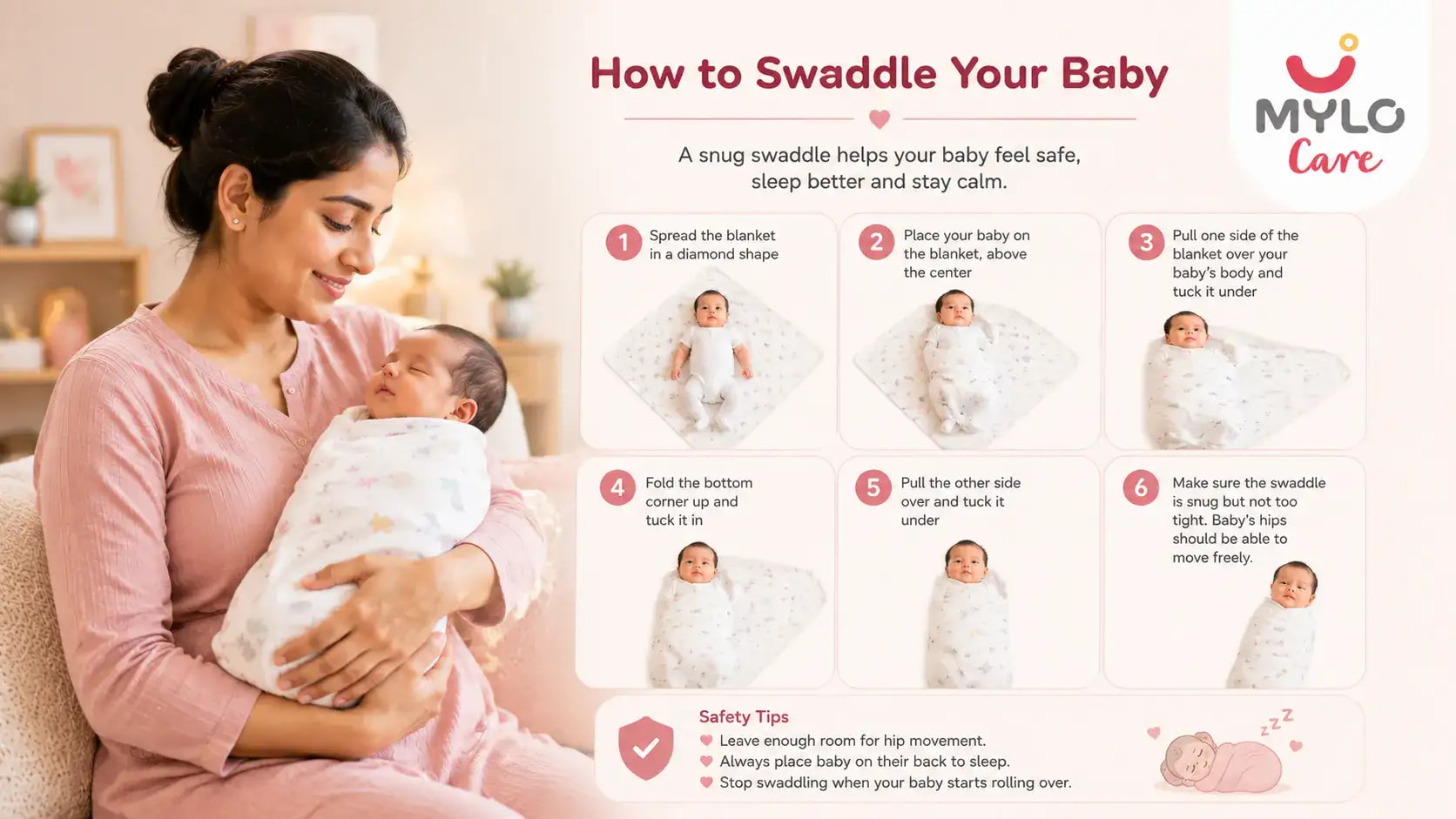
8 min How to Swaddle a Baby: A Step-by-Step Guide With Safety Tips
 8 min
8 min What Is Fundal Height? Meaning, Normal Range by Week and Why It Matters
 7 min
7 min Diet for a Breastfeeding Mother: Protein, Milk Supply, and What Indian Moms Actually Need
17 min
Related Topics
.webp&w=32&q=75)
Medical Disclaimer
This content is for informational purposes only and should not replace professional medical advice. Consult with a physician or other health care professional if you have any concerns or questions about your health. If you rely on the information provided here, you do so solely at your own risk.


AWARDS AND RECOGNITION

Mylo wins Forbes D2C Disruptor award

Mylo wins The Economic Times Promising Brands 2022
AS SEEN IN













- Mylo Care: Effective and science-backed personal care and wellness solutions for a joyful you.
- Mylo Baby: Science-backed, gentle and effective personal care & hygiene range for your little one.
- Mylo Community: Trusted and empathetic community of 10mn+ parents and experts.


Product Categories
Baby Carrier | Baby Soap | Baby Wipes | Stretch Marks Cream | Baby Cream | Baby Shampoo | Baby Massage Oil | Baby Hair Oil | Stretch Marks Oil | Baby Body Wash | Baby Powder | Baby Lotion | Diaper Rash Cream | Newborn Diapers | Teether | Baby Kajal | Baby Diapers Pants | Cloth Diapers | Laundry Detergent | Lactation Granules |