


Orders
.png&w=48&q=75 "login")
Profile


Wallet

Cloth Diapering 101: How to Successfully Change Your Baby's Diaper
 17 Likes|
 9 min
9 minTL;DR
Cloth diapering is popular for being reusable, cost-effective over time and lower-waste. It can feel daunting, but with a little practice it is simple. The two things that matter most: change cloth often (it holds moisture close to the skin, so change every 2 to 3 hours and immediately after a poop, no diaper prevents rash on its own) (Mayo Clinic), and wash it right (rinse solids, use a cloth-safe detergent, and NEVER use fabric softener, which ruins absorbency) (NHS). Keep 1 to 2 dozen cloth diapers, pre-wash new ones, and use a liner if you apply barrier cream.
Quick Answer
To cloth diaper: keep about 1 to 2 dozen diapers, pre-wash new ones, and stuff or lay in the inserts. Change every 2 to 3 hours and immediately after a poop, since cloth keeps moisture near the skin. To change: gather supplies, remove the dirty diaper, clean front to back, apply barrier cream with a liner if needed, and snap on a fresh diaper with a clean insert. To wash: shake off solids, rinse cold, wash warm with a cloth-safe detergent, skip fabric softener, and dry (sunlight helps). Many families use cloth at home and disposables when travelling.
Author: Mylo Editorial Team, Mylo Parenting Desk Medically reviewed by: Mylo Editorial Board, aligned with NHS, AAP and IAP (Indian Academy of Pediatrics) guidance Last updated: 16 July 2026
Medical Disclaimer: This article is for informational purposes only and is not a substitute for professional medical advice. If your baby has a rash that is severe, blistering, bleeding, spreading or not improving in a few days, or comes with fever, please consult your paediatrician.
Key Takeaways
- Cloth diapers are reusable, cost-effective over time and lower-waste
- Cloth holds moisture close to the skin, so change every 2 to 3 hours (Mayo Clinic)
- Change immediately after a poop, at any time (AAD)
- No diaper prevents rash on its own; frequent changing does
- Pre-wash new cloth diapers before first use (full absorbency takes several washes)
- NEVER use fabric softener; it coats the fabric and ruins absorbency (NHS)
- Use a liner between barrier cream and the cloth
- Keep 1 to 2 dozen diapers so you do not run out mid-wash
Benefits of Cloth Diapering
| Benefit | What It Means |
|---|---|
| Cost-effective | Higher up front, but reused many times, so cheaper over months and years |
| Lower waste | Reusable, so far fewer diapers reach landfill |
| Soft, breathable fabric | Comfortable against the skin, and some sensitive-skin babies prefer it |
| Adjustable | Snaps let one diaper grow with your baby |
An honest note on a common claim: cloth is often called "chemical-free" and "gentler, so no rash." In reality, most cloth covers use a waterproof layer (PUL), and no diaper prevents rash by itself. Rash comes mainly from prolonged wetness, and because cloth holds moisture close to the skin, it actually needs changing sooner than a disposable (AAP).
Read more: Cloth Diapers vs Disposable Diapers: Pros and Cons
How Often Should You Change Cloth Diapers?
Change cloth frequently to avoid leaks and keep skin healthy:
| Baby's Age | How Often |
|---|---|
| Newborn | About every 2 hours, or as soon as wet (10 to 12 times a day) |
| Older baby / toddler | Every 2 to 3 hours |
| After a poop | Immediately, at any hour |
| With a rash | More often than usual |
Cloth has no wetness indicator, so check by feel, and change as soon as it is wet.
Read more: Do you need to change your baby's cloth diaper after every episode of pee?
Step-by-Step: Changing a Cloth Diaper
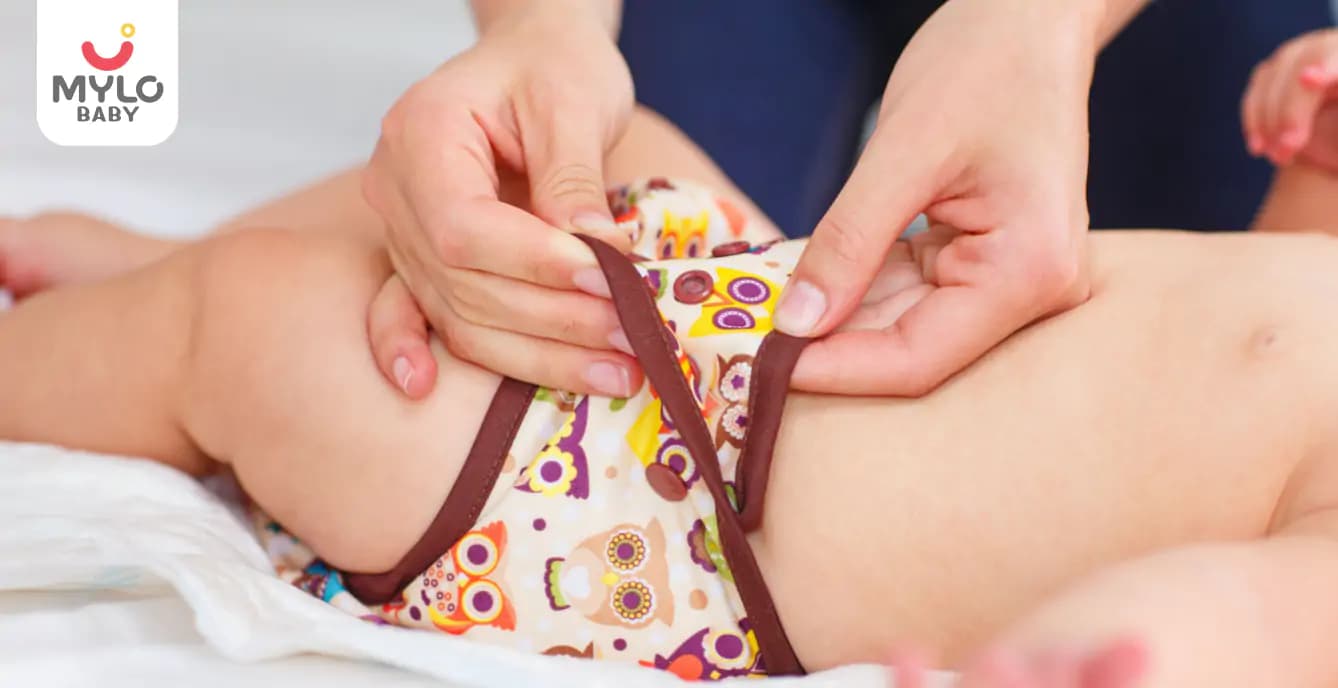
- Gather supplies: a clean cloth diaper, clean insert, baby wipes or warm water and a cloth, a liner, barrier cream if needed, and a changing mat. Keep everything within reach and never leave your baby unattended
- Remove the dirty diaper: unfasten it, gently lift your baby's legs by the ankles, and use the front to wipe away solids
- Clean your baby: wipe front to back, getting into the creases and folds, then pat dry
- Apply barrier cream if needed: use a thin layer of a diaper rash cream with a liner between the cream and the cloth (cream reduces absorbency). Not every change needs cream
- Put on a clean diaper: place a fresh insert, snap to fit snugly with the leg cuffs pulled out, and check there are no gaps
Read more: Types of diaper rash: causes, treatment and remedies
Tips for Successful Cloth Diapering
- Keep enough diapers: 1 to 2 dozen so you do not run out during a wash cycle
- Pre-wash new diapers: cotton and bamboo reach full absorbency only after several washes
- Prep ahead: stuff inserts in advance for quick changes
- Use a cloth-safe detergent: a gentle baby laundry detergent avoids build-up; skip fabric softener
- Be ready for leaks: carry spare diapers and clothes, most leaks mean the fit is wrong or a change is overdue
Read more: A beginner's guide on how to use cloth diapers
Cloth Diapering On the Go
Cloth diapering while out is easier than it looks. Pack a reusable diaper, spare inserts and wipes in your diaper bag, plus a waterproof "wet bag" for soiled diapers. The Mylo Happy Bums Combo is one ready-made bundle (a reusable cloth diaper, inserts and gentle wipes). When out, find a clean spot and follow the same steps as at home.
Read more: Browse baby diapers
How to Wash Cloth Diapers
- Remove solids: shake or spray solids into the toilet, or use a flushable liner
- Cold rinse: rinse in cold water first, which stops stains setting
- Warm or hot wash: wash with a cloth-safe detergent (check the care label; many wash up to 60°C)
- Skip fabric softener: it coats the fibres and destroys absorbency, causing leaks
- Dry fully: line-dry in sunlight (a natural stain remover and deodoriser) or tumble on low, and make sure diapers are completely dry before reuse
Do not soak cloth nappies for long unless the manufacturer advises it, and avoid harsh scrubbing, which wears the fabric.
Indian Context
Cloth diapering suits India well, it is economical and the strong sun makes line-drying easy and hygienic. In hot, humid weather change cloth even more often and allow nappy-free air time. During the monsoon, when sunlight is scarce, make sure diapers dry completely, a damp diaper grows mildew and smells. Skip talcum powder in the diaper area, and if a rash keeps returning despite frequent changes, see your paediatrician, as it may be a fungal (candida) rash needing specific treatment (Cleveland Clinic).
Myths vs Facts
| Myth | Fact |
|---|---|
| Cloth diapers prevent rash | No diaper prevents rash alone; frequent changing does |
| Cloth is completely chemical-free | Most covers use a waterproof PUL layer |
| Add fabric softener to keep cloth soft | Softener ruins absorbency and causes leaks; never use it |
| A new cloth diaper is fully absorbent right away | Cotton and bamboo need several washes to reach full absorbency |
| Cloth is always greener | It cuts landfill waste but uses more water and energy to wash |
Frequently Asked Questions
How often should I change a cloth diaper?
Every 2 to 3 hours, and immediately after a poop. Cloth holds moisture closer to the skin than a disposable, so it needs changing sooner (Mayo Clinic).
How many cloth diapers do I need?
About 1 to 2 dozen so you always have clean ones during a wash-and-dry cycle. Newborns use 10 to 12 a day.
What should I never do when washing cloth diapers?
Never use fabric softener or heavily scented products, they coat the fabric and ruin absorbency. Also avoid storing them damp, which causes mildew.
Can I use diaper cream with cloth diapers?
Yes, but place a liner between the cream and the cloth. Zinc oxide and petroleum creams coat the fibres and reduce absorbency if applied directly.
Is cloth diapering practical when travelling?
Yes. Pack spare diapers, inserts and wipes, plus a waterproof wet bag for soiled ones, and change as you would at home.
References
- NHS. How to change your baby's nappy. www.nhs.uk
- American Academy of Pediatrics (HealthyChildren.org). Diapers: Disposable or Cloth? www.healthychildren.org
- American Academy of Pediatrics (HealthyChildren.org). Common Diaper Rashes and Treatments. www.healthychildren.org
- Mayo Clinic. Diaper rash: Symptoms and causes. www.mayoclinic.org
- American Academy of Dermatology (AAD). How to treat diaper rash. www.aad.org
- Cleveland Clinic. Yeast Diaper Rash (Candidal Diaper Dermatitis). my.clevelandclinic.org
Article Posted Under
Related Articles



Related Topics
.webp&w=32&q=75)
Medical Disclaimer
This content is for informational purposes only and should not replace professional medical advice. Consult with a physician or other health care professional if you have any concerns or questions about your health. If you rely on the information provided here, you do so solely at your own risk.


AWARDS AND RECOGNITION

Mylo wins Forbes D2C Disruptor award

Mylo wins The Economic Times Promising Brands 2022
AS SEEN IN













- Mylo Care: Effective and science-backed personal care and wellness solutions for a joyful you.
- Mylo Baby: Science-backed, gentle and effective personal care & hygiene range for your little one.
- Mylo Community: Trusted and empathetic community of 10mn+ parents and experts.


Product Categories
Baby Carrier | Baby Soap | Baby Wipes | Stretch Marks Cream | Baby Cream | Baby Shampoo | Baby Massage Oil | Baby Hair Oil | Stretch Marks Oil | Baby Body Wash | Baby Powder | Baby Lotion | Diaper Rash Cream | Newborn Diapers | Teether | Baby Kajal | Baby Diapers Pants | Cloth Diapers | Laundry Detergent | Lactation Granules |