


Orders

Profile

Baby Growth Stages Month-by-Month (0 to 12): The Complete 2026 Chart with Milestones, Weight, Height & Development Guide
 100 Likes|
 18 min
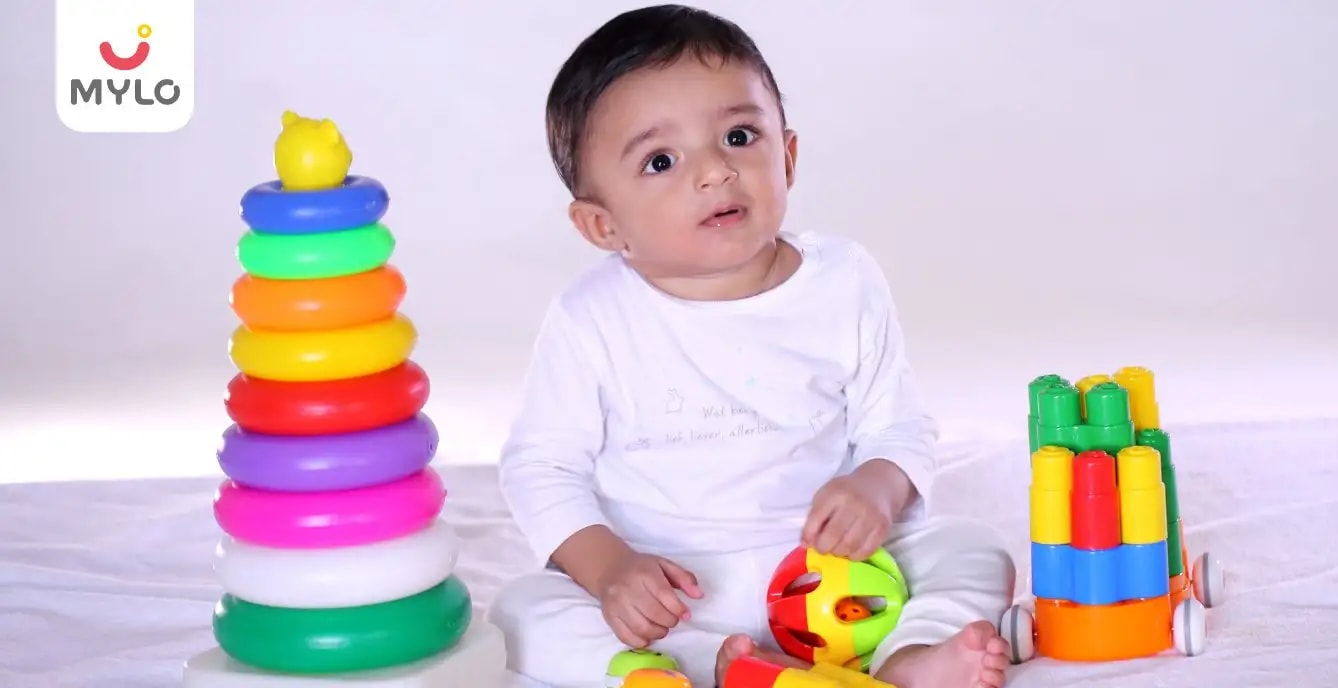
Baby growth stages in the first year progress through 12 distinct monthly milestones, covering motor skills, language, social-emotional development, and physical growth (weight, height, head circumference). By month 3, babies smile socially. By month 6, they roll over and double birth weight. By month 9, most start crawling. By month 12, many take first steps and say their first word. Below is a complete month-by-month chart with average weight, height, and 60+ tracked milestones.
Quick reference chart: Month 1: sleeps 16-17 hours, reflex grasping | Month 6: 5.5 to 7.5 kg, rolling both ways | Month 9: 7 to 9 kg, crawling | Month 12: 8 to 10 kg, first steps + first word.
If you're a new parent, also explore how to take care of newborn skin, what to feed your baby month-by-month, and our Hindi paheliyan brain games for cognitive stimulation in older months.
The Complete Baby Growth Chart (0 to 12 Months at a Glance)
A 12-row reference table for every parent. Save this. Print this. Show this to your paediatrician.
| Month | Avg Weight (Boys) | Avg Weight (Girls) | Avg Height | Key Milestones |
|---|---|---|---|---|
| 1 | 4.5 kg | 4.2 kg | 54.7 cm | Lifts head briefly, reflex grasp, eyes track |
| 2 | 5.6 kg | 5.1 kg | 58.4 cm | Social smile, coos, follows objects |
| 3 | 6.4 kg | 5.8 kg | 61.4 cm | Holds head steady, laughs, recognizes parents |
| 4 | 7.0 kg | 6.4 kg | 63.9 cm | Rolls front to back, reaches for toys |
| 5 | 7.5 kg | 6.9 kg | 65.9 cm | Rolls both ways, sits with support |
| 6 | 7.9 kg | 7.3 kg | 67.6 cm | Sits with help, starts solids, doubles birth weight |
| 7 | 8.3 kg | 7.6 kg | 69.2 cm | Sits unsupported, transfers objects between hands |
| 8 | 8.6 kg | 7.9 kg | 70.6 cm | Pulls to stand, says "mama"/"papa" without meaning |
| 9 | 8.9 kg | 8.2 kg | 72.0 cm | Crawling, pincer grasp emerging |
| 10 | 9.2 kg | 8.5 kg | 73.3 cm | Cruises on furniture, claps |
| 11 | 9.4 kg | 8.7 kg | 74.5 cm | Stands alone briefly, waves bye-bye |
| 12 | 9.6 kg | 8.9 kg | 75.7 cm | First steps, first word, triples birth weight |
These are AVERAGE values. Babies who are 25% below or above can still be perfectly healthy. Your paediatrician will check growth percentiles at every visit.
What Are the Baby Milestones in Month 1 (Newborn)?
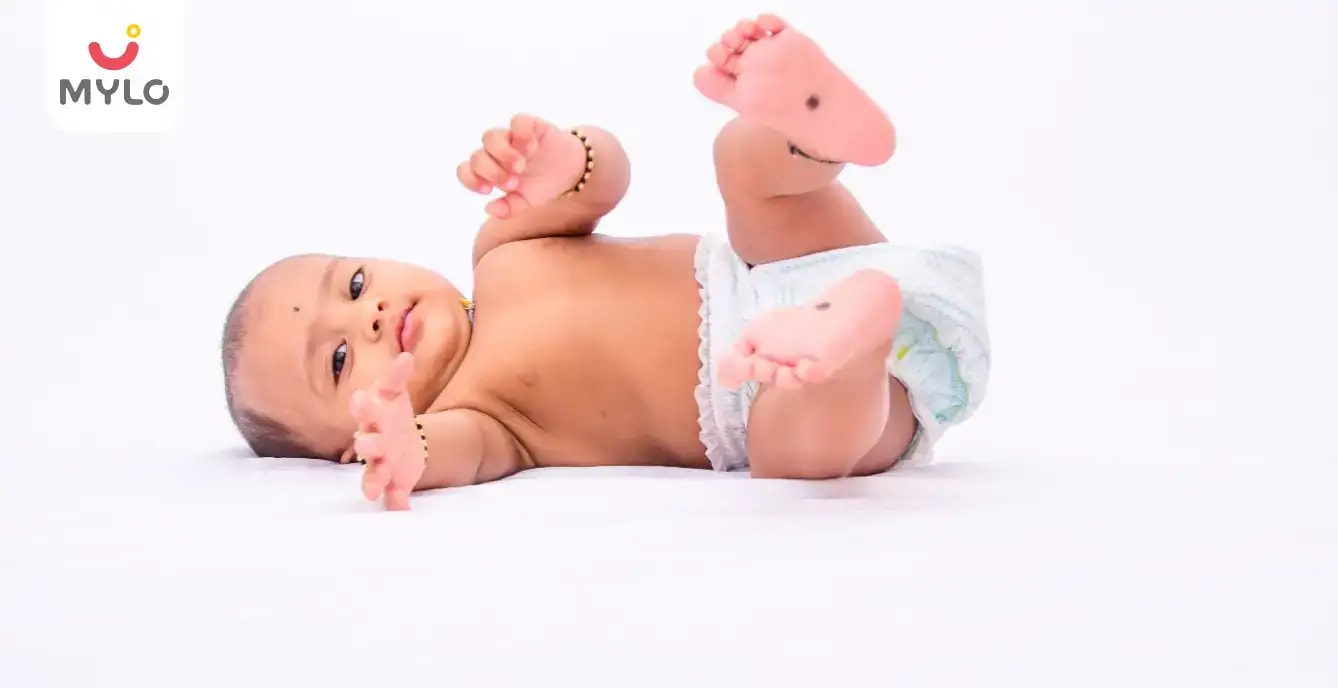
The first month is about adjusting to life outside the womb.
Month 1 Development at a glance:
| Category | What to Expect |
|---|---|
| Physical | Sleeps 16-17 hours/day, eats every 2-3 hours, head wobbly |
| Motor | Reflex grasping, fists clenched, can't hold head up |
| Sensory | Sees clearly only 8-12 inches away, hears voices |
| Cognitive | Recognizes mother's voice, calmed by familiar sounds |
| Social | Pre-social smiles (reflex), gazes at faces |
| Communication | Cries are the main signal, different cries for different needs |
Month 1 red flags (call your paediatrician):
- Doesn't respond to loud sounds
- Doesn't focus on faces
- Excessive jitters or stiffness
- Poor feeding or extreme lethargy
For first-time moms: The first month is exhausting. Your body needs serious recovery support. Mylo Lactomama Lactation Granules for Breastmilk Increase Supply. Safe during breastfeeding.
What Are the Baby Milestones in Months 2 to 3?
The "social awakening" months. Your baby starts truly responding to the world.
Month 2-3 Development:
| Skill | Month 2 | Month 3 |
|---|---|---|
| Smiling | First real social smile (around 6-8 weeks) | Smiles intentionally at parents |
| Cooing | Beginning vowel sounds ("ahh", "ooh") | "Conversations" with adults |
| Head control | Lifts head briefly during tummy time | Holds head up steadily |
| Vision | Tracks moving objects | Recognizes faces from across the room |
| Hands | Opens fists | Brings hands to mouth, swats at toys |
| Sleep | 14-16 hours/day | Begins longer night stretches (4-5 hours) |
Activities to support development (months 2-3):
- Tummy time for 5-10 minutes, 2-3 times daily
- Black and white high-contrast cards to stimulate vision
- Talking and singing during diaper changes and feeds
- Skin-to-skin contact for bonding and brain development
What Are the Baby Milestones in Months 4 to 6?
The "rolling and reaching" months. Massive motor skill development.
Month 4-6 Development:
| Skill | Month 4 | Month 5 | Month 6 |
|---|---|---|---|
| Rolling | Tries to roll | Rolls front to back | Rolls both ways |
| Sitting | Sits with full support | Sits leaning on hands (tripod) | Sits with minimal support |
| Grasping | Reaches for toys | Holds rattles | Transfers toys between hands |
| Sounds | Laughs out loud | Squeals with delight | Babbles ("ba-ba", "da-da") |
| Vision | Sees full color spectrum | Tracks objects across room | Recognizes familiar people |
| Weight gain | 600 g/month | 600 g/month | Doubles birth weight by month 5-6 |
Important milestone: Starting solids at 6 months
The World Health Organization recommends exclusive breastfeeding until 6 months, then introducing solids. Best first foods for Indian babies:
| First Foods | Why? |
|---|---|
| Rice cereal / Ragi porridge | Easy to digest, iron-rich |
| Mashed dal water | Protein introduction |
| Mashed banana | Natural sweetness, potassium |
| Boiled-and-mashed apple/pear | Vitamins, easy texture |
| Cooked-and-mashed sweet potato | Beta-carotene |
💊 As you introduce solids, baby's nutritional needs change. Mylo Baby Bath & Care Combo keeps baby's skin healthy through the messy weaning months. Coconut and, tear-free, dermatologist-tested.
What Are the Baby Milestones in Months 7 to 9?
The "crawling and conversing" months. Mobility transforms your home.
Month 7-9 Development:
| Skill | Month 7 | Month 8 | Month 9 |
|---|---|---|---|
| Sitting | Sits unsupported | Sits and twists | Sits and reaches sideways |
| Movement | Rocks on hands and knees | Begins crawling (commando style) | True crawling on hands/knees |
| Standing | Stands holding furniture | Pulls to standing | Cruises along furniture |
| Grasping | Transfers objects | Picks up with thumb-finger | Pincer grasp (tiny objects) |
| Communication | Babbles repeated sounds | Says "ma-ma", "pa-pa" (not meaningful) | Responds to own name |
| Food | 2 solid meals/day | 3 solid meals/day | Self-feeding finger foods |
Stranger anxiety begins (around month 8):
Around 8 months, babies develop stranger anxiety, where they cry when held by unfamiliar people. This is a healthy sign of attachment to primary caregivers.
Pro tip: Always introduce new people gradually. Don't force the baby into strangers' arms. Stranger anxiety usually peaks at 9-10 months and softens by 18 months.
What Are the Baby Milestones in Months 10 to 12?
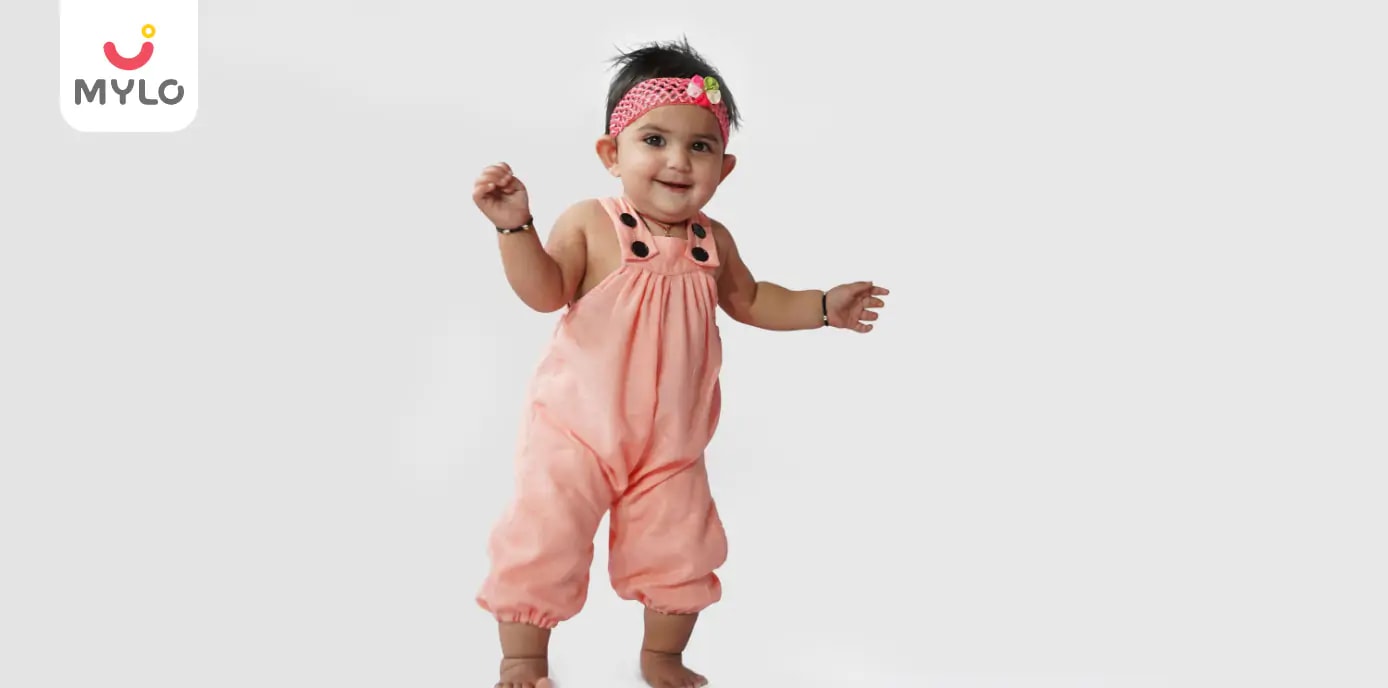
The "first steps and first words" months. The most photo-worthy.
Month 10-12 Development:
| Skill | Month 10 | Month 11 | Month 12 |
|---|---|---|---|
| Movement | Cruises confidently | Stands alone briefly | First steps (varies widely!) |
| Communication | Imitates simple sounds | Says first word with meaning | Says 1-3 meaningful words |
| Understanding | Follows simple commands ("no") | Responds to "wave bye" | Understands 50+ words |
| Social | Plays peek-a-boo | Waves bye-bye | Shows preferences (likes/dislikes) |
| Feeding | Drinks from cup | Eats family food (mashed) | Eats with spoon (messy!) |
| Weight | 9 kg average | 9.2 kg average | Triples birth weight |
The 1st birthday milestones:
| Most Babies By 12 Months Can | But Some May Not Yet |
|---|---|
| Pull to stand | Walk without support |
| Cruise on furniture | Eat fully on their own |
| Say at least one word | Run or climb stairs |
| Wave bye-bye | Use multi-word phrases |
| Recognize themselves in mirror | Use spoon perfectly |
| Drink from open cup | Be fully potty-aware |
For 1st birthday inspiration, see our 1st birthday wishes collection and tips to make your baby's first birthday memorable.
What Are the Average Baby Weight & Height Charts (Indian Standards)?
These charts follow WHO standards adapted for Indian babies (Indian babies are typically 200-400g lighter than WHO global average at each stage).
Baby Boys: Weight by Month (Indian Average)
| Month | 3rd %ile (Lower) | 50th %ile (Avg) | 97th %ile (Upper) |
|---|---|---|---|
| Birth | 2.5 kg | 3.3 kg | 4.4 kg |
| 1 | 3.4 kg | 4.5 kg | 5.8 kg |
| 3 | 5.1 kg | 6.4 kg | 7.9 kg |
| 6 | 6.4 kg | 7.9 kg | 9.7 kg |
| 9 | 7.1 kg | 8.9 kg | 10.9 kg |
| 12 | 7.7 kg | 9.6 kg | 11.8 kg |
Baby Girls: Weight by Month (Indian Average)
| Month | 3rd %ile (Lower) | 50th %ile (Avg) | 97th %ile (Upper) |
|---|---|---|---|
| Birth | 2.4 kg | 3.2 kg | 4.2 kg |
| 1 | 3.2 kg | 4.2 kg | 5.5 kg |
| 3 | 4.5 kg | 5.8 kg | 7.4 kg |
| 6 | 5.7 kg | 7.3 kg | 9.3 kg |
| 9 | 6.5 kg | 8.2 kg | 10.4 kg |
| 12 | 7.0 kg | 8.9 kg | 11.3 kg |
Don't panic about percentiles. A baby in the 5th percentile can be perfectly healthy. What matters is consistent growth along their own curve, not where they sit on the chart.
What Are the Baby Milestones by Week (Detailed Week-by-Week)?
For parents tracking weekly progress in the first 12 weeks:
| Week | Key Development |
|---|---|
| Week 1 | Lots of sleep, jerky movements, learning to feed |
| Week 2 | Eyes track briefly, may show first reflex smile |
| Week 3 | More awake periods, lifts head briefly |
| Week 4 | Coos begin, longer night sleep stretches |
| Week 5 | First social smile possible, eyes follow objects |
| Week 6 | Strong social smile, distinct cry tones |
| Week 7 | Holds head better during tummy time |
| Week 8 | Definite social smile, recognizes parents |
| Week 9 | Cooing increases, fascination with hands |
| Week 10 | Laughs out loud possible, longer head control |
| Week 11 | Tracks objects across room, reaches for toys |
| Week 12 | Holds head steady upright, smiles at strangers |
What Is the Vaccination Schedule for Babies (0 to 12 Months)?
Indian Academy of Paediatrics (IAP) recommended vaccinations:
| Age | Vaccines |
|---|---|
| Birth | BCG, OPV 0, Hepatitis B 1 |
| 6 weeks | DTwP/DTaP 1, IPV 1, Hep B 2, Hib 1, Rotavirus 1, PCV 1 |
| 10 weeks | DTwP/DTaP 2, IPV 2, Hib 2, Rotavirus 2, PCV 2 |
| 14 weeks | DTwP/DTaP 3, IPV 3, Hib 3, Rotavirus 3, PCV 3 |
| 6 months | Influenza, Typhoid Conjugate Vaccine (recommended) |
| 9 months | MMR 1 |
| 12 months | Hep A 1, PCV booster, MMR 2 (some schedules) |
Always follow your paediatrician's personalised schedule. Vaccines may be combined or rearranged based on your baby's health.
When Should Parents Worry About Baby Milestones?
Most "delays" are within normal variation. But call your paediatrician if your baby:
By 3 months:
- Doesn't smile at people
- Doesn't follow moving objects with eyes
- Doesn't lift head during tummy time
- Doesn't respond to loud sounds
By 6 months:
- Doesn't reach for toys
- Doesn't bring hands to mouth
- Doesn't make babbling sounds
- Doesn't show affection for caregivers
By 9 months:
- Doesn't sit even with support
- Doesn't babble ("ba", "da", "ma")
- Doesn't recognize familiar people
- Doesn't try to get attention
By 12 months:
- Doesn't crawl
- Doesn't stand even with help
- Doesn't say single words
- Doesn't use gestures (waving, pointing)
- Loses skills they once had ⚠️ (most serious sign)
How Can Parents Support Baby's Growth & Development?
A 5-pillar framework every paediatrician recommends:
Pillar 1: Nutrition
- 0 to 6 months: Exclusive breastfeeding
- 6 to 12 months: Breast milk PLUS solids (rice cereal, dal water, mashed fruits)
- 12+ months: Family food (mashed)
Pillar 2: Sleep
- Newborn: 16-17 hours/day
- 3 months: 14-16 hours/day
- 6 months: 13-15 hours/day
- 12 months: 11-14 hours/day
Pillar 3: Stimulation
- Talking, singing, reading from day 1
- Tummy time from week 2
- Mirror play, peek-a-boo from month 4
- Picture books from month 6
- Simple puzzles from month 10
Pillar 4: Bonding
- Skin-to-skin contact in first months
- Eye contact during feeding
- Responding promptly to cries (it does NOT spoil them)
- Parental playtime daily
Pillar 5: Health Tracking
- Monthly weight/height measurement
- Vaccinations on schedule
- Paediatrician visits at 1, 2, 4, 6, 9, 12 months
- Mom's own health (because a healthy mom = healthy baby)
Don't forget Mom in this equation. Mylo Mom's Postpartum Recovery Combo (Stretch Marks Oil Kit) supports your body through the demanding first year.
Frequently Asked Questions (FAQ)
When do babies start crawling?
Most babies start crawling between 7 and 10 months, with peak crawling around month 9. Some babies skip crawling entirely and go straight to standing/walking. Both are completely normal as long as motor skills are developing.
When do babies start walking?
Most babies take their first independent steps between 10 and 15 months. The average is around month 12, but anywhere from 9 to 17 months can be normal. If your baby isn't walking by 18 months, consult your paediatrician.
What is the average baby weight month by month?
At birth, average weight is 3.0 to 3.3 kg. By 6 months, babies typically double their birth weight (around 6-7 kg). By 12 months, babies typically triple their birth weight (around 9-10 kg). See our complete chart above.
When do babies start talking?
First sounds (cooing) begin at 2-3 months. Babbling ("ba-ba", "da-da") begins around 6-9 months. First meaningful word typically comes at 12-14 months. Some children speak as early as 9 months; others wait until 18 months. Both are within normal range.
When should I worry about baby milestones?
Worry markers: doesn't smile by 3 months, doesn't sit by 9 months, doesn't crawl/scoot by 12 months, doesn't say single words by 15 months, or loses skills they once had at any age. See your paediatrician for personal evaluation.
Are premature baby milestones different?
Yes. Premature babies are tracked using adjusted age (subtract weeks of prematurity from chronological age). A baby born 8 weeks early at 6 months chronological age is developmentally compared to a 4-month-old. By age 2, most premature babies catch up to peers.
When should babies start solids?
The World Health Organization recommends starting solids at 6 months. Signs of readiness: sits with support, shows interest in food, has lost tongue-thrust reflex, has good head control. Start with single-ingredient purees and progress to mashed family foods.
Is it normal if my baby is in the 25th percentile?
Yes. Percentiles are statistical, not pathological. A baby in the 25th percentile means 75% of babies weigh more, but they can still be perfectly healthy. What matters is consistent growth along their own curve. Only sudden drops in percentile warrant investigation.
How do I track baby growth at home?
Use our chart above as reference. Weigh your baby monthly (use a baby scale or doctor's clinic). Measure height every 3 months. Track milestones using a simple journal. Always cross-check with paediatrician visits.
Why is my baby smaller than other babies the same age?
Variations are mostly genetic (parental height/build), but can also be due to feeding patterns, sleep, illness, or low birth weight. As long as your baby is gaining weight steadily along their own curve, this is usually fine. Consult your paediatrician if concerned.
What if my baby misses a milestone?
One missed milestone is not a concern. Babies develop in their own time. But if multiple milestones are missed in a single month, or if your baby seems regressed, see your paediatrician. Early intervention (when needed) leads to better outcomes.
How does breastfeeding affect baby growth?
Breastfed babies typically gain weight rapidly in the first 3 months, then gain weight slightly slower than formula-fed babies from 4-12 months. This is normal and reflects the WHO growth standards. Don't switch to formula based on growth alone without consulting your paediatrician.
Do I need to give my baby any supplements?
Vitamin D drops are recommended for all babies from birth (400 IU/day) by the Indian Academy of Pediatrics. Most other supplements are unnecessary if the baby is breastfed or on standard formula. After 6 months, iron-rich solids become critical. Consult your paediatrician before any other supplements.
Final Thoughts: Trust the Journey, Not the Comparison
The first year is the most rapid development period in human life. Your baby will go from a sleepy, helpless newborn to a walking, talking little person in just 365 days. It is a miracle to witness.
But the most important advice every paediatrician gives: don't compare your baby to other babies. Compare your baby to yesterday's version of themselves. Are they doing more than last week? Saying more? Smiling more? Reaching more? If yes, they're on track.
When in doubt, photograph the milestone, log it, and ask your paediatrician at the next visit. Don't rely on internet forums or panicked WhatsApp groups.
✨ Wishing you and your little one a year full of giggles, growth, and golden moments. ✨
Related Reads on Mylo
- 🍼 1st Birthday Wishes for Your Little One
- 🎂 Tips to Make Your Baby's First Birthday Memorable
- 🧠 25 Best Akbar and Birbal Stories for Kids
- 🧩 250+ Paheliyan with Answers for Kids
- 📚 Top 10 Tenali Raman Stories for Kids
- 🎭 Top 10 Panchatantra Stories for Kids
- 📖 Top 10 Short Moral Stories for Kids
- 🎁 50 Budget-Friendly Return Gift Ideas
 Yes
Yes
 No
No
Your parenting partner
in your pocket.
supportive community.

Your parenting partner
in your pocket.
supportive community.


Article Posted Under
Helpful Tools & Calculators

.webp&w=32&q=75)














Anupama Chadha, born and raised in Delhi is a content writer who has written extensively for industries such as HR, Healthcare, Finance, Retail and Tech.
Related Articles

Related Videos
![Infant Developmental Milestones [UndergroundMed]](https://images.mylofamily.com/_next/image?url=https%3A%2F%2Fimg.youtube.com%2Fvi%2Fi0fnBTUuRIA%2Fhqdefault.jpg&w=1900&q=75)
Infant Developmental Milestones [UndergroundMed]
16 Facts about Months 4 through 6 | Baby Development
12 - 24 Months Old Baby Development - What To Expect
Your baby - Visual Development
Baby Milestones: 24-36 Months
Questions about this article
- Asked by Mother of 3 Months Old Baby
Hi my baby completed today 3th month n she want to sit what should I do....??
- Asked by Mother of 18 Days Old Baby
My baby scratch on face with own hands
- Asked by Mother of 18 Days Old Baby
Rajaj kymar
Related Topics
.webp&w=32&q=75)
Recently Published Articles
Your body needs extra nutrition this trimester - these can help.
60+ Gen Z & Gen Alpha Slangs Indian Parents Must Know in 2026: A Complete Decoder Guide
130+ Welcoming Newborn Baby Quotes for 2026: Status, Captions, Family Messages & Hindi/Tamil Meanings
It's a Baby Girl! 130+ Heart Touching Birth Announcement Ideas (2026): Quotes, Status, WhatsApp Messages & Princess Captions
220+ Modern Hindu Baby Girl Names with Meanings (2026): Trending, Goddess Inspired, Unique

Are you a first time dad & scared? Here's some help
Medical Disclaimer
This content is for informational purposes only and should not replace professional medical advice. Consult with a physician or other health care professional if you have any concerns or questions about your health. If you rely on the information provided here, you do so solely at your own risk.


AWARDS AND RECOGNITION

Mylo wins Forbes D2C Disruptor award

Mylo wins The Economic Times Promising Brands 2022
AS SEEN IN












- Mylo Care: Effective and science-backed personal care and wellness solutions for a joyful you.
- Mylo Baby: Science-backed, gentle and effective personal care & hygiene range for your little one.
- Mylo Community: Trusted and empathetic community of 10mn+ parents and experts.


Product Categories
Baby Carrier | Baby Soap | Baby Wipes | Stretch Marks Cream | Baby Cream | Baby Shampoo | Baby Massage Oil | Baby Hair Oil | Stretch Marks Oil | Baby Body Wash | Baby Powder | Baby Lotion | Diaper Rash Cream | Newborn Diapers | Teether | Baby Kajal | Baby Diapers Pants | Cloth Diapers | Laundry Detergent | Lactation Granules |