


Orders
.png&w=48&q=75 "login")
Profile


Wallet

Best Activities for Toddlers by Age: 12 Months to 3 Years
 19 min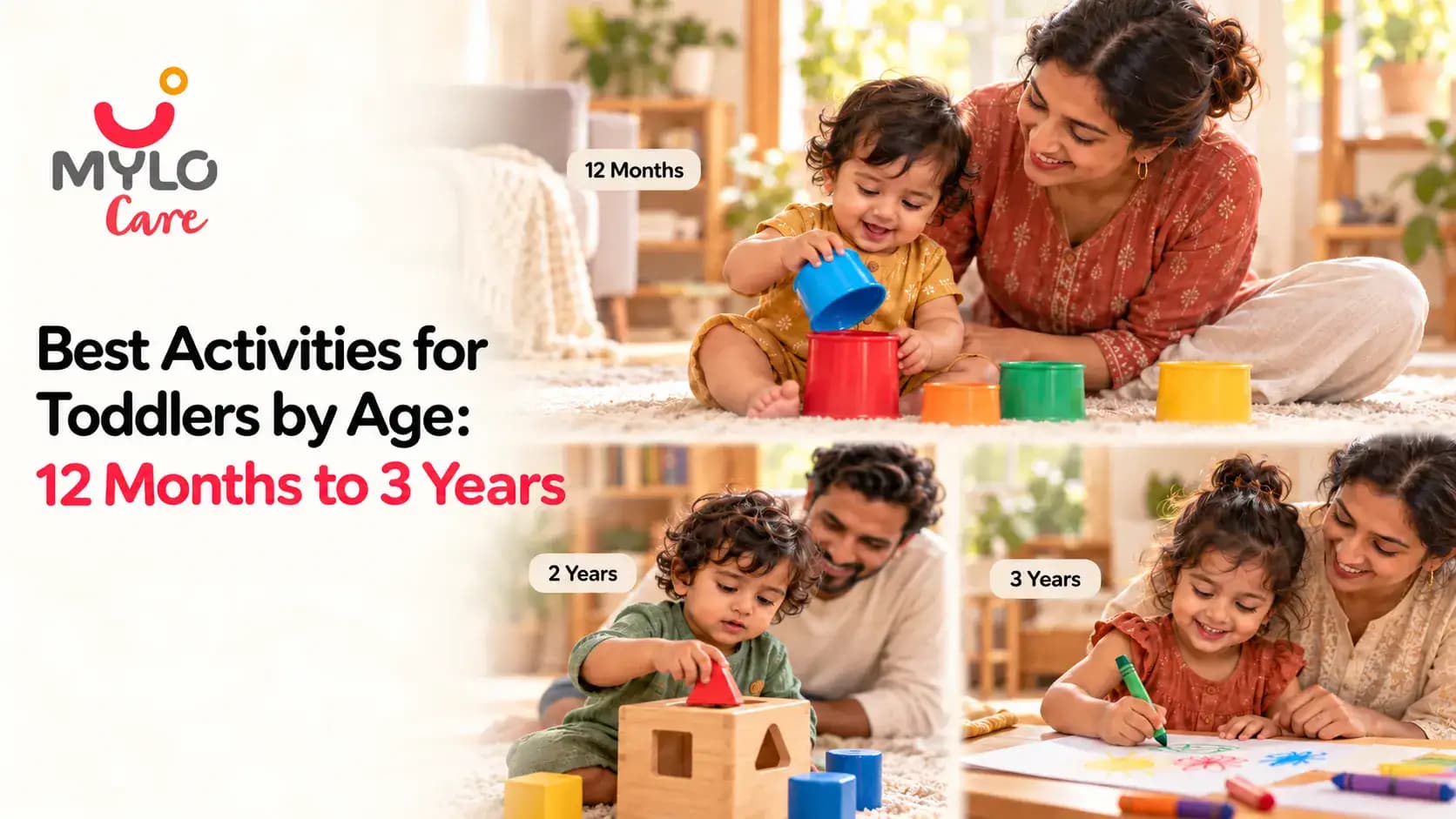
Quick Answer
Toddler activities are simple play ideas that help 1 to 3 year olds move, talk, think and explore. For example, pouring water between steel katoris builds hand control in a 15 month old. You don't need expensive toys: everyday household items and 10 minutes of your attention work best.
At a Glance
Age | What They're Learning | Top 3 Activities |
|---|---|---|
12 to 18 months | Walking, grasping, first words, cause and effect | Push and pull toys, stacking cups, peekaboo |
18 to 24 months | Running, climbing, naming things, copying adults | Ball play, scribbling, pretend cooking |
2 to 2.5 years | Jumping, two-word sentences, sorting, independence | Dancing, sorting by colour, simple puzzles |
2.5 to 3 years | Pedalling, short sentences, imagination, playing with others | Tricycle, role play, simple crafts |
Key Facts
The World Health Organization advises at least 180 minutes of physical activity a day, spread through the day, for children aged 1 to 4 years.
WHO also advises that toddlers should not be restrained (in a pram, high chair or carrier) for more than 1 hour at a time.
Play builds the brain. Toddlers learn language, problem solving and social skills mainly through play with caring adults.
Short sessions of 5 to 15 minutes match a toddler's attention span.
Any object small enough to fit through a toilet paper roll is a choking risk for children under 3.
Why Are Activities Important for Toddlers?
Short answer: Play is how toddlers learn. Activities build muscles, coordination, language, thinking, emotions and social skills, and help toddlers sleep and eat better.
Skill Area | What It Means | Activity Examples |
|---|---|---|
Gross motor | Big movements: walking, running, climbing, jumping | Ball play, dancing, park visits |
Fine motor | Small hand movements: grasping, pinching, turning | Stacking, scribbling, threading big beads |
Language | Understanding and using words | Books, rhymes, naming things on walks |
Thinking (cognitive) | Problem solving, memory, cause and effect | Shape sorters, hide and seek with toys, puzzles |
Social and emotional | Sharing, turn taking, handling feelings | Pretend play, playdates, simple group games |
Sensory | Exploring touch, sound, sight, smell | Water play, atta dough, sand play |
Activities for 12 to 18 Month Olds
Short answer: At 12 to 18 months, toddlers are learning to walk, grasp small objects and say first words. Choose activities that let them move, stack, fill and empty, and copy sounds.
Activity | How to Do It | Skill Built |
|---|---|---|
Push and pull toys | Let them push a toy cart or pull a toy on a string | Walking, balance |
Stacking cups or steel katoris | Stack 2 to 3, let them knock down | Hand-eye coordination |
Fill and empty | Put blocks in a dabba and tip them out again | Cause and effect |
Peekaboo and hide the toy | Hide a toy under a dupatta, ask "Where's the ball?" | Memory, object permanence |
Rhymes with actions | "Machli Jal Ki Rani Hai", "Twinkle Twinkle" with hand movements | Language, copying |
Board books | Point and name pictures | Vocabulary. See reading to toddlers |
Ball rolling | Sit facing each other and roll a soft ball | Turn taking, tracking |
Kitchen band | Steel bowls and a wooden spoon to bang | Rhythm, cause and effect |
Crawling tunnel | Cushions or a bedsheet over chairs | Gross motor, confidence |
Activities for 18 to 24 Month Olds
Short answer: At 18 to 24 months, toddlers run, climb, copy adults and learn many new words. Choose activities that involve climbing, pretend play, scribbling and naming.
Activity | How to Do It | Skill Built |
|---|---|---|
Ball games | Kick, throw and chase a big soft ball | Gross motor, coordination |
Scribbling | Chunky crayons on large paper taped to the floor | Fine motor. See toddler drawing stages |
Pretend cooking | Toy kitchen or real steel utensils, "make chai for papa" | Imagination, language |
Shape sorter and simple puzzles | 2 to 4 piece puzzles with knobs | Problem solving |
Animal sounds game | "What does the cow say?" with picture cards | Language |
Water pouring | Pour water between cups in a tub (always supervised) | Hand control, senses |
Body parts song | "Head, Shoulders, Knees and Toes" | Language, body awareness |
Treasure basket | Basket of safe household items to explore | Sensory, curiosity |
Simple helping | Put socks in the basket, give the spoon to dadi | Independence, listening |
Activities for 2 to 2.5 Year Olds
Short answer: Two year olds jump, talk in short phrases and want to do things themselves. Choose activities with sorting, building, music and simple choices.
Activity | How to Do It | Skill Built |
|---|---|---|
Colour sorting | Sort coloured blocks or bangles into matching bowls | Colours, thinking. See teaching colours and shapes |
Block tower | Build towers of 4 to 6 blocks | Fine motor, patience |
Dance and freeze | Dance to music, freeze when it stops | Listening, self-control |
Atta dough play | Roll, squash and cut with a plastic knife | Hand strength, creativity |
Big bead threading | Thread big beads or pasta on a thick string | Pincer grasp. See pincer grasp and pre-writing skills |
Counting games | Count stairs, rotis, toys together | Early maths. See how toddlers learn to count |
Sticker play | Peel and stick big stickers on paper | Fine motor |
Obstacle course | Crawl under a table, step over a pillow, jump on a mat | Gross motor, following steps |
Matching game | Match socks or pairs of picture cards | Memory. See how to improve memory in toddlers |
Activities for 2.5 to 3 Year Olds
Short answer: Near 3 years, toddlers pedal, speak in sentences, use imagination and start playing with other children. Choose activities with role play, crafts, simple rules and outdoor play.
Activity | How to Do It | Skill Built |
|---|---|---|
Role play | Doctor, shopkeeper, teacher, cooking | Language, imagination, social skills |
Tricycle | Pedal in a safe space with a helmet | Leg strength, coordination |
Simple crafts | Tear and paste paper, finger painting, leaf printing | Fine motor, creativity |
Puzzles | 6 to 12 piece puzzles | Problem solving |
Story time with questions | "What happens next?" | Language, thinking |
Simple group games | Ring-a-ring-a-roses, follow the leader | Turn taking, sharing. See teaching toddlers to share |
Gardening | Water plants, plant seeds in a pot | Responsibility, nature |
Sorting by size and shape | Big and small, round and square | Thinking |
Washing toys | Soap, water and old toys in a tub | Independence, sensory |
Indoor Activities for Toddlers at Home
Short answer: Simple household items like steel utensils, atta, cushions, old boxes and bedsheets can make a full day of indoor activities, with no expensive toys needed.
Household Item | Activity |
|---|---|
Steel katoris and dabbas | Stacking, filling, drumming |
Atta dough | Rolling, shaping, "making rotis" |
Cardboard boxes | Car, house, tunnel, posting slot for lids |
Bedsheet and chairs | Tent or tunnel |
Old newspaper | Tearing, scrunching, throwing paper balls |
Bottle caps (large only, supervised) | Sorting by colour, counting |
Dal and rice (supervised, 2 years and above) | Pouring and scooping in a tray |
Cushions | Climbing, jumping on a mattress on the floor |
Clothes basket | Pushing toys, "taxi ride" |
Plastic bottles | Bowling with a soft ball |
Small items like dal and rice need close supervision. Avoid whole chana, rajma and beans with children under 3, as they can be inhaled.
Outdoor Activities for Toddlers
Short answer: Outdoor play helps toddlers burn energy, sleep better and get sunlight. Parks, terraces, balconies (with safe railings) and building compounds all work.
Activity | Where | Skill Built |
|---|---|---|
Walking and exploring | Park, compound | Gross motor, curiosity |
Sand play | Park sandpit | Sensory, fine motor |
Swings and slides (toddler size) | Park | Balance, confidence |
Bubble chasing | Anywhere | Running, eye tracking |
Nature walk | Park, garden | Language: name trees, birds, flowers |
Ball kicking | Open ground | Coordination |
Chalk drawing | Floor of the compound or terrace | Creativity, fine motor |
Avoid outdoor play in the hottest hours of summer and on high pollution days. Read festival and seasonal care for toddlers.
Sensory and Messy Play for Toddlers
Short answer: Sensory play lets toddlers explore with touch, smell and sound. Keep it simple, safe and supervised, and accept some mess.
Activity | Age | Tip |
|---|---|---|
Water play in a tub | 12 months and above | Never leave your toddler alone, even for a second |
Atta or homemade play dough | 12 months and above | Use a simple flour, salt and water dough |
Finger painting with curd and haldi or food colour | 12 months and above | Safe if tasted |
Cooked pasta or noodles play | 12 months and above | Squish and squeeze |
Ice cube play | 18 months and above | Big cubes only, supervised |
Leaf and flower collection | 18 months and above | Avoid unknown plants |
Sand or mud kitchen | 2 years and above | Wash hands well after |


A Simple Daily Activity Plan for Toddlers
Short answer: Mix active and quiet play through the day, keep each activity short, and fit play around meals and naps.
Time | Activity Type | Example |
|---|---|---|
Morning | Active play | Park walk, ball play |
Mid-morning | Fine motor or sensory | Atta dough, stacking |
Before lunch | Helping | Washing vegetables, setting plates |
After nap | Creative | Scribbling, stickers, music |
Evening | Outdoor or active indoor | Dancing, obstacle course |
Before bed | Calm | Books, rhymes, cuddles |
For full sample schedules, including for working parents, read daily routine for toddlers.
How Long Should Toddlers Play at One Activity?
Short answer: Most toddlers focus on one activity for about 2 to 3 minutes per year of age, sometimes longer when very interested. Moving from one thing to another is normal.
Age | Typical Focus Time |
|---|---|
12 to 18 months | 1 to 3 minutes |
18 to 24 months | 3 to 6 minutes |
2 to 3 years | 5 to 10 minutes |
Read toddler attention span by age for more.
How Can Parents Play With Toddlers?
Short answer: Follow your toddler's lead, talk about what they are doing, let them repeat, and give praise for effort. Your attention matters more than the toy.
Follow their lead: let your toddler choose the activity.
Describe: "You put the red block on top!"
Don't rush: let them try before you help.
Repeat: doing the same activity again and again is how toddlers learn.
Praise effort: "You tried so hard!" rather than "Good boy".
Put your phone away: 10 minutes of full attention beats an hour of half attention.
Toy and Activity Safety for Toddlers
Short answer: Avoid small parts, button batteries, magnets, latex balloons and long strings, and always supervise water and climbing play.
Hazard | Why It's Dangerous | What to Do |
|---|---|---|
Small parts | Choking. Anything that fits through a toilet paper roll is too small for under 3 | Check toys and household items |
Button batteries | Can burn the food pipe within hours if swallowed | Check battery covers are screwed shut |
Magnets | Can cause serious gut injury if two or more are swallowed | Keep magnetic toys and fridge magnets away |
Latex balloons | Pieces of burst balloons can block the airway | Don't let toddlers play with balloons alone. Throw away burst pieces |
Strings and cords | Strangulation | No strings longer than about 30 cm on toys |
Water | Drowning in a few centimetres of water | Empty tubs and buckets right after use |
Climbing | Falls | Soft surfaces, anchor furniture to walls |
If your toddler swallows a battery or magnet, go to the hospital immediately. Read child first aid and toddler safety.
When to Talk to Your Paediatrician
Short answer: Speak to your paediatrician if your toddler is not walking by 18 months, has no words by 16 to 18 months, doesn't play pretend by 2 to 2.5 years, or loses skills they had.
Age | Check With Your Doctor If |
|---|---|
18 months | Not walking, not pointing, no words |
2 years | Not using two-word phrases, not copying actions, not interested in other children |
3 years | Not speaking in short sentences, no pretend play, falls often, can't climb stairs |
Any age | Loses words or skills they had before |
Read toddler development 12 to 36 months and toddler behaviour red flags.
Indian Context: What Parents Should Know
Traditional games: ring-a-ring games, "Oonchi Neechi" style simple chasing games, "chidiya udd" and clapping games are perfect for toddlers.
Grandparents: rhymes, lullabies and stories from dadi and nani are rich language activities.
Anganwadi and playschools: many offer play-based early learning. Ask about their daily activities.
Small homes: use corridors, terraces and building compounds safely for active play.
Screens: keep screens limited. Read screen time for toddlers.
Myths vs Facts
Myth | Fact |
|---|---|
Toddlers need expensive educational toys | Household items and your attention are just as good |
Learning apps teach toddlers faster | Toddlers learn best through hands-on play and talking with people |
Toddlers should sit still and focus | Moving is how toddlers learn. Short attention is normal |
Messy play is a waste of time | Sensory play builds fine motor skills, language and curiosity |
Boys and girls need different activities | All toddlers benefit from dolls, blocks, balls, kitchens and crafts |
More activities make toddlers smarter | Free play, rest and repetition matter as much as planned activities |
FAQs
1. What are the best activities for a 1 year old at home?
Stacking cups, fill and empty games, peekaboo, rhymes with actions, board books, ball rolling and push toys.
2. What activities can I do with my 2 year old at home?
Colour sorting, atta dough, block towers, dance and freeze, scribbling, simple puzzles and helping in the kitchen.
3. How many hours should a toddler play?
Toddlers should be active for at least 3 hours a day, spread through the day, with a mix of active and quiet play.
4. Is free play or planned activity better?
Both. Free play builds creativity and independence, while short planned activities help practise specific skills.
5. How do I keep my toddler busy while I work from home or cook?
Give a safe "busy box" (blocks, crayons, stickers), a kitchen job like washing vegetables, or a treasure basket within your sight.
6. Are activity worksheets good for toddlers?
Worksheets are not needed under 3 years. Hands-on play with real objects teaches far more.
7. 1 saal ke bacche ke saath ghar par kya activities karein?
Katori stack karna, dabbe mein cheezein daalna aur nikalna, chhupan chhupai, gaane ke saath haath hilana, aur ball rolling jaisi aasan activities kijiye. Roz 10 se 15 minute poore dhyaan se khelna kaafi hai.
8. 2 saal ke bacche ka dimaag tez kaise karein?
Rang aur shape pehchanna, ginti ke khel, puzzles, kahaniyan aur bacche se lagaatar baat karna sabse achha hai. Mobile ki jagah haath se khelne wali activities dijiye.
Related Reads
References
World Health Organization. Guidelines on physical activity, sedentary behaviour and sleep for children under 5 years of age, 2019. https://www.who.int/publications/i/item/9789241550536
American Academy of Pediatrics. The Power of Play: A Pediatric Role in Enhancing Development in Young Children. Pediatrics, 2018. https://publications.aap.org/pediatrics/article/142/3/e20182058/38649
Centers for Disease Control and Prevention. Milestone checklists (Learn the Signs. Act Early.). https://www.cdc.gov/ncbddd/actearly
ZERO TO THREE. Play and learning. https://www.zerotothree.org
U.S. Consumer Product Safety Commission. Small parts and toy safety. https://www.cpsc.gov
World Health Organization, UNICEF. Nurturing care for early childhood development. https://nurturing-care.org
Medical Disclaimer
This article is for general information only and does not replace advice from your paediatrician. Every child develops at their own pace. If you have concerns about your toddler's development, please consult your doctor.
Recommended for you
Playtime picks for little explorers




Article Posted Under
Related Articles
Right Side Abdominal Pain: Common Causes, Home Care and When to See a Doctor
 14 min
 Growth Scan in Pregnancy: When It Is Done, What It Checks and What Your Report Means
 17 min
 Hair Colour During Pregnancy: Is It Safe? Trimester Guide, Mehndi and Safer Options
 14 min
 Mylo: The Made-in-India Pregnancy and Parenting App Built for Indian Parents
 7 min
7 min
Related Topics
.webp&w=32&q=75)
Medical Disclaimer
This content is for informational purposes only and should not replace professional medical advice. Consult with a physician or other health care professional if you have any concerns or questions about your health. If you rely on the information provided here, you do so solely at your own risk.


AWARDS AND RECOGNITION

Mylo wins Forbes D2C Disruptor award

Mylo wins The Economic Times Promising Brands 2022
AS SEEN IN













- Mylo Care: Effective and science-backed personal care and wellness solutions for a joyful you.
- Mylo Baby: Science-backed, gentle and effective personal care & hygiene range for your little one.
- Mylo Community: Trusted and empathetic community of 10mn+ parents and experts.


Product Categories
Baby Carrier | Baby Soap | Baby Wipes | Stretch Marks Cream | Baby Cream | Baby Shampoo | Baby Massage Oil | Baby Hair Oil | Stretch Marks Oil | Baby Body Wash | Baby Powder | Baby Lotion | Diaper Rash Cream | Newborn Diapers | Teether | Baby Kajal | Baby Diapers Pants | Cloth Diapers | Laundry Detergent | Lactation Granules |