


Orders
.png&w=48&q=75 "login")
Profile


Wallet

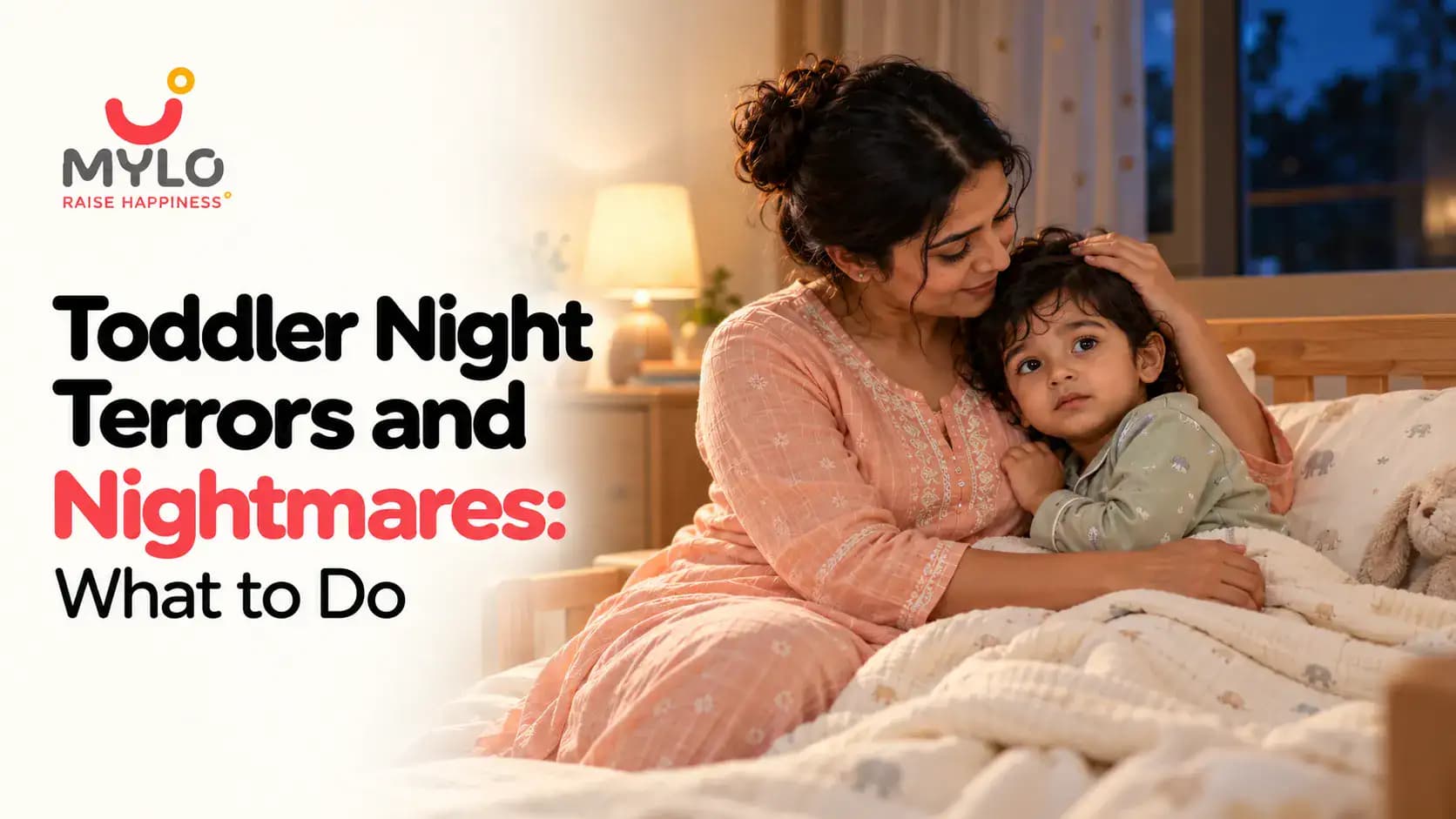
Toddler Night Terrors and Nightmares: What to Do
 17 min
Quick Answer
Toddler night terrors are episodes where a sleeping child suddenly screams, cries or thrashes but isn't really awake. Nightmares are bad dreams that wake a child up scared. Sleep regressions are short phases of worse sleep, often around 18 months and 2 years. All three are common and usually pass with calm comfort and a steady routine.
Night Terrors, Nightmares and Sleep Regression at a Glance
Question | Short Answer |
|---|---|
What is a night terror? | Screaming or thrashing during deep sleep, without fully waking up |
What is a nightmare? | A scary dream that wakes your toddler up, wanting comfort |
Which is more common in toddlers? | Both happen. Night terrors can start around 18 months, nightmares often from 2 to 3 years |
What to do in a night terror | Stay close, keep your toddler safe, don't try to wake them |
What to do after a nightmare | Hug, comfort and reassure |
What is a sleep regression? | A few weeks of worse sleep, often around 18 months, 2 years and 3 years |
When to see a doctor | Episodes almost every night, loud snoring, jerking or stiff movements, or very sleepy days |
Key Facts Every Parent Should Know
Night terrors are common: Studies suggest about 1 in 3 toddlers around 18 months have them at least sometimes
Your toddler won't remember a night terror: It's often far scarier for parents than for the child
Night terrors happen early in the night: Usually 1 to 3 hours after falling asleep, during deep sleep
Nightmares happen later: Usually in the second half of the night, during dreaming sleep
Being overtired is a big trigger: Too little sleep makes night terrors more likely
Sleep regressions are temporary: Most last 2 to 6 weeks if you keep the routine steady
What Are Night Terrors in Toddlers?
Short answer: A night terror is when a toddler suddenly screams, cries, sits up or thrashes during deep sleep, but isn't really awake. It usually lasts a few minutes, and your toddler won't remember it.
What a night terror looks like:
Sudden screaming or crying, often 1 to 3 hours after falling asleep
Eyes may be open, but your toddler looks through you
Sweating, fast breathing, racing heart
Thrashing, kicking or sitting up
Doesn't recognise you, and pushes you away if you try to hold them
Falls back to sleep quickly afterwards
Doesn't remember it in the morning
Why do night terrors happen?
Night terrors happen when a child partly wakes from deep sleep. Part of the brain is awake, and part is still asleep.
Common Trigger | What Helps |
|---|---|
Being overtired | Earlier bedtime, regular naps |
Irregular sleep times | Same bedtime and wake-up time daily |
Fever or illness | Night terrors often settle once your toddler is well |
Full bladder | Potty or diaper change before bed, less milk late at night |
Noise or a new place | Quiet, familiar room. Travel can trigger them |
Stress or big changes | Extra cuddles and a calm routine |
Snoring or breathing problems | See a doctor |
Family history | Night terrors often run in families |
What Should I Do During a Night Terror?
Short answer: Stay calm, stay close and keep your toddler safe. Don't try to wake them or hold them tightly. Most night terrors end on their own within a few minutes.
Stay calm: Your toddler isn't in pain and won't remember it.
Keep them safe: Move hard objects away, and stop them falling off the bed.
Don't try to wake them: Waking can make them more confused and upset, and the episode may last longer.
Don't hold them tightly: Holding can make thrashing worse. Stay nearby and speak softly if it helps.
Wait it out: Most episodes end in a few minutes, and your toddler goes back to sleep.
Don't talk about it in the morning: Your toddler won't remember, and talking about it may worry them.
What if night terrors happen every night?
If night terrors happen at about the same time most nights, your doctor may suggest scheduled waking:
Note the time night terrors usually start
Gently wake your toddler about 15 to 30 minutes before that time
Let them settle back to sleep
Do this for 1 to 2 weeks
Only try this with your doctor's advice.
What Are Nightmares in Toddlers?
Short answer: Nightmares are scary dreams that wake toddlers up crying and wanting comfort. They often start around 2 to 3 years, when imagination grows.
What a nightmare looks like:
Your toddler wakes up crying or scared, usually later in the night
They're fully awake and know you
They want a hug and comfort
Older toddlers may tell you about it: "A monster was chasing me"
They may find it hard to go back to sleep
What to do after a nightmare
What Helps | How |
|---|---|
Comfort quickly | Go to them, hug them, speak softly |
Reassure | "It was a dream. You're safe. I'm here." |
Keep it calm | Dim light, quiet voice |
Use a comfort object | Their favourite soft toy or blanket |
Night light | A dim, warm night light can help |
Talk in the daytime | For older toddlers, talk about the dream and make up a happy ending |
How to prevent nightmares
Avoid scary cartoons, videos and stories, especially before bed
Don't use threats like "bhoot aa jayega" to make your toddler sleep
Keep a calm, happy bedtime routine with a gentle story
Give extra cuddles during big changes, like a new sibling or starting daycare
For more on fear of the dark, read our guide on toddler fears and anxiety.
Night Terrors vs Nightmares: What's the Difference?
Short answer: In a night terror, your toddler screams but isn't awake and won't remember. In a nightmare, your toddler wakes up scared, wants comfort and may remember the dream.
Night Terror | Nightmare | |
|---|---|---|
When it happens | 1 to 3 hours after falling asleep | Later in the night or early morning |
Sleep stage | Deep, non-dreaming sleep | Dreaming sleep |
Is your toddler awake? | No, even if eyes are open | Yes, fully awake |
Recognises you? | No | Yes |
Wants comfort? | No, may push you away | Yes |
Remembers it? | No | Often yes |
Back to sleep | Quickly | May take a while |
What to do | Stay close, keep safe, don't wake | Comfort and reassure |
Common age | Can start around 18 months, common from 3 to 7 years | Often from 2 to 3 years |
Why Does My Toddler Cry or Scream in Their Sleep Without Waking?
Short answer: Short cries, whimpers or talking in sleep are very common and usually normal. Longer screaming with eyes open, while not awake, is often a night terror.
What You See | What It Usually Is |
|---|---|
A short cry or whimper, then back to sleep | Normal movement between sleep stages |
Talking or laughing in sleep | Sleep talking, which is normal |
Screaming with eyes open, not recognising you | Night terror |
Waking up crying, wanting you | Nightmare or normal night waking |
Rocking or head banging to fall asleep | Common soothing habit, usually stops by 4 to 5 years |
Grinding teeth | Common and usually harmless |
Crying with fever | Illness can cause restless sleep and bad dreams |
What Is a Toddler Sleep Regression?
Short answer: A sleep regression is a phase of a few weeks when a toddler who slept well starts waking at night, fighting bedtime or skipping naps. It's not a medical term, and it usually passes.
Common sleep regression ages
Age | Common Reasons |
|---|---|
18 months | Separation anxiety, new molars, wanting independence, saying "no" |
2 years | Nap battles, new fears, potty training, moving to a big bed, a new sibling |
3 years | Dropping the nap, imagination and fears, starting playschool |
Any age | New baby, travel, illness, moving house, a parent going back to work |
How long does a sleep regression last?
Most sleep regressions last about 2 to 6 weeks. Keeping the same routine helps them pass faster.
What helps during a sleep regression
Keep the same routine: Same bedtime, same steps, every night.
Don't start new habits you don't want to keep: Like a phone at bedtime or a bottle at night.
Check the nap: A nap that's too long or too late can push bedtime later. See our toddler sleep chart by age.
Try an earlier bedtime: Overtired toddlers wake more.
Give extra attention in the day: More connection in the day can mean less clinginess at night.
Stay calm and consistent at night: Short, boring check-ins with the same words.
If your toddler's sleep gets worse after a new baby, read our guide on preparing your toddler for a new baby.
When Should I Worry?
Short answer: Most night terrors, nightmares and sleep regressions are normal. See your pediatrician if episodes are very frequent or long, come with breathing problems, or look like stiffening or jerking.
Sign | Why It Matters |
|---|---|
Night terrors several times a week, or every night | Needs a check |
Episodes lasting more than 30 minutes | Needs a check |
Stiffening, jerking, the same movements every time, or confusion after | May need a check for seizures |
Loud snoring, gasping or pauses in breathing | May be sleep apnea, which can trigger night terrors |
Very sleepy, cranky or hyperactive during the day | Poor sleep may be affecting your toddler |
Sleepwalking into danger | Needs safety steps and a check |
Very frequent nightmares that cause fear of sleeping | Talk to your doctor |
Sleep problems lasting more than 6 weeks | Talk to your pediatrician |
When to get emergency help
Call 108 or 112, or go to the nearest hospital, if your toddler:
Has a fit (seizure): stiffening, jerking, eyes rolling, not responding
Has trouble breathing or turns blue
Is very hard to wake, or very confused after waking, especially with fever
Who Can Help?
Short answer: Start with your pediatrician. They can check for causes like snoring, illness or seizures, and guide you.
Who | When to See Them |
|---|---|
Pediatrician | First stop for any night-time worry |
ENT specialist | Loud snoring, mouth breathing, large tonsils or adenoids |
Pediatric neurologist | If episodes look like seizures |
Pediatric sleep specialist | Frequent or severe sleep problems |
Child psychologist | Nightmares linked to fear, anxiety or a scary event |
Free government support in India
RBSK (Rashtriya Bal Swasthya Karyakram): Free health checks for children from birth to 18 years
Tele-MANAS (14416): Free mental health helpline for tired or stressed parents
Emergency: Call 108 or 112
What Should Indian Parents Keep in Mind?
Short answer: In some Indian families, night terrors are blamed on nazar or spirits. Night terrors are a normal sleep event. Stay calm, keep your toddler safe, and see a doctor if you're worried.
Nazar and spirits: Night terrors aren't caused by nazar or spirits. Avoid jhaad-phoonk and scary rituals at night, which can frighten your toddler more
Scary stories: Avoid "bhoot" stories and scary TV serials before bed
Late nights: Late weddings, festivals and travel make toddlers overtired, which can trigger night terrors
Diwali crackers: Loud noises at night can disturb sleep for a few days
Evening milk: A big glass of milk just before bed can mean a full bladder, which can trigger night terrors
Co-sleeping: If your toddler sleeps with you, keep them safe from falling during a night terror
Myths vs Facts
Myth | Fact |
|---|---|
You should wake a child during a night terror | Waking them can make it worse. Stay close and keep them safe |
Night terrors mean something is seriously wrong | Most are normal and fade with age |
Night terrors are caused by nazar or spirits | They're caused by partial waking from deep sleep |
Toddlers remember night terrors | They usually don't remember them |
Sleep regressions last forever | Most pass in 2 to 6 weeks |
Skipping naps helps toddlers sleep better | Overtired toddlers have more night terrors and night waking |
Frequently Asked Questions
1. Why is my toddler screaming in their sleep but not awake?
This is usually a night terror. Your toddler is in deep sleep and isn't really awake. Stay close, keep them safe and don't try to wake them.
2. What age do night terrors start in toddlers?
They can start as early as 18 months, and are most common between 3 and 7 years. Most children outgrow them.
3. Are night terrors harmful?
No. They're scary to watch, but your toddler isn't in pain and won't remember them. Just keep them safe.
4. What's the difference between night terrors and nightmares?
In a night terror, your toddler isn't awake and won't remember it. In a nightmare, they wake up scared and want comfort.
5. What are the sleep regression ages for toddlers?
Common times are around 18 months, 2 years and 3 years. A new baby, travel or illness can also cause one.
6. How long does a toddler sleep regression last?
Usually 2 to 6 weeks. Keeping the same routine helps it pass faster.
7. Can fever cause night terrors?
Yes. Illness and fever can make night terrors and bad dreams more likely. They usually settle when your toddler is well.
8. Baccha neend mein cheekhta hai, kya karein?
Yeh aksar night terror hota hai. Baccha poori tarah jaaga nahi hota aur subah use yaad nahi rehta. Shaant rahiye, use girne se bachaiye, aur jagane ki koshish mat kijiye. Agar roz ho, to doctor se milein.
9. Baccha raat ko darr ke uth jata hai, kya karein?
Yeh bura sapna (nightmare) ho sakta hai. Use gale lagaiye, pyaar se kahiye "Main yahin hoon", aur halki night light jalaiye. Sone se pehle daravni kahaniyan aur videos mat dikhaiye.
Related Reads on Mylo
References
Petit D, et al. "Childhood Sleepwalking and Sleep Terrors: A Longitudinal Study of Prevalence and Familial Aggregation." JAMA Pediatrics, 2015.
American Academy of Pediatrics (AAP). "Nightmares and Night Terrors in Preschoolers." HealthyChildren.org. https://www.healthychildren.org
Nemours KidsHealth. "Night Terrors." https://kidshealth.org
NHS (UK). "Night terrors and nightmares." https://www.nhs.uk/conditions/night-terrors/
American Academy of Sleep Medicine (AASM). "International Classification of Sleep Disorders," 3rd edition. 2014.
Ministry of Health and Family Welfare, Government of India. "Tele-MANAS" (14416). https://telemanas.mohfw.gov.in/
Medical Disclaimer
This article is for information only and does not replace professional medical advice. Every toddler is different. If you're worried about your toddler's sleep or night-time episodes, please consult your pediatrician.


Article Posted Under
Related Articles



Related Topics
.webp&w=32&q=75)
Medical Disclaimer
This content is for informational purposes only and should not replace professional medical advice. Consult with a physician or other health care professional if you have any concerns or questions about your health. If you rely on the information provided here, you do so solely at your own risk.


AWARDS AND RECOGNITION

Mylo wins Forbes D2C Disruptor award

Mylo wins The Economic Times Promising Brands 2022
AS SEEN IN













- Mylo Care: Effective and science-backed personal care and wellness solutions for a joyful you.
- Mylo Baby: Science-backed, gentle and effective personal care & hygiene range for your little one.
- Mylo Community: Trusted and empathetic community of 10mn+ parents and experts.


Product Categories
Baby Carrier | Baby Soap | Baby Wipes | Stretch Marks Cream | Baby Cream | Baby Shampoo | Baby Massage Oil | Baby Hair Oil | Stretch Marks Oil | Baby Body Wash | Baby Powder | Baby Lotion | Diaper Rash Cream | Newborn Diapers | Teether | Baby Kajal | Baby Diapers Pants | Cloth Diapers | Laundry Detergent | Lactation Granules |