


Orders
.png&w=48&q=75 "login")
Profile


Wallet

How Much Milk and Water Does a Toddler Need?
 18 min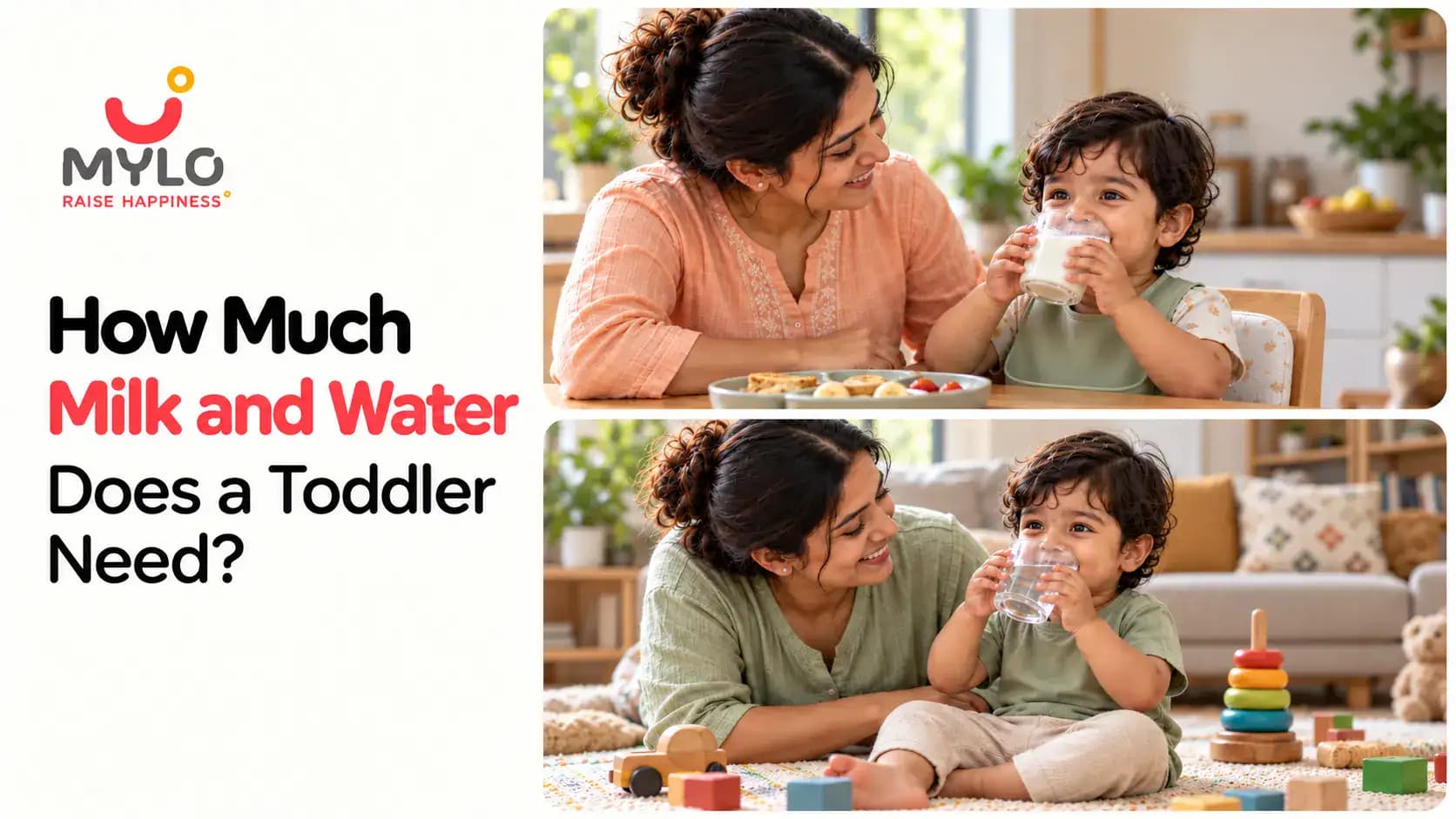
Quick Answer
Toddler milk and water needs are the daily drinks a child aged 1 to 3 needs to grow and stay hydrated: about 2 cups (400 to 500 ml) of milk and 1 to 4 cups of water. Too much milk lowers appetite and iron. Use an open or straw cup, and stop the bottle by about 18 months.
Milk, Water and Bottles at a Glance
Question | Short Answer |
|---|---|
How much milk for a 1 to 3 year old? | About 2 cups (400 to 500 ml) a day. Try not to go over about 700 ml |
Which milk? | Whole (full-fat) cow's milk from 1 to 2 years. After 2, toned milk is fine if your toddler is growing well |
Breast milk? | Yes. WHO recommends breastfeeding up to 2 years and beyond |
How much water? | About 1 to 4 cups (250 ml to 1 litre) a day at 1 to 2 years, a little more at 2 to 3 years and in hot weather |
Juice? | Not needed. Whole fruit is better. If given, no more than half a cup (120 ml) of 100% juice a day |
When to stop the bottle? | Start a cup at 6 months, and stop the bottle by about 12 to 18 months |
Night bottle? | Avoid it. Milk in bed can cause tooth decay |
Key Facts Every Parent Should Know
Milk is a food, not just a drink: Too much milk fills toddlers up and leaves less room for iron-rich foods
Low iron is common: Drinking a lot of milk is one of the most common causes of iron deficiency anaemia in toddlers
Water is the best drink: Between meals, water is better than juice, tea or sweet drinks
"Toddler milk" isn't needed: Special growing-up formulas aren't needed for healthy toddlers who eat a varied diet
Bottles can harm teeth: Sipping milk from a bottle, especially at night, can cause tooth decay
Cups help development: Drinking from an open or straw cup helps mouth muscles and self-feeding skills
How Much Milk Should a Toddler Drink?
Short answer: Most toddlers need about 2 cups (400 to 500 ml) of milk a day, including milk used in porridge or curd. More than about 700 ml a day can reduce appetite and iron.
Age | Milk per Day | Type |
|---|---|---|
12 to 24 months | About 2 cups (400 to 500 ml). Upper limit about 700 ml | Whole (full-fat) cow's milk, or breast milk |
2 to 3 years | About 2 cups (400 to 500 ml) | Toned or whole milk, as your doctor advises |
1 cup = about 240 ml. Curd, paneer and milk in porridge also count towards the daily total.
Before 1, babies need breast milk or formula, not cow's milk. Read when to start in our guide on when babies can begin cow's milk.
Signs your toddler may be drinking too much milk
Eats very little food at meals
Asks for milk instead of food
Pale skin, tiredness or low energy (possible low iron)
Hard stools or constipation
Wakes at night wanting milk
Which milk is best for toddlers?
Milk | Is It Okay? |
|---|---|
Breast milk | Yes, for as long as you and your toddler want |
Whole cow's milk (full cream) | Yes, from 12 months. Best choice from 1 to 2 years |
Toned or low-fat milk | From 2 years, if your toddler is growing well |
Buffalo milk | Higher in fat. Some families dilute it slightly. Ask your pediatrician |
Packet (pasteurised) milk | Yes. Safe to use. Warm if your toddler prefers |
Loose milk | Boil it before use |
Raw (unboiled) milk | No. It can carry germs |
Toddler or growing-up formula | Not needed for healthy toddlers |
Plant milks (almond, rice, oat) | Not a replacement for cow's milk. Fortified soy milk only with your doctor's advice |
Flavoured milk and malted drink powders | Often high in added sugar. Avoid, especially under 2 |
How Much Water Should a Toddler Drink?
Short answer: Toddlers aged 1 to 2 need about 1 to 4 cups (250 ml to 1 litre) of water a day, and 2 to 3 year olds need about 1 to 5 cups. They need more in hot weather, when active, or when unwell.
Age | Water per Day (About) |
|---|---|
12 to 24 months | 1 to 4 cups (250 ml to 1 litre) |
2 to 3 years | 1 to 5 cups (250 ml to 1.2 litres) |
Tips:
Offer water with every meal and snack
Keep a cup of water within reach during play
Give more water in Indian summers, after outdoor play, and during illness
Use a small cup your toddler can hold
Signs of dehydration
See a doctor if your toddler shows signs of dehydration:
Fewer wet diapers, or no urine for 6 to 8 hours
Dark yellow urine
Dry mouth, lips or tongue
No tears when crying
Very sleepy, cranky or floppy
Sunken eyes
During diarrhoea or vomiting, give ORS as your doctor advises, and keep breastfeeding if you are.
What Other Drinks Are Okay?
Drink | Is It Okay? |
|---|---|
Water | Best drink between meals |
Breast milk or plain milk | Yes, within the daily amount |
Chaas (buttermilk) or lassi without sugar | Yes, a good option |
Coconut water | Okay sometimes, in small amounts |
100% fruit juice | Not needed. If given, no more than half a cup (120 ml) a day, in a cup, not a bottle |
Packaged juices, soft drinks, energy drinks | No. High in sugar |
Tea and coffee | No. They reduce iron absorption |
Sweetened health drink powders | Often high in sugar. Avoid |
Why Should Toddlers Stop the Bottle?
Short answer: Using a bottle for too long can cause tooth decay, make toddlers drink too much milk, and lower their appetite for food. The American Academy of Pediatrics suggests stopping the bottle by about 18 months at the latest.
Problem | Why It Happens |
|---|---|
Tooth decay | Milk sits on the teeth, especially at night |
Too much milk | Bottles make it easy to drink a lot quickly |
Low iron | Milk fills them up, so they eat fewer iron-rich foods |
Picky eating | Less hunger at mealtimes |
Comfort habit | Harder to stop the longer it continues |
How to Stop Bottle Feeding a Toddler
Short answer: Move to a cup slowly. Drop one bottle at a time, starting with the daytime ones, and drop the bedtime bottle last.
Step by step
Step | What to Do | How Long |
|---|---|---|
1. Introduce a cup early | Offer an open cup or straw cup from 6 months, with water at meals | Ongoing |
2. Drop the midday bottle | Give milk in a cup at lunch or snack time | 3 to 5 days |
3. Drop the morning bottle | Offer milk in a cup with breakfast | 3 to 5 days |
4. Drop the evening bottle | Use a cup at dinner | 3 to 5 days |
5. Drop the bedtime bottle last | Move milk earlier, before brushing teeth, and replace the bottle with a cuddle and story | 1 to 2 weeks |
Tips that help
Let your toddler choose a special cup: A favourite colour or character makes it exciting
Put only water in the bottle: Many toddlers lose interest when the bottle has only water
Keep bottles out of sight: Out of sight, out of mind
Offer comfort in other ways: Cuddles, a soft toy or a song instead of the bottle
Say bye-bye to the bottle: Toddlers over 2 may like a small "goodbye bottle" moment
Stay calm and consistent: Expect a few days of protest, then it gets easier
How to stop the night bottle
Give milk earlier, as part of the bedtime routine, then brush teeth.
If your toddler still needs a bottle to fall asleep, reduce the milk by about 30 ml every 2 to 3 nights.
When it's very small, switch to water only.
Replace the bottle with a story, song or cuddle.
For more help with night waking, read our guide on toddler night waking.
Which cup is best?
Cup | Notes |
|---|---|
Open cup | Best for mouth development. Expect spills at first |
Straw cup | Good for drinking on the go |
Spouted sippy cup | Okay for a short time, but works a lot like a bottle |
Steel or glass cup with a lid | Good for home and travel |
What Not to Do
Short answer: Don't use the bottle to put your toddler to sleep, don't give sweet drinks, and don't force extra milk.
Avoid | Why | Try Instead |
|---|---|---|
Bottle in bed or to fall asleep | Tooth decay | Milk before brushing, then a cuddle |
Adding sugar or flavoured powders to milk | Tooth decay, sweet habits | Plain milk |
Forcing more milk "for strength" | Lowers appetite and iron | About 2 cups a day, plus food |
Juice in a bottle | High sugar, tooth decay | Water in a cup |
Stopping all bottles in one day during illness or big changes | Extra stress | Choose a calm time |
When Should I Worry?
Short answer: Talk to your pediatrician if your toddler drinks far too much or too little, shows signs of low iron or dehydration, or is always very thirsty.
Sign | Why It Matters |
|---|---|
Drinks more than about 700 ml of milk a day and eats little | Risk of iron deficiency |
Pale, tired, eats mud or chalk | Possible anaemia |
Refuses all milk and dairy | May need other calcium sources |
Signs of dehydration | Needs medical help |
Very thirsty all the time and passing a lot of urine | Needs a check for conditions like diabetes |
Constipation most days | May need more water, fibre and less milk |
Rash, vomiting or diarrhoea after milk | Possible milk allergy or intolerance |
Brown or white spots on the front teeth | Early tooth decay. See a dentist |
Who Can Help?
Short answer: Your pediatrician can check your toddler's growth and iron levels. A pediatric dentist can check for tooth decay from bottles.
Who | When to See Them |
|---|---|
Pediatrician | Milk amount, iron, growth, dehydration |
Pediatric dietitian | Diet planning, milk allergy, picky eating |
Pediatric dentist | First dental visit, tooth decay, bottle habits |
Free government support in India
Anganwadi centres: Growth checks, nutrition advice and take-home rations
Anemia Mukt Bharat: Free iron and folic acid syrup for children aged 6 to 59 months
RBSK (Rashtriya Bal Swasthya Karyakram): Free health checks for children from birth to 18 years
ORS and zinc: Free at government health centres for diarrhoea
What Should Indian Parents Keep in Mind?
Short answer: In many Indian homes, milk is seen as the most important food, and toddlers drink from bottles until 3 or 4 years. Limiting milk and moving to a cup helps your toddler eat better and protects their teeth.
"Doodh nahi piya to kamzor ho jayega": Toddlers get strength from a mix of foods, not only milk
Bottles until 3 or 4 years: Common, but it raises the risk of tooth decay and low iron
Adding sugar or powders: Many families add sugar or flavoured powders to milk. Plain milk is best
Buffalo milk: Common in North India. It's higher in fat. Ask your pediatrician if it should be diluted
Steel glasses and katoris: A small steel glass is a great first cup
Summer heat: Offer extra water, chaas and coconut water in hot months
Grandparents: Share the bottle-weaning plan so everyone follows it
Myths vs Facts
Myth | Fact |
|---|---|
More milk makes toddlers stronger | Too much milk can cause low iron and poor appetite |
Toddlers need special toddler formula | A varied diet with regular milk is enough for most toddlers |
Toddlers don't need water if they drink milk | Water is the best drink between meals |
Fruit juice is healthy | Whole fruit is better. Juice is high in sugar |
A bottle at bedtime helps toddlers sleep | It can cause tooth decay and night waking |
Stopping the bottle is cruel | A gentle switch to a cup is healthy and most toddlers adjust within weeks |
Frequently Asked Questions
1. How much milk should a 1 year old drink?
About 2 cups (400 to 500 ml) of whole milk a day, or breast milk. Try not to go over about 700 ml.
2. How much milk should a 2 year old drink in ml?
About 400 to 500 ml a day, including milk in porridge and curd.
3. How much water should a 1 year old drink per day in ml?
About 250 ml to 1 litre, depending on the weather, activity and how much milk and food they have.
4. Can my toddler drink milk before bed?
Yes, as part of the bedtime routine, before brushing teeth. Avoid a bottle in bed.
5. When should my toddler stop using a bottle?
Ideally by 12 to 18 months. Start offering a cup from 6 months.
6. How do I stop my toddler's night bottle?
Move milk earlier in the routine, reduce the amount slowly, switch to water, then replace the bottle with a cuddle or story.
7. Is toddler formula necessary?
No. Healthy toddlers who eat a varied diet don't need it.
8. Bacche ko bottle ki aadat kaise chhudayen?
Ek ek karke bottle band kijiye. Pehle din ki bottle, phir subah ki, aur raat ki bottle sabse aakhir mein. Doodh steel ke glass ya cup mein dijiye, aur raat ko bottle ki jagah kahani ya lori sunaiye.
9. 2 saal ke bacche ko kitna doodh dena chahiye?
Din mein lagbhag 2 cup (400 se 500 ml) doodh kaafi hai. Isse zyada doodh dene se bhookh kam hoti hai aur khoon ki kami ho sakti hai.
Related Reads on Mylo
References
American Academy of Pediatrics (AAP). "Recommended Drinks for Young Children Ages 0 to 5." HealthyChildren.org. https://www.healthychildren.org
Healthy Eating Research. "Healthy Beverage Consumption in Early Childhood: Recommendations from Key National Health and Nutrition Organizations." 2019.
American Academy of Pediatrics (AAP). "Discontinuing the Bottle." HealthyChildren.org. https://www.healthychildren.org
World Health Organization (WHO). "Infant and young child feeding." https://www.who.int/news-room/fact-sheets/detail/infant-and-young-child-feeding
American Academy of Pediatric Dentistry (AAPD). "Policy on Early Childhood Caries." https://www.aapd.org
ICMR-National Institute of Nutrition. "Dietary Guidelines for Indians." 2024.
Ministry of Health and Family Welfare, Government of India. "Anemia Mukt Bharat." https://anemiamuktbharat.info
Medical Disclaimer
This article is for information only and does not replace professional medical advice. Every toddler is different. If you're worried about your toddler's milk intake, hydration, growth or teeth, please consult your pediatrician.


Shop Now
From Bottle to Sipper



Article Posted Under
Related Articles

Related Topics
.webp&w=32&q=75)
Medical Disclaimer
This content is for informational purposes only and should not replace professional medical advice. Consult with a physician or other health care professional if you have any concerns or questions about your health. If you rely on the information provided here, you do so solely at your own risk.


AWARDS AND RECOGNITION

Mylo wins Forbes D2C Disruptor award

Mylo wins The Economic Times Promising Brands 2022
AS SEEN IN












- Mylo Care: Effective and science-backed personal care and wellness solutions for a joyful you.
- Mylo Baby: Science-backed, gentle and effective personal care & hygiene range for your little one.
- Mylo Community: Trusted and empathetic community of 10mn+ parents and experts.


Product Categories
Baby Carrier | Baby Soap | Baby Wipes | Stretch Marks Cream | Baby Cream | Baby Shampoo | Baby Massage Oil | Baby Hair Oil | Stretch Marks Oil | Baby Body Wash | Baby Powder | Baby Lotion | Diaper Rash Cream | Newborn Diapers | Teether | Baby Kajal | Baby Diapers Pants | Cloth Diapers | Laundry Detergent | Lactation Granules |