


Orders
.png&w=48&q=75 "login")
Profile


Wallet

Toddler Fever, Cold and Frequent Illness at Playschool
 20 min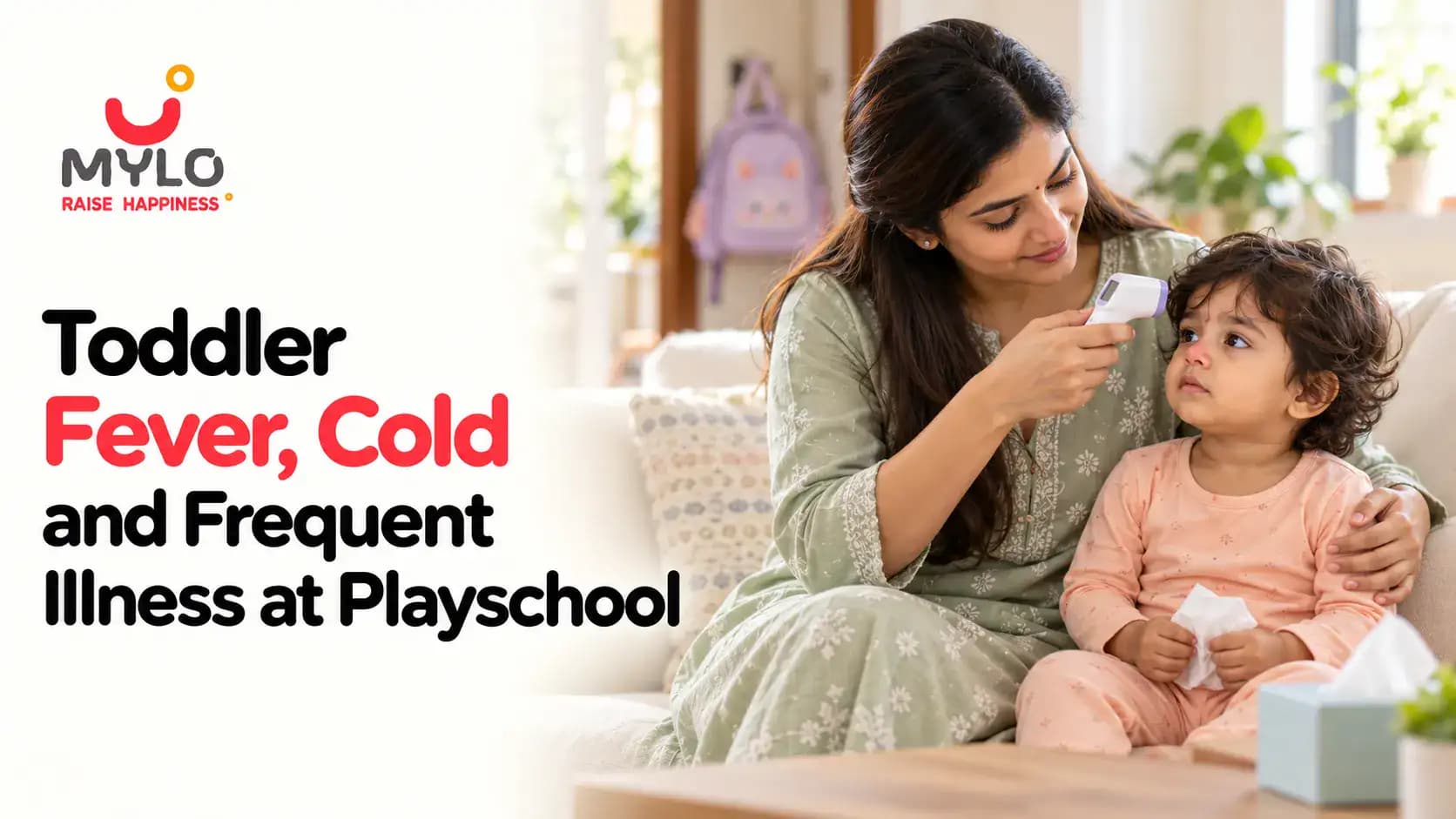
Quick Answer
Toddler fever is a temperature of 100.4°F (38°C) or higher, and a cold is a viral infection of the nose and throat. Both are very common when toddlers start playschool, with 6 to 8 colds a year being normal. Keep your toddler comfortable and drinking fluids, and see a doctor for warning signs.
Fever and Cold at a Glance
Question | Short Answer |
|---|---|
What is a fever? | 100.4°F (38°C) or higher |
Normal temperature | About 97°F to 99°F (36.1°C to 37.2°C) |
How long does a cold last? | Usually 7 to 10 days. A cough can last 2 to 3 weeks |
How many colds are normal? | About 6 to 8 a year, sometimes more in the first year of playschool |
What helps | Fluids, rest, saline nose drops, light clothes. Medicine only if your doctor advises |
Do colds need antibiotics? | No. Colds are caused by viruses |
When to see a doctor | Fever for more than 3 days, very high fever, breathing trouble, very sleepy, rash, a fit, or dehydration |
Monsoon fevers | May need tests for dengue, malaria or typhoid |
Key Facts Every Parent Should Know
Fever is a sign, not an illness: It shows the body is fighting an infection
How your toddler looks matters more than the number: A playful toddler with 102°F is often less worrying than a very sleepy toddler with 100°F
Most fevers and colds are viral: They get better on their own
Antibiotics don't help colds or viral fevers: Use them only when a doctor prescribes them
Frequent illness at playschool is normal: Toddlers meet many new germs, and their immunity builds with each one
It gets better: Most children get sick less often by school age
Why Is My Toddler Always Sick Since Starting Playschool?
Short answer: Toddlers at playschool meet many new germs, and their immune system is still learning. Getting fevers and colds often in the first year of playschool is very common, and it usually gets better over time.
Reason | What It Means |
|---|---|
New germs | Each cold virus is new to a toddler's body |
Close contact | Toddlers share toys, hug, touch their faces and put things in their mouths |
Developing immunity | Each infection helps build protection for the future |
Many cold viruses | There are hundreds of cold viruses, so toddlers catch many |
Season changes | Monsoon and winter bring more infections |
Back-to-back colds | A new cold can start before the last one fully clears, so it feels like your toddler is always sick |
How many illnesses are normal?
Normal | May Need a Check |
|---|---|
6 to 8 colds a year, sometimes more | 2 or more pneumonias in a year |
Colds lasting 7 to 10 days | Infections that need hospital stays or IV antibiotics |
A cough lasting 2 to 3 weeks after a cold | A cough lasting more than 4 weeks |
A few ear infections a year | 4 or more ear infections in a year |
Growing and gaining weight well | Not gaining weight, or losing weight |
Getting better between illnesses | Never fully well between illnesses |
If your toddler has signs in the right-hand column, ask your pediatrician about tests for immunity, allergies, asthma or anaemia.
Toddler Cold: What Parents Need to Know
Short answer: A cold is a viral infection of the nose and throat. It causes a runny or blocked nose, sneezing, cough and sometimes a mild fever. It usually gets better in 7 to 10 days without medicine.
Signs of a cold
Runny nose (clear at first, then may turn thick, yellow or green)
Blocked nose and noisy breathing
Sneezing
Cough, often worse at night
Mild fever for the first 1 to 3 days
Sore throat, crankiness and poor appetite
Green or yellow mucus doesn't always mean a bacterial infection. It's a normal part of a cold as it gets better.
How long does a toddler's cold last?
Symptom | Usual Time |
|---|---|
Fever | 1 to 3 days |
Runny or blocked nose | 7 to 10 days |
Cough | Up to 2 to 3 weeks |
Is it a cold, flu or allergy?
Cold | Flu | Allergy | |
|---|---|---|---|
Fever | Mild or none | High, sudden | None |
Body ache and tiredness | Mild | Strong | None |
Runny nose | Yes | Sometimes | Yes, clear and watery |
Sneezing | Yes | Sometimes | Lots, often with itchy eyes |
How long | 7 to 10 days | 1 to 2 weeks | As long as the trigger is around |
Spreads to others? | Yes | Yes | No |
A yearly flu vaccine is recommended for children from 6 months to 5 years. Ask your doctor.
How to care for a toddler with a cold
Short answer: Clear the nose, give plenty of fluids, and let your toddler rest. Most colds don't need medicine.
What Helps | How |
|---|---|
Saline nose drops | 1 or 2 drops in each nostril before feeds and sleep |
Warm fluids | Soups, dal water, warm water, breast milk |
Honey for cough (from 1 year) | Half a teaspoon before bed |
Rest | Extra naps and quiet play |
Raised head | A slightly raised mattress end for better breathing at night |
Wipe and protect the nose | Soft cloth and a little petroleum jelly to prevent soreness |
Avoid:
Steam inhalation with hot water, which can cause burns
Cough and cold syrups for children under 4, unless your doctor prescribes them
Vicks or strong balms inside the nose or on the face of young children
Antibiotics without a doctor's prescription
For more ideas, read our guide on home remedies for cough and cold in toddlers.
When is a cold more serious?
See a doctor if your toddler with a cold:
Breathes fast, or the skin pulls in between the ribs
Wheezes or has noisy breathing that doesn't clear when the nose is cleaned
Has a fever for more than 3 days, or a fever that comes back after the cold seemed better
Has ear pain or pulls at their ears
Has a cough lasting more than 3 weeks, or a cough with whooping sounds
Isn't drinking well, or has fewer wet diapers
What Temperature Is a Fever in a Toddler?
Short answer: A temperature of 100.4°F (38°C) or higher is a fever. Use a digital thermometer, not your hand on the forehead.
Temperature | What It Means |
|---|---|
97°F to 99°F (36.1°C to 37.2°C) | Normal |
99.1°F to 100.3°F (37.3°C to 37.9°C) | Slightly warm. Watch your toddler |
100.4°F to 102.2°F (38°C to 39°C) | Fever. Keep comfortable and give fluids |
102.3°F to 104°F (39.1°C to 40°C) | High fever. Call your doctor for advice |
Above 104°F (40°C) | Very high fever. See a doctor quickly |
How to check temperature
Digital thermometer under the armpit: Easy and safe for toddlers. Hold the arm down for the full time
Ear or forehead thermometers: Quick, but follow the instructions carefully
Avoid glass mercury thermometers: They can break and are unsafe
Touching the forehead: Not reliable
How to Care for a Toddler With Fever at Home
Short answer: Keep your toddler comfortable, give plenty of fluids, dress them lightly, and let them rest. Give fever medicine only if your doctor advises it.
What Helps | How |
|---|---|
Fluids | Breast milk, water, ORS, dal water, coconut water, soups |
Light clothing | One light cotton layer. Don't bundle up |
Rest | Let your toddler rest or play quietly |
Comfortable room | Not too hot or cold. A fan on low is fine |
Lukewarm sponging | Only if your toddler is uncomfortable. Never use cold water, ice or alcohol |
Light food | Khichdi, curd rice, soups, fruit. Don't force food |
Fever medicine | Paracetamol, in the dose your doctor tells you based on weight |
Don't do this
Don't give aspirin to children
Don't give ibuprofen in the monsoon without asking a doctor: It may be unsafe if the fever is dengue
Don't use cold water, ice or alcohol rubs
Don't bundle your toddler in blankets to "sweat out" the fever
Don't give antibiotics without a doctor's prescription
Don't give two fever medicines together unless your doctor tells you to
What Is a Febrile Seizure?
Short answer: A febrile seizure is a fit caused by fever in children aged about 6 months to 5 years. It looks scary but is usually harmless and over within a few minutes.
What to do during a febrile seizure:
Stay calm and lay your toddler on their side on a safe surface
Don't put anything in their mouth
Don't hold them down
Note how long it lasts
Call 108 or 112 if it lasts more than 5 minutes, if it's the first seizure, or if your toddler has trouble breathing
See a doctor after every febrile seizure, even if your toddler seems fine.
When Should I See a Doctor for Fever?
Short answer: See a doctor if the fever lasts more than 3 days, is very high, or comes with warning signs.
Go to a doctor or hospital immediately if your toddler:
Is very sleepy, floppy or hard to wake
Has a seizure (fit)
Has trouble breathing or breathes very fast
Has a rash that doesn't fade when you press a glass on it
Has a stiff neck, bad headache or bulging soft spot
Shows signs of dehydration (no urine for 6 to 8 hours, dry mouth, no tears)
Can't stop vomiting
Has a fever above 104°F (40°C)
Cries in a way you can't settle
See a doctor within a day if:
Fever lasts more than 3 days
Fever comes back after a few days
Your toddler pulls at their ear, or cries while passing urine
Fever comes with body ache, rash or red eyes in the monsoon
Your toddler has a long-term health condition
Fevers in the Indian monsoon
During the rainy season, fever can be caused by dengue, malaria, typhoid or chikungunya. If your toddler has fever for more than 2 to 3 days, especially with body ache, rash, vomiting or bleeding, see your doctor. They may advise blood tests.
How Can I Help My Toddler Get Sick Less Often?
Short answer: You can't prevent every cold, but good habits cut down on infections and help your toddler recover faster.
Habit | How It Helps |
|---|---|
Handwashing | Before meals, after the toilet, and after coming home from playschool |
All vaccines on time, including flu | Protects against serious infections |
Good sleep | 11 to 14 hours a day helps the immune system |
A varied diet | Fruits, vegetables, dal, curd, eggs and enough iron and zinc |
No smoke at home | Smoke raises the risk of chest and ear infections |
Own water bottle and spoon | Fewer shared germs |
Teach coughing into the elbow | Fewer germs spread |
Change clothes after playschool | Fewer germs brought into the home |
Keep sick toddlers home | Helps them recover and protects other children |
Read more about essential nutrients and immunity for toddlers, and check your toddler's vaccination schedule after 1 year.
When Should My Toddler Stay Home From Playschool?
Short answer: Keep your toddler home if they have a fever, are vomiting or have loose motions, or are too unwell to take part.
Keep Home If | Usually Okay to Go If |
|---|---|
Fever (until 24 hours without fever, without medicine) | A mild runny nose without fever, and playful |
A cold with fever, or too tired to play | A cold that's getting better, with normal energy |
Vomiting or loose motions | Recovered and eating normally |
Chickenpox (until all spots have crusted over) | Spots fully crusted |
Conjunctivitis with discharge | As your doctor or school advises |
Hand, foot and mouth disease with fever or mouth sores | Fever gone and eating well |
Check your playschool's own illness policy too.
Who Can Help?
Who | When to See Them |
|---|---|
Pediatrician | Fever, colds that won't settle, frequent illness, any worry |
Pediatric ENT specialist | Frequent ear infections, snoring, large tonsils or adenoids |
Pediatric pulmonologist or allergist | Frequent wheezing, long-lasting cough, allergies |
Pediatric immunologist | Repeated serious infections |
Free government support in India
Primary health centres and government hospitals: Free check-ups and many medicines
RBSK: Free health checks for children from birth to 18 years
Universal Immunization Programme: Free vaccines
Emergency: Call 108 or 112
What Should Indian Parents Keep in Mind?
Short answer: Many Indian families give antibiotics or cough syrups at the first sign of illness, or bundle feverish children in blankets. Simple home care and a doctor's advice are safer.
Antibiotics from the chemist: Most fevers and colds are viral. Antibiotics don't help and can cause harm
Cough syrups: Not recommended for children under 4
"Thanda lag gaya": Colds are caused by viruses, not by cold air or cold food. Curd, banana and rice don't cause colds
Wrapping in blankets: It can push the fever higher. Use light cotton clothes
Cold water sponging: It can cause shivering. Use lukewarm water only if needed
Monsoon fevers: Don't ignore fever with body ache or rash. Ask about dengue and malaria tests
Mosquito protection: Use nets, screens and child-safe repellents to prevent dengue and malaria
Comparing with other children: Playschool toddlers get sick more often at first. It usually settles
Myths vs Facts
Myth | Fact |
|---|---|
Cold air or cold food causes colds | Colds are caused by viruses |
Green mucus means antibiotics are needed | Green mucus is common in viral colds |
High fever causes brain damage | Fever from common infections doesn't damage the brain |
Every fever needs antibiotics | Most fevers are viral and don't need antibiotics |
Bundle a feverish child to sweat it out | This can raise the temperature further |
Frequent colds mean weak immunity | Frequent colds are normal for toddlers starting playschool |
Cough syrups are safe for toddlers | They're not recommended under 4 years |
Frequently Asked Questions
1. What temperature is a fever in a toddler?
100.4°F (38°C) or higher, measured with a digital thermometer.
2. When should I worry about my toddler's fever?
If it lasts more than 3 days, is above 104°F, or comes with sleepiness, rash, breathing trouble, a fit or dehydration.
3. Why is my toddler always sick since starting playschool?
Toddlers meet many new germs at playschool. Frequent fevers and colds in the first year are common and usually improve with time.
4. How many colds a year are normal for a toddler?
About 6 to 8, and sometimes more in the first year of playschool.
5. How long does a cold last in a toddler?
Usually 7 to 10 days, but a cough can last 2 to 3 weeks.
6. Can I send my toddler to playschool with a cold?
Usually yes, if there's no fever and your toddler is playful. Keep them home if they have a fever, vomiting or loose motions.
7. Does green mucus mean my toddler needs antibiotics?
No. Green or yellow mucus is common in viral colds. See a doctor if there's fever for more than 3 days or ear pain.
8. What medicine can I give my toddler for fever?
Paracetamol, in the dose your doctor tells you based on your toddler's weight. Never give aspirin.
9. Baccha baar baar bimar kyon padta hai?
Playschool jaane par bacche naye keetanu se milte hain, isliye pehle saal mein baar baar sardi khansi aur bukhar hona aam hai. Haath dhulwaiye, sabhi teeke lagwaiye, achhi neend aur khana dijiye. Agar baccha bahut kamzor ho raha hai to doctor ko dikhaiye.
10. Bacche ko sardi aur bukhar ho to kya karein?
Naak mein saline drops daaliye, garam paani, soup aur ORS dijiye, halke kapde pehnaiye aur aaram karne dijiye. Doctor ki salah se hi dawai dijiye. 3 din se zyada bukhar, saans lene mein dikkat ya bahut neend aaye to turant doctor ke paas jaiye.
Related Reads on Mylo
References
American Academy of Pediatrics (AAP). "Fever and Your Child" and "Colds in Children." HealthyChildren.org. https://www.healthychildren.org
National Institute for Health and Care Excellence (NICE). "Fever in under 5s: assessment and initial management." NG143, 2019.
Indian Academy of Pediatrics (IAP). "Standard Treatment Guidelines: Fever in Children."
American Academy of Pediatrics (AAP). "Febrile Seizures: Clinical Practice Guideline." Pediatrics, 2011.
Central Drugs Standard Control Organisation (CDSCO), Government of India. Advisory on cough and cold fixed-dose combinations for children under 4, 2023.
Centers for Disease Control and Prevention (CDC). "Common Colds: Protect Yourself and Others." https://www.cdc.gov
National Center for Vector Borne Diseases Control (NCVBDC), Government of India. "Dengue." https://ncvbdc.mohfw.gov.in
Medical Disclaimer
This article is for information only and does not replace professional medical advice. If your toddler has a high fever, seizure, breathing trouble or seems very unwell, seek medical help immediately.



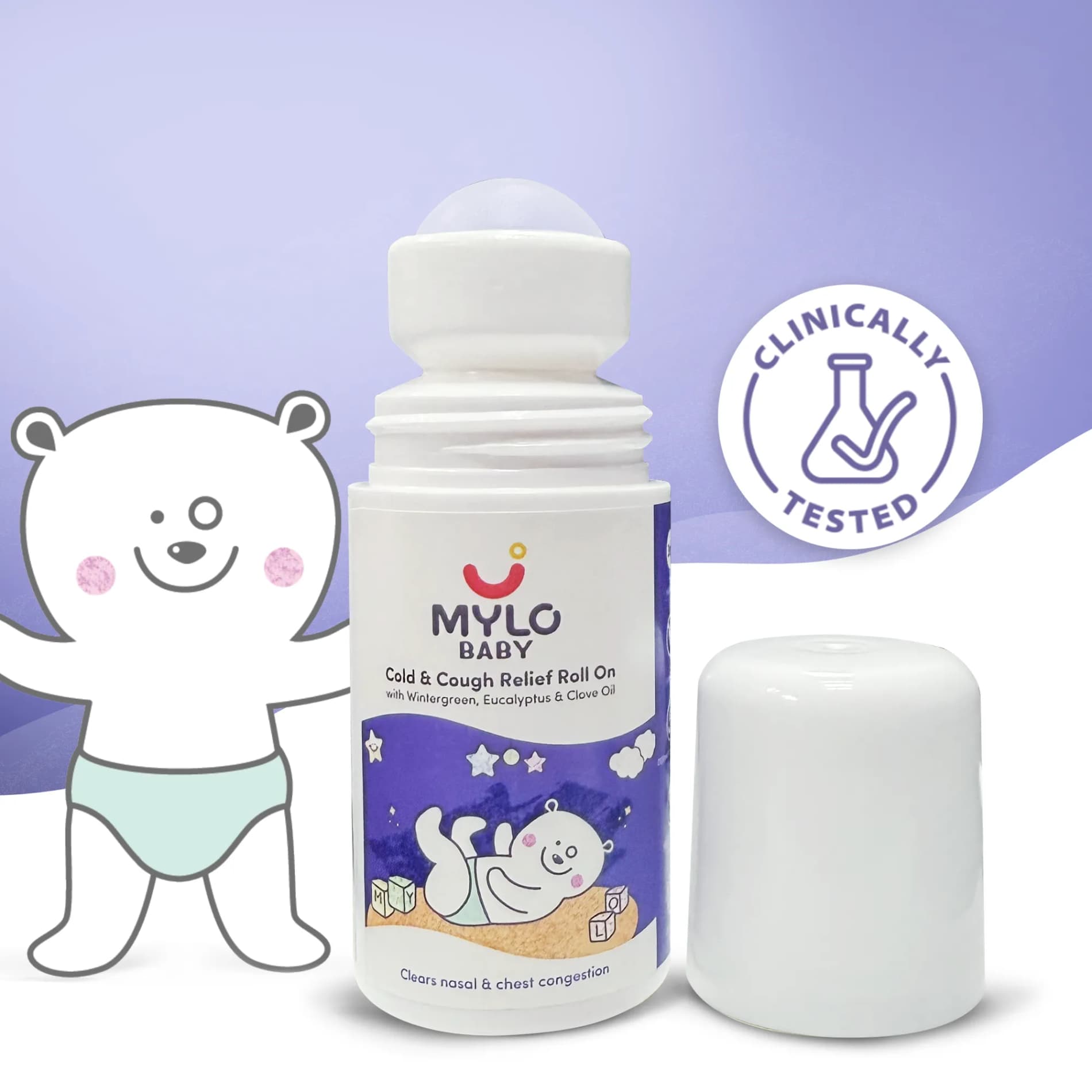
Sniffle Season Picks
Cosy care for under-the-weather days




Article Posted Under
Related Articles
Related Topics
.webp&w=32&q=75)
Medical Disclaimer
This content is for informational purposes only and should not replace professional medical advice. Consult with a physician or other health care professional if you have any concerns or questions about your health. If you rely on the information provided here, you do so solely at your own risk.


AWARDS AND RECOGNITION

Mylo wins Forbes D2C Disruptor award

Mylo wins The Economic Times Promising Brands 2022
AS SEEN IN












- Mylo Care: Effective and science-backed personal care and wellness solutions for a joyful you.
- Mylo Baby: Science-backed, gentle and effective personal care & hygiene range for your little one.
- Mylo Community: Trusted and empathetic community of 10mn+ parents and experts.


Product Categories
Baby Carrier | Baby Soap | Baby Wipes | Stretch Marks Cream | Baby Cream | Baby Shampoo | Baby Massage Oil | Baby Hair Oil | Stretch Marks Oil | Baby Body Wash | Baby Powder | Baby Lotion | Diaper Rash Cream | Newborn Diapers | Teether | Baby Kajal | Baby Diapers Pants | Cloth Diapers | Laundry Detergent | Lactation Granules |