


Orders
.png&w=48&q=75 "login")
Profile


Wallet

Stem Cell Banking: Meaning, Purpose & Benefits
 1 Likes|
 14 min
TL;DR
Stem cell banking means collecting and storing stem cells — most often from a baby's umbilical cord blood at birth — frozen at about −196°C for possible future medical use (Cleveland Clinic). Cord blood stem cells are already used to treat around 80 blood, immune and metabolic disorders such as leukaemia, lymphoma and sickle cell disease (FDA). There are two options: public banking (donated free for anyone who matches) and private/family banking (a paid service storing the cells for your own family). Importantly, major bodies like ACOG and the AAP recommend public donation for most families, because the chance of a child ever using their own privately banked cord blood is very low, and a baby's own cord blood usually cannot treat that child's genetic disease or leukaemia (ACOG) (AAP). Private banking makes most sense when a family member already has a condition treatable with a transplant. Discuss the decision with your doctor.
Quick Answer
Stem cell (cord blood) banking is collecting and freezing stem cells from your baby's umbilical cord at birth for possible future medical use. These cells can treat about 80 blood and immune diseases. You can donate to a public bank (free, available to anyone who matches) or pay for private/family storage. Medical bodies such as ACOG and the AAP recommend public donation for most families, because a child rarely uses their own stored cord blood and it usually cannot treat that same child's genetic disease. Private banking is most useful when a close relative already has a treatable condition. Talk to your doctor before deciding.
Author: Mylo Editorial Team, Mylo Parenting Desk
Medically reviewed by: Mylo Editorial Board, aligned with ACOG, AAP and FOGSI guidance
Last updated: 6 July 2026
Medical Disclaimer: This article is for informational purposes only and is not a substitute for professional medical advice. Decisions about cord blood or stem cell banking should be made after discussion with your obstetrician or paediatrician. Be cautious of marketing claims from private banks that promise treatment for conditions where stem cell therapy is still experimental and unproven.
Key Takeaways
- Stem cell banking = collecting and freezing stem cells (usually from cord blood at birth) at about −196°C for future use (Cleveland Clinic)
- Cord blood stem cells treat around 80 blood, immune and metabolic disorders, including leukaemia and sickle cell disease (FDA)
- Two options: public donation (free, for anyone who matches) and private/family banking (a paid service)
- ACOG and the AAP recommend public banking for most families (ACOG) (AAP)
- A child's own cord blood usually CANNOT treat that child's genetic disease or leukaemia (it carries the same cells) (ACOG)
- The chance a child ever uses their own privately banked cord blood is very low (AAP)
- Private banking makes most sense if a family member already has a condition treatable by transplant (ACOG)
- Be wary of private-bank marketing that promises unproven "future cures" (FDA)
What Are Stem Cells?
Stem cells are special cells that can both make more of themselves and develop ("differentiate") into many specialised cell types — such as blood cells, nerve cells or muscle cells (Cleveland Clinic). This ability makes them valuable in medicine, especially for rebuilding blood and immune systems after treatments like chemotherapy.
| Type of Stem Cell | Where It Comes From | Notes |
|---|---|---|
| Cord blood stem cells | Blood left in the umbilical cord and placenta after birth | The main source used in banking; collected painlessly at delivery |
| Adult stem cells | Body tissues such as bone marrow and fat (adipose) tissue | Used in established transplants (e.g., bone marrow) |
| Embryonic stem cells | Very early-stage embryos | Used mainly in research; ethically and legally restricted |
| Induced pluripotent stem cells (iPSCs) | Adult cells reprogrammed in a lab | A research advance; not a routine treatment |
How Do Stem Cells Work in Treatment?
In an established stem cell (or bone marrow) transplant, healthy blood-forming stem cells are given to a patient whose own blood or immune system has been damaged — for example, by leukaemia or by the chemotherapy used to treat it (Cleveland Clinic). The transplanted cells travel to the bone marrow and begin producing healthy new blood and immune cells, rebuilding the system.
Beyond blood and immune diseases, scientists are researching stem cells for many other conditions — including spinal cord injury, diabetes and heart disease. For example, an early clinical trial at UC San Diego Health explored neural stem cells for spinal cord injury. It is important to understand that most of these uses are still experimental research, not proven, approved treatments (FDA).
What Is Stem Cell (Cord Blood) Banking?
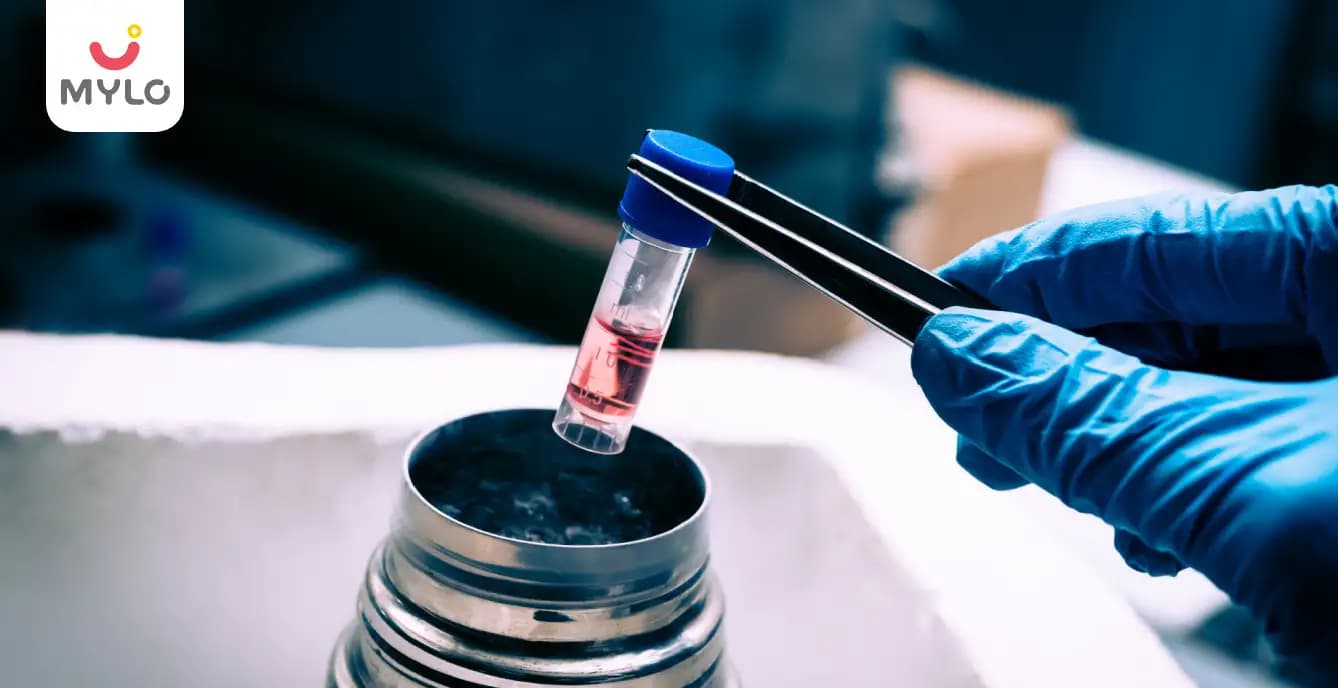
Stem cell banking is collecting stem cells, preserving them and storing them for possible future use (Cleveland Clinic). For newborns, the cells come from umbilical cord blood, collected safely and painlessly right after birth once the cord is clamped. (Stem cells can also come from bone marrow or fat tissue in other settings.)
The collected cells are cryopreserved — frozen and stored at extremely low temperatures (about −196°C) — which lets them be kept for many years and thawed when needed.
Public vs Private Cord Blood Banking
This is the key decision for most parents, and the two options serve very different purposes (ACOG) (AAP):
| Feature | Public Banking | Private (Family) Banking |
|---|---|---|
| Who it's for | Donated for anyone in the world who is a match | Reserved for your own family |
| Cost | Free to donate | Paid: a collection/processing fee plus yearly storage fees |
| How often used | Public units are used far more often (about 30 times more than private) | Rarely used by the child who stored it |
| Recommended for most families | Yes — recommended by ACOG and AAP | Not routinely; best when a relative has a treatable condition |
| Quality standards | Highly regulated and accredited | Standards vary between companies |
Bottom line: For most healthy families, public donation is the option medical bodies recommend. Private banking is reasonable when there is a known family member with a condition (such as certain cancers or genetic/blood disorders) who could benefit from a transplant (ACOG).
What Cord Blood CAN and CANNOT Treat
Understanding this prevents costly misunderstandings (FDA) (ACOG):
| CAN treat (established, ~80 conditions) | CANNOT (or usually cannot) do |
|---|---|
| Blood cancers — leukaemia, lymphoma | Treat the SAME child's own genetic disease — the stored cells carry the same faulty gene |
| Inherited blood disorders — thalassaemia, sickle cell disease | Treat that same child's leukaemia in most cases — the cells may already carry pre-leukaemic changes |
| Immune system disorders | Cure conditions like autism, cerebral palsy or diabetes — these remain unproven/experimental |
| Certain metabolic disorders | Guarantee a future treatment — many advertised uses are still research |
Because a child's own cord blood shares their genetics, genetic and inherited diseases usually need a matched donor (often a sibling or an unrelated public-bank match), not the child's own stored blood (ACOG).
What Are the Benefits of Stem Cell Banking?
When used appropriately, banking offers real advantages (Cleveland Clinic):
- Ready-to-use treatment: Stored, matched cord blood can be available faster than searching for a new donor
- Helps others (public banking): A donated unit could save the life of a child or adult who needs a transplant
- Family benefit (private banking): If a sibling or close relative has a treatable condition, a stored match can help
- Supports research: Donated cells advance treatments and cures for many diseases
- Painless collection: Gathering cord blood poses no risk to mother or baby
What Are the Limitations and Things to Consider?
A balanced decision also weighs the limits (ACOG) (AAP):
- Low personal-use odds: Most privately banked cord blood is never used by that child
- Not for the child's own genetic disease: Autologous cord blood cannot treat inherited conditions the child already carries
- Ongoing cost: Private banking means a processing fee plus annual storage charges for years
- Marketing hype: Some private banks advertise unproven future uses — treat such claims with caution (FDA)
- Quantity limits: A single cord blood unit may not contain enough cells to treat a large adult
Indian Context: What Indian Parents Should Know
- Heavy marketing: Private cord blood banking is aggressively marketed to expecting parents in India; make an informed, not pressured, decision
- Ask your obstetrician: Discuss public vs private banking with your doctor, and ask whether there is any family history that would make private banking worthwhile
- Public banks exist in India: Public cord blood banks (for example, government and non-profit banks) accept donations; ask your hospital about donation options
- Read the contract: For private banking, understand the total cost — collection plus many years of annual storage fees — and the company's accreditation and track record
- Be sceptical of "cure-all" promises: Claims that stored cord blood will treat autism, cerebral palsy or diabetes are not proven; do not base the decision on them
- No pressure at a vulnerable time: You do not have to decide in the delivery room; gather information calmly during pregnancy
Myths vs Facts About Stem Cell Banking
| Myth | Fact | Source |
|---|---|---|
| "Privately banking my baby's cord blood is the best choice for every family" | For most families, public donation is what ACOG and the AAP recommend | ACOG |
| "My child can always use their own cord blood for any disease" | A child's own cord blood usually cannot treat their genetic disease or leukaemia | ACOG |
| "Stored cord blood can cure autism, cerebral palsy or diabetes" | These uses are experimental and unproven; do not bank based on them | FDA |
| "Cord blood is very likely to be used one day" | Privately banked cord blood is used only rarely by the child who stored it | AAP |
| "Public and private banks are basically the same" | They serve different purposes; public units are better regulated and used far more often | AAP |
| "Collecting cord blood is risky for the baby" | Collection is painless and poses no risk to mother or baby | Cleveland Clinic |
FAQs: Stem Cell & Cord Blood Banking
What is cord blood banking in simple words?
It is collecting the blood left in your baby's umbilical cord after birth, which is rich in stem cells, and freezing it for possible future medical use. You can donate it to a public bank or pay to store it privately for your family (Cleveland Clinic).
Cord blood banking karana chahiye ya nahi? (Hinglish)
Ye family ki situation par depend karta hai. Zyadatar healthy families ke liye doctors (ACOG, AAP) public donation recommend karte hain — kyunki bacche ka apna stored cord blood shaayad hi kabhi use hota hai, aur apni genetic bimari ke ilaaj mein kaam nahi aata (ACOG). Private banking tab samajhdari hai jab family mein kisi ko aisi bimari ho jo transplant se theek ho sakti hai. Apne doctor se baat karke decide karein, marketing pressure mein aakar nahi.
What diseases can cord blood stem cells treat?
Around 80 conditions, mainly blood, immune and metabolic disorders — including leukaemia, lymphoma, thalassaemia, sickle cell disease and certain immune deficiencies (FDA).
Can my baby use their own banked cord blood for a genetic disease?
Usually not. Because the stored cord blood carries the same genes, it typically cannot be used to treat that same child's inherited (genetic) disease, and often not their own leukaemia either. These usually need a matched donor (ACOG).
Private ya public cord blood bank — kaunsa behtar hai? (Hinglish)
Dono ka maqsad alag hai. Public banking free hai, kisi bhi zaroortmand ke liye, better regulated, aur zyada use hoti hai — isliye zyadatar families ke liye recommended hai. Private banking paid hai aur sirf aapki family ke liye reserve rehti hai; ye tab useful hai jab family mein koi treatable condition ho (AAP).
Is collecting cord blood safe for my baby?
Yes. Cord blood is collected from the umbilical cord and placenta after the baby is born and the cord is clamped, so it is painless and poses no risk to mother or baby (Cleveland Clinic).
Can stored cord blood cure autism, cerebral palsy or diabetes?
No — these are not proven, approved treatments. Research is ongoing, but such uses remain experimental, and you should not choose private banking based on these promises (FDA).
How much does private cord blood banking cost?
It varies by provider, but private banking involves a one-time collection and processing fee plus an annual storage fee charged for many years. Public donation, by contrast, is free (AAP). Check each company's exact charges and accreditation.
How long can stem cells be stored?
Cryopreserved at about −196°C, cord blood stem cells can be stored for many years and thawed when needed (Cleveland Clinic).
References
- Cleveland Clinic. "Cord Blood Banking." https://my.clevelandclinic.org/health/treatments/23981-cord-blood-banking
- American College of Obstetricians and Gynecologists (ACOG). Committee Opinion No. 771: "Umbilical Cord Blood Banking." https://www.acog.org/clinical/clinical-guidance/committee-opinion/articles/2019/03/umbilical-cord-blood-banking
- American Academy of Pediatrics (AAP) / HealthyChildren.org. "Should We Store Our Newborn's Cord Blood?" https://www.healthychildren.org/English/ages-stages/prenatal/decisions-to-make/Pages/Should-We-Store-Our-Newborns-Cord-Blood.aspx
- U.S. Food and Drug Administration (FDA). "Cord Blood Banking — Information for Consumers." https://www.fda.gov/vaccines-blood-biologics/consumers-biologics/cord-blood-banking-information-consumers
- FOGSI (Federation of Obstetric and Gynaecological Societies of India). https://www.fogsi.org/
Related Articles
Best Hairstyles for Postpartum Hair Loss and Regrowth
 10 min
 HairVivine Pro: What This Pumpkin Seed Hair Active Does and What the Studies Show
 15 min
 Postpartum Hair Loss and Confidence: Why It Hits So Hard and What Helps
 9 min
9 min Copper Peptides for Hair: What Copper Tripeptide-1 (GHK-Cu) Really Does
 11 min
Related Topics
.webp&w=32&q=75)
Medical Disclaimer
This content is for informational purposes only and should not replace professional medical advice. Consult with a physician or other health care professional if you have any concerns or questions about your health. If you rely on the information provided here, you do so solely at your own risk.


AWARDS AND RECOGNITION

Mylo wins Forbes D2C Disruptor award

Mylo wins The Economic Times Promising Brands 2022
AS SEEN IN












- Mylo Care: Effective and science-backed personal care and wellness solutions for a joyful you.
- Mylo Baby: Science-backed, gentle and effective personal care & hygiene range for your little one.
- Mylo Community: Trusted and empathetic community of 10mn+ parents and experts.


Product Categories
Baby Carrier | Baby Soap | Baby Wipes | Stretch Marks Cream | Baby Cream | Baby Shampoo | Baby Massage Oil | Baby Hair Oil | Stretch Marks Oil | Baby Body Wash | Baby Powder | Baby Lotion | Diaper Rash Cream | Newborn Diapers | Teether | Baby Kajal | Baby Diapers Pants | Cloth Diapers | Laundry Detergent | Lactation Granules |