


Orders

Profile


Wallet

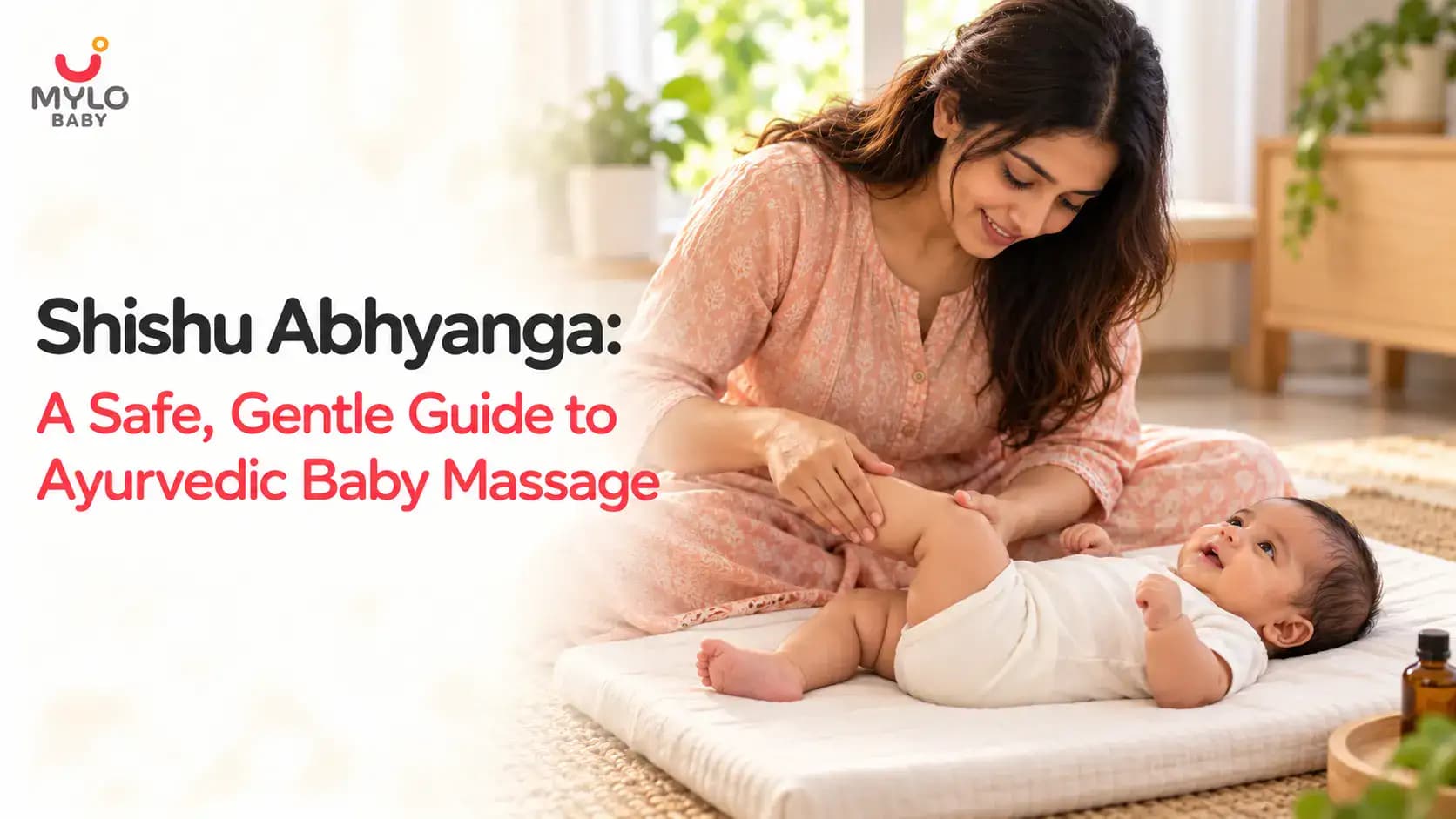
Shishu Abhyanga: A Safe, Gentle Guide to Ayurvedic Baby Massage
 13 min
Quick Answer
Shishu Abhyanga is the traditional Ayurvedic practice of gently massaging a baby with warm oil. For healthy, full-term babies it is generally safe and a lovely way to bond. Use light strokes, a plain, unscented oil, a warm room and a calm baby, and keep oil away from the eyes, nose, ears and cord stump. Skip it when your baby is unwell.
If your mother or mother-in-law has been asking when the daily maalish will start, or you are wondering whether you are doing it “right”, you are in good company. Baby massage is one of the oldest care rituals in Indian homes. This guide explains what Shishu Abhyanga is, what the science actually says, which oils to choose, a simple step-by-step routine, and when to skip it.
What is Shishu Abhyanga?
Shishu Abhyanga is the Ayurvedic name for baby massage: “Shishu” means infant and “Abhyanga” means oil massage. It usually involves warm oil and slow, rhythmic strokes over the whole body, often before the daily bath.
In many Indian families, the massage is done by grandmothers or a trained maalishwali, and it is seen as a way to keep the baby’s skin soft, help them sleep and bring parent and baby closer. You do not need special training to do it well at home. Gentle hands, patience and attention to your baby’s mood matter more than technique.
Is baby massage actually good for babies?
Gentle massage is safe for healthy babies and is a pleasant way to connect, but its health benefits are less certain than many claims suggest. The World Health Organization (WHO) says gentle whole-body massage “may be considered” for term, healthy newborns for its possible benefits to growth and development, while rating the evidence as very low certainty.
Here is what the research shows so far:
Claimed benefit | What the evidence says |
|---|---|
Bonding and calm time together | Widely reported by parents. Touch and eye contact are part of everyday nurturing care. |
Weight and length gain | A 2022 review of 31 trials found possible small gains in length (low certainty) and weight (very low certainty). |
Better sleep | The same review found slightly longer sleep, but the evidence is uncertain. |
Less jaundice | Slightly lower bilirubin in a few small studies, very low certainty. Massage is not a treatment for jaundice. |
Overall health in healthy babies | A Cochrane review found the evidence of poor quality and said benefits faded at later follow-up. |
Harm | No adverse effects were reported in the 2022 review when massage was gentle. |
So, enjoy massage as a calm, loving ritual. If your baby does not like it, or your family skips it some days, your baby is not missing out on anything essential.
When can I start massaging my baby?
Most healthy, full-term babies can have a gentle massage in the first weeks of life. Many families and doctors prefer to wait until the umbilical cord stump has dried and fallen off, and to keep oil away from the stump until then, since WHO advises keeping the cord clean and dry with nothing applied.
Full-term, healthy baby: start gently with short sessions on the legs, arms and back, then build up.
Premature or low birth weight baby: ask your paediatrician first.
Baby in the NICU or with a medical condition: follow your neonatal team’s advice.
For more on timing, see our guide on when to start massaging your newborn baby.
Which oil is best for Shishu Abhyanga?
Choose a plain, unscented oil and do a small patch test first. Traditional Ayurvedic choices include til (sesame) oil and coconut oil, and many families use ghee or almond oil. Avoid oils with added perfume, camphor or essential oils.
Oil | What to know |
|---|---|
Coconut oil | Common in South India, light and easily absorbed. A good everyday choice. |
Til (sesame) oil | The classic Ayurvedic massage oil. Choose a pure, cold-pressed, unflavoured variety. |
Sunflower seed oil | Studied in Indian newborns. It helped keep the skin barrier intact in adult tests, and a large Uttar Pradesh trial found fewer deaths in a small group of very low birth weight babies massaged with it. |
Mustard oil | Very common in North India, but lab and animal studies suggest it may harm the skin barrier. Human data are limited, so a milder oil may be a gentler choice for newborns. |
Olive oil | A small study in adults found it weakened the skin barrier, and the authors advised against it for infant massage. |
Oils with camphor (kapur), eucalyptus or strong herbs | Avoid. Camphor and eucalyptus can be toxic to young children, even in small amounts. |
If your baby has eczema, very dry skin or a family history of allergies, ask your paediatrician which oil to use. Our guide to choosing the right baby massage oil and our guide to ghee massage for babies go into more detail.
How do I give my baby a Shishu Abhyanga massage?
Keep it short, warm and gentle: 10 to 15 minutes when your baby is awake and calm, not hungry and not just after a feed. Watch your baby, not the clock, and stop if they seem unhappy.
Before you begin
Pick a warm, draft-free room. Switch the fan off or to low.
Trim your nails and remove rings and bangles.
Lay your baby on a soft towel on the bed or floor, and keep one hand on them at all times.
Warm a little oil by rubbing it between your palms. Never heat oil on the stove or in the microwave and pour it straight on your baby.
Step by step
Legs and feet: hold one leg and stroke from thigh to ankle with light, flowing movements. Gently rub the soles with your thumbs. Repeat on the other leg.
Tummy: with a flat palm, stroke in slow clockwise circles around the belly button, staying away from the cord stump if it has not fallen off. Some parents find this soothes a gassy baby.
Chest: place both hands at the centre of the chest and stroke outwards to the sides, like opening a book.
Arms and hands: stroke from shoulder to wrist, then gently open the fingers and rub the palm.
Back: turn your baby onto their tummy across your lap or on the towel, and stroke from neck to bottom with flat hands. Never press on the spine.
Face and head: use your fingertips very lightly over the forehead and cheeks. Avoid the soft spot on the head (fontanelle) and keep oil away from the eyes.
After the massage
Wipe off extra oil or give a warm bath so your baby does not slip when lifted.
Dress your baby warmly and offer a feed if they are hungry.
Wondering whether to massage before or after a bath? Our guide on massage before or after bath covers both.
What traditional practices should I skip?
Some well-meant habits can irritate or hurt a baby. Respect the intention behind them, and keep the massage gentle.
Oil in the ears, nose, eyes or navel: avoid. Nothing needs to go inside these openings.
Pressing or “shaping” the head, nose or limbs: avoid. Keep every stroke light, and never press hard anywhere on the body.
Stretching or pulling limbs, or holding the baby upside down: avoid.
Very hard rubbing or abrasive ubtan pastes on newborn skin: keep strokes light. Newborn skin is thin and easily irritated.
Kapur (camphor), eucalyptus or balm in the oil: avoid at any age in infancy.
When should I not massage my baby?
Skip the massage for the day if your baby is unwell or uncomfortable, and restart once they are better.
Fever or your baby seems ill or very sleepy
Rash, broken skin, skin infection or a weeping patch
Just after a feed, or when they are very hungry or overtired
Redness or swelling at a recent vaccine injection site (avoid that area until it settles)
Your baby cries, stiffens, turns away or arches their back during the massage
When should I call the doctor?
Call your paediatrician if, after a massage or at any time, you notice:
A rash, redness, bumps or itching where the oil was applied
Redness, pus or a bad smell around the cord stump
Pain or crying when a particular arm, leg or joint is moved, or swelling of a limb
Fever: 38°C or higher in a baby under 3 months needs urgent medical advice
Get emergency help straight away if your baby has difficulty breathing, blue or grey lips or tongue, is floppy or hard to wake, has a seizure, or you think they may have swallowed oil containing camphor or eucalyptus.
Frequently asked questions
Which massage is good for babies?
A gentle, slow, whole-body massage with light strokes and a plain, unscented oil is best for babies. Traditional Shishu Abhyanga and simple baby massage routines taught by nurses are very similar. The right massage is the one your baby enjoys: if they are calm and relaxed, you are doing it well.
Who should not do Abhyanga massage?
Babies should not have Abhyanga when they have a fever, are unwell, or have a rash, broken skin or a skin infection. Premature, low birth weight or medically fragile babies should be massaged only after a paediatrician says it is safe. Adults who are unwell, pregnant or have a medical condition should check with their doctor or a qualified Ayurvedic practitioner before Abhyanga.
At what age can you start a baby massage?
Most healthy, full-term babies can have a gentle massage within the first few weeks of life. Many families wait until the cord stump has fallen off, usually within about three weeks, before massaging the tummy. For premature babies, ask your paediatrician when to begin.
How to massage a baby to relieve a cough?
Massage does not treat a cough, but gentle chest and back strokes with plain oil can comfort a baby who is unwell, as long as they are not feverish or struggling to breathe. Do not add camphor, eucalyptus or vapour rubs to the oil, as these can be toxic to young children. Keep your baby upright when awake, offer smaller feeds more often, and see a doctor if the cough comes with fast breathing, fever or poor feeding, as NHS guidance advises.
How often should I massage my baby?
Once a day is common in Indian homes, and many parents massage before the daily bath. There is no fixed rule. A few times a week is fine if that fits your routine better.
Should I massage before or after a feed?
Give your baby some time after a feed so they are less likely to spit up, and avoid massaging when they are very hungry. A calm, alert baby enjoys massage most.
Can massage help my baby gain weight?
Some small studies show slightly better weight gain with massage, but the evidence is very low certainty. Good feeding is what drives weight gain. If you are worried about your baby’s weight, talk to your paediatrician.
Is it safe to use mustard oil for baby massage?
Mustard oil is widely used, but lab and animal studies suggest it may weaken the skin barrier. Human evidence is limited. A milder oil such as coconut, til or sunflower oil is a gentler choice, and you should never add garlic, ajwain or camphor to oil you rub on a newborn without checking with your doctor.
References
World Health Organization. WHO recommendations on maternal and newborn care for a positive postnatal experience, 2022. Recommendation on gentle whole-body massage, via BIGG database.
World Health Organization. Caring for newborns.
Priyadarshi M, Kumar V, Balachander B, Gupta S, Sankar MJ. Effect of whole-body massage on growth and neurodevelopment in term healthy newborns: a systematic review. Journal of Global Health, 2022.
Bennett C, Underdown A, Barlow J. Massage for promoting mental and physical health in typically developing infants under the age of six months. Cochrane Database of Systematic Reviews.
Kumar A, et al. Cluster randomised trial of sunflower seed oil emollient therapy for newborns in rural Uttar Pradesh, India. PLoS Medicine, 2021; 18(9): e1003680.
Danby SG, et al. Effect of olive and sunflower seed oil on the adult skin barrier: implications for neonatal skin care. Pediatric Dermatology, 2013.
Flaman Z, et al. Unintentional exposure of young children to camphor and eucalyptus oils. Paediatrics and Child Health, 2001.
NHS. Bronchiolitis.
Disclaimer: This article is for general information and does not replace advice from your paediatrician. If you are worried about your baby’s health, contact your doctor.

Article Posted Under
Related Articles
Related Topics

Medical Disclaimer
This content is for informational purposes only and should not replace professional medical advice. Consult with a physician or other health care professional if you have any concerns or questions about your health. If you rely on the information provided here, you do so solely at your own risk.


AWARDS AND RECOGNITION

Mylo wins Forbes D2C Disruptor award
Mylo wins The Economic Times Promising Brands 2022
AS SEEN IN












- Mylo Care: Effective and science-backed personal care and wellness solutions for a joyful you.
- Mylo Baby: Science-backed, gentle and effective personal care & hygiene range for your little one.
- Mylo Community: Trusted and empathetic community of 10mn+ parents and experts.


Product Categories
Baby Carrier | Baby Soap | Baby Wipes | Stretch Marks Cream | Baby Cream | Baby Shampoo | Baby Massage Oil | Baby Hair Oil | Stretch Marks Oil | Baby Body Wash | Baby Powder | Baby Lotion | Diaper Rash Cream | Newborn Diapers | Teether | Baby Kajal | Baby Diapers Pants | Cloth Diapers | Laundry Detergent | Lactation Granules |