


Orders

Profile


Wallet

Protein Deficiency in Pregnancy: Hidden Signs You Shouldn’t Ignore
 11 min


M.Sc. (Food & Nutrition) · 3 years experience
Key Takeaways
Quick overview in 30 seconds
- Protein deficiency in pregnancy rarely shows clear signs, but constant tiredness, slow weight gain, frequent hunger after meals, muscle weakness, or hair thinning can be subtle clues worth checking.
- Indian pregnancies often fall short because meals revolve around rice or roti with small dal portions; studies show over 80% of pregnant women don't meet protein needs.
- Fix low protein by adding dal, milk, curd, paneer or eggs to every meal, combining cereals with pulses, and using a pregnancy-safe protein top-up on low-appetite days.
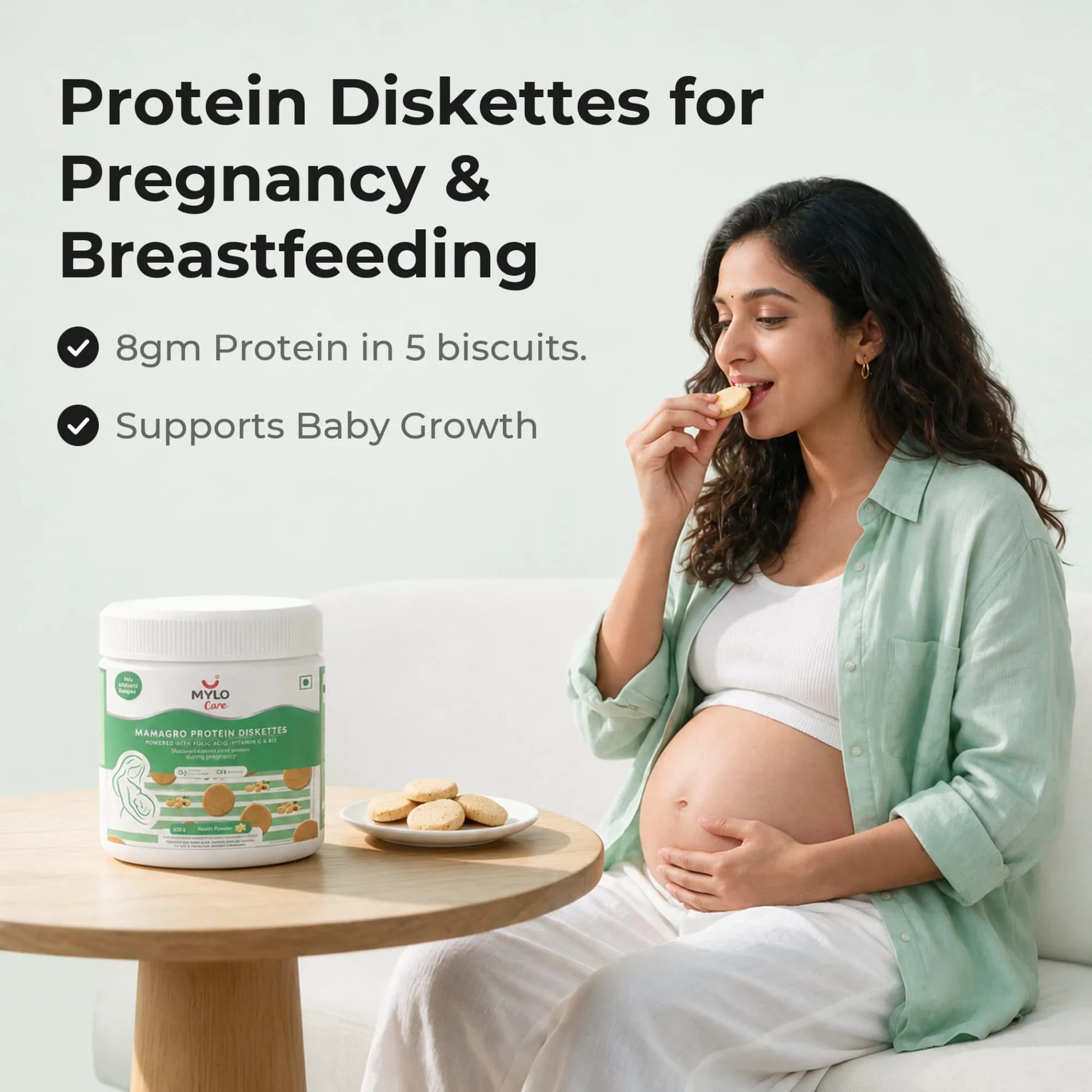
- Looking for a safe pregnancy protein top-up? Explore our MamaGro™ Protein Diskettes - High Protein & No Added Sugar - 250gm (50 Vanilla Diskettes).
 4.6
 4.5
 4.7
Quick Answer
Low protein in pregnancy often has no clear sign. Tiredness, slow weight gain, frequent hunger or muscle weakness can be clues, but they have other causes too, so see your doctor. Most women can close the gap with dal, milk, curd, paneer or eggs, and a pregnancy top-up such as MamaGro Pregnancy Protein Powder helps on low-appetite days.
If you are pregnant and constantly tired, hungry soon after meals or not gaining weight as expected, you may be wondering whether you are getting enough protein. It is a fair question, as many Indian diets fall short. But these signs can also point to other problems, so it helps to understand what they can and cannot tell you. Here is how much protein you need, the clues to watch for, why gaps happen and how to fix them.
How much protein do you need in pregnancy?
ICMR-NIN 2020 recommends about 0.83 g of protein per kg of body weight for adult Indian women, plus an extra 9.5 g a day in the second trimester and 22 g a day in the third. For a 55 kg woman, that works out to:
Trimester | Approximate protein a day (55 kg woman) |
|---|---|
First | About 46 g |
Second | About 55 g |
Third | About 68 g |
Your exact target depends on your weight and diet. Our guide on how much protein you need in pregnancy has a table by body weight.
Is protein deficiency common in Indian pregnancies?
It can be. A study of 221 pregnant women in Delhi found that 83.7% were not meeting their protein needs. A national analysis found that more than half of Indian pregnant women had inadequate protein intake, and the share rose further once protein quality was taken into account.
The main reasons are meals built mostly around rice or roti, small portions of dal, and appetite changes in pregnancy.
What are the signs of protein deficiency in pregnancy?
Mild protein deficiency rarely causes a clear, specific symptom. The clues below can be linked to low protein, but each one has other common causes in pregnancy, which is why they need a doctor's check rather than self-diagnosis.
Possible clue | Why protein may be involved | Other common causes to rule out |
|---|---|---|
Constant tiredness | Low overall nutrition, including protein | Anaemia, thyroid problems, poor sleep |
Slow weight gain | Not eating enough protein and calories for your baby's growth | Nausea, low appetite, other medical causes |
Feeling hungry soon after meals | Meals heavy in carbohydrates and light in protein are less filling | Normal pregnancy hunger, growth spurts |
Muscle weakness | Your muscles need protein to stay strong | Anaemia, low vitamin D, tiredness |
Hair thinning or weak nails | Hair and nails are made of protein | Pregnancy hormones, thyroid problems, low iron |
Low protein (albumin) on a blood test | Can reflect poor nutrition | Other medical conditions, which your doctor will check |
Our guide on whether protein can help with pregnancy fatigue explains the link with tiredness in more detail.
What about swelling?
Mild swelling of the feet and ankles is common in pregnancy. Severe protein malnutrition can cause swelling, but in pregnancy, sudden swelling of the face, hands or feet is a warning sign of pre-eclampsia, a high blood pressure condition that needs urgent care. Do not assume swelling is a protein problem. See your doctor straight away.
Why does protein deficiency happen in pregnancy?
Carb-heavy meals: rice, roti, poha and upma with only a little dal or curd
Nausea and food aversions, especially in the first trimester
Vegetarian diets with little variety, for example few pulses, milk products or eggs
Sugary snacks such as regular biscuits instead of protein-rich ones
Busy routines that lead to skipped or rushed meals
Our breakdown of why dal-roti alone can fall short shows the numbers.
Can low protein affect your baby?
Your baby relies on you for the building blocks of every tissue, so ongoing poor nutrition matters. The World Health Organization recommends balanced energy and protein supplements for undernourished pregnant women, because they can improve pregnancy outcomes for mother and baby. The key word is balanced: WHO does not recommend high-protein supplements in pregnancy, as they did not help and were linked to babies being born small for their age.
So the aim is to meet your recommended amount, not to eat as much protein as possible.
How to fix low protein in pregnancy
1. Add protein to every meal
Food | Approximate protein |
|---|---|
1 katori cooked dal (150 g) | 7 to 9 g |
1 glass milk (200 ml) | 6 to 7 g |
1 katori curd (150 g) | 5 to 6 g |
50 g paneer | 9 g |
1 egg | 6 g |
30 g roasted chana | 5 to 6 g |
1 katori cooked rajma or chole (150 g) | 7 to 9 g |
For example: add a bowl of dal or curd at lunch and dinner, choose paneer or egg bhurji at breakfast, and swap a sugary snack for roasted chana or peanuts.
2. Combine cereals and pulses
ICMR-NIN suggests balancing cereals, pulses and milk in roughly a 3:1:2.5 ratio, because combining them improves protein quality. Dal-rice, rajma-chawal and khichdi with curd are good examples.
3. Use a pregnancy top-up when food is not enough
On days with nausea, a poor appetite or no time to cook, a protein product made for pregnancy can fill the gap:
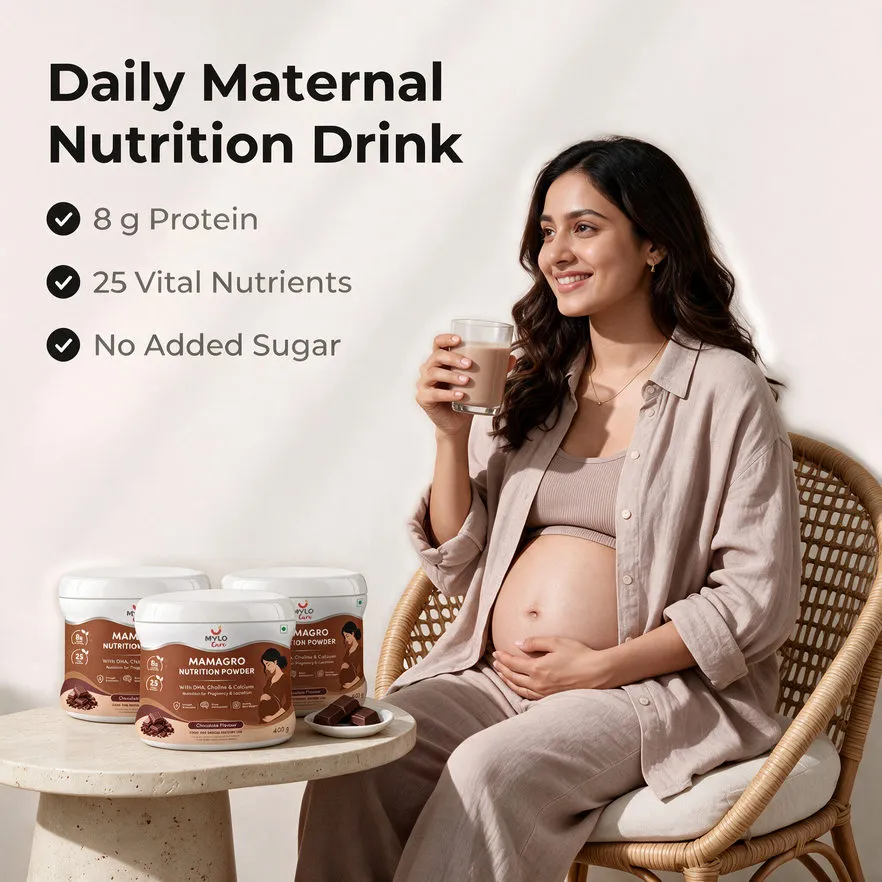
A drink: one scoop of MamaGro Pregnancy Protein Powder in a glass of milk gives about 14 to 15 g of protein, along with nutrients such as DHA, iron and calcium. Our guide on protein powder in pregnancy explains how to choose a safe powder.
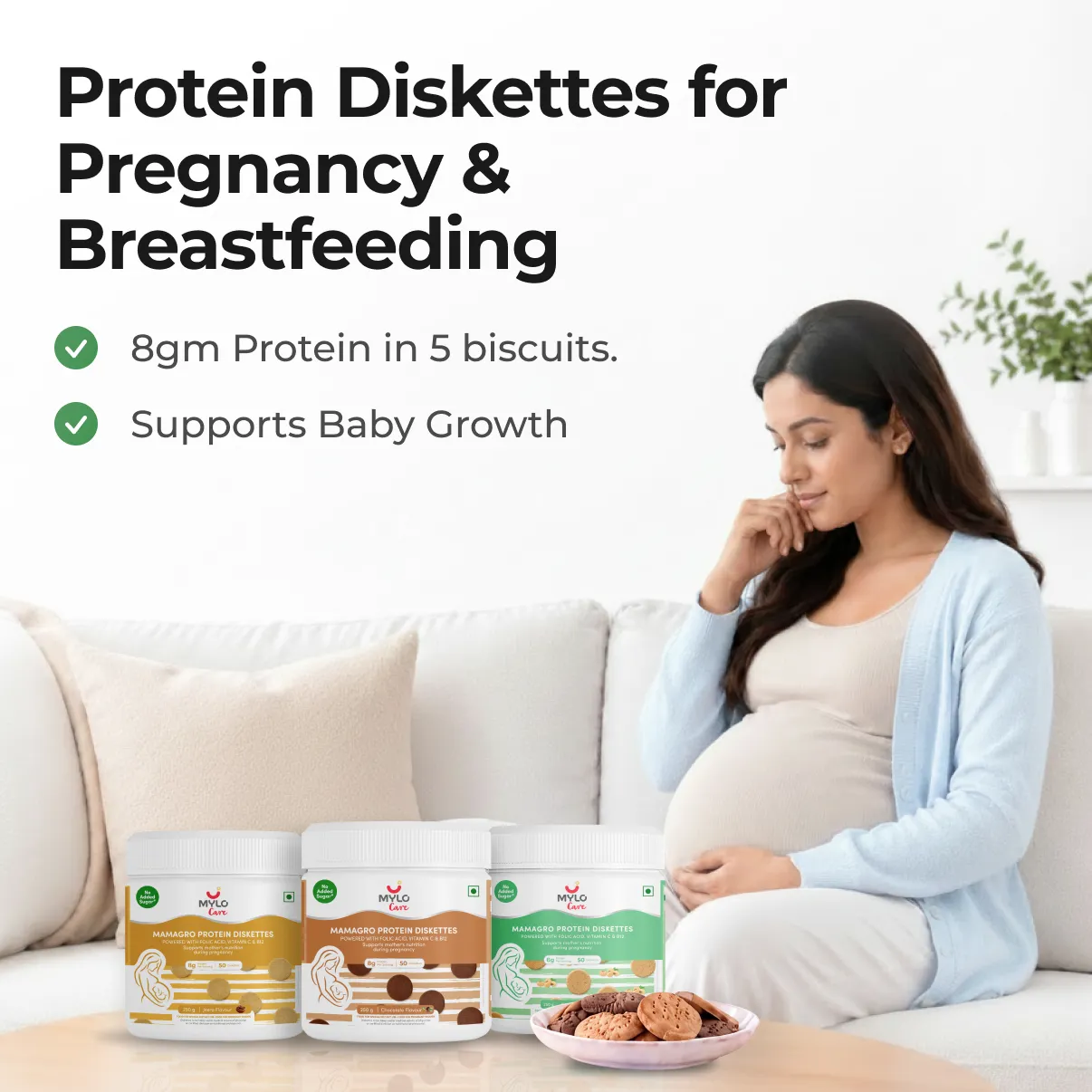
A snack: 5 MamaGro™ Protein Diskettes - 250gm - Vanilla give 8 g of protein, which is easy to carry and eat on nausea days.
Avoid gym and bodybuilding powders, and check with your doctor before starting any supplement, especially if you have gestational diabetes, thyroid disease or a milk allergy. Our comparison of protein biscuits vs protein powder can help you choose.
When should you see a doctor?
Talk to your doctor if you:
feel extremely tired, weak or breathless, as this may be anaemia
are not gaining weight as expected, or are losing weight
cannot eat enough because of nausea or vomiting
follow a restricted diet and are worried about protein
have been told your baby is small for their age
Get urgent help if you have sudden swelling of the face, hands or feet, a severe headache, blurred vision or pain just below the ribs, which can be signs of pre-eclampsia.
Frequently Asked Questions
1. What are the early signs of protein deficiency in pregnancy? There is often no clear early sign. Tiredness, frequent hunger, slow weight gain and muscle weakness can be clues, but they also have other causes, so ask your doctor to check.
2. Can a blood test show protein deficiency? Your doctor may look at blood protein levels such as albumin, alongside your weight gain and diet. A blood test on its own does not always show how much protein you are eating.
3. Does swelling in pregnancy mean low protein? Not usually. Mild swelling of the feet is common in pregnancy. Sudden swelling of the face, hands or feet can be a sign of pre-eclampsia and needs urgent medical attention.
4. Can I get enough protein on a vegetarian diet in pregnancy? Yes, with planning. Include dal, milk, curd, paneer, soya and nuts every day. Our guide on hitting your protein target in a vegetarian pregnancy shows how.
5. How quickly can I fix low protein intake? You can start improving your intake from your next meal. Adding a protein food to every meal and one protein-rich snack a day usually closes most of the gap.
6. Can too much protein be harmful in pregnancy? High-protein supplements are not recommended by WHO in pregnancy. Aim for your recommended amount from food, with a modest pregnancy top-up only if needed.
Related Articles
"Ghar Ka Khana Is Enough": Why Dal-Roti Falls Short on Pregnancy Protein
Protein Powder in Pregnancy: Is It Safe, Benefits and When to Take It
Related Products
MamaGro Pregnancy Protein Powder - Chocolate Flavor (Pack of 2): one 28 g scoop in milk gives 8 g of milk protein plus DHA, iron and calcium
MamaGro™ Protein Diskettes - 250gm - Vanilla: 8 g of protein in 5 diskettes, no added sugar
References
ICMR-National Institute of Nutrition. Nutrient Requirements for Indians, Recommended Dietary Allowances and Estimated Average Requirements, 2020 (brief note). https://www.nin.res.in/rdabook/brief_note.pdf
Basu et al., 2022. Study of protein intake in 221 pregnant women in Delhi, PubMed Central. https://pmc.ncbi.nlm.nih.gov/articles/PMC9891045/
Bandyopadhyay et al., 2020. National analysis of protein adequacy in Indian pregnant women, PubMed Central. https://pmc.ncbi.nlm.nih.gov/articles/PMC7752127/
World Health Organization, eLENA. Balanced energy and protein supplementation during pregnancy. https://www.who.int/tools/elena/interventions/energy-protein-pregnancy
World Health Organization, eLENA. High-protein supplementation during pregnancy. https://www.who.int/tools/elena/interventions/high-protein-pregnancy
NHS. Pre-eclampsia. https://www.nhs.uk/conditions/pre-eclampsia/
NHS. Iron deficiency anaemia. https://www.nhs.uk/conditions/iron-deficiency-anaemia/
NHS. Underactive thyroid (hypothyroidism): symptoms. https://www.nhs.uk/conditions/underactive-thyroid-hypothyroidism/symptoms/
Medical disclaimer: This article is for general information only and is not a substitute for advice from your doctor. Please see your doctor if you are worried about your diet, weight gain or any symptoms in pregnancy.

Trusted by mamas nourishing two with every meal
On tired, low-appetite days, a pregnancy-safe protein top-up helps you close the gap gently and confidently.
MamaGro™ Protein Diskettes - 250gm - Vanilla
Supports Healthy Placenta | Supports Fetal Development



Compression Stocking Socks - S
Compression Stockings for Varicose Veins | Reduces Swelling | Boosts Blood Circulation

Pregnancy Massage Oil + Coconut Oil - 200 ml each


Article Posted Under
Related Articles
Second Baby Planning: How Long Should You Wait Between Pregnancies?
 11 min
Baby Kidney Swelling on Ultrasound (Antenatal Hydronephrosis): Will It Go Away?
 8 min
Foods for Height Growth in Toddlers and Kids: What Really Helps (Indian Guide)
 11 min
10 Ways to Protect Your Child from Air Pollution: A Practical Guide for Indian Parents
 14 min
Medical Disclaimer
This content is for informational purposes only and should not replace professional medical advice. Consult with a physician or other health care professional if you have any concerns or questions about your health. If you rely on the information provided here, you do so solely at your own risk.


AWARDS AND RECOGNITION

Mylo wins Forbes D2C Disruptor award

Mylo wins The Economic Times Promising Brands 2022
AS SEEN IN













- Mylo Care: Effective and science-backed personal care and wellness solutions for a joyful you.
- Mylo Baby: Science-backed, gentle and effective personal care & hygiene range for your little one.
- Mylo Community: Trusted and empathetic community of 10mn+ parents and experts.


Product Categories
Baby Carrier | Baby Soap | Stretch Marks Cream | Baby Cream | Baby Shampoo | Baby Massage Oil | Baby Hair Oil | Stretch Marks Oil | Baby Body Wash | Baby Powder | Baby Lotion | Diaper Rash Cream | Teether | Baby Kajal |