


Orders
.png&w=48&q=75 "login")
Profile


Wallet

Protein Biscuits vs Protein Powder in Pregnancy: What's Safer?


BDS (Gold Medalist), Certified Lactation Consultant – BPNI Delhi, Maternal & Infant Nutrition Expert · 15 years experience
 13 min
TL;DR
In pregnancy, the safest protein comes first from whole foods like dal, dairy, eggs and nuts, and most mothers can meet much of their needs this way (ICMR). When you need extra help, both protein biscuits and protein powders can work, but the real safety question for both is the label and the dose. Many general protein powders carry high added sugar (some scoops have a lot), artificial sweeteners, or additives that have not been studied in pregnancy, and quality varies between brands (Healthline). A protein snack designed for pregnancy, with a modest, fixed protein amount and a clean label (no added sugar, no preservatives, no refined maida), makes it easier to add protein without those extras. Whichever you choose, pick a pregnancy-appropriate product, do not overdo protein, and check with your doctor first. A supplement complements a balanced diet and does not replace prescribed supplements.
Quick Answer
Whole foods are the safest way to get protein in pregnancy. If you need a supplement, both protein biscuits and protein powders can be fine, but the safety depends on what is in them. Generic gym or weight-loss protein powders often contain high added sugar, artificial sweeteners or un-researched additives, and are not designed for pregnancy. A pregnancy-designed protein snack with a modest, fixed dose and a clean label (no added sugar, preservatives or refined maida) is an easy way to add protein with fewer unknowns. Always choose a pregnancy-appropriate product, avoid excessive protein, and ask your doctor before adding any supplement.
Author: Mylo Editorial Team, Mylo Parenting Desk Medically reviewed by: Mylo Editorial Board, aligned with ICMR and FOGSI guidance Last updated: 8 July 2026
Medical Disclaimer: This article is for informational purposes only and is not a substitute for professional medical advice. Whole foods should be your main source of protein in pregnancy. Talk to your doctor before adding any protein supplement, biscuit or powder, especially if you have a medical condition, diabetes, kidney issues, an allergy or a high-risk pregnancy. A protein snack does not replace meals or any supplement (such as iron or folic acid) your doctor has prescribed.
Key Takeaways
- Whole foods (dal, dairy, eggs, nuts) are the safest, first source of protein in pregnancy (ICMR)
- For both biscuits and powders, safety depends on the label and the dose, not the format alone
- Many general protein powders have high added sugar, artificial sweeteners or un-researched additives (Healthline)
- Gym, bodybuilding and weight-loss powders are usually NOT designed for pregnancy
- A pregnancy-designed protein snack offers a modest, fixed dose and a clean label, which is easier to moderate
- Do NOT overdo protein; more is not better, and excessive intake is not advised
- Always choose a pregnancy-appropriate product and check with your doctor first (FOGSI)
- Any protein supplement complements a balanced diet and does not replace prescribed supplements
First, the Real Answer: Food Comes First
During pregnancy and breastfeeding, your need for protein and several nutrients rises to support your baby's growth and your own strength (ICMR). The safest and best way to meet this is through everyday foods: dals and legumes, milk, curd, paneer, eggs, nuts and seeds. Most mothers can cover a large part of their protein needs from food.
Supplements, whether a biscuit or a powder, are helpers for when you fall short, for example on busy days or when appetite is low. They are not meant to replace balanced meals (Healthline).
What Actually Makes a Protein Supplement "Safe" in Pregnancy?
Whether you are looking at a biscuit or a powder, the same checks decide how safe it is (Healthline):
| What to Check | Why It Matters |
|---|---|
| Added sugar | Many powders are high in added sugar, which can add unwanted calories and affect blood sugar; look for no added sugar |
| Artificial sweeteners | Best limited in pregnancy; they add no benefit for you or your baby |
| Additives and unstudied ingredients | Avoid herbs, stimulants or ingredients not researched in pregnancy |
| Protein amount (dose) | More is not better; a modest, fixed amount is easier to moderate than a large scoop |
| Designed for pregnancy | Pregnancy-appropriate products are formulated with mothers in mind, unlike gym or weight-loss powders |
| Doctor approval | Always confirm with your doctor, especially with any medical condition |
Protein Biscuits vs Protein Powder: A Fair Comparison
Both can help, but they differ in how easy they are to control and what tends to be inside them:
| Feature | Protein Biscuits (pregnancy-designed) | Protein Powder (general) |
|---|---|---|
| Protein dose | Modest and fixed per serving, easy to moderate | Often a large scoop; easy to over-consume |
| Added sugar | Can be a clean, no-added-sugar option | Some brands are high in added sugar |
| Sweeteners and additives | Simple, food-style ingredients | May contain artificial sweeteners, flavours or un-researched additives |
| Designed for pregnancy | Available as pregnancy-specific snacks | Many are made for gym or weight-loss goals, not pregnancy |
| Convenience | Grab-and-eat, no mixing, portion-controlled | Needs mixing; portion depends on how much you scoop |
| Best used as | An easy snack to top up protein | Extra protein when advised, if pregnancy-appropriate |
The takeaway: neither format is automatically unsafe. But a pregnancy-designed protein snack with a modest fixed dose and a clean label removes several of the variables (large doses, added sugar, sweeteners, unknown additives) that you have to watch for with general protein powders.
So, What's Safer in Pregnancy?
- Safest of all: getting your protein from balanced, whole foods.
- When you need a supplement: choose a pregnancy-appropriate product with a clean label and a modest dose, and get your doctor's go-ahead.
- Between the two formats: a pregnancy-designed protein snack (like a protein biscuit) is often the easier, lower-fuss choice, because the dose is fixed and the label is simple. A protein powder can also be fine if it is specifically pregnancy-safe, low in added sugar, and free of un-researched additives, but generic gym and weight-loss powders are best avoided in pregnancy.
Either way, do not overdo protein, and treat any supplement as a top-up to your meals, not a replacement.
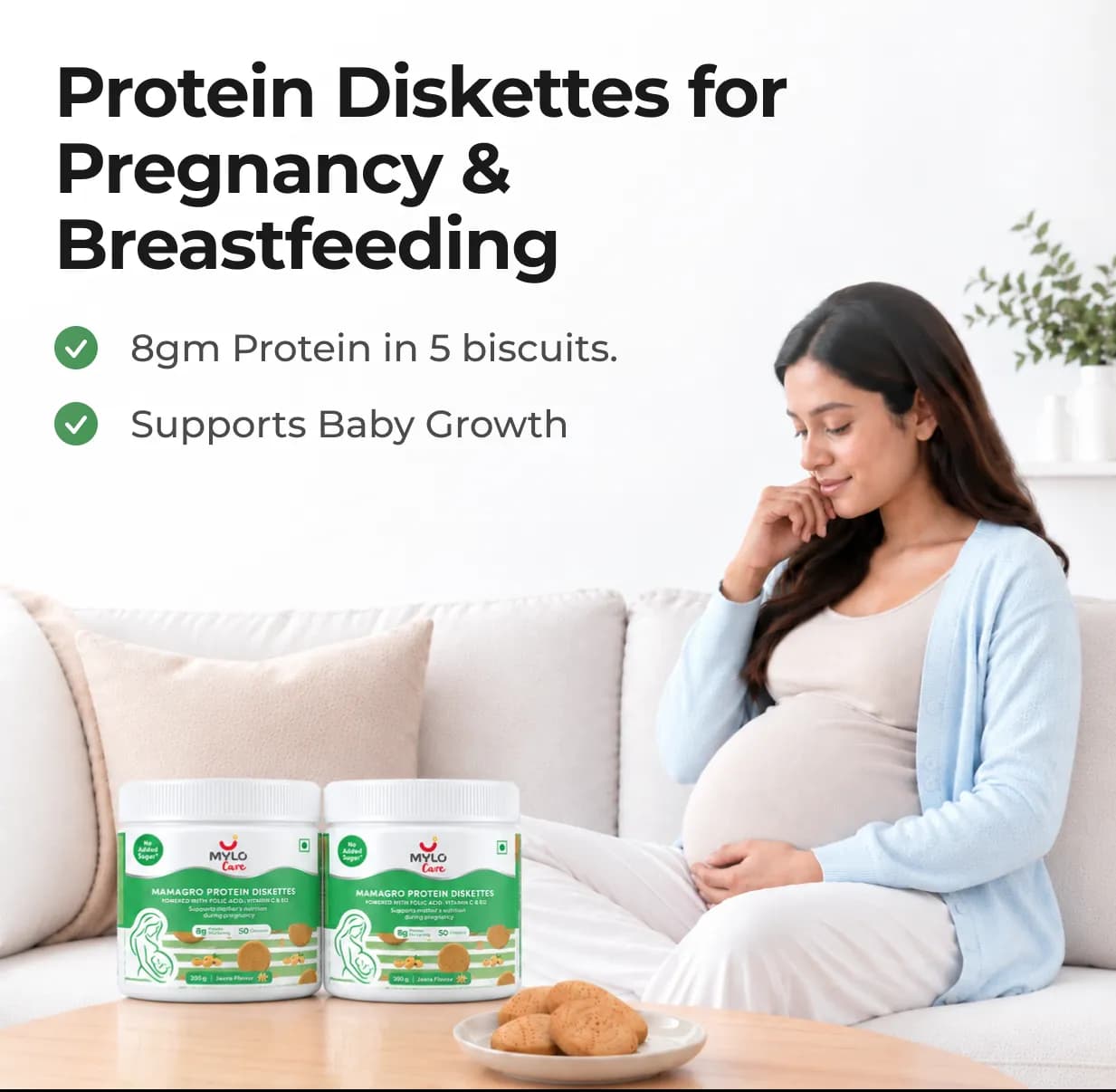
An Easy, Pregnancy-Designed Option: Mylo High-Protein Biscuits
Mylo's high-protein biscuit is designed for pregnancy and breastfeeding, to help moms add daily protein and key nutrients in an easy, light and snackable format:
| Feature | What It Offers |
|---|---|
| High protein, snackable format | 5 diskettes provide 8g protein, helping bridge part of the daily protein gap during pregnancy and lactation |
| Fortified with key nutrients | Iron, Folic Acid, Vitamin C, Vitamin B12 and Phosphorus to support pregnancy and postpartum nutrition |
| Cleaner everyday choice | No added sugar, no preservatives and no refined maida |
| Easy to eat | Light and snackable, a simple way to add nutrition on busy days |
Key ingredients and nutrients:
| Ingredient / Nutrient | Why It Matters |
|---|---|
| Casein (milk protein) | The core hero ingredient, supporting mom's strength, daily nutrition and pregnancy/lactation protein needs |
| Iron | Important for blood health and supports the increased iron needs of pregnancy and postpartum |
| Folic Acid | A key pregnancy nutrient that supports the baby's growth and development |
| Vitamin C | Supports immunity and helps the body absorb iron |
| Vitamin B12 | Supports energy metabolism and overall maternal nutrition |
| Phosphorus | Supports bone health and growth nutrition |
Because it offers a modest, fixed 8g of protein per 5 diskettes with no added sugar, no preservatives and no refined maida, it is an easy way to top up protein without a large scoop or hidden extras. It is meant to complement a balanced diet, not replace it, and it does not replace any iron, folic acid or other supplement your doctor has prescribed.
Indian Context: What Indian Mothers Should Know
- Food first: Build protein into every meal with dal, dairy, eggs, nuts and seeds (ICMR)
- Beware gym powders: Weight-gain, weight-loss and bodybuilding protein powders are not designed for pregnancy; avoid them unless your doctor specifically approves
- Read the label: Check any supplement for added sugar, artificial sweeteners and unfamiliar ingredients
- Keep the dose modest: More protein is not better; a fixed, moderate amount is easier to manage
- Do not replace prescribed supplements: Snacks and powders do not replace your doctor-prescribed iron and folic acid (FOGSI)
- Ask your doctor: Especially if you have diabetes, kidney concerns, an allergy or a high-risk pregnancy
Myths vs Facts About Protein Biscuits and Powder in Pregnancy
| Myth | Fact | Source |
|---|---|---|
| "Protein powder is always unsafe in pregnancy" | It can be fine if it is pregnancy-appropriate, low in added sugar and free of un-researched additives | Healthline |
| "More protein means a healthier baby" | More is not better; excessive protein is not advised, aim for your recommended needs | ICMR |
| "A protein supplement can replace my meals" | It is a top-up to a balanced diet, not a replacement for meals | ICMR |
| "All protein powders are the same" | They vary a lot in sugar, sweeteners, additives and quality; always read the label | Healthline |
| "A protein biscuit can replace my iron and folic acid tablets" | No snack replaces prescribed supplements; keep taking them | FOGSI |
FAQs: Protein Biscuits vs Protein Powder in Pregnancy
Is protein powder safe during pregnancy?
It can be, if it is designed for pregnancy, low in added sugar, and free of artificial sweeteners and un-researched additives. Generic gym or weight-loss powders are best avoided. Whole foods should be your main source of protein, and you should check with your doctor before adding any powder (Healthline).
Pregnancy mein protein biscuit ya protein powder, kaunsa safe hai? (Hinglish)
Sabse safe protein whole foods se milta hai: dal, doodh-dahi-paneer, ande, nuts (ICMR). Jab extra zaroorat ho, toh dono theek ho sakte hain, lekin dhyaan label aur dose par dena chahiye. Aam gym ya weight-loss protein powders mein aksar zyada added sugar, artificial sweeteners ya aise ingredients hote hain jinka pregnancy mein research nahi hua (Healthline). Ek pregnancy ke liye banaya gaya protein snack (jaise Mylo ka high-protein biscuit, 5 diskettes se 8g protein, no added sugar/preservatives/maida) modest, fixed dose deta hai aur moderate karna aasan hota hai. Kuch bhi shuru karne se pehle doctor se poochein.
Why are gym or bodybuilding protein powders not recommended in pregnancy?
They are formulated for muscle-building or weight goals, not for pregnancy, and may contain high protein doses, added sugar, artificial sweeteners, caffeine or herbs that have not been studied in pregnancy (Healthline). If you want a protein supplement, choose one designed for pregnancy and approved by your doctor.
How much protein do I actually need in pregnancy?
Your protein needs rise in pregnancy, especially in the second and third trimesters, but more is not better (ICMR). Aim to meet your recommended needs mostly through food, using a modest protein snack to fill gaps. Your doctor or dietitian can guide the right amount for you.
Protein powder ya biscuit lene se pehle kya check karein? (Hinglish)
Ye cheezein check karein: added sugar hai ya nahi, artificial sweeteners hain ya nahi, koi anjaan ya un-researched ingredient toh nahi, protein ki matra (dose) kitni hai, aur kya product pregnancy ke liye bana hai (Healthline). Modest dose aur clean label behtar hai. Aur haan, doctor ki salah zaroor lein.
Can a protein biscuit replace a meal or my supplements?
No. A protein snack is a top-up to support a balanced diet, not a replacement for meals, and it does not replace any supplement (like iron or folic acid) your doctor has prescribed. Keep eating balanced meals and taking your prescribed supplements (FOGSI).
Which is easier to use safely, a biscuit or a powder?
A pregnancy-designed protein biscuit is often easier to use safely because the dose is fixed and the label is simple, so there is less to watch out for. A powder can also be safe if it is pregnancy-appropriate and clean, but you have to check the scoop size and ingredients carefully (Healthline).
References
- ICMR / NIN. "Dietary Guidelines for Indians." https://www.nin.res.in/dietaryguidelines/pdfjs/locale/DGI07052024P.pdf
- Healthline. "Protein Powder for Pregnancy: Which Ones Are Safe?" https://www.healthline.com/health/pregnancy/protein-powder-for-pregnancy
- FOGSI (Federation of Obstetric and Gynaecological Societies of India). https://www.fogsi.org/




Article Posted Under
Related Articles
Mylo: The Made-in-India Pregnancy and Parenting App Built for Indian Parents
 7 min
7 min Diwali During Pregnancy: Safety Tips for Pregnant Women on Crackers, Sweets and Diet
 17 min
 Best Pregnancy and Parenting App in India: 5 Must-Have Features to Look For (2026)
 20 min
 Best Hairstyles for Postpartum Hair Loss and Regrowth
 10 min
Related Topics
.webp&w=32&q=75)
Medical Disclaimer
This content is for informational purposes only and should not replace professional medical advice. Consult with a physician or other health care professional if you have any concerns or questions about your health. If you rely on the information provided here, you do so solely at your own risk.


AWARDS AND RECOGNITION

Mylo wins Forbes D2C Disruptor award

Mylo wins The Economic Times Promising Brands 2022
AS SEEN IN












- Mylo Care: Effective and science-backed personal care and wellness solutions for a joyful you.
- Mylo Baby: Science-backed, gentle and effective personal care & hygiene range for your little one.
- Mylo Community: Trusted and empathetic community of 10mn+ parents and experts.


Product Categories
Baby Carrier | Baby Soap | Baby Wipes | Stretch Marks Cream | Baby Cream | Baby Shampoo | Baby Massage Oil | Baby Hair Oil | Stretch Marks Oil | Baby Body Wash | Baby Powder | Baby Lotion | Diaper Rash Cream | Newborn Diapers | Teether | Baby Kajal | Baby Diapers Pants | Cloth Diapers | Laundry Detergent | Lactation Granules |