


Orders
.png&w=48&q=75 "login")
Profile


Wallet

Mylo Cloth Diapers Review (2026): Features, Real Costs, Pros, Cons and Who They Suit
 1 Likes|
 20 min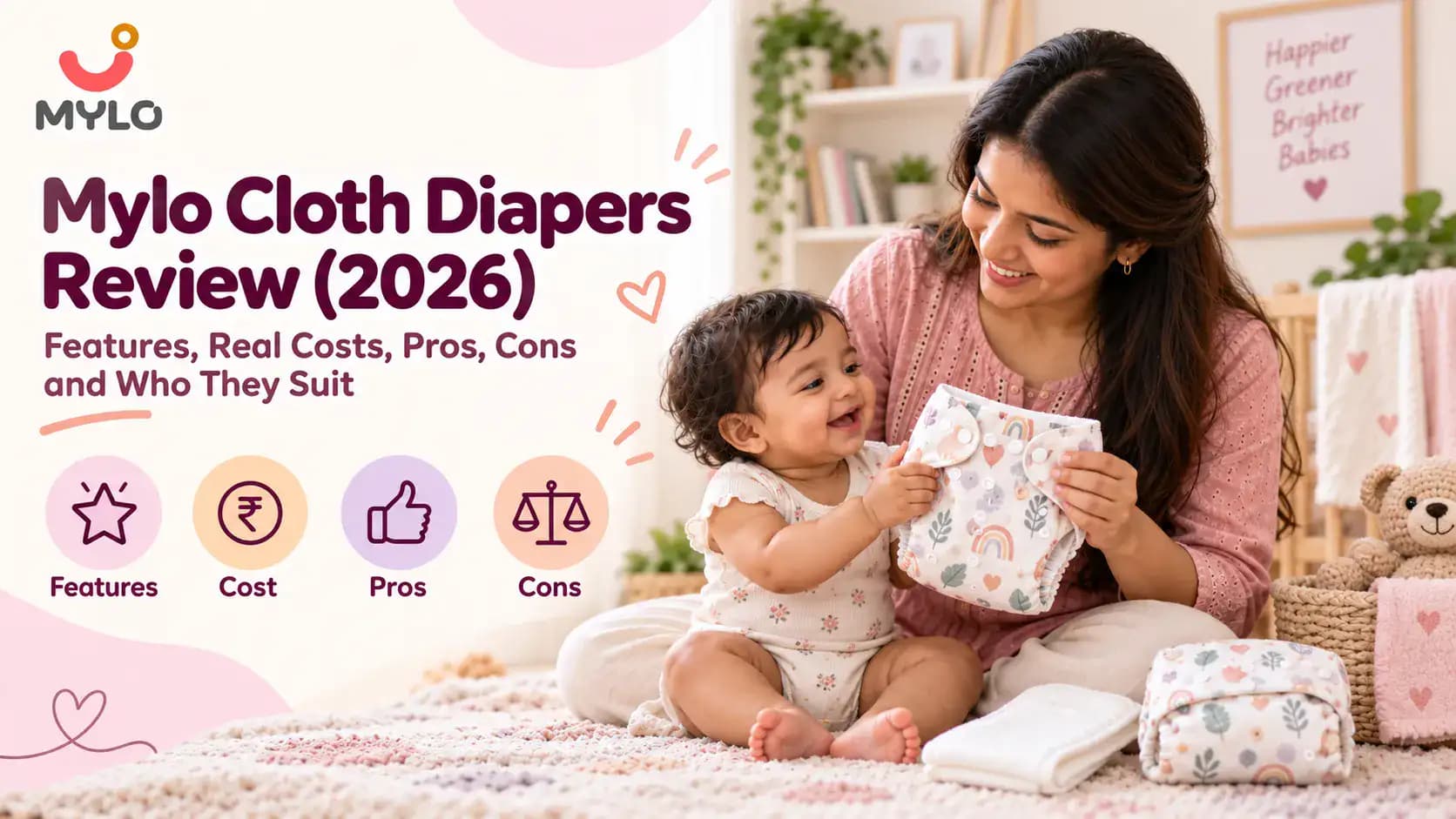
Key Takeaways
Quick overview in 30 seconds.webp&w=32&q=75)
- Mylo Baby Cloth Diapers are India's first OEKO-TEX-certified diapers, made with hypoallergenic, chemical-free fabric that is gentle on your little one's delicate skin.
- These reusable cloth diapers feature 6-layered insert pads for super absorbency, leakproof leg cuffs and keep babies dry and rash-free for up to 5 hours.
- Eco-friendly and budget-friendly, Mylo Cloth Diapers can be reused for 300+ washes, helping moms save up to ₹20,000 a year compared to disposable diapers.
- Looking for safe, reusable diapers for your baby? Explore our Adjustable & Reusable Cloth Diaper - Red & Blue - Pack of 2.
.webp&w=1900&q=75)
 4.6
4.6Quick Answer
Mylo's Adjustable and Reusable Cloth Diaper is an OEKO-TEX certified cloth diaper for babies from 3 months to 3 years, with snap-adjustable sizing and a removable 6-layer Leaksafe Ultra Absorb insert. It suits daytime use at home and cuts long-term diaper spend. It holds less than a disposable, needs daily washing and drying, and is not the practical choice for nights, travel or newborns.
Key Takeaways
One diaper spans 3 months to 3 years through snap rows, so you buy a set once instead of re-buying a size every few months.
The 6-layer insert is rated for around 5 hours of absorbency, but that is capacity, not a change schedule. Change every 2 to 3 hours and immediately after a poo, the same as any diaper.
Savings are real but arrive slowly. Cloth is cheaper across 0 to 3 years, not in month one, and water, detergent and electricity all count.
No diaper type prevents rash. What protects skin is how quickly you change and how dry you keep it.
Drying is the deciding factor in India. If you cannot dry inserts reliably through the monsoon, run cloth part-time rather than full-time.
What is the Mylo cloth diaper?
It is a two-part system: a snap-adjustable waterproof outer shell, and a removable absorbent insert that does the actual work.
Feature | Detail |
|---|---|
Size | 3 months to 3 years, adjustable via snap buttons |
Insert | 6-layer Leaksafe Ultra Absorb pad, removable |
Absorbency capacity | Around 5 hours per insert (Mylo product testing) |
Reusability | 300+ washes with correct care (Mylo product testing) |
Certification | OEKO-TEX certified textile |
Stated free from | Phthalates, lead, cadmium, formaldehyde |
Fit | Leakproof leg cuffs, adjustable waist and rise snaps |
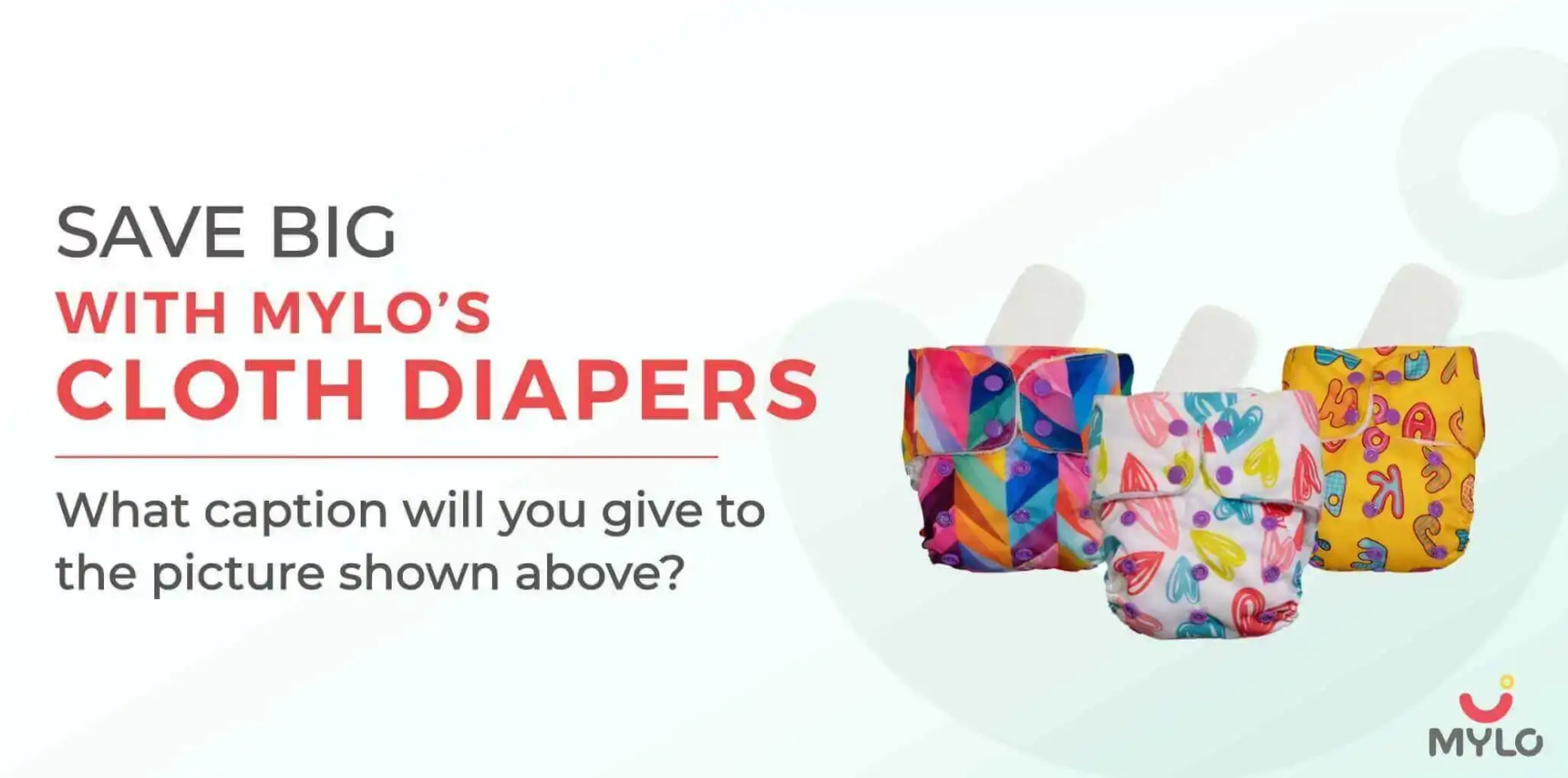
Prints | 8 designs: Twinkle Twinkle, Rainbow, Heart Doodle, ABC, Floral Spring, Cherry Blossom, Purple Love, Pet Love |
What OEKO-TEX certification means: the textile has been tested against a defined list of harmful substances. It is a fabric safety standard. It is not a claim about absorbency, leak performance or skin outcomes.
Browse prints and pack sizes on the reusable cloth diaper range. Current prices and offers are on the product pages: Twinkle Twinkle, Cherry Blossom, Pet Love, or the ABC print pack of 3.
How often should you actually change a cloth diaper?
Every 2 to 3 hours, and immediately after a poo. This is the most important thing on this page, and it is where a lot of cloth diaper advice online goes wrong.
The confusion comes from mixing up two different numbers.
Absorbency capacity is how much liquid the insert can hold before it leaks. For the 6-layer Leaksafe insert that is around 5 hours' worth.
Change frequency is how long skin should stay in contact with a wet surface. That is a skin health question, and the answer is much shorter.
A diaper can still be holding liquid and be the wrong thing to leave on your baby. Prolonged contact with moisture is the main driver of diaper rash, whichever diaper type you use. Cloth matters here more than disposables, because a cloth insert keeps the surface damper against the skin, while a disposable core locks liquid into a gel.
So use the 5-hour figure for planning your rotation, and the 2 to 3 hour rule for your baby.
Situation | What to do |
|---|---|
Normal daytime | Change every 2 to 3 hours |
After a poo | Change immediately, regardless of the clock |
Rash currently active | Change every 1.5 to 2 hours, and add diaper free time |
Hot or very humid weather | Shorten the interval, do not stretch it |
Overnight | Most babies will not stay comfortable through the night in cloth. Use a disposable |
Travel or a long outing | A disposable is more practical |
Do Mylo cloth diapers really save ₹20,000 a year?
Only if you go almost fully cloth. For the hybrid routine most families actually settle into, the saving is real but smaller. Here is the maths with the assumptions visible so you can run your own numbers.
Disposables, full time
Around 6 diapers a day is a typical average across the first years
That is roughly 2,200 diapers a year
At roughly ₹7 to ₹11 per diaper depending on brand and pack size, that is about ₹15,000 to ₹24,000 a year
Cloth, full time
A working rotation is 8 to 12 diapers, because each one needs time to wash and dry
That is a one-time purchase, not an annual one. Check the current price on the product page, since pack offers change
Rated for 300+ washes and fits 3 months to 3 years, so the same set can cover most of the diapering years
Then add detergent, extra water, and electricity or gas if you dry indoors
The verdict
Route | Realistic outcome |
|---|---|
Almost fully cloth | The ₹20,000 figure becomes plausible, but only with the discipline to wash daily year round |
Hybrid, cloth by day and disposable at night and travel | Meaningful savings, roughly half the full-time figure, with far less disruption |
Cloth for a second child too | This is where cloth clearly wins, since the set is already paid for |
Honest caveats: the saving is not there in month one, because you buy the whole set upfront. Inserts wear out before shells do, so budget for replacements. And if a set gets ruined by fabric softener, the maths resets.
What are the pros?
Long-term savings. One-time cost, hundreds of uses, and reusable for a second child.
Much less waste. 300+ washes replaces hundreds of disposables headed to landfill.
Grows with your baby. One shell covers 3 months to 3 years, so no re-buying sizes.
OEKO-TEX certified fabric. Useful if you want to remove disposable components as a variable for a baby with reactive skin.
Breathable cloth against the skin, which some parents prefer for daytime at home.
Eight prints, which sounds trivial until you are photographing your baby every day.
What are the cons? The honest part
Daily washing and drying. Every diaper needs rinsing, washing and full drying. This does not pause when you are tired.
Holds less than a disposable. Around 5 hours of capacity versus up to 12, so you need a bigger rotation and more changes.
Drying is genuinely hard in the monsoon. This is the most common reason Indian families give up on cloth.
Not practical overnight for most babies.
Not travel friendly. Carrying soiled wet cloth is unpleasant and often impractical.
Higher upfront cost. The savings arrive later.
No newborn size. It starts at 3 months, so you need disposables before that.
None of this makes cloth a bad product. It means cloth is a daytime-at-home product for most families.
Cloth or disposable: which should you choose?
Factor | Mylo cloth diaper | Mylo disposable diaper pants |
|---|---|---|
Absorbency capacity | Around 5 hours | Up to 12 hours |
Recommended change interval | Every 2 to 3 hours | Every 2 to 3 hours |
Sizing | One adjustable size, 3 months to 3 years | Sized by weight, New Born to XXL |
Newborn under 5 kg | Not suitable | Yes, New Born size |
Overnight | Not recommended for most babies | Designed for longer stretches |
Travel and outings | Needs a wet bag and spares | Far more practical |
Upfront cost | Higher, one time | Lower, recurring |
Cost across 0 to 3 years | Lower | Higher |
Daily effort | Rinse, wash, dry every day | Discard |
Monsoon | The hard season | Unaffected |
Waste | Much lower | Much higher |
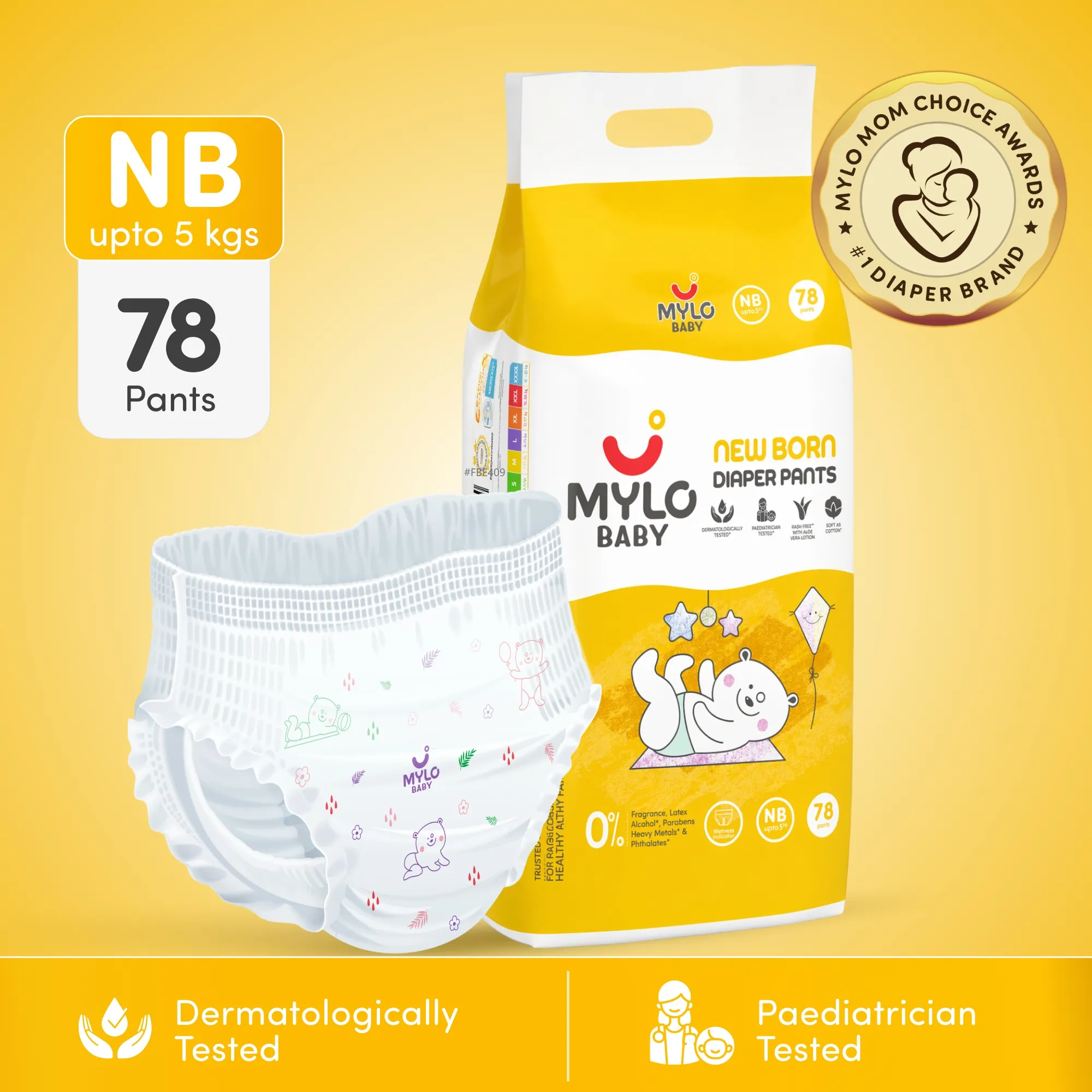
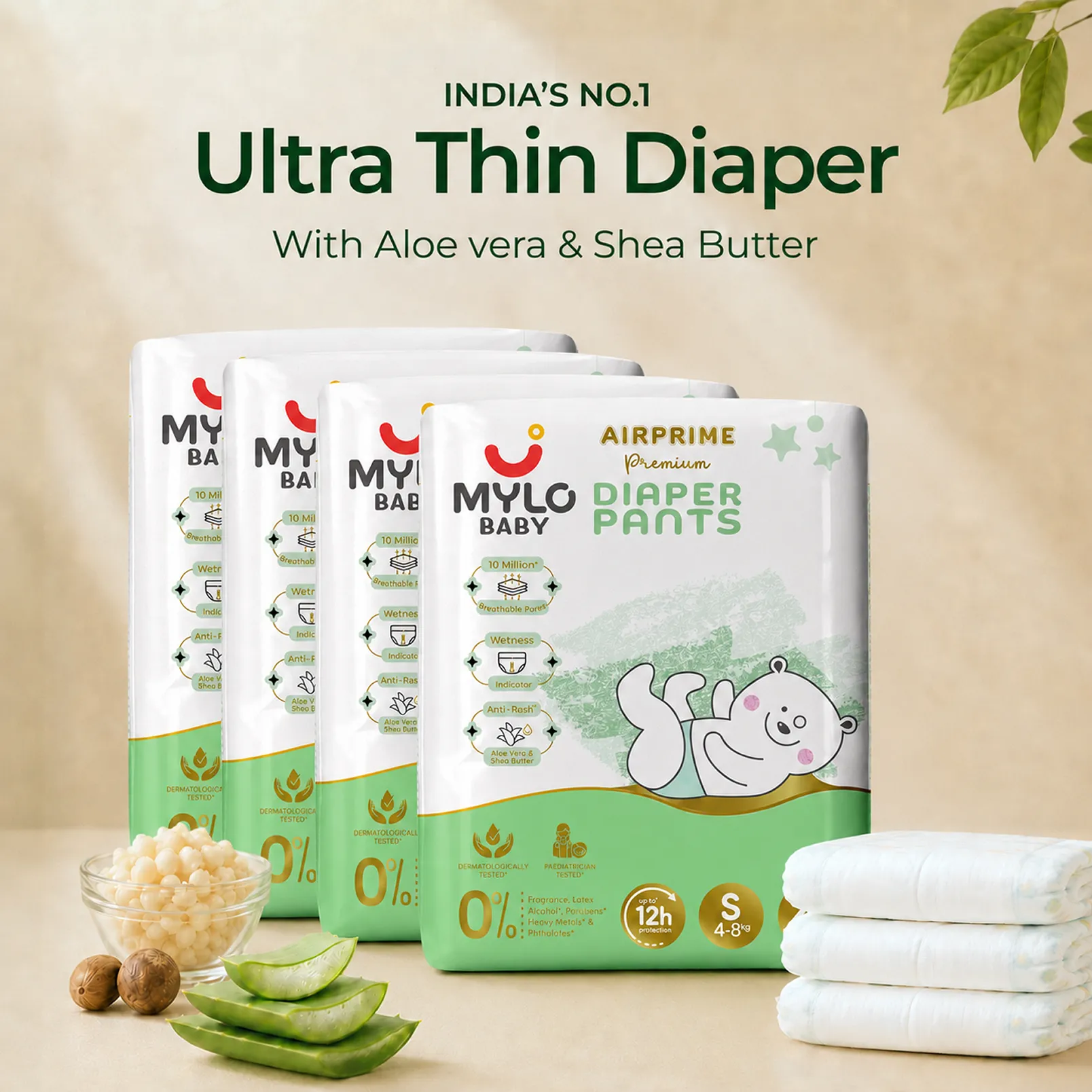
For disposables, see all baby diapers, the premium AirPrime range, or for newborns the New Born diaper pants and New Born tape diapers.
Who should choose cloth, and who should not?
Cloth is a good fit if | Cloth may not suit you if |
|---|---|
You are at home most of the day | You travel or step out often |
You want to cut long-term costs | You have no reliable drying space |
You want to reduce waste | You need overnight dryness |
You have a washing machine or help at home | Your baby is under 3 months |
You are planning a second child | You want zero-effort convenience |
The realistic recommendation for most Indian families is a hybrid: cloth by day at home, disposable at night and while travelling. This captures most of the saving and the environmental benefit without the 3 am bedsheet change.
How do you use a Mylo cloth diaper?
Set the rise first. Use the vertical front snaps so the top edge sits at or just below the belly button. Do the waist after, not before.
Place the insert into the pocket, or lay it on top, depending on your shell.
Fasten the waist snaps so you can slide two flat fingers between the shell and the tummy.
Check the legs. Run a finger inside both leg cuffs to pull the lining outward. Bunched lining is the single most common cause of thigh leaks.
Check the elastic position. It should sit in the thigh crease, not on the fleshy part of the leg.
Change every 2 to 3 hours, and immediately after a poo.
How do you wash and care for them?
Good washing is what gets you to 300+ washes.
Rinse solids off immediately. Knock them into the toilet, then rinse the insert under running water until it runs clear.
Do not let soiled diapers sit. Damp storage causes staining and smell.
Wash with a mild, residue-free detergent. Mylo's baby safe liquid detergent is one option, but any gentle detergent without softener works.
Never use fabric softener or bleach. Softener coats the fibres and permanently reduces absorbency. This is the most common way a cloth set gets ruined.
Dry fully in the sun where you can. Sunlight helps with stains and odour.
Never reuse a damp diaper. Moisture held against skin is what causes rash.
Keep a rotation of 8 to 12 so there is always a dry one ready.
Troubleshooting: what is going wrong and how to fix it
Problem | Most likely cause | Fix |
|---|---|---|
Leaks at the thigh | Lining bunched inside the leg cuff, or elastic sitting on the leg instead of in the crease | Run a finger around both legs after every change |
Leaks at the back or waist | Rise set too short, so the diaper sits too low | Release one rise row and re-check |
Soaked through in under an hour | Insert saturated, or absorbency has dropped | Add a second insert, and check whether softener has been used |
Absorbency dropped after a few weeks | Detergent or softener residue coating the fibres | Strip wash in hot water with no detergent until no suds appear, then use less detergent and no softener |
Persistent smell after washing | Not rinsed enough before storing, or stored damp | Rinse thoroughly, and dry completely before putting away |
Red marks at the thigh or waist | Snaps set too tight | Loosen one snap, re-check the two-finger gap |
Stains on the insert | Normal with cloth | Sun drying fades most stains. Stains do not affect function |
Rash appearing after switching to cloth | Change interval stretched at the same time as the switch | Go back to 2 to 3 hours. Do not use the 5-hour capacity as a schedule |
Indian context: what parents here should know
Drying is the real constraint. In the monsoon and in humid coastal cities, drying inserts is the biggest practical hurdle. Plan a larger rotation, or run cloth part-time in those months.
Never reuse a damp diaper. Moisture against skin causes rash, and half-dried cloth is a common monsoon mistake.
Sunlight helps. Indian sun is effective for stains and odour on inserts.
Count your utilities. Water, detergent and electricity are part of the true cost and are usually left out of savings claims.
Layering in winter compresses the insert, and a compressed insert leaks. Check fit over the clothing your baby actually wears.
Not for newborns. These start at 3 months. Before that, use a New Born disposable size.
Myths versus facts
Myth | Fact | Basis |
|---|---|---|
"Cloth diapers cause more rashes" | Not inherently. Rash risk comes from how long skin stays damp, not the diaper type. A cloth diaper left on too long, or reused while damp, does raise the risk | General nappy care guidance, NHS |
"Cloth can be worn all night like a disposable" | The insert holds less than a disposable core, so most babies will not stay comfortable through the night | Mylo product specification |
"Cloth diapers are always cheaper" | Cheaper across 0 to 3 years, but not in month one, and water, detergent and electricity count | Cost calculation in this article |
"One cloth diaper is enough to start" | You need a rotation of 8 to 12 so dry ones are always ready | Mylo usage guidance |
"Cloth diapers work from birth" | This one fits from 3 months. Under that, use a New Born disposable | Mylo product specification |
"Fabric softener makes them softer and better" | It coats the fibres and reduces absorbency permanently | Standard textile care guidance |
Mylo Parents Asked
Are Mylo cloth diapers good?
They are OEKO-TEX certified, adjustable from 3 months to 3 years, and rated for 300+ washes, which makes them a sound daytime option that saves money over time. The honest trade-offs are the daily washing and the lower absorbency compared with a disposable. Best used as part of a hybrid routine rather than a full switch on day one.
Mylo cloth diaper kaisa hai? (Hinglish)
Mylo ka cloth diaper OEKO-TEX certified hai, 3 mahine se 3 saal tak fit hota hai, aur sahi dhulai ke saath 300+ dhulai tak chalta hai. Insert lagbhag 5 ghante ka paani rok sakta hai, lekin diaper har 2 se 3 ghante mein badalna chahiye aur potty ke turant baad. Paisa bachta hai aur waste kam hota hai, lekin dhona-sukhana roz karna padta hai. Isliye din mein ghar par cloth aur raat ya safar mein disposable sabse practical rehta hai.
How long can my baby wear one before it leaks?
The 6-layer insert is rated for around 5 hours of absorbency. That is how much it can hold, not how long it should stay on. Change every 2 to 3 hours, and immediately after a poo. Using the 5-hour figure as a schedule is the most common way parents end up with a rash.
Kitne cloth diapers chahiye hote hain? (Hinglish)
Aam taur par 8 se 12 ka rotation chahiye, kyunki har 2 se 3 ghante mein badalna padta hai aur dhulne-sukhne mein time lagta hai. Monsoon mein thode zyada rakhein. Geela ya aadha sukha diaper kabhi na pehnayein.
Can newborns use them?
No. They are made for 3 months to 3 years. For a newborn under roughly 5 kg, use a New Born disposable size, which is cut with a naval notch for the umbilical cord stump.
My baby is 4 months and 6 kg. Will the free size fit?
It should, on the shortest rise setting. Set the rise first so the top edge is at the belly button, close the waist to a two-finger gap, then check the thighs. If the leg still gapes, your baby is probably still a little small for the shell.
The absorbency dropped after two months. Is it faulty?
Usually not. The most common cause is detergent or fabric softener residue coating the fibres. Strip wash in hot water with no detergent, rinsing until no suds appear, then resume with less detergent and no softener at all.
Can I use cloth if my baby already has a rash?
Ask your pediatrician first. While a rash is active, very frequent changes and keeping skin dry matter most, and cloth keeps the surface damper than a disposable. Many doctors suggest pausing cloth until the skin has healed.
Are cloth diapers better than disposables?
Neither is simply better. Cloth wins on cost and waste. Disposables win on absorbency and convenience. Most families get the best of both with a hybrid.
When to speak to your doctor
Product choice is not a treatment. Contact your pediatrician if you notice:
Rash that is blistering or weeping, or that has open sores or pus
Bright red patches with small spots at the edges, which can suggest a fungal infection
Rash with fever, or rash not improving after two to three days of frequent changes and barrier care
Blood in the stool or in the diaper
Swelling, a lump or redness in the groin or scrotum
Skin broken by a pressure mark from a tight waist or leg snap
Fewer wet diapers than expected, along with a dry mouth, a sunken soft spot or unusual sleepiness, which can point to dehydration
Bottom Line
Mylo's reusable cloth diaper does its core job well: one snap-adjustable shell covers 3 months to 3 years, the OEKO-TEX certified fabric is a reasonable pick for sensitive skin, and the long-run cost is genuinely lower than disposables. The limits are absorbency and laundry. Treat the 5-hour insert rating as capacity rather than a schedule, change every 2 to 3 hours, use a disposable at night and while travelling, and be honest with yourself about drying inserts through the monsoon. Meet those conditions and it is a sound buy. If you cannot, start part-time instead of switching everything at once.
Shop on Mylo
Cloth diapers, 3 months to 3 years, OEKO-TEX certified. Current prices and offers are on the product pages.
All reusable cloth diapers | Twinkle Twinkle print | Cherry Blossom print | Pet Love print | ABC print, pack of 3
Disposables, for nights, travel and newborns.
All baby diapers | New Born diaper pants | New Born tape diapers | Premium AirPrime range
Read next.
A beginner's guide on how to use cloth diapers | How to change your baby's cloth diaper | Top 8 myths about cloth diapers | Can cloth diapers help prevent rashes?
References
AAP / HealthyChildren, "Diapers and Clothing": https://www.healthychildren.org/English/ages-stages/baby/diapers-clothing/Pages/default.aspx
NHS UK, "Nappy rash": https://www.nhs.uk/conditions/nappy-rash/
Indian Academy of Pediatrics: https://iapindia.org/
Product specifications, absorbency rating and wash count: Mylo product testing documentation.
Medical disclaimer: This article is for informational purposes only and is not a substitute for professional medical advice, diagnosis or treatment. Every baby's skin is different. If your baby has a severe rash, blisters, pus, or a rash that does not improve in two to three days, see your pediatrician.

Trending Articles
postnatal ayurvedic care | cloth diapers vs disposable diapers | dress to wear during pregnancy | how to hold newborn baby
Popular Articles
mylo stretch marks cream review | mylo pregnancy pillow review | mylo wipes review | mylo stretch marks oil review
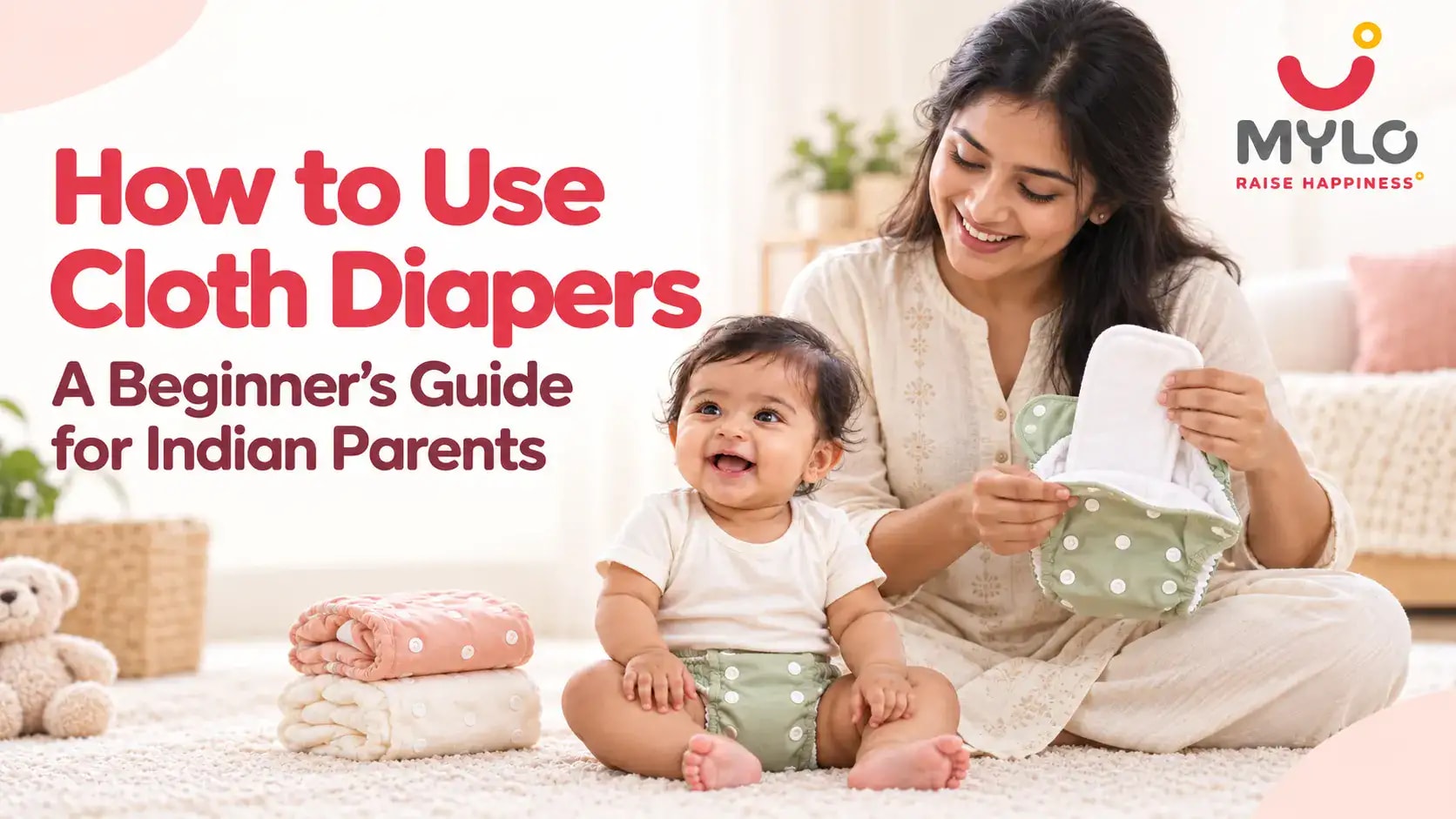
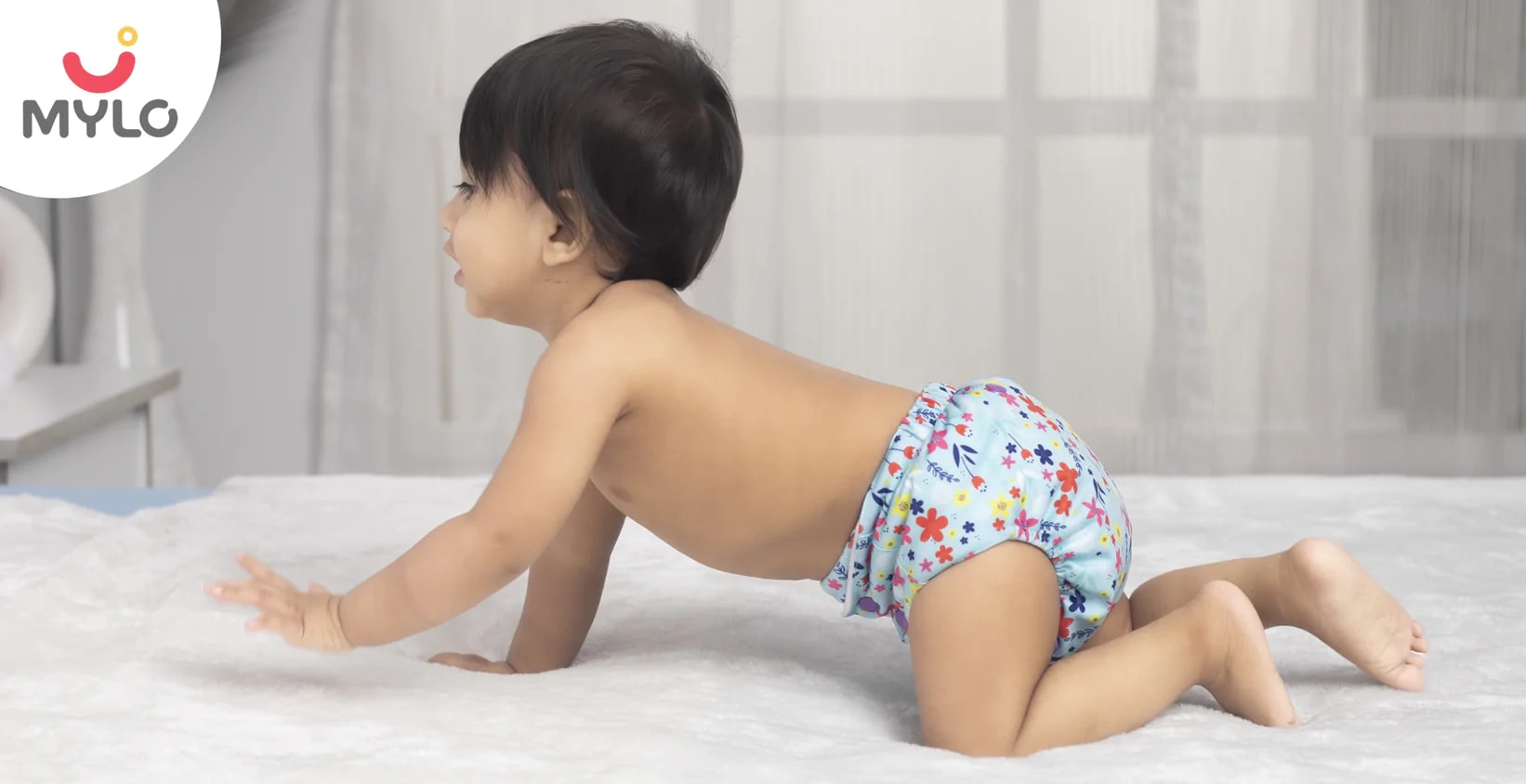
Loved by Moms for Gentle, Rash-Free Diapering
Choose soft, chemical-free cloth diapers that keep your baby comfortable, dry and protected through every playful day.



Medical Disclaimer
This content is for informational purposes only and should not replace professional medical advice. Consult with a physician or other health care professional if you have any concerns or questions about your health. If you rely on the information provided here, you do so solely at your own risk.


AWARDS AND RECOGNITION

Mylo wins Forbes D2C Disruptor award

Mylo wins The Economic Times Promising Brands 2022
AS SEEN IN












- Mylo Care: Effective and science-backed personal care and wellness solutions for a joyful you.
- Mylo Baby: Science-backed, gentle and effective personal care & hygiene range for your little one.
- Mylo Community: Trusted and empathetic community of 10mn+ parents and experts.


Product Categories
Baby Carrier | Baby Soap | Baby Wipes | Stretch Marks Cream | Baby Cream | Baby Shampoo | Baby Massage Oil | Baby Hair Oil | Stretch Marks Oil | Baby Body Wash | Baby Powder | Baby Lotion | Diaper Rash Cream | Newborn Diapers | Teether | Baby Kajal | Baby Diapers Pants | Cloth Diapers | Laundry Detergent | Lactation Granules |