


Orders
.png&w=48&q=75 "login")
Profile


Wallet

How to Swaddle a Baby: A Step-by-Step Guide With Safety Tips


BDS (Gold Medalist), Certified Lactation Consultant – BPNI Delhi, Maternal & Infant Nutrition Expert · 15 years experience
 8 min
8 minSwaddling can work like magic for a fussy newborn, wrapping them snugly to help them feel calm and sleep more soundly. But a good swaddle is about technique and safety, snug in the right places, loose in others, and always on the back. Done well it soothes; done wrong it carries risks. Here is how to swaddle your baby step by step, and the safety rules that matter most.
Quick Answer
To swaddle a baby, lay a light blanket in a diamond and fold the top corner down. Place your baby face-up with their shoulders just below the fold. Straighten one arm and wrap that side of the blanket snugly across the body, tucking it under. Straighten the other arm and wrap the opposite side across. Fold the bottom up, keeping it loose around the hips so the legs can bend freely. Always place a swaddled baby on their back, and stop swaddling once they show signs of rolling over.
Reviewed against: AAP / HealthyChildren and NHS safe-sleep guidance
Medical Disclaimer: This article is for general information and is not a substitute for professional medical advice. Safe sleep practices matter, always place a swaddled baby on their back, and speak to your paediatrician with any concern.
What Is Swaddling?
Swaddling is the practice of wrapping a baby snugly in a light blanket, leaving the head and neck free. It recreates the cosy, contained feeling of the womb, which can help a newborn feel secure. A key benefit is that it gently limits the startle (Moro) reflex, the sudden jerking of the arms that often wakes young babies, helping them settle and stay asleep.
Why Swaddle a Baby?
Swaddling, done safely, can help a newborn in several ways (AAP / HealthyChildren):
Calms fussiness by mimicking the womb's snug feeling
Reduces the startle reflex that wakes babies suddenly
Supports better sleep in the early weeks
Provides comfort during unsettled or colicky periods
It is most useful in the newborn months, and not every baby enjoys it, some prefer their arms free, which is completely normal.
How to Swaddle a Baby Step by Step
Use a light, breathable square blanket and a flat, safe surface:
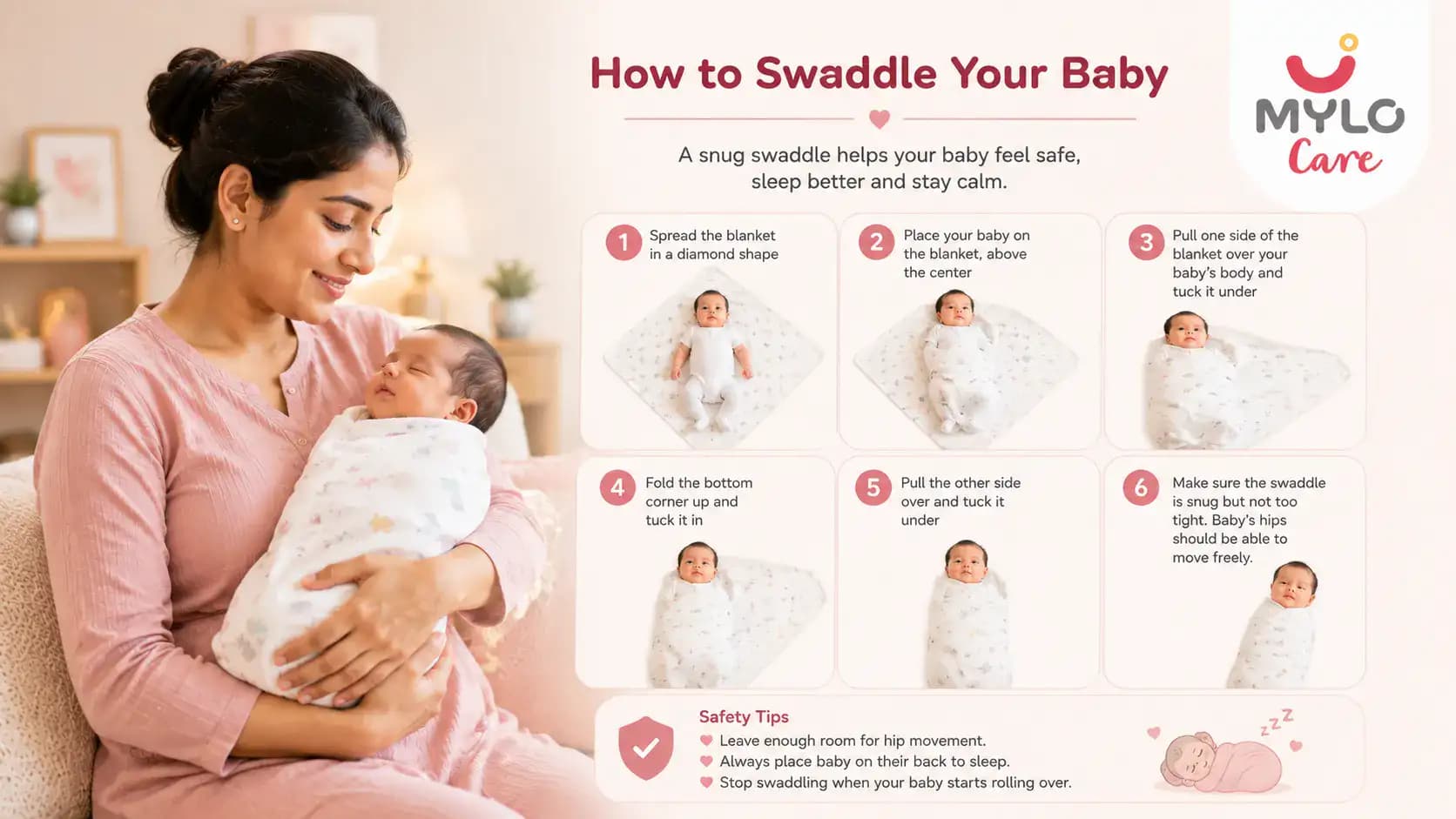
Lay the blanket in a diamond shape, then fold the top corner down about 15 cm to make a straight edge.
Place your baby on their back, with their shoulders just below the folded edge and their head above it.
Straighten your baby's left arm gently along their side. Take the left side of the blanket, wrap it across their chest, and tuck the end snugly under their right side.
Bring the bottom corner up over the feet, keeping it loose around the hips and legs so they can bend up and out.
Straighten the right arm, then take the right side of the blanket, wrap it across the body, and tuck it snugly under the left side.
Check the fit: it should be snug around the arms and chest, but you should be able to slip two to three fingers between the blanket and your baby's chest, and the hips should stay loose enough to move.
If your baby prefers, you can swaddle with one or both arms out, this is still soothing and is often the natural next step as they grow.
Swaddling Safety Rules You Must Follow
Safe swaddling is as important as the technique. Always follow these rules (AAP / HealthyChildren) (NHS):
Always place a swaddled baby on their back to sleep, never on the tummy or side.
Keep the hips loose, tight, straight leg-wrapping can harm hip development. The legs should bend up and out.
Do not wrap the chest too tightly, your baby must be able to breathe and move their chest easily.
Avoid overheating, use a light, breathable fabric and do not over-bundle. Watch for sweating or a hot chest.
Never leave it too loose, a blanket that comes undone can cover the face and is a suffocation risk.
Keep the head and face uncovered at all times.
Nothing else loose in the cot, no extra blankets, pillows or toys.
When Should You Stop Swaddling?
Stop swaddling as soon as your baby shows any sign of trying to roll over, which can be as early as 2 months and usually by 3 to 4 months (AAP / HealthyChildren). A swaddled baby who rolls onto their tummy cannot easily reposition, which raises the risk of suffocation. When that time comes, move to a sleeveless sleep sack or wearable blanket with the arms free, so your baby can still feel cosy but move safely.
Expert Insight: Snug Arms, Loose Hips, Back to Sleep
The safest swaddle follows three simple principles: snug around the arms, so your baby feels secure and the startle reflex is calmed; loose around the hips, so the legs can bend freely and hips develop normally; and always on the back, the single most important safe-sleep rule. If you remember nothing else, remember those three. And if your baby consistently fights the swaddle or seems happier with arms free, follow their cue, swaddling is a tool to help them settle, not a rule.
FAQs
How do I swaddle a baby step by step?
Lay a light blanket in a diamond, fold the top corner down, and place your baby on their back with shoulders below the fold. Wrap one side across the body and tuck it under, fold the bottom up loosely over the hips, then wrap the other side across and tuck it in. Keep the arms snug, the hips loose, and the chest able to move.
Is it safe to swaddle a baby for sleep?
Yes, when done correctly. Always place a swaddled baby on their back, keep the wrap snug at the arms but loose at the hips and chest, use a light fabric to avoid overheating, and stop once your baby starts to roll.
When should I stop swaddling my baby?
As soon as your baby shows signs of trying to roll over, often around 2 to 3 months. After that, switch to a sleeveless sleep sack with the arms free.
Should a baby's legs be tight in a swaddle?
No. The legs and hips must stay loose so they can bend up and out. Wrapping the legs tightly and straight can affect healthy hip development.
Summary
Swaddling wraps your newborn snugly to help them feel calm and sleep better, and the technique is simple: fold, position on the back, wrap each side snugly across the arms, and keep the hips loose. Safety is what matters most, always back to sleep, snug arms, loose hips, a light fabric to avoid overheating, and stop swaddling the moment your baby starts to roll.
References
AAP / HealthyChildren. "Swaddling: Is It Safe?" https://www.healthychildren.org/English/ages-stages/baby/diapers-clothing/Pages/Swaddling-Is-it-Safe.aspx
NHS UK. "Reduce the Risk of Sudden Infant Death Syndrome." https://www.nhs.uk/conditions/baby/caring-for-a-newborn/reduce-the-risk-of-sudden-infant-death-syndrome/

.webp)
Shop New Born Diapers
Shop New Born Diapers




Article Posted Under
Related Articles



Related Topics
.webp&w=32&q=75)
Medical Disclaimer
This content is for informational purposes only and should not replace professional medical advice. Consult with a physician or other health care professional if you have any concerns or questions about your health. If you rely on the information provided here, you do so solely at your own risk.


AWARDS AND RECOGNITION

Mylo wins Forbes D2C Disruptor award

Mylo wins The Economic Times Promising Brands 2022
AS SEEN IN













- Mylo Care: Effective and science-backed personal care and wellness solutions for a joyful you.
- Mylo Baby: Science-backed, gentle and effective personal care & hygiene range for your little one.
- Mylo Community: Trusted and empathetic community of 10mn+ parents and experts.


Product Categories
Baby Carrier | Baby Soap | Baby Wipes | Stretch Marks Cream | Baby Cream | Baby Shampoo | Baby Massage Oil | Baby Hair Oil | Stretch Marks Oil | Baby Body Wash | Baby Powder | Baby Lotion | Diaper Rash Cream | Newborn Diapers | Teether | Baby Kajal | Baby Diapers Pants | Cloth Diapers | Laundry Detergent | Lactation Granules |