


Orders
.png&w=48&q=75 "login")
Profile


Wallet

How to Prevent Diaper Rash in Newborns (and How the Right Diaper Helps)


BDS (Gold Medalist), Certified Lactation Consultant – BPNI Delhi, Maternal & Infant Nutrition Expert · 15 years experience

 15 min
You prevent diaper rash the same way for a newborn as for a toddler: keep the skin clean and dry. In practice that means changing diapers promptly, especially after every poo, cleaning gently, giving the skin some air, using a zinc-oxide barrier cream, and choosing a highly absorbent, breathable diaper that you change often. Diaper rash, also called diaper dermatitis, is the most common skin problem in babies, affecting around half of infants and peaking between 9 and 12 months of age (StatPearls). In India, its reported incidence runs from 4 to 35% in the first two years of life (IP Indian Journal of Clinical and Experimental Dermatology, 2021).
TL;DR: Diaper rash is caused by moisture, friction, and prolonged contact with urine and stool against the skin. Prevention comes down to five habits: change often, clean gently, air-dry, apply a zinc-oxide barrier, and use an absorbent, breathable diaper. The diaper matters, in one study of 105 Indian babies a breathable air-through diaper caused significantly less diaper rash than a standard one (Salvi et al., 2021). Most rashes clear in 2 to 3 days with these steps. A beefy-red rash in the skin folds with small satellite spots is likely a yeast rash and needs an antifungal, and any rash with blisters, fever, or no improvement in 2 to 3 days needs a doctor.
What Causes Diaper Rash in Babies?
Diaper rash is an irritation of the skin in the diaper area, and its root cause is simple: skin that stays warm, wet, and rubbed for too long. When urine and stool sit against the skin, they raise its pH and break down its protective barrier, and friction from the diaper finishes the job (StatPearls).
This is why diaper rash is so common. Diaper dermatitis is the single most common skin disorder in young infants, affects roughly 50% of babies at some point, and accounts for about 25% of skin-related visits to doctors in the first year of life (StatPearls). It peaks between 9 and 12 months, when babies pass more solid stool and sleep longer stretches in one diaper.
A few things push the risk higher. Diarrhoea is a big one, because frequent, acidic stools irritate the skin fast, which matters in India where infant loose motions are common. Infrequent changes, a diaper that traps heat and moisture, harsh wipes, and the introduction of new foods during weaning can all trigger a flare.
The reassuring part is that most diaper rash is mild, self-limited, and preventable with everyday care. You do not need to keep your baby out of diapers to avoid it. You need to keep the skin dry and unbothered.
How Do You Prevent Diaper Rash in Newborns?
You prevent diaper rash in newborns with five habits, and frequent changing is the most important of them. Newborn skin is thin and sensitive, so the goal is to minimise how long it stays in contact with wetness.
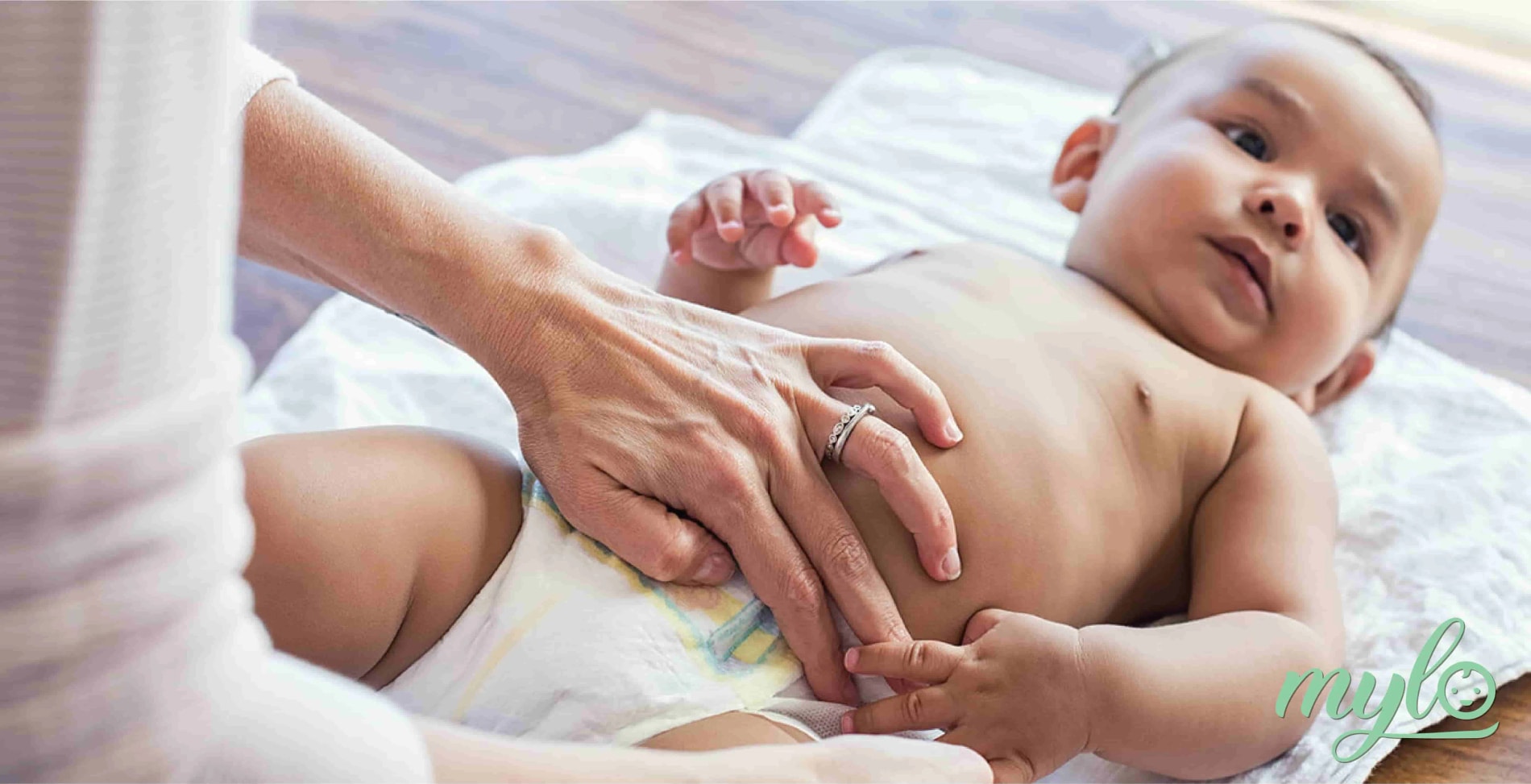
Change often, and immediately after a poo. Newborns often need a change every 2 to 3 hours, and a soiled diaper should be changed right away rather than left on. Stool is the biggest irritant, so never let a poo sit.
Clean gently and pat dry. Use plain water or a mild, fragrance-free wipe, wipe front to back, and pat the skin dry rather than rubbing. Trapped moisture under a fresh diaper is a common cause of rash.
Give the skin some air. Let your baby lie on a towel without a diaper for a few minutes at each change. Air exposure is a recognised prevention step because it lets the skin dry fully (StatPearls).
Apply a barrier at each change. A thin layer of a zinc-oxide cream acts as a shield between the skin and moisture. Barrier agents such as zinc oxide and petrolatum are the standard preventive layer (StatPearls).
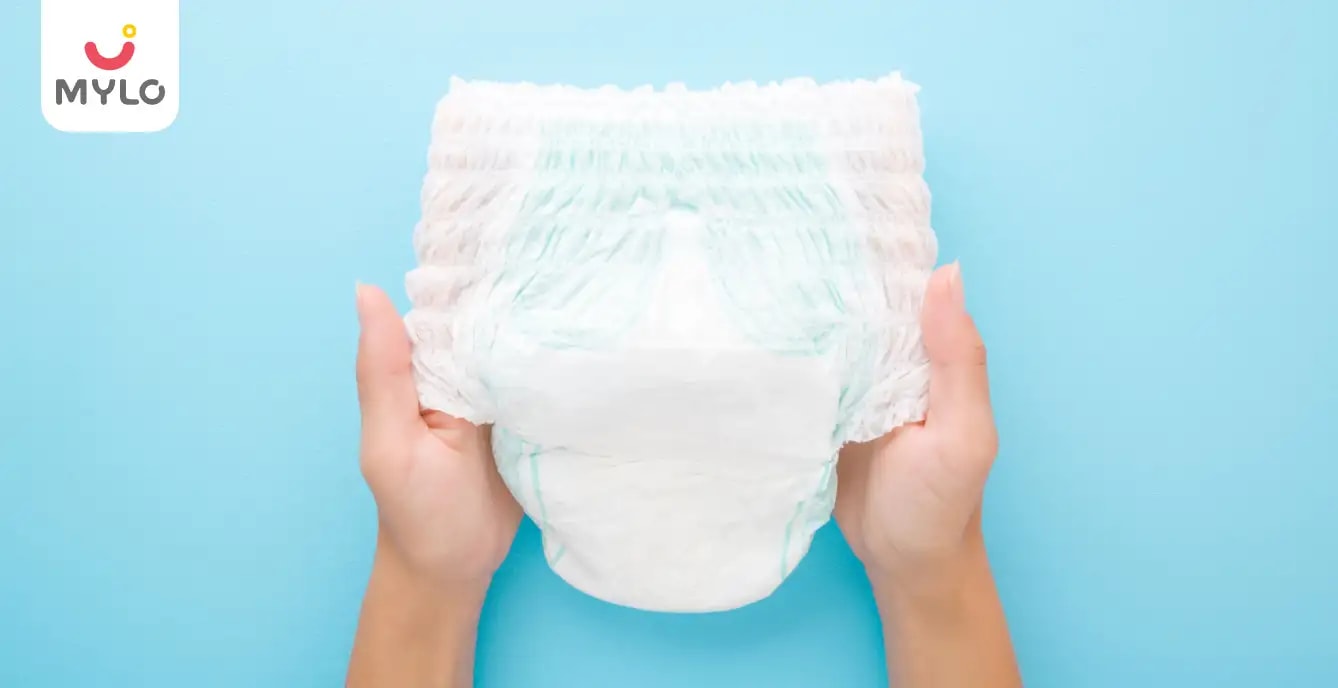
Use an absorbent, breathable diaper in the right size. A diaper that pulls wetness away from the skin and lets air move keeps the surface drier between changes. A too-tight diaper traps heat and rubs, so fit matters as much as the diaper itself.
These steps work together. For a fuller routine, see Mylo's guide to diapering dos and don'ts for newborns. During humid months, add Mylo's monsoon baby skin-care tips, because heat and dampness make rashes more likely.
How the Right Diaper Helps Keep a Newborn Rash-Free
The right diaper does not replace frequent changing, but it keeps the skin drier in between, and that is where rash starts. Two features matter most for prevention: absorbency and breathability.
Absorbency decides how much wetness reaches the skin. Mylo Airprime Diaper Pants use ADL (Acquisition Distribution Layer) Technology, a layer that pulls liquid off the surface and spreads it into the core so it does not pool against your baby's skin. A wetness indicator shows when it is time to change, and the diaper offers up to 12 hours of leak protection, though for rash prevention you still change well before that, especially in newborns.
Breathability decides how much heat and humidity build up inside the diaper. This is not a small detail. In a single-blind randomised study of 105 Indian babies, a breathable air-through diaper produced significantly less diaper rash than a standard diaper (Salvi et al., 2021). That study tested a generic breathable diaper, not Airprime specifically, but it shows why an air-permeable top sheet is worth looking for.
Airprime is built around these two ideas. It has a breathable, air-permeable top sheet, uses OEKO-TEX certified materials tested for harmful substances, and is dermatologically and paediatrician tested with no harsh bleaching chemicals. Its top sheet is infused with aloe vera and shea butter, aloe being a traditional skin soother that helps calm and hydrate, and shea butter a natural emollient that conditions the skin it touches.
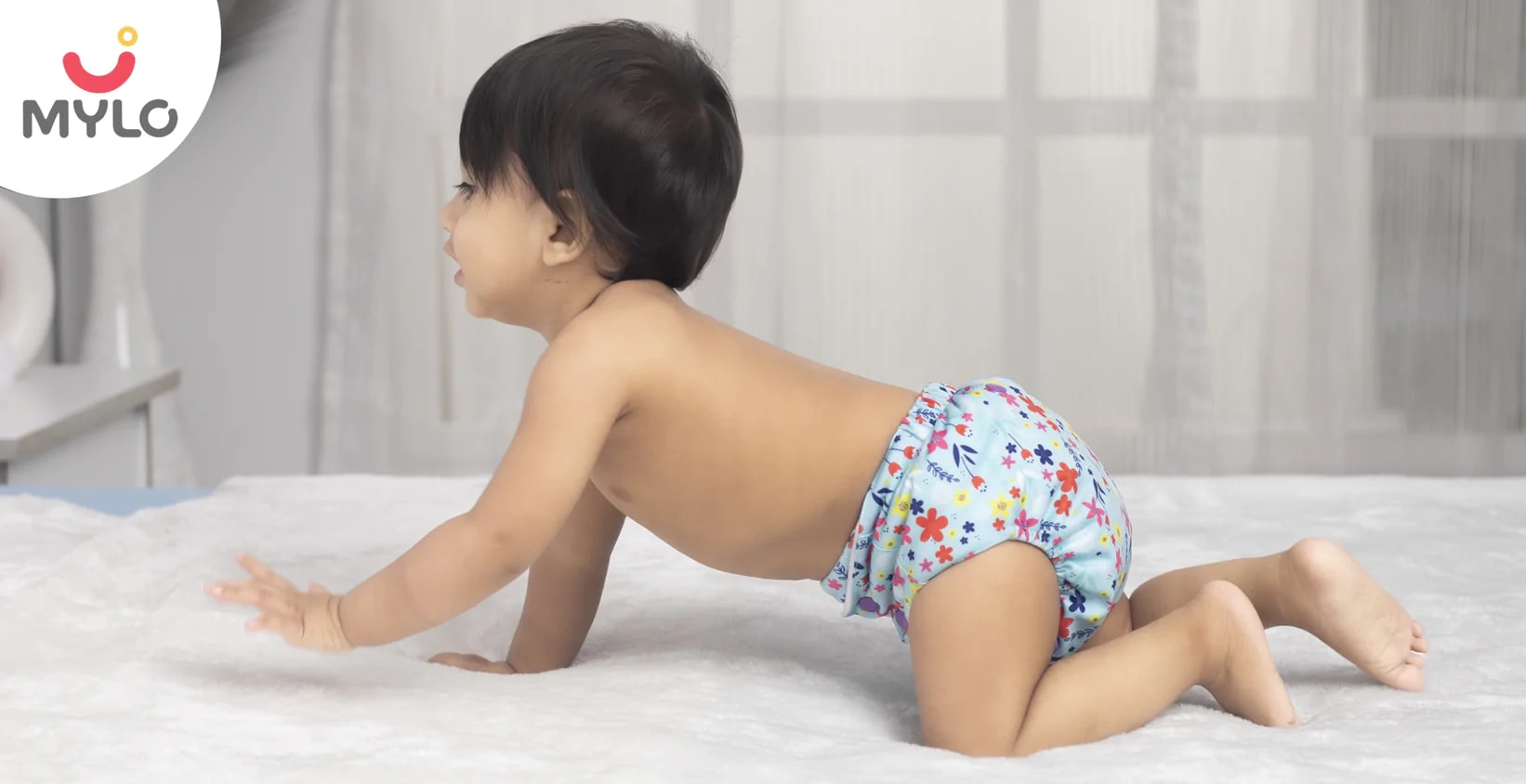
The principle holds whatever you choose. Whether you use a disposable diaper like Airprime or a cloth diaper, the rules are the same: high absorbency, a breathable design, a snug but not tight fit, and frequent changes. If you are weighing options, Mylo's guide to choosing the right baby diaper in India walks through the trade-offs.
Irritant vs Yeast Diaper Rash: How to Tell the Difference
Most diaper rash is irritant diaper rash, a simple reaction to moisture and friction. The important exception is a yeast (candidal) diaper rash, caused by Candida albicans, because it will not clear with a barrier cream alone and needs an antifungal (StatPearls).
The two look different once you know what to check.
Feature | Irritant diaper rash | Yeast (candidal) diaper rash |
How common | The usual type, from wetness and friction | Often follows a rash that will not heal, or a course of antibiotics |
Where it sits | On the exposed, rounded skin, tends to spare the deep folds | In and around the skin folds and creases |
How it looks | Red, sometimes shiny or chapped | Beefy-red, with small "satellite" spots at the edges |
Barrier cream | Usually improves within 2 to 3 days | Does not clear; needs a doctor-advised antifungal |
A few other conditions get mistaken for diaper rash. Heat rash (prickly heat) shows up as tiny bumps in hot, humid weather. Eczema (atopic dermatitis) and seborrheic dermatitis can also appear in the diaper area (StatPearls). Mylo's explainer on the types of diaper rash and their remedies covers these in more detail. When a rash looks unusual or stubborn, it is worth a doctor's eye rather than a guess.
How Do You Treat Diaper Rash Fast?
To clear diaper rash fast, do more of what prevents it: change more often, keep the area clean and dry, add air time, and apply a zinc-oxide barrier at every change. Most mild diaper rash improves within 2 to 3 days of consistent care (StatPearls).
The barrier cream is the workhorse. The American Academy of Pediatrics describes a diaper paste as "a shield that sits between the skin and the contents of the diaper," and recommends a thick layer of a zinc-oxide or petrolatum barrier (AAP). Mylo's Baby Diaper Rash Cream is a zinc-oxide, Made Safe Australia certified formula that you apply at each change until the rash settles.
A yeast rash is the exception that will not respond to a barrier alone. If the rash is beefy-red, sits in the folds, and has satellite spots, or if it has not improved after 2 to 3 days, it likely needs a topical antifungal such as nystatin or clotrimazole, which a doctor should confirm (StatPearls). Do not use a steroid or antifungal cream on a baby without medical advice.
While treating, keep two habits tight: change the moment the diaper is soiled, and give longer diaper-free stretches so the skin can dry. The cream heals; the dryness prevents the next flare.
When Should You See a Doctor About Diaper Rash?
See a doctor if a diaper rash does not improve after 2 to 3 days of proper care, or sooner if it looks severe. Diaper rash is usually mild, but a few signs mean it needs more than home care (StatPearls).
No improvement in 2 to 3 days, or a rash that keeps spreading despite frequent changes and a barrier cream, since it may be a yeast or bacterial infection that needs specific treatment.
Blisters, open sores, cracks, or bleeding, which point to a more severe dermatitis that should be assessed rather than self-treated.
Fever, pus, or skin that is warm, swollen and increasingly red, which can signal a bacterial infection and needs prompt medical attention (StatPearls).
A rash that spreads beyond the diaper area, or that comes with your baby being unusually unsettled, off feeds, or unwell.
When in doubt, it is always reasonable to have a paediatrician look. A quick check can tell an irritant rash from a yeast or bacterial one and get your baby comfortable faster.
Frequently Asked Questions About Diaper Rash
What causes diaper rash?
Diaper rash is caused by skin staying wet and rubbed for too long. Urine and stool against the skin raise its pH and weaken its protective barrier, and friction from the diaper adds to the irritation (StatPearls). Diarrhoea, infrequent changes, heat and humidity, harsh wipes, and new foods during weaning all raise the risk. Most diaper rash is a simple irritant reaction, not an infection, and responds to keeping the area clean, dry, and changed often.
How do you prevent diaper rash in newborns?
Change diapers often and immediately after a poo, clean gently with water or a mild wipe, pat the skin dry, give a few minutes of diaper-free air time, and apply a thin zinc-oxide barrier cream at each change. Use an absorbent, breathable diaper in the right size so wetness is pulled away from the skin. Frequent changing is the single most important habit, because stool and trapped moisture are the main triggers.
How can you tell a yeast diaper rash from a normal one?
A yeast (candidal) diaper rash is beefy-red, settles into the skin folds and creases, and has small satellite spots at its edges, while an ordinary irritant rash is redness on the exposed skin that tends to spare the folds (StatPearls). The clearest tell is response to treatment: an irritant rash improves with a barrier cream in 2 to 3 days, while a yeast rash does not clear until an antifungal is used. If a rash follows antibiotics or refuses to heal, suspect yeast and ask your doctor.
How do you cure diaper rash fast?
Change more often, keep the area clean and dry, add diaper-free air time, and apply a zinc-oxide barrier cream at every change. Most mild diaper rash improves within 2 to 3 days with this routine (StatPearls). If it is not settling, or it looks beefy-red in the folds with satellite spots, it may be a yeast rash that needs an antifungal, so see a doctor rather than layering on more cream.
Is coconut oil good for diaper rash?
Coconut oil can soothe and lightly moisturise mildly irritated skin, and many Indian families use it, but it is not a substitute for a zinc-oxide barrier cream and it will not clear a yeast rash. The core fixes remain the same: keep the area clean, dry, and changed often, and use a proper barrier layer. If a rash is severe, weepy, or not improving, skip the home remedies and have it checked.
What foods can worsen diaper rash?
In babies who have started solids, acidic foods such as citrus, tomato, and strawberries can make stool more irritating, and any new food or a bout of diarrhoea can trigger a flare. There is no need to cut foods pre-emptively. If you notice a rash appear each time a specific food is introduced, pause it, watch, and mention it to your doctor.
How often should you change a newborn's diaper to prevent rash?
Change a newborn's diaper roughly every 2 to 3 hours during the day, and immediately whenever it is soiled, rather than waiting for it to feel full. Leaving a wet or dirty diaper on is the fastest route to a rash. A modern diaper may hold much longer without leaking, but for rash prevention the trigger to change is a soiled or wet diaper, not the clock.
Do breathable diapers like Mylo Airprime prevent diaper rash?
A breathable, highly absorbent diaper that is changed often helps keep the skin dry, which lowers the risk of rash, and breathability specifically has evidence behind it: a study of 105 Indian babies found a breathable air-through diaper caused significantly less diaper rash than a standard one (Salvi et al., 2021). Mylo Airprime pairs a breathable top sheet with ADL Technology that pulls wetness into the core and an aloe-vera and shea-butter top layer. Pair it with frequent changes for the best result.
Sources
Benitez Ojeda AB, Mendez MD. "Diaper Dermatitis," StatPearls, NCBI Bookshelf, updated 2023. https://www.ncbi.nlm.nih.gov/books/NBK559067/
Salvi AN, Joshi R, Bhawe A, et al. "Comparative evaluation of the clinical effects of high Air-Through soft diaper and standard diaper in Indian babies with diaper rash," IP Indian Journal of Clinical and Experimental Dermatology, 2021. https://ijced.org/archive/volume/7/issue/4/article/7781
American Academy of Pediatrics, "Common Diaper Rashes & Treatments," HealthyChildren.org, 2024. https://www.healthychildren.org/English/ages-stages/baby/diapers-clothing/Pages/Diaper-Rash.aspx
.webp)

Article Posted Under
Related Articles


Related Topics
.webp&w=32&q=75)
Medical Disclaimer
This content is for informational purposes only and should not replace professional medical advice. Consult with a physician or other health care professional if you have any concerns or questions about your health. If you rely on the information provided here, you do so solely at your own risk.


AWARDS AND RECOGNITION

Mylo wins Forbes D2C Disruptor award

Mylo wins The Economic Times Promising Brands 2022
AS SEEN IN













- Mylo Care: Effective and science-backed personal care and wellness solutions for a joyful you.
- Mylo Baby: Science-backed, gentle and effective personal care & hygiene range for your little one.
- Mylo Community: Trusted and empathetic community of 10mn+ parents and experts.


Product Categories
Baby Carrier | Baby Soap | Baby Wipes | Stretch Marks Cream | Baby Cream | Baby Shampoo | Baby Massage Oil | Baby Hair Oil | Stretch Marks Oil | Baby Body Wash | Baby Powder | Baby Lotion | Diaper Rash Cream | Newborn Diapers | Teether | Baby Kajal | Baby Diapers Pants | Cloth Diapers | Laundry Detergent | Lactation Granules |