


Orders

Profile

Round Ligament Pain During Pregnancy: Causes, Relief and When to Worry (2026 Guide)
 15 Likes|
 14 min
AI-Generated Summary
Quick overview in 30 seconds.webp&w=32&q=75)
Summary
- Round ligament pain is a sharp, stabbing discomfort in the lower abdomen or groin, commonly felt during the second trimester as the uterus expands and stretches supporting ligaments.
- Gentle stretches like pelvic tilts, cat-cow pose, and prenatal yoga can ease round ligament pain by stretching and strengthening muscles supporting the uterus.
- Rest, warm compresses, proper posture, comfortable maternity wear, and a maternity support belt can help manage pain and reduce pressure on the round ligament.
- Looking for comfort essentials to ease pregnancy aches? Explore our Compression Stocking Socks - S.
TL;DR
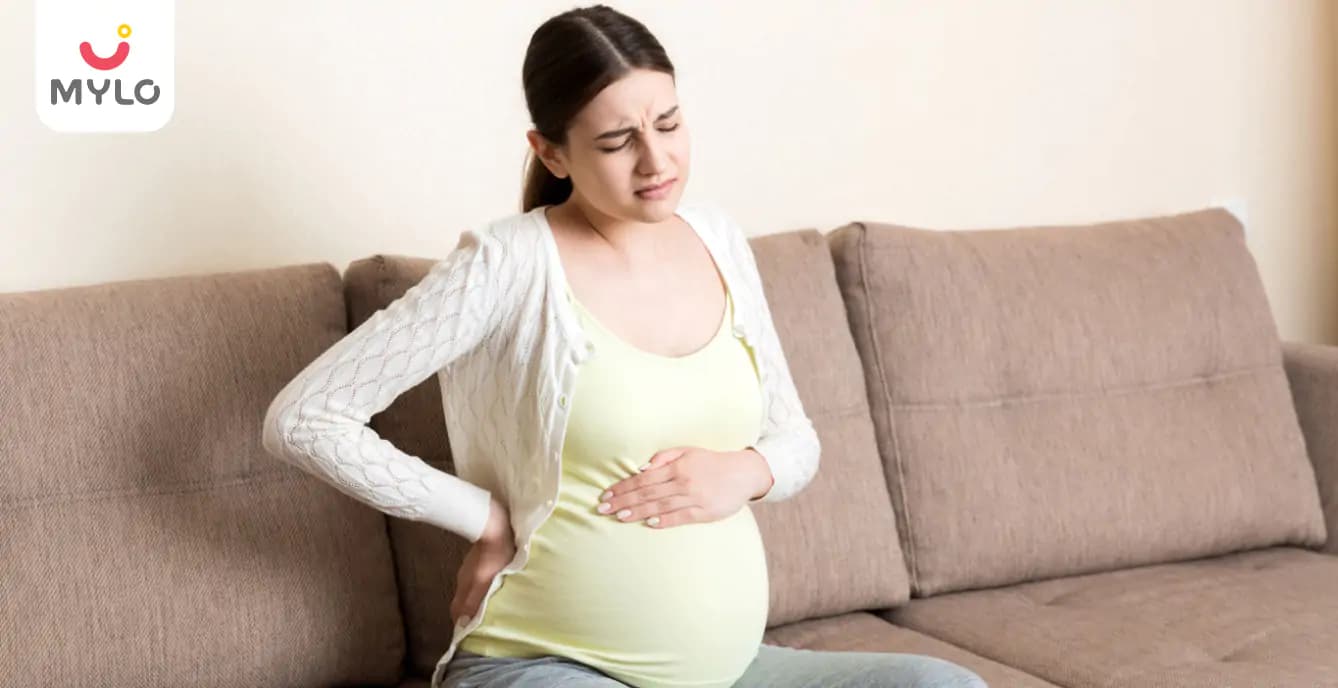
Round ligament pain is a sharp, stabbing or cramping pain in the lower belly or groin, usually felt during the second trimester as the round ligaments supporting your growing uterus stretch (Cleveland Clinic) (ACOG). It is normal and harmless, often triggered by sudden movements like standing up, coughing, sneezing, laughing or rolling over in bed. The pain usually lasts only a few seconds to a few minutes. Relief comes from moving slowly, changing position gently, warm compresses, gentle stretches and a maternity support belt. See a doctor if the pain is severe, constant, or comes with bleeding, fever, contractions or unusual discharge, as these can signal a different problem.
Quick Answer
Round ligament pain is a sharp or cramping pain in the lower belly or groin, common in the second trimester as the ligaments holding the uterus stretch. It is normal and brief, triggered by sudden movements like sneezing or standing up. Move slowly, use warm compresses and gentle stretches. See a doctor if pain is severe or constant.
Author: Mylo Editorial Team, Mylo Parenting Desk Medically reviewed by: Mylo Editorial Board, aligned with ACOG, NHS and FOGSI guidance Last updated: 11 June 2026
Medical Disclaimer: This article is for informational purposes only and is not a substitute for professional medical advice. Round ligament pain is normal, but severe, persistent or one-sided pain with bleeding, fever, contractions or fluid leakage is NOT and needs prompt medical evaluation. When in doubt, contact your doctor.
Key Takeaways
- Round ligament pain is a normal, harmless part of pregnancy (Cleveland Clinic)
- It is caused by the round ligaments stretching as the uterus grows
- Most common in the second trimester (around weeks 14 to 24)
- Feels like a sharp, stabbing or pulling pain in the lower belly or groin
- Usually lasts only a few seconds to a few minutes
- Triggered by sudden movements: standing, coughing, sneezing, laughing, rolling over
- Relief: slow movements, warm compress, gentle stretches, support belt
- See a doctor if pain is severe, constant, or comes with bleeding, fever or contractions
What Is Round Ligament Pain?
The round ligaments are two cord-like bands of tissue that connect the front of the uterus to the groin, helping to support the uterus (Cleveland Clinic).
As your baby and uterus grow:
- These ligaments stretch and thin out
- Sudden movements make them tighten quickly (like a rubber band snapping)
- This pulls on nearby nerves, causing a sharp, brief pain
Round ligament pain is one of the most common and normal discomforts of the second trimester and is not dangerous to you or your baby (ACOG).
When Does Round Ligament Pain Start?
| Trimester | Round Ligament Pain Pattern |
|---|---|
| First (weeks 1 to 13) | Uncommon; uterus still small |
| Second (weeks 14 to 27) | Most common; ligaments stretching rapidly |
| Third (weeks 28 to 40) | May continue but often eases as ligaments fully stretch; replaced by other pressure pains |
Most women first notice it around weeks 14 to 20, when the uterus grows quickly (Cleveland Clinic).
What Does Round Ligament Pain Feel Like?
Women describe it as (Cleveland Clinic) (ACOG):
- A sharp, stabbing or jabbing pain in the lower belly or groin
- A pulling or cramping sensation
- Usually on the right side, but can be on the left or both
- Brief, lasting a few seconds to a couple of minutes
- Comes on with sudden movement and fades when you rest
- A dull ache that may linger briefly after the sharp pain
It does not come in regular waves like contractions, and it does not get progressively stronger.
What Triggers Round Ligament Pain?
Common triggers include sudden or quick movements (Cleveland Clinic):
| Trigger | Why It Causes Pain |
|---|---|
| Standing up quickly | Sudden tightening of the ligament |
| Rolling over in bed | Quick stretch while lying down |
| Coughing or sneezing | Sharp contraction of abdominal area |
| Laughing | Sudden abdominal movement |
| Climbing stairs | Repeated stretching |
| Getting out of a car or bath | Twisting and rising motion |
| Exercise or brisk walking | Repeated ligament movement |
| Sudden position changes | Quick pull on the ligament |
How Can You Relieve Round Ligament Pain?
These safe measures help most women (ACOG) (NHS):
1. Move Slowly
- Change positions gently, especially when getting up or rolling over
- Avoid sudden twists or quick standing
2. Support Before You Sneeze or Cough
- Bend and flex your hips before coughing, sneezing or laughing to reduce the pull on the ligament
3. Apply Warmth
- A warm (not hot) compress or warm bath relaxes the muscles and ligaments
- Avoid very hot water
4. Change Position When Pain Strikes
- Lie on the side that hurts and bend your knees toward your belly
- Rest until the pain passes
5. Use a Maternity Support Belt
- A belly support band lifts some of the uterus's weight off the ligaments
6. Gentle Stretches and Prenatal Yoga
- Pelvic tilts
- Cat-cow pose (Marjariasana)
- Child's pose (Balasana)
- Hip and side stretches
- Done gently, these ease ligament tension
7. Rest and Pace Yourself
- Take breaks; avoid standing or walking for very long stretches
- Ask for help with heavy lifting
8. Stay Active (Gently)
- Regular gentle movement keeps muscles supple, which can reduce flare-ups
- Avoid sudden, jerky exercises
9. Wear Comfortable Clothing
- Loose, supportive clothing avoids extra pressure
10. Paracetamol If Needed
- For persistent discomfort, paracetamol (acetaminophen) is generally considered safe, but only at your doctor's advised dose (ACOG)
How Is Round Ligament Pain Different from Other Pregnancy Pains?
This is the most important table for peace of mind (ACOG) (NHS):
| Type of Pain | Feels Like | Pattern | Concern Level |
|---|---|---|---|
| Round ligament pain | Sharp, brief, with movement | Random, brief, eases with rest | Normal |
| Braxton Hicks | Tightening of the whole belly | Irregular, painless to mild | Normal |
| Real labour contractions | Cramping that builds and peaks | Regular, getting closer and stronger | Needs hospital |
| Gas/constipation pain | Bloating, cramping | Comes and goes, relieved by passing gas/stool | Usually normal |
| UTI pain | Burning urination, lower belly ache | Constant, with urinary symptoms | See doctor |
| Pre-term labour | Rhythmic cramps, pelvic pressure | Regular before 37 weeks | Urgent |
| Placental abruption | Severe constant pain, often with bleeding | Sudden, severe, constant | Emergency |
| Appendicitis | Pain starting near navel, moving to right lower belly | Constant, worsening, with fever/nausea | Emergency |
If your pain is constant, severe, or comes with bleeding, fever, or regular contractions, it is NOT round ligament pain, seek care (ACOG).
When Should You See a Doctor?
Round ligament pain is normal, but contact your doctor if you have (Cleveland Clinic) (NHS):
- Severe pain that does not ease with rest
- Constant pain lasting more than a few minutes
- Pain with vaginal bleeding or spotting
- Pain with fever or chills
- Regular, rhythmic cramps (4 or more in an hour), especially before 37 weeks
- Pain with unusual vaginal discharge or fluid leaking
- Painful or burning urination (possible UTI)
- Severe pain in the lower right belly with nausea or vomiting (rule out appendicitis)
- Pain with dizziness, fainting or shoulder-tip pain (early pregnancy, rule out ectopic)
- Reduced baby movements
- Any pain you are simply unsure about, it is always okay to get checked
Indian Context: What Indian Mothers Should Know
- Household chores: Activities like squatting, bending, lifting buckets and climbing stairs are common triggers; move slowly and ask for help with heavy tasks
- Floor sitting and rising: Getting up from floor seating (common in Indian homes) can trigger the pain; rise gently using support
- Support belt availability: Maternity support belts are widely available in India (INR 500 to INR 2,000) and genuinely help
- Traditional oil massage: Gentle warm oil massage of the lower back and hips can be soothing; avoid deep pressure on the belly
- Joint family help: Accept help with cooking, cleaning and lifting; rest is not laziness, it protects you
- Do not panic: Many Indian families worry that any belly pain means danger; learn to recognise normal round ligament pain versus warning signs (use the comparison table)
- Cost of checkup: If unsure, a gynaecology consult (INR 500 to INR 1,500) for reassurance is worthwhile, never hesitate to get checked
Myths vs Facts About Round Ligament Pain
| Myth | Fact | Source |
|---|---|---|
| "Any belly pain in pregnancy is dangerous" | False. Round ligament pain is normal and harmless | Cleveland Clinic |
| "Round ligament pain harms the baby" | False. It does not affect the baby | ACOG |
| "You must rest in bed completely" | False. Gentle movement actually helps | NHS |
| "It means early labour" | False. It is unrelated to labour; labour pains are rhythmic | ACOG |
| "Pain only on the right side is abnormal" | False. Right-sided round ligament pain is very common | Cleveland Clinic |
| "You should avoid all exercise" | False. Gentle prenatal exercise reduces flare-ups | ACOG |
| "Painkillers are always needed" | False. Most cases ease with position changes and warmth | NHS |
FAQs: Round Ligament Pain in Pregnancy
What does round ligament pain feel like?
It feels like a sharp, stabbing or pulling pain in the lower belly or groin, usually on the right side, that comes on suddenly with movement (like standing up or sneezing) and lasts only a few seconds to a couple of minutes (Cleveland Clinic). It does not come in regular waves.
Round ligament pain kya hota hai? (Hinglish)
Round ligament pain pregnancy ke second trimester mein hone wala ek normal pain hai. Jaise jaise uterus badhta hai, use support karne wale round ligaments stretch hote hain. Achanak movement (uthna, chheenkna, khaansna, karwat badalna) par lower belly ya groin mein ek tez, sharp pain hota hai jo kuch second mein theek ho jata hai. Ye baby ke liye safe hai. Dheere movement karein aur warm compress lagayein.
When does round ligament pain start and stop?
It most commonly starts in the second trimester (around weeks 14 to 20) and often eases by the third trimester as the ligaments finish stretching (Cleveland Clinic). It can come and go throughout this period.
Is round ligament pain dangerous for the baby?
No. Round ligament pain is a normal result of your body adjusting to your growing uterus and does not harm the baby (ACOG). It is only a concern if the pain is severe, constant, or comes with bleeding, fever or contractions, which would point to a different cause.
How can I relieve round ligament pain quickly?
Quick relief steps (NHS):
- Stop and rest when pain strikes
- Lie on the painful side with knees bent toward the belly
- Apply a warm compress
- Move slowly when getting up
- Flex your hips before coughing or sneezing
Round ligament pain ke liye kya karein? (Hinglish)
Round ligament pain ke liye:
- Dheere se position change karein
- Chheenkne ya khaansne se pehle hips ko thoda mod lein
- Warm (garam nahi) compress lagayein
- Jis side dard ho us side karwat le kar ghutne pet ki taraf mod lein
- Maternity support belt use karein
- Heavy lifting avoid karein aur rest karein
Which side is round ligament pain usually on?
It is most often on the right side, because the uterus tends to tilt slightly to the right in pregnancy, but it can occur on the left side or both sides too (Cleveland Clinic). Both are normal.
How is round ligament pain different from contractions?
Round ligament pain is sharp, brief, triggered by movement, and random. Contractions are a tightening that comes in a regular pattern, getting stronger and closer together over time (ACOG). If your pain is rhythmic and progressive, especially before 37 weeks, contact your doctor.
Can round ligament pain happen in the third trimester?
Yes, although it is most common in the second trimester. In the third trimester, the ligaments are more fully stretched, so sharp round ligament pain often decreases and is replaced by general pressure and aching from the baby's weight (Cleveland Clinic).
Does a support belt help with round ligament pain?
Yes, for many women. A maternity support belt lifts some of the uterus's weight off the round ligaments, reducing the strain and the sharp pain (ACOG). They are inexpensive and widely available in India.
When should I worry about lower belly pain in pregnancy?
Worry and see a doctor if the pain is (NHS):
- Severe or constant (not brief)
- With bleeding, fever or unusual discharge
- With regular contractions (especially before 37 weeks)
- With burning urination (possible UTI)
- In the lower right belly with nausea/vomiting (rule out appendicitis)
- With dizziness or shoulder-tip pain in early pregnancy (rule out ectopic)
Can exercise make round ligament pain worse?
Sudden, jerky exercise can trigger it, but gentle regular exercise (walking, prenatal yoga, stretching) actually keeps muscles supple and reduces flare-ups over time (ACOG). Warm up slowly and avoid quick twists.
Is it normal to feel round ligament pain when I sneeze?
Yes, very common. A sneeze causes a sudden, sharp contraction of the abdominal area that quickly pulls the round ligaments (Cleveland Clinic). Flexing your hips or bending slightly forward before you sneeze can reduce this pain.
References
- Cleveland Clinic. "Round Ligament Pain." https://my.clevelandclinic.org/health/diseases/round-ligament-pain
- American College of Obstetricians and Gynecologists (ACOG). "Back Pain During Pregnancy." https://www.acog.org/womens-health/faqs/back-pain-during-pregnancy
- ACOG. "How to Tell When Labor Begins." https://www.acog.org/womens-health/faqs/how-to-tell-when-labor-begins
- ACOG. "Exercise During Pregnancy." https://www.acog.org/womens-health/faqs/exercise-during-pregnancy
- ACOG. "Medicine During Pregnancy." https://www.acog.org/womens-health/faqs/medicine-during-pregnancy
- NHS UK. "Stomach Pain in Pregnancy." https://www.nhs.uk/pregnancy/related-conditions/common-symptoms/stomach-pain/
- NHS UK. "Exercise in Pregnancy." https://www.nhs.uk/pregnancy/keeping-well/exercise/
- FOGSI (Federation of Obstetric and Gynaecological Societies of India). https://www.fogsi.org/
Article Posted Under
Related Articles
Vitamin C for Skin: What It Does for Dark Spots and Dull Skin, and How to Use the Range
13 min Kumkumadi Tailam for Postpartum Skin: What the Evidence Shows and How to Use It
18 min Is Onion Oil Safe During Breastfeeding: What We Know and What We Do Not
12 min 200+ Adorable Nicknames for Baby in 2026: Indian Parent's Pet Name Guide
17 min
Related Topics
.webp&w=32&q=75)
Medical Disclaimer
This content is for informational purposes only and should not replace professional medical advice. Consult with a physician or other health care professional if you have any concerns or questions about your health. If you rely on the information provided here, you do so solely at your own risk.


AWARDS AND RECOGNITION

Mylo wins Forbes D2C Disruptor award

Mylo wins The Economic Times Promising Brands 2022
AS SEEN IN












- Mylo Care: Effective and science-backed personal care and wellness solutions for a joyful you.
- Mylo Baby: Science-backed, gentle and effective personal care & hygiene range for your little one.
- Mylo Community: Trusted and empathetic community of 10mn+ parents and experts.


Product Categories
Baby Carrier | Baby Soap | Baby Wipes | Stretch Marks Cream | Baby Cream | Baby Shampoo | Baby Massage Oil | Baby Hair Oil | Stretch Marks Oil | Baby Body Wash | Baby Powder | Baby Lotion | Diaper Rash Cream | Newborn Diapers | Teether | Baby Kajal | Baby Diapers Pants | Cloth Diapers | Laundry Detergent | Lactation Granules |