


Orders
.png&w=48&q=75 "login")
Profile


Wallet

Essential Nutrients for Toddlers: Iron, Calcium and More
 16 min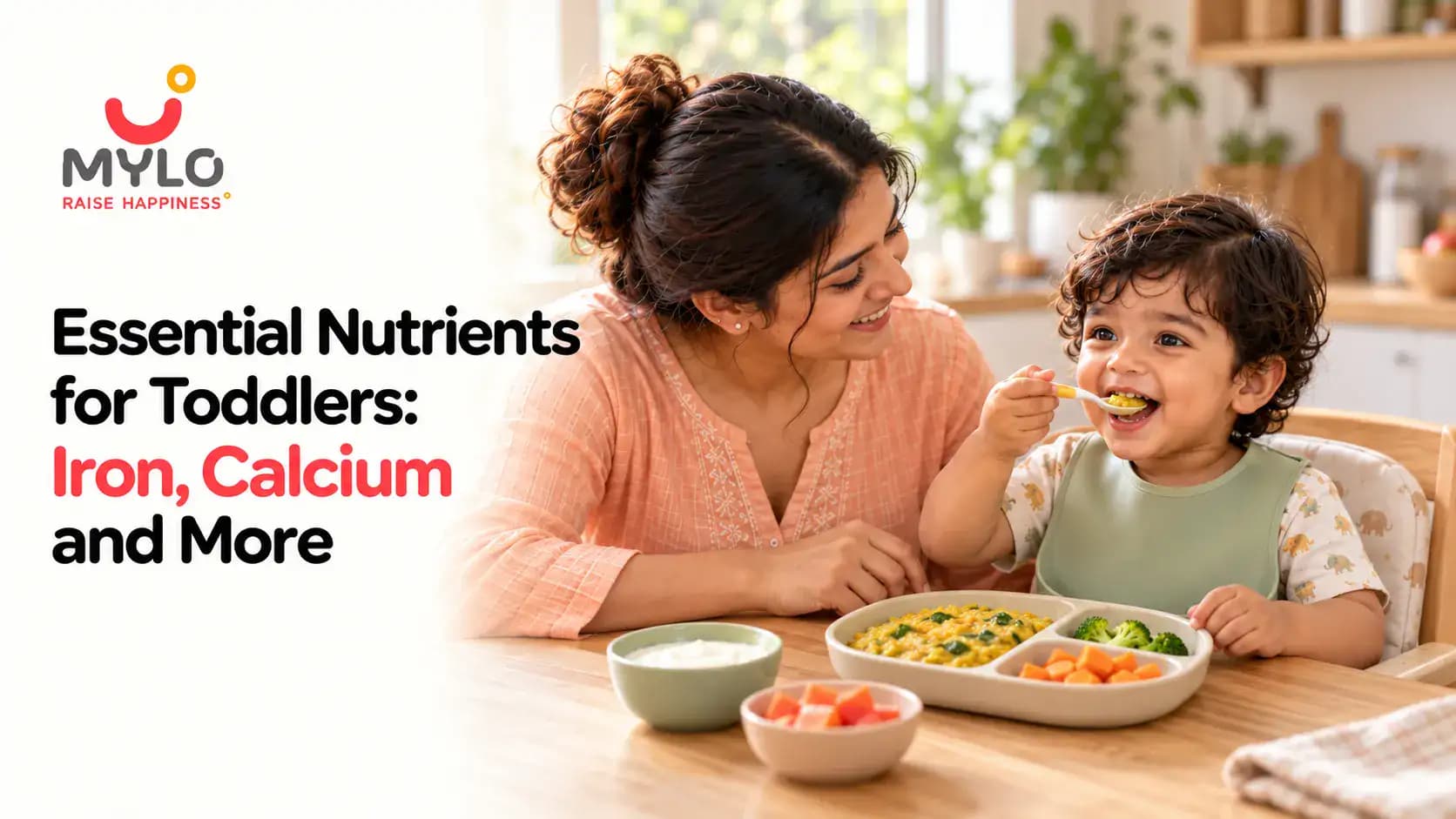
Quick Answer
Essential nutrients for toddlers are the vitamins and minerals children aged 1 to 3 need to grow, learn and fight infections. The most important are iron, calcium, protein, vitamin D and zinc. Most come from a varied Indian diet of dal, ragi, milk, curd, eggs, vegetables and fruit, plus sunlight and vaccines.
Toddler Nutrients at a Glance
Nutrient | Why It Matters | Daily Need (1 to 3 Years, ICMR-NIN) | Top Indian Foods |
|---|---|---|---|
Iron | Brain growth, energy, prevents anaemia | About 8 mg | Ragi, green leafy vegetables, dal, rajma, eggs, chicken |
Calcium | Bones and teeth | About 500 mg | Milk, curd, paneer, ragi, ground til |
Protein | Growth and muscles | About 12.5 g | Dal, paneer, curd, eggs, chicken, fish, soya |
Vitamin D | Absorbs calcium, bone health | About 600 IU (15 mcg) | Sunlight, eggs, fish. Supplement if your doctor advises |
Zinc | Growth, appetite, fighting infections | About 3.3 mg | Dal, chana, curd, eggs, meat, whole grains |
Vitamin A | Eyes and immunity | About 390 mcg | Carrot, pumpkin, papaya, mango, spinach |
Vitamin C | Iron absorption, immunity | About 27 mg | Amla, guava, orange, tomato, lemon |
Vitamin B12 | Blood and brain | About 1.2 mcg | Milk, curd, eggs, meat, fish |
Key Facts Every Parent Should Know
Iron deficiency is very common: National surveys show that most young children in India have anaemia, often from low iron
No single food boosts immunity: A varied diet, vaccines, good sleep and clean hands keep toddlers healthy
Vegetarian diets can meet most needs: With some planning for iron, zinc and vitamin B12
Vitamin C helps iron: Eating vitamin C foods with iron-rich foods helps the body absorb more iron
Too much milk lowers iron: More than about 700 ml of milk a day can crowd out iron-rich foods
Supplements aren't always needed: Give them only if your doctor advises, and keep iron tablets out of reach
Iron for Toddlers
Short answer: Toddlers need about 8 mg of iron a day for brain growth and energy. Low iron causes anaemia, which is very common in Indian toddlers.
Best iron-rich foods for toddlers
Vegetarian | Non-Vegetarian |
|---|---|
Ragi (porridge, dosa, ladoo) | Eggs |
Palak, methi, amaranth (chaulai) leaves | Chicken and mutton |
Moong, masoor, rajma, chana (mashed) | Fish |
Soya and tofu | Liver (small amounts, occasionally) |
Jaggery and dates (small amounts) | |
Poha (iron-fortified or made in an iron kadai) |
How to help the body absorb more iron
Add vitamin C: A squeeze of lemon on dal, guava or orange after a meal, or tomato in sabzi
Cook in an iron kadai: It can add a little iron to food
Ferment and sprout: Idli, dosa, dhokla and sprouted moong are easier to absorb
Avoid tea and coffee: They block iron absorption
Don't give too much milk: Keep it to about 2 cups a day
Signs of low iron
Pale skin and lips, tiredness, crankiness, poor appetite, frequent infections, and eating mud, chalk or ice (pica). Ask your pediatrician for a blood test if you notice these.
Calcium for Toddlers
Short answer: Toddlers need about 500 mg of calcium a day for strong bones and teeth. Two cups of milk (about 480 ml) give roughly 550 to 600 mg, which covers most of a toddler's daily need.
Food | Approximate Calcium |
|---|---|
1 cup (240 ml) cow's milk | About 280 to 300 mg |
1 small katori (100 g) curd | About 120 to 150 mg |
25 g paneer | About 100 to 120 mg |
2 tablespoons ragi flour (about 20 g) | About 70 mg |
1 teaspoon ground til (sesame) | About 50 mg |
For toddlers who don't drink milk: Offer curd, paneer, ragi, ground til, green leafy vegetables and fortified foods. Talk to your pediatrician about whether a supplement is needed.
Protein for Toddlers
Short answer: Toddlers need about 12.5 g of protein a day. Most toddlers get enough from milk, dal, curd and eggs.
Example: 2 cups of milk (about 16 g of protein) plus 1 egg (about 6 g) gives about 22 g, which is already more than a toddler needs. Add dal and roti, and protein is well covered.
Vegetarian Protein | Non-Vegetarian Protein |
|---|---|
Dal, rajma, chana, moong | Eggs |
Paneer, curd, milk | Chicken |
Soya, tofu | Fish |
Peanut butter or ground nuts (no whole nuts) |
Vitamin D for Toddlers
Short answer: Toddlers need about 600 IU (15 mcg) of vitamin D a day. It helps the body use calcium for strong bones. Low vitamin D is very common in India, even with lots of sunshine.
How to get enough vitamin D:
Sunlight: Short periods of outdoor play with arms and legs uncovered help the skin make vitamin D. Avoid sunburn in the hot midday sun
Food: Eggs (yolk), fish, and fortified milk or oil have small amounts
Supplements: Many Indian toddlers need drops. Ask your pediatrician
Signs of low vitamin D: Late walking, bowed legs, delayed teeth, bone pain, muscle weakness or frequent infections. Read more in our guide on vitamin D deficiency symptoms in children.
Zinc for Toddlers
Short answer: Toddlers need about 3.3 mg of zinc a day. Zinc helps growth, appetite and the immune system.
Good sources: Dal, chana, rajma, curd, paneer, eggs, chicken, whole wheat, and ground pumpkin or sesame seeds.
Zinc and diarrhoea: When toddlers have diarrhoea, doctors often give ORS with zinc for 10 to 14 days. This is free at government health centres.
Signs of low zinc: Poor appetite, slow growth, frequent infections and slow wound healing.
Other Important Nutrients
Nutrient | Why It Matters | Indian Food Sources |
|---|---|---|
Vitamin A | Eyes, skin and immunity | Carrot, pumpkin, papaya, mango, spinach, eggs |
Vitamin C | Iron absorption, immunity | Amla, guava, orange, lemon, tomato |
Vitamin B12 | Blood and brain development | Milk, curd, paneer, eggs, meat, fish |
Folate | Blood and growth | Green leafy vegetables, dal, chana |
Healthy fats | Brain development and energy | Ghee, oils, ground nuts, eggs, fish |
Fibre | Healthy digestion, prevents constipation | Fruits, vegetables, whole grains, dal |
For vegetarian families: Vitamin B12 comes mainly from animal foods. Make sure your toddler has milk, curd or paneer every day, and ask your doctor if a supplement is needed.
How Can I Boost My Toddler's Immunity?
Short answer: No single food or tonic boosts immunity. A toddler's immune system grows stronger with a varied diet, all vaccines on time, good sleep, play and clean hands.
What Helps | Why |
|---|---|
All vaccines on time | The strongest protection against serious infections |
A varied diet with fruits and vegetables | Gives vitamins A, C, zinc and iron |
Curd and buttermilk | Contain helpful bacteria |
11 to 14 hours of sleep a day | Sleep helps the immune system |
Outdoor play | Activity and sunlight for vitamin D |
Handwashing before meals and after the toilet | Prevents many infections |
Breastfeeding (if continuing) | Gives antibodies |
No smoke at home | Smoke raises the risk of chest infections |
Track your toddler's vaccines with our free immunization scheduler.
What about kadha, chyawanprash and immunity powders?
Haldi doodh: A pinch of haldi in warm milk is fine, but it isn't a cure
Honey: Okay after 1 year in small amounts. Never give honey under 1
Kadha and herbal mixes: Strong spices and herbs can upset a toddler's stomach. Ask your doctor first
Chyawanprash and tonics: Many contain added sugar. They're not needed if your toddler eats well
"Immunity booster" syrups and gummies: Give supplements only if your doctor advises
Does My Toddler Need Supplements?
Short answer: Most toddlers who eat a varied diet don't need multivitamins. But many Indian toddlers need iron and vitamin D. Ask your pediatrician before giving any supplement.
Supplement | When It May Be Needed |
|---|---|
Iron (IFA syrup) | Given free under Anemia Mukt Bharat for children aged 6 to 59 months, twice a week |
Vitamin A | Given free every 6 months from 9 months to 5 years |
Vitamin D drops | If your doctor finds low vitamin D or limited sun exposure |
Vitamin B12 | Some vegetarian toddlers, if your doctor advises |
Zinc | During diarrhoea, with ORS |
Safety: Iron tablets and syrups can be very dangerous if a toddler swallows too many. Keep all medicines and supplements locked away.
When Should I Worry?
Short answer: Talk to your pediatrician if your toddler looks pale, is very tired, gets sick very often, isn't growing well, or eats very few foods.
Sign | May Mean |
|---|---|
Pale skin, tiredness, eating mud or chalk | Low iron (anaemia) |
Bowed legs, late walking, bone pain | Low vitamin D or calcium |
Frequent infections, poor appetite, slow growth | Low zinc or poor overall diet |
Not gaining weight or height | Needs a growth check |
Very pale and tired in a vegetarian toddler | Possible low vitamin B12 or iron |
Night blindness or dry eyes | Low vitamin A. See a doctor quickly |
Swelling of the feet or face, very thin arms | Severe malnutrition. Needs urgent care |
Who Can Help?
Who | When to See Them |
|---|---|
Pediatrician | Growth checks, blood tests, supplements |
Pediatric dietitian | Meal plans, vegetarian diets, picky eating |
Anganwadi worker | Growth monitoring, nutrition advice, take-home rations |
Free government support in India
Anemia Mukt Bharat: Free IFA syrup for children aged 6 to 59 months
Vitamin A supplementation: Free doses every 6 months from 9 months to 5 years
National Deworming Day: Free deworming from 1 to 19 years, which also helps prevent anaemia
Anganwadi centres: Growth monitoring, take-home rations and nutrition advice
RBSK: Free health checks for children from birth to 18 years
ORS and zinc: Free at government health centres for diarrhoea
What Should Indian Parents Keep in Mind?
Short answer: Traditional Indian foods like ragi, dal, curd, ghee, amla and seasonal fruits are excellent for toddlers. Focus on variety, limit packaged foods, and get vaccines and checks on time.
Ragi is a superstar: It's rich in calcium and iron. Try ragi porridge, dosa or ladoo
Pair dal with lemon: A squeeze of lemon helps iron absorption
Tea with biscuits: A common habit that blocks iron. Offer milk or fruit instead
Seasonal fruits: Guava, amla, oranges and papaya are cheap and full of vitamins
Vegetarian homes: Include milk, curd and paneer daily for protein, calcium and B12
Health drink powders: Many contain added sugar. They don't replace real food
Deworming: Worms can cause anaemia. Use free deworming at Anganwadi centres or schools
Myths vs Facts
Myth | Fact |
|---|---|
Some foods can "boost" immunity overnight | Immunity builds with a varied diet, vaccines, sleep and hygiene |
Vegetarian toddlers can't get enough nutrients | They can, with planning for iron, zinc and B12 |
More milk means stronger bones | About 2 cups is enough. Too much milk lowers iron |
All toddlers need multivitamins | Most don't. Many Indian toddlers need iron and vitamin D |
Sunshine in India means no vitamin D problem | Low vitamin D is very common in Indian children |
Tonics and chyawanprash are essential | Not needed if your toddler eats a varied diet |
Frequently Asked Questions
1. What are the most important nutrients for toddlers?
Iron, calcium, protein, vitamin D and zinc, along with vitamins A, C and B12.
2. What are the best immunity boosting foods for toddlers in India?
Seasonal fruits like guava, amla and oranges, curd, dal, ragi, green leafy vegetables, eggs and nuts (ground). Vaccines, sleep and handwashing matter just as much.
3. What are iron rich foods for vegetarian Indian toddlers?
Ragi, palak, methi, dal, rajma, chana, soya, dates and jaggery (small amounts). Pair them with lemon, guava or orange.
4. How do I know if my toddler is low on iron?
Pale skin, tiredness, poor appetite and eating mud or chalk can be signs. Ask your pediatrician for a blood test.
5. Does my toddler need vitamin D drops?
Many Indian toddlers have low vitamin D. Ask your pediatrician whether your child needs drops.
6. What should I feed my toddler during fever to help recovery?
Light, easy foods like khichdi, dal water, curd rice, soup and fruits, with plenty of fluids. Don't force food.
7. Are multivitamins safe for toddlers?
Only if your doctor advises. Too much of some vitamins and iron can be harmful.
8. Bacchon ki immunity kaise badhaye?
Roz alag alag tarah ka khana dijiye: dal, sabzi, phal, dahi, ragi aur anda. Sabhi teeke samay par lagwaiye, bacche ko achhi neend aur bahar khelne dijiye, aur khane se pehle haath dhulwaiye.
9. Bacche mein khoon ki kami ke lakshan kya hain?
Peela chehra, thakaan, bhookh na lagna, aur mitti ya chalk khana khoon ki kami (anaemia) ke lakshan ho sakte hain. Doctor se khoon ki jaanch karwaiye.
Related Reads on Mylo
References
ICMR-National Institute of Nutrition. "Nutrient Requirements for Indians: Recommended Dietary Allowances and Estimated Average Requirements." 2020.
ICMR-National Institute of Nutrition. "Dietary Guidelines for Indians." 2024.
Ministry of Health and Family Welfare, Government of India. "National Family Health Survey (NFHS-5), 2019 to 2021."
Ministry of Health and Family Welfare, Government of India. "Anemia Mukt Bharat." https://anemiamuktbharat.info
American Academy of Pediatrics (AAP). "Vitamin D: On the Double." HealthyChildren.org. https://www.healthychildren.org
World Health Organization (WHO). "Infant and young child feeding." https://www.who.int/news-room/fact-sheets/detail/infant-and-young-child-feeding
Indian Council of Medical Research. "Nutritive Value of Indian Foods" / "Indian Food Composition Tables." National Institute of Nutrition, 2017.
Medical Disclaimer
This article is for information only and does not replace professional medical advice. Every toddler is different. Please consult your pediatrician or a qualified dietitian before giving any supplements.


Shop Now
Clean Hands, Happy Snacks



Article Posted Under
Related Articles
Related Topics
.webp&w=32&q=75)
Medical Disclaimer
This content is for informational purposes only and should not replace professional medical advice. Consult with a physician or other health care professional if you have any concerns or questions about your health. If you rely on the information provided here, you do so solely at your own risk.


AWARDS AND RECOGNITION

Mylo wins Forbes D2C Disruptor award

Mylo wins The Economic Times Promising Brands 2022
AS SEEN IN












- Mylo Care: Effective and science-backed personal care and wellness solutions for a joyful you.
- Mylo Baby: Science-backed, gentle and effective personal care & hygiene range for your little one.
- Mylo Community: Trusted and empathetic community of 10mn+ parents and experts.


Product Categories
Baby Carrier | Baby Soap | Baby Wipes | Stretch Marks Cream | Baby Cream | Baby Shampoo | Baby Massage Oil | Baby Hair Oil | Stretch Marks Oil | Baby Body Wash | Baby Powder | Baby Lotion | Diaper Rash Cream | Newborn Diapers | Teether | Baby Kajal | Baby Diapers Pants | Cloth Diapers | Laundry Detergent | Lactation Granules |