


Orders
.png&w=48&q=75 "login")
Profile


Wallet

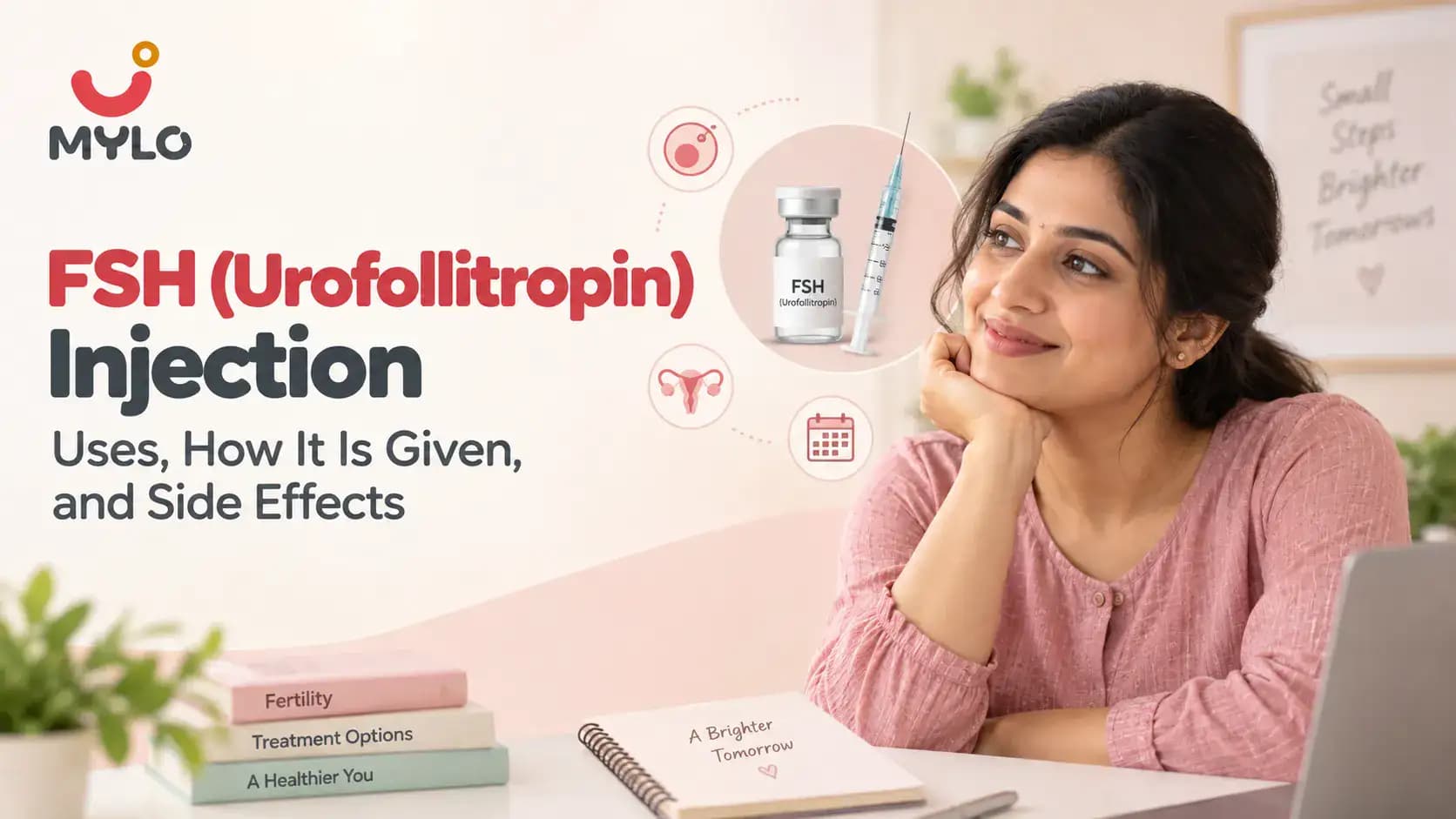
FSH (Urofollitropin) Injection: Uses, How It Is Given, and Side Effects
 1 Likes|
 11 min

RMNCH+A, MCH & Midwifery, Program Management & National Trainer (ToT/ToN), WHO, MoHFW, ECHO Model · 11 years experience
Key Takeaways
Quick overview in 30 seconds.webp&w=32&q=75)
- FSH (Urofollitropin) Injection contains follicle-stimulating hormone, which helps treat infertility by stimulating the ovaries to develop mature eggs and supporting sperm production in men.
- Common uses include treating poor follicular development, encouraging ovaries to produce more eggs, supporting follicle growth, and boosting chances of pregnancy alongside treatments like IVF.
- FSH 75 and FSH 150 differ in dosage strength; possible side effects include injection site reactions, bloating, abdominal discomfort, and rarely ovarian hyperstimulation syndrome (OHSS).
- Looking for fertility support on your TTC journey? Explore our Organic Aloe Vera (300 ml).
 4.4
4.4 4.2
4.2 4.6
4.6 4.5
4.5Quick Answer
FSH (urofollitropin) injection is a highly purified form of follicle-stimulating hormone (FSH), extracted from natural human sources (specifically the urine of postmenopausal women), used in fertility treatment to stimulate the ovaries to grow eggs. It is prescribed for women whose ovaries do not release eggs properly, and as part of IVF, and it is sometimes used in men to support sperm production. It works, but it is a specialist treatment given under close monitoring, because it carries real risks, mainly ovarian hyperstimulation and multiple pregnancy. It is not something to start or self-manage without a doctor.
Key Takeaways
FSH (urofollitropin) is a prescription hormone injection that stimulates the ovaries to develop eggs (Drugs.com).
Its main uses are ovulation induction (when ovulation is absent or infrequent, such as in PCOS not responding to first-line tablets) and IVF, where it stimulates several eggs to grow.
It is given by injection under the skin or into a muscle, usually daily for a set number of days, and adjusted based on your response.
Close monitoring is essential. Your doctor tracks your ovaries with ultrasound and blood tests to set the dose and reduce risks.
The two main risks are ovarian hyperstimulation syndrome (OHSS) and multiple pregnancy, which is exactly why it must be doctor-supervised.
What Is an FSH (Urofollitropin) Injection?
Urofollitropin is a highly purified form of follicle-stimulating hormone (FSH) extracted and purified from natural human sources (specifically postmenopausal urine). It works identically to the FSH your pituitary gland naturally produces to develop egg follicles in the ovaries. (Note: It differs slightly from 'recombinant FSH' like follitropin alfa or beta, which is synthesized in a laboratory, though both serve the same clinical purpose). It belongs to a class of medications called gonadotropins.
When your own FSH signalling is not enough to grow and release eggs, an FSH injection supplies that signal directly. It binds to FSH receptors on the ovarian follicles (the small sacs that hold eggs) and stimulates them to grow and mature. It is available only on a doctor's prescription and is used within a monitored fertility treatment plan, not on its own.
This is a treatment. It is different from the FSH, LH and prolactin blood test, which measures your hormone levels rather than treating them.
What Is FSH (Urofollitropin) Injection Used For?
There are three main situations (Drugs.com; ScienceDirect overview):
1. Ovulation induction (when you are not ovulating properly)
For women who do not release eggs regularly, for example due to anovulation or PCOS, FSH injections can stimulate the ovaries to grow and release an egg. It is often used when tablets like clomiphene or letrozole have not worked. Women with PCOS frequently have low FSH relative to LH, and FSH injections help make up for that.
2. IVF and assisted reproductive technology (ART)
In IVF, the goal is controlled ovarian hyperstimulation—growing multiple follicles simultaneously. FSH injections drive follicle growth over 8 to 12 days. Once follicles reach optimal size, a separate 'trigger shot' (such as human chorionic gonadotropin [hCG] or a GnRH agonist) is given to induce final egg maturation prior to retrieval. See Mylo's guide to IVF.
3. Supporting sperm production in men
In men with hypogonadotropic hypogonadism (where the pituitary gland doesn't produce enough gonadotropins), FSH stimulates Sertoli cells in the testes to support sperm production. Clinical Note for Men: Because the full sperm development cycle (spermatogenesis) takes roughly 70 to 90 days, male FSH therapy requires continuous treatment for 3 to 6 months to see results, unlike the short 8-to-12-day regimen used for women
What Is the Difference Between FSH 75 and FSH 150 Injection?
The numbers refer to the strength of the injection in international units (IU): FSH 75 contains 75 IU of FSH per vial, and FSH 150 contains 150 IU. Neither is "better"; they are simply different doses.
Your doctor chooses and adjusts the dose based on your diagnosis, age, ovarian reserve and how your ovaries respond, usually starting low and increasing only if needed. In IVF, daily doses commonly range from about 150 to 225 IU and are capped well below the maximum, again individualised (ScienceDirect overview). The important point is that the dose is set and changed by your fertility specialist, not by you.
How and Where Is the FSH Injection Given?
This is one of the most common practical questions, so here it is clearly.
Route: FSH injections are given under the skin (subcutaneous) or into a muscle (intramuscular), depending on the specific product and your clinic's protocol (Drugs.com).
Injection site: subcutaneous injections are usually given in the lower abdomen (a couple of finger-widths from the navel) or the thigh. Your clinic will show you exactly where and how.
Self-injection: many women are taught to give the injections themselves at home, once shown the technique. Rotate the site slightly each day to reduce soreness.
Timing: injections are usually given once a day, around the same time, for a set number of days (often around 8 to 12 days in a cycle, but this varies), until your follicles are ready.
Do not adjust the dose or timing yourself. Follow your clinic's instructions precisely.
If you are ever unsure about the technique, dose or timing, contact your clinic rather than guessing.
Why Is Close Monitoring So Important?
FSH injections are powerful, and everyone responds differently, so your treatment is monitored throughout (ScienceDirect overview):
Ultrasound scans (follicular tracking) check how many follicles are growing and how big they are. See understanding follicular study.
Blood tests (such as estradiol) show how strongly your ovaries are responding.
This monitoring lets your doctor fine-tune the dose, decide the right time for the next step, and, crucially, catch signs of over-response early. This is the main reason FSH injections cannot be self-managed.
What Are the Side Effects of FSH Injections?
Most side effects are mild, but there are two important risks that make monitoring essential.
Common, usually mild side effects:
Injection-site reactions (redness, soreness, bruising)
Bloating and mild abdominal discomfort
Headache
Mood changes
Breast tenderness
The two important risks:
1. Ovarian hyperstimulation syndrome (OHSS). This occurs when the ovaries over-respond to stimulation, causing swollen, painful ovaries and fluid shifts into the abdomen.
Early OHSS: Develops within 3 to 9 days after the hCG trigger shot due to the exogenous hCG.
Late OHSS: Develops 10 to 17 days after the trigger shot, driven by rising endogenous hCG from a newly implanting embryo.
Mild OHSS is relatively common and resolves with rest, but moderate-to-severe OHSS requires urgent medical management and fluid monitoring.
2. Multiple pregnancy. Because the treatment can cause more than one egg to release or implant, there is a higher chance of twins or more, which carries added risks for mother and babies. Careful dosing and monitoring aim to limit this.
There is no good evidence that fertility drugs like this cause ovarian cancer, but discuss any personal concerns with your specialist.
Is the FSH Injection Effective and Safe?
Effective: yes, for the right candidates. FSH injections are an established, effective way to stimulate egg development, both for ovulation induction and IVF. But "effective" does not mean guaranteed. Success depends on your age, the cause of infertility, ovarian reserve and other factors, and it often takes more than one cycle. Your doctor can give you a realistic idea of your chances.
Safe: yes, when used as prescribed and properly monitored. It is a well-understood treatment used for decades. The safety comes precisely from the specialist supervision and monitoring, which manage the real risks of OHSS and multiple pregnancy. It is not a treatment to obtain or use without that oversight.
The honest summary: FSH injection is an effective and generally safe fertility treatment within a monitored specialist plan, not a simple or risk-free one.
FSH (Urofollitropin) Injection: Frequently Asked Questions
"What is urofollitropin used for?"
It is a man-made FSH injection used in fertility treatment to stimulate the ovaries to grow eggs, for ovulation induction (when ovulation is absent or infrequent) and for IVF. In men, it can be used to support sperm production. It is prescription-only.
"Where do I inject FSH injections?"
FSH is usually injected under the skin of the lower abdomen or thigh, or sometimes into a muscle, depending on the product. Your clinic will show you the exact site and technique, and many women self-inject at home. Rotate the site slightly each day.
"How many days do you take FSH injections?"
For women undergoing ovulation induction or IVF, FSH is typically injected daily for 8 to 12 days until ultrasound scans confirm the follicles have reached 17–20 mm in diameter. For men treated for low sperm count, FSH therapy is administered 2 to 3 times per week for 3 to 6 months
"What are the main side effects of FSH injections?"
Common ones are injection-site soreness, bloating, mild abdominal discomfort, headache and mood changes. The important risks to know are ovarian hyperstimulation syndrome (OHSS) and multiple pregnancy, which is why monitoring is essential.
"Are FSH injections used for men?"
Yes, in certain cases of male infertility, FSH can be used to support sperm production, usually where the body is not making enough of its own gonadotropins and often alongside other hormone treatment. This is a specialist decision.
"What is the difference between FSH 75 and FSH 150?"
They are different strengths, 75 IU and 150 IU of FSH per injection. Neither is better; your doctor chooses and adjusts the dose based on your needs and response.
"Can I take FSH injections on my own?"
You may be taught to self-inject at home, but the treatment must be prescribed and monitored by a fertility specialist. Never start, stop or change the dose on your own, because of the risks of OHSS and multiple pregnancy.
When To Contact Your Doctor Urgently
Contact your clinic or seek urgent care during FSH treatment if you have signs of OHSS, including:
Severe or worsening abdominal pain or bloating
Rapid weight gain over a day or two
Severe nausea or vomiting
Reduced urination
Shortness of breath
Swelling in the legs
Also report any severe injection-site reaction, or signs of an allergic reaction such as rash, swelling or difficulty breathing.
This article is for information only and does not replace the advice of your fertility specialist, who prescribes and monitors this treatment for your specific situation.
Bottom Line
FSH (urofollitropin) injection is a well-established fertility treatment that stimulates the ovaries to grow eggs, used for ovulation induction and IVF, and sometimes to support sperm production in men. It is effective for the right candidates and generally safe, but only within a monitored specialist plan, because it carries genuine risks of ovarian hyperstimulation and multiple pregnancy. It is given by daily injection, usually under the skin, with the dose tailored to how your body responds through ultrasound and blood tests. If your doctor recommends it, follow the plan closely, learn the injection technique properly, and know the OHSS warning signs, so you get the benefit of the treatment while the risks stay well managed.
References
All links verified live on 17 September 2026.
Urofollitropin: Uses, Dosage and Safety Guidance — Drugs.com (medically reviewed, updated January 2026). Source for what urofollitropin is, its uses in ovulation problems and IVF, its use with hCG, the prescription-only status, and its administration by injection.
Urofollitropin overview — ScienceDirect. Source for the mechanism, subcutaneous or intramuscular use, dosing ranges, monitoring, and the main risks of OHSS and multiple pregnancy.
Mylo internal guides: anovulation, IVF, FSH, LH, prolactin test, and follicular study.
Trusted by Women Navigating Their Fertility Journey
Alongside your treatment, gentle fertility support can help nurture your body and boost your chances of conceiving.
Organic Aloe Vera (300 ml)
Nurtures Skin & Hair | Reduces Suntan | Soothes Burns | Enhances Hair Resilience



Baby Wellness Kit | Skincare Gift Set for Newborns



MamaGro™ Protein Diskettes - 250gm - Vanilla
Supports Healthy Placenta | Supports Fetal Development

Baby Lotion (100 ml) + Baby Soap (75 gm)
Made Safe Australia Certified | Dermatologically Tested | Long Lasting 24 Hours Moisturization| Soothes Dryness

Article Posted Under
Related Articles
Right Side Abdominal Pain: Common Causes, Home Care and When to See a Doctor
 14 min
 Growth Scan in Pregnancy: When It Is Done, What It Checks and What Your Report Means
 17 min
 Hair Colour During Pregnancy: Is It Safe? Trimester Guide, Mehndi and Safer Options
 14 min
 Mylo: The Made-in-India Pregnancy and Parenting App Built for Indian Parents
 7 min
7 min
Related Topics
.webp&w=32&q=75)
Medical Disclaimer
This content is for informational purposes only and should not replace professional medical advice. Consult with a physician or other health care professional if you have any concerns or questions about your health. If you rely on the information provided here, you do so solely at your own risk.


AWARDS AND RECOGNITION

Mylo wins Forbes D2C Disruptor award

Mylo wins The Economic Times Promising Brands 2022
AS SEEN IN













- Mylo Care: Effective and science-backed personal care and wellness solutions for a joyful you.
- Mylo Baby: Science-backed, gentle and effective personal care & hygiene range for your little one.
- Mylo Community: Trusted and empathetic community of 10mn+ parents and experts.


Product Categories
Baby Carrier | Baby Soap | Baby Wipes | Stretch Marks Cream | Baby Cream | Baby Shampoo | Baby Massage Oil | Baby Hair Oil | Stretch Marks Oil | Baby Body Wash | Baby Powder | Baby Lotion | Diaper Rash Cream | Newborn Diapers | Teether | Baby Kajal | Baby Diapers Pants | Cloth Diapers | Laundry Detergent | Lactation Granules |