


Orders

Profile

Umbilical Cord: Risks, Benefits & Recovery
 3 Likes|
 8 min
8 minAI-Generated Summary
Quick overview in 30 seconds.webp&w=32&q=75)
Summary
- The umbilical cord stump usually dries and falls off naturally within 1-3 weeks after birth, so avoid pulling it and let it detach on its own.
- Keep the stump clean and dry, stick to sponge baths with gentle baby wipes, and fold the diaper down below the cord to prevent moisture.
- Watch for infection signs like foul-smelling pus, redness, swelling, fever, or unusual fatigue, and consult your pediatrician immediately if these appear.
- Which gentle products help care for your newborn's umbilical stump? Explore our Adjustable & Reusable Cloth Diaper - Red & Blue - Pack of 2.
 4.6
4.6 3.9
3.9The emotion you feel when your baby is finally out of your womb is beyond any description. The birth of a child is probably the best moment in any parent’s life. However, every parent must ensure a few critical things as soon as the baby is born. One of which is the umbilical cord.
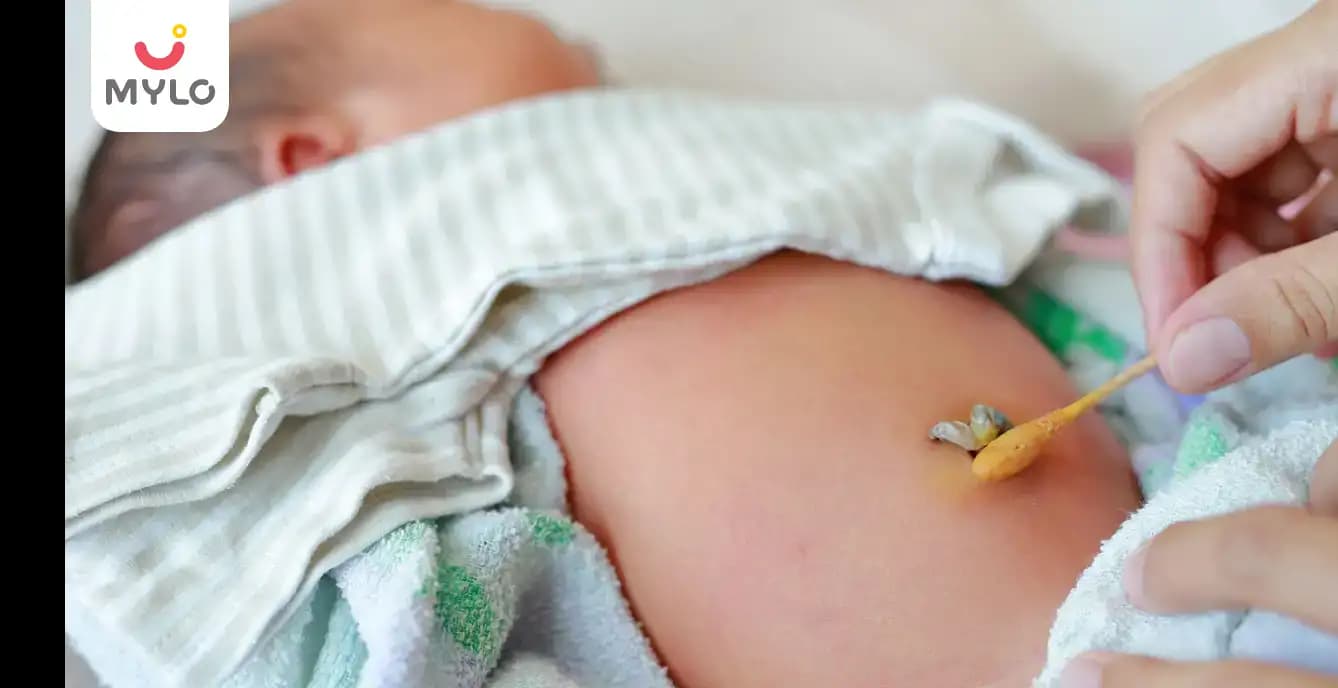
It's crucial to take proper care of your newborn baby's umbilical cord in the first few weeks to avoid any infections. Your healthcare practitioner will cut the cord at birth, but a little will remain attached to the newborn. After three weeks, it should have dried out and fallen off all by itself. Remember not to yank the cord out by yourself. To avoid infections, make sure the cord is clean and dry.
What is the Umbilical Cord?
In pregnancy, the umbilical cord is the connection between mother and child. Because of the cord, your baby will receive oxygenated and nutrient-rich blood. The waste products of the infant are also removed via the cord. Your baby's umbilical cord has two arteries and one vein in it, and it is connected to your placenta.
Your newborn baby will have no further need for the umbilical cord after birth. A small section of the umbilical cord, known as a "stump," will remain attached to the baby's belly button after the procedure. Following the first few weeks of life, the stump will dry out and fall off on its own.
You may also like: First 24 hours: Bathing Your Newborn
Why Your Infant Has a Stump of the Umbilical Cord?
Your newborn has a stump of the umbilical cord because it is the part left over after the cord is cut at birth. The umbilical cord is a flexible, tube-like structure that connects the baby to the placenta in the mother's womb. The stump is usually about one to two inches long and should be kept clean and dry until it naturally falls off on its own, which typically occurs between 5 to 15 days after birth. It is important to take care of the stump to prevent infection and ensure proper healing.
The umbilical stump dries up and falls off sometime between the first and the third weeks\ after birth. In the meantime, be gentle with the affected area in the following ways:
- Make sure the stump stays dry
- Stick with sponge baths using gentle baby wipes
- Let the stump fall off on its own
- Careful diapering choices
How Does the Umbilical Cord Look Like?
The umbilical cord can twist and turn and has the appearance of a spongy tube. The cord is covered in a jellylike material. Your doctor or midwife will clamp the umbilical cord and cut it, leaving behind a short piece called the umbilicus. It usually takes a few weeks for the stump to dry and fall out. The stump shrinks and turns from yellowish green to brown to black as it dries up and eventually falls off.
Importance of Caring for the Umbilical Cord
Your responsibility as a parent is to keep your baby’s umbilical cord clean and dry until it falls off. Your child is at risk for infection at the stump of the umbilical cord if you don't treat it appropriately.
You may also like: 10 Useful Baby Care Tips for New Parents
What Happens to the Baby’s Umbilical Cord After Birth?
Your newborn no longer needs the umbilical cord once it can breathe and feed independently. The umbilical cord will be clamped and then cut by your healthcare provider. When this happens, your baby is deprived of the oxygen and nutrients usually delivered to it through your blood.
Does the Umbilical Cord of My Child Have Any Sensation?
Your infant cannot feel anything in the umbilical cord since there are no nerve endings. When the umbilical cord is cut, your baby will not feel discomfort. As the cable dries, shrinks, and comes off, it poses no danger to your child.
How Should I Handle the Umbilical Cord of My Newborn?
All you have to remember while dealing with your baby’s umbilical cord is that do not meddle with it unnecessarily until you see any signs of risk. Let it wear off on its own.
You may also like: New Born Baby Growth Stage
How Do I Care For My Baby’s Belly Button Once the Umbilical Cord Has Been Removed?
After you and your baby leave the hospital, you'll need to tend to the umbilical cord. To avoid infection, ensure the cord stump is always dry and clean. When caring for your infant, remember to do the following with their umbilical cord:
- Putting the cord out in the open to dry. Avoid using topical remedies, especially alcohol, which can only speed up drying.
- To prevent the umbilical cord from getting wet, always tuck the diaper's front down below the cord and toward the baby's tummy after changing the diaper.
- Give your infant a sponge bath. In a towel, gently scrub your baby's skin using a sponge or washcloth. Until the umbilical cord breaks off, you shouldn't bathe your infant in a bathtub.
- To remove the stump, one must simply wait for it to fall off. Don't take your baby's stump out by yourself, even if it seems to be dangling or hanging by a thread; doing so could cause serious injury.
- Don't risk your baby's health by yanking on the umbilical cord. Keep an eye out for any signs of infection.
What Benefits Can You Expect if You Take Care of the Umbilical Cord Stump Until It Comes Off?
Infections can be avoided, and your newborn can remain healthy if you take care of the umbilical cord stump. And always remember that it is absolutely normal for the umbilical cord to fall off naturally as your child matures.
What Risks Might Arise Near the Umbilical Cord?
Amputation stumps are prone to infection. The following signs and symptoms indicate infection:
- The stump discharges a foul-smelling, clear-to-yellow fluid (pus).
- When the skin around your baby's umbilical cord turns red or swells, seek medical attention immediately.
- Medical attention should be sought when a child's temperature reaches or exceeds 100.4 degrees Fahrenheit (38 degrees Celsius).
- Your kid is too drowsy or listless to do anything (fatigue).
- Your child's eating habits need some work.
- Low muscle tone is a problem in your youngster (hypotonia).
Here are some other umbilical cord related risks that can occur during pregnancy or after birth:
1. Umbilical granuloma
Even after the stump falls off, your baby's skin may still have a small amount of tissue from the stump. A pink or red scar tissue lump may develop around the belly button. Yellow or clear fluid may ooze from the granuloma, but it often disappears after a week. Your baby should consult a pediatrician if the granuloma lasts more than a week.
2. Umbilical hernia
A little lump or bulging under your child's belly button, giving them an "outie" appearance, is an umbilical hernia. This is called "intestine obstruction," when a piece of your baby's intestines gets stuck in the abdominal hole. Innocent umbilical hernias draw extra attention if your baby screams. Within 18 months, a hernia will usually heal on its own.
3. Umbilical cord prolapse
The occurrence of an umbilical cord prolapse is a rare but potentially life-threatening obstetric emergency. When this happens, the fetal presenting part presses down on the prolapsed chord, squeezing it between the cervix and the birth canal. Fetal hypoxia can occur as a result, which increases the risk of stillbirth.
How Long Does It Take To Recover?
Your newborn baby should lose the umbilical stump within the first several weeks. You can switch from sponge baths to tub baths once the stump falls out and there is no longer any bleeding. You can skip folding the front of the diaper now that the umbilical cord is no longer an issue. If your baby's stump doesn't fall off after three weeks or if their belly button is red or inflamed, you should take them to the doctor.
When Should I Schedule a Visit With My Doctor?
You must visit your child’s doctor if:
- The umbilical cord takes longer than three weeks to fall off.
- Turns red or gets swollen.
- Starts bleeding without stopping.
- You find leaking pus or any other fluid.
With proper care of the umbilical cord and taking some precautions, you can avoid any infections and risks to your baby's health and wellbeing.
Trusted by New Parents Caring for Their Newborn
Gentle, baby-safe essentials to help you keep the umbilical stump clean, dry, and infection-free during those delicate first weeks.
Airprime Premium Diaper Pants S (5–9 kg, 26 Count) + 100% Plant-Based Baby Wipes (Pack of 2)
Rash-free | Paediatrician Tested | Dermatologically Tested | Breathable | Expert Approved | No Harsh Bleaching Chemicals | Super-Saver Combo
Baby Wellness Kit | Skincare Gift Set for Newborns


Article Posted Under
Related Articles




Related Topics
.webp&w=32&q=75)
Medical Disclaimer
This content is for informational purposes only and should not replace professional medical advice. Consult with a physician or other health care professional if you have any concerns or questions about your health. If you rely on the information provided here, you do so solely at your own risk.


AWARDS AND RECOGNITION

Mylo wins Forbes D2C Disruptor award

Mylo wins The Economic Times Promising Brands 2022
AS SEEN IN












- Mylo Care: Effective and science-backed personal care and wellness solutions for a joyful you.
- Mylo Baby: Science-backed, gentle and effective personal care & hygiene range for your little one.
- Mylo Community: Trusted and empathetic community of 10mn+ parents and experts.


Product Categories
Baby Carrier | Baby Soap | Baby Wipes | Stretch Marks Cream | Baby Cream | Baby Shampoo | Baby Massage Oil | Baby Hair Oil | Stretch Marks Oil | Baby Body Wash | Baby Powder | Baby Lotion | Diaper Rash Cream | Newborn Diapers | Teether | Baby Kajal | Baby Diapers Pants | Cloth Diapers | Laundry Detergent | Lactation Granules |