


Orders

Profile

25+ Root Vegetables Names for Kids: A-Z Guide With Hindi, Tamil and Bengali (2026)
 2 Likes|
 15 min
AI-Generated Summary
Quick overview in 30 seconds.webp&w=32&q=75)
Summary
- Root vegetables grow underground and store energy in their roots, making them rich in carbohydrates, vitamins, minerals, and fiber essential for kids' healthy diets.
- Common root vegetables include carrots, potatoes, beetroot, turnips, radishes, sweet potatoes, onions, garlic, ginger, turmeric, parsnips, horseradish, and yam, each with unique flavors and shapes.
- Identify root vegetables by their thick, fleshy roots, rough earthy exterior, sweet earthy taste, and the fact that the edible part of the plant is the root itself.
- What helps kids enjoy healthy mealtime learning? Explore our Adjustable & Reusable Cloth Diaper - Rainbow, Pet Love & Heart Doodles - Pack of 3.
TL;DR
Indian kids should learn at least 20 root vegetables by age 6: classic staples (aloo, gajar, pyaaz, lehsun, adrak), Indian regional roots (suran, arbi, kachalu, singhada, kamal kakdi), winter specials (shaljam, chukandar, mooli, black carrot) and global picks (parsnip, horseradish, kohlrabi, tapioca). Root vegetables grow underground and store energy as starch, making them rich in carbs, fiber, iron, potassium and vitamin C. The fastest way to teach root veggie names to Indian kids is the bilingual pull-out test: pull a fresh root from a bag, ask "yeh kya hai?", and reward correct English plus Hindi names with stars.
Quick Answer
Common root vegetables for Indian kids are aloo (potato), gajar (carrot), mooli (radish), chukandar (beetroot), pyaaz (onion), lehsun (garlic), adrak (ginger), haldi (turmeric), shakarkand (sweet potato), shaljam (turnip), suran (elephant foot yam) and arbi (colocasia). Teach Indian children both the English name and the Hindi or regional name (Marathi, Tamil, Bengali) so they recognise the vegetable at home, school and the local sabziwala.
Author: Anupama Chadha, Senior Content Editor, Mylo Parenting Desk
Nutritionally reviewed by: Mylo Editorial Board (aligned with ICMR Dietary Guidelines for Indian Children)
Last updated: 2 June 2026
Key Takeaways
- Indian kids should know at least 20 root vegetables by primary school
- Root vegetables grow underground, storing energy as starch in the root or tuber
- Bilingual learning works best: English name + Hindi/regional name taught together
- Aloo (potato), gajar (carrot), pyaaz (onion) are the top 3 daily-use roots in Indian kitchens
- Indian root vegetables provide iron, potassium, vitamin A and C, key nutrients for growing kids
- Visual learning (sabziwala visits, garden walks, sensory bins) beats rote memorisation
What Are Root Vegetables? (Simple Answer for Kids)
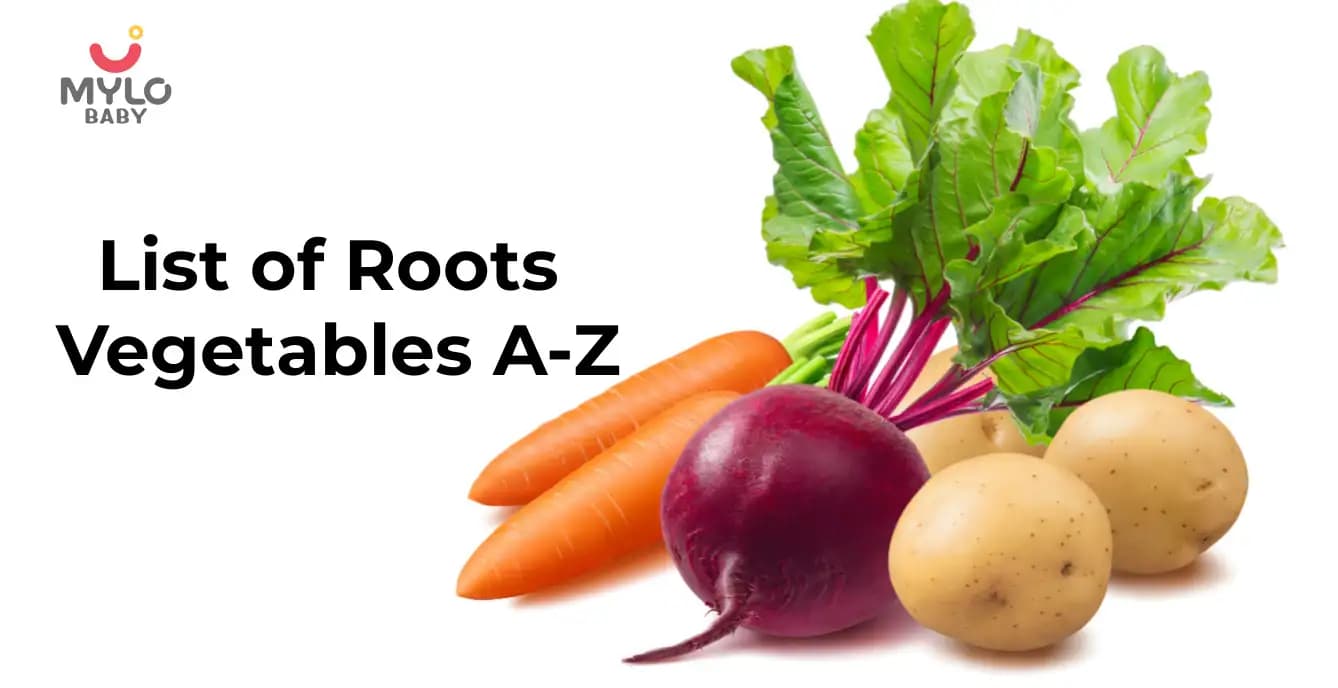
Root vegetables are edible plant parts that grow underground. The plant stores its food (mostly starch) in the root, tuber, bulb or rhizome, which is why root veggies feel firm, heavy and starchy.
There are 5 types of underground vegetables:
- Taproots: carrot, radish, beetroot, turnip, parsnip
- Tubers: potato, sweet potato, yam, suran
- Bulbs: onion, garlic, shallot
- Rhizomes: ginger, turmeric, galangal
- Corms: arbi (colocasia), water chestnut, kachalu
All five groups grow underground and store energy, but their shape, texture and use in Indian cooking differs.
Complete Bilingual Root Vegetables List (English + Hindi + Devanagari)
Staple Indian Root Vegetables
| English Name | Hindi Name | Devanagari | Type | Best Dish for Kids |
|---|---|---|---|---|
| Potato | Aloo | आलू | Tuber | Aloo paratha, aloo tikki, French fries |
| Sweet Potato | Shakarkand | शकरकंद | Tuber | Roasted shakarkand chaat, halwa |
| Carrot | Gajar | गाजर | Taproot | Gajar halwa, gajar matar, salad |
| Black Carrot | Kala Gajar | काला गाजर | Taproot | Kanji (Punjabi winter drink) |
| Radish (White) | Mooli | मूली | Taproot | Mooli paratha, salad, raita |
| Red Radish | Lal Mooli | लाल मूली | Taproot | Salad, garnish |
| Beetroot | Chukandar | चुकंदर | Taproot | Beetroot halwa, juice, salad |
| Onion | Pyaaz | प्याज़ | Bulb | Base for almost every Indian sabzi |
| Garlic | Lehsun | लहसुन | Bulb | Tempering, paste in curries |
| Ginger | Adrak | अदरक | Rhizome | Ginger tea, sabzi tempering |
| Turmeric (fresh) | Haldi | हल्दी | Rhizome | Haldi doodh, pickle |
| Turnip | Shaljam | शलजम | Taproot | Shaljam sabzi, Kashmiri yakhni |
| Elephant Foot Yam | Suran / Jimikand | सूरण / जिमीकंद | Corm | Suran ki sabzi (Bihari, UP classic) |
| Colocasia | Arbi / Ghuiyan | अरबी / घुइयाँ | Corm | Arbi ki sabzi, fried arbi |
| Purple Yam | Kachalu | कचालू | Tuber | Kachalu chaat (Delhi style) |
| Water Chestnut | Singhada | सिंघाड़ा | Corm | Singhade ka atta (vrat food), salad |
| Lotus Stem | Kamal Kakdi / Bhein | कमल ककड़ी | Rhizome | Bhein ki sabzi (Punjabi, Kashmiri) |
| Tapioca / Cassava | Kappa | कप्पा | Tuber | Kappa with fish (Kerala classic) |
| Yam (regular) | Ratalu | रतालू | Tuber | Ratalu sabzi |
| Galangal | Kulanjan | कुलंजन | Rhizome | Ayurvedic teas, soups |
Global Root Vegetables (Increasingly Available in Indian Markets)
| English Name | Hindi Name | Devanagari | Best For |
|---|---|---|---|
| Parsnip | Parsnip / Saphed Gajar | पार्सनिप | Roasted, soup |
| Horseradish | Pahadi Mooli / Tikhi Mooli | पहाड़ी मूली | Pickle, sauce |
| Kohlrabi | Ganth Gobhi | गांठ गोभी | Sabzi, salad |
| Rutabaga | Swedish Turnip | रूतबागा | Mash, roasted |
| Daikon Radish | Japani Mooli | जापानी मूली | Pickle, salad |
| Celeriac | Celery Root | सेलेरी रूट | Soup, mash |
| Jicama | Mishri Kand | मिश्री कंद | Salad sticks, raw |
| Salsify | Oyster Plant | सॉल्सिफाई | Soup, mash |
Root Vegetable Names in Indian Regional Languages
Help your child recognise root veggies wherever they live or visit family.
Potato (आलू)
Marathi: Batata, Bengali: Aloo, Tamil: Urulai kizhangu, Telugu: Bangaladumpa, Kannada: Aloo gadde, Malayalam: Urulakizhangu, Gujarati: Bataka, Punjabi: Aloo
Carrot (गाजर)
Marathi: Gajar, Bengali: Gajor, Tamil: Carrot / Mullangi varieties, Telugu: Gajaramu, Kannada: Carrot / Gajjari, Malayalam: Carrot, Gujarati: Gajar, Punjabi: Gajar
Radish (मूली)
Marathi: Mula, Bengali: Mulo, Tamil: Mullangi, Telugu: Mullangi, Kannada: Mullangi, Malayalam: Mullangi, Gujarati: Muri, Punjabi: Mooli
Beetroot (चुकंदर)
Marathi: Beet, Bengali: Beet, Tamil: Beetroot, Telugu: Beetroot, Kannada: Beetroot, Malayalam: Beetroot, Gujarati: Beet, Punjabi: Chukandar
Onion (प्याज़)
Marathi: Kanda, Bengali: Peyaaj, Tamil: Vengayam, Telugu: Ulli, Kannada: Erulli, Malayalam: Sevvulli, Gujarati: Kanda / Dungali, Punjabi: Gandda
Garlic (लहसुन)
Marathi: Lasun, Bengali: Roshun, Tamil: Poondu, Telugu: Vellulli, Kannada: Bellulli, Malayalam: Veluthulli, Gujarati: Lasan, Punjabi: Thom
Ginger (अदरक)
Marathi: Aale, Bengali: Ada, Tamil: Inji, Telugu: Allam, Kannada: Shunti, Malayalam: Inji, Gujarati: Aadu, Punjabi: Adrak
Turmeric (हल्दी)
Marathi: Halad, Bengali: Holud, Tamil: Manjal, Telugu: Pasupu, Kannada: Arishina, Malayalam: Manjal, Gujarati: Halad, Punjabi: Haldi
Sweet Potato (शकरकंद)
Marathi: Ratale, Bengali: Misti aloo, Tamil: Sakkaravalli kizhangu, Telugu: Chilakada dumpa, Kannada: Genasu, Malayalam: Madhura kizhangu, Gujarati: Shakkariya, Punjabi: Shakarkand
Colocasia (अरबी)
Marathi: Alu, Bengali: Kachu, Tamil: Seppankizhangu, Telugu: Chamadumpa, Kannada: Kesuvina gadde, Malayalam: Chembu, Gujarati: Patra (leaves) / Arvi, Punjabi: Arbi
Nutritional Benefits: Why Indian Kids Need Root Vegetables
ICMR (Indian Council of Medical Research) Dietary Guidelines recommend root vegetables in daily Indian meals because they offer cheap, locally grown, energy-dense nutrition.
| Nutrient | Found In | Helps With |
|---|---|---|
| Complex carbs | Aloo, shakarkand, suran, arbi | Energy for school, play |
| Vitamin A (beta carotene) | Gajar, shakarkand, kala gajar | Eye health, immunity |
| Iron | Chukandar, suran, mooli | Prevents anaemia, common in Indian kids |
| Vitamin C | Aloo, mooli, kachalu | Immunity, iron absorption |
| Potassium | Aloo, shakarkand, arbi | Heart and muscle function |
| Fiber | Gajar, mooli, chukandar | Digestion, prevents constipation |
| Folate | Chukandar, suran | Brain development |
| Curcumin | Fresh haldi | Anti-inflammatory |
| Allicin | Lehsun, pyaaz | Immunity, anti-bacterial |
| Gingerols | Adrak | Digestion, anti-nausea |
India-specific context: Root vegetables are the most affordable nutrient source for Indian families across income levels. Aloo, gajar, mooli and pyaaz are available year-round in every Indian sabzi mandi.
Top 10 Easiest Root Vegetables for Picky Indian Eaters
Most Indian kids resist new sabzi at first. These 10 are the easiest entry points.
- Aloo / Potato: Universal kid favourite; paratha, tikki, fries, sabzi
- Gajar / Carrot: Sweet, crunchy; halwa, salad, soup, raw sticks
- Shakarkand / Sweet Potato: Naturally sweet; roasted with chaat masala
- Chukandar / Beetroot: Bright pink colour wins kids; halwa, raita, juice
- Pyaaz / Onion (cooked): Caramelised in every Indian curry
- Mooli / Radish (cooked): Hidden in paratha
- Singhada / Water Chestnut: Crunchy, mildly sweet; salad, atta in vrat
- Arbi / Colocasia (fried): Crispy texture wins kids
- Adrak / Ginger (in tea): Mild dose builds familiarity
- Lehsun / Garlic (cooked): Used in every tadka, kids absorb the taste naturally
Top 10 Indian Recipes That Sneak Root Veggies Into Kids' Meals
- Aloo paratha: Mashed potato stuffed in atta
- Gajar halwa: Carrot grated with milk and ghee
- Aloo tikki chaat: Crispy potato patties with chutneys
- Mooli paratha: Grated radish stuffed paratha
- Shakarkand chaat: Roasted sweet potato with lemon and chaat masala
- Beetroot raita: Grated beetroot mixed with curd
- Suran ki sabzi: Elephant foot yam Bihari style
- Arbi fry: Crispy colocasia chips
- Vegetable cheela: Besan pancake with grated gajar, mooli, pyaaz
- Singhada atta puri (vrat food): Water chestnut flour purified
How to Identify Root Vegetables (For Kids' Learning)
Teach kids these 5 identification rules:
- It grows underground: Pull from soil, not picked from a plant above ground
- It is heavy and firm: Stores starch and water inside
- It often has skin or peel: Brown, red, white, purple, orange skins
- The shape is round, long or knobby: Not flat like a leaf
- The colour inside is usually different from outside: Aloo (brown outside, white inside), chukandar (red outside, dark red inside)
How to Teach Indian Kids Root Vegetable Names: 8 Easy Methods
1. Bilingual Flashcards
Make or buy flashcards with the English name on one side and Hindi name in Devanagari on the other. Add a picture and a 1-line nutrition fact.
2. Sabziwala or Mandi Walk
Take your child to the local sabziwala or sabzi mandi weekly. Point to each root veggie, say its English plus Hindi name.
3. Sensory Bin
Fill a tray with uncooked aloo, gajar, mooli, pyaaz, adrak, lehsun, chukandar. Let the child touch, smell, lift and weigh. Add a magnifying glass for the curious kid.
4. Mini Kitchen Garden
Grow mooli, hara dhaniya (root), gajar in pots on the balcony. Mooli grows in 30 to 40 days; carrot in 70 to 80 days. Hands-on learning lasts a lifetime.
5. Cooking Together
Let your child wash, peel and grate roots. Talk about colour, shape, smell, the dish you will cook.
6. Storytime
Create stories: "Aloo Bhaiya lives underground with his friend Gajar Didi. One day Pyaaz Uncle came visiting." Indian kids respond to family-themed stories.
7. Underground vs Above Ground Sort
Lay out cards of mixed vegetables. Ask the child to sort underground veggies (roots) into one pile, above-ground veggies into another. Builds the core concept.
8. Sabziwala Quiz
Cover one root veggie with a cloth. Let the child put their hand under, touch and guess. Bonus points if they name it in Hindi too.
Common Mistakes Indian Parents Make When Teaching Root Veggie Names
- Using only English names, leaving the child blank at dadi-nani's kitchen
- Teaching only aloo and gajar, ignoring regional roots like suran, arbi, singhada
- Forcing strong-tasting roots first (raw mooli, adrak), causing aversion
- Skipping the sabziwala visit, missing real-world exposure
- Not adapting to season: Some roots are winter-only (kala gajar, shaljam)
- Calling onion and garlic "not vegetables" in Jain or no-onion households without explaining the type
- Mocking the child for not liking a vegetable, building negative association
Root Vegetables by Season in India
Winter (October to February)
Gajar, kala gajar, shaljam, chukandar, mooli, kamal kakdi, singhada
Summer (March to June)
Aloo (peak), pyaaz (peak), kachalu, ratalu
Monsoon (July to September)
Arbi, suran, jimikand, kappa, fresh haldi
Year-Round
Aloo, pyaaz, lehsun, adrak, gajar (with cold storage), shakarkand, suran
Root Vegetables in Indian Festivals and Vrat (Religious Fasting)
- Singhada (water chestnut) and kachalu (purple yam) are key vrat foods, eaten on Navratri, Janmashtami, Ekadashi
- Suran (elephant foot yam) is a Diwali tradition in Bihar and UP
- Shakarkand (sweet potato) is roasted on Lohri in Punjab
- Kala gajar (black carrot) is the base for Holi-time kanji in North India
- Mooli (white radish) is eaten with breakfast paratha all winter
This builds cultural context along with the name, which Indian kids retain better.
FAQs: Root Vegetables Names for Kids
What are the 10 most common root vegetables in India?
The 10 most common root vegetables in Indian kitchens are aloo (potato), gajar (carrot), pyaaz (onion), lehsun (garlic), adrak (ginger), haldi (turmeric), mooli (radish), chukandar (beetroot), shakarkand (sweet potato) and shaljam (turnip). Together they appear in almost every Indian meal across North, South, East and West India.
Root vegetables ke naam Hindi mein kya hain? (Hinglish)
Hindi mein common root vegetables hain: aloo (potato), gajar (carrot), mooli (radish), chukandar (beetroot), pyaaz (onion), lehsun (garlic), adrak (ginger), haldi (turmeric), shakarkand (sweet potato), shaljam (turnip), suran (elephant foot yam), arbi (colocasia), kachalu, singhada aur kamal kakdi. Bachchon ko English aur Hindi dono naam ek saath sikhayein.
Which root vegetable is best for Indian kids?
Gajar (carrot) is one of the best root vegetables for Indian kids because it is rich in beta-carotene (vitamin A), fiber and natural sweetness. Eaten as gajar halwa, gajar matar sabzi or raw salad sticks, it builds eye health and immunity. Shakarkand (sweet potato) is a close second for similar reasons.
What is the difference between root vegetables and tubers?
A root vegetable is a broad category that includes anything growing underground: taproots (carrot, radish), bulbs (onion, garlic), rhizomes (ginger, turmeric), corms (arbi, singhada) and tubers. A tuber is a specific type of root vegetable where the plant stores food in a swollen underground stem, like aloo (potato), shakarkand (sweet potato) and ratalu (yam).
Mulansathi root vegetables konkonti changle? (Marathi)
Mulansathi sopya aani changle root vegetables mhanje batata (potato), gajar (carrot), kanda (onion), mula (radish), ratale (sweet potato), beet ani aale (ginger). Ya bhajyanmadhe carbs, vitamin A, iron ani fiber changle astat. Gajar halwa, batata paratha ani sweet potato chaat ne suruvat kara.
How many root vegetables should a 5-year-old Indian child eat per day?
ICMR Dietary Guidelines suggest at least 50 to 100 grams of root vegetables daily for Indian children aged 4 to 9, alongside other vegetables. A common Indian meal pattern: aloo or gajar at lunch, mooli or chukandar salad at dinner, plus pyaaz, lehsun and adrak as cooking base ingredients.
Are onions and garlic root vegetables?
Yes, onions and garlic are root vegetables, specifically of the bulb type. They grow underground as layered bulbs (onion) or clustered cloves (garlic). Both are technically modified leaves, not roots, but they are commonly classified under root vegetables because they grow below the soil and store energy.
Which root vegetable should be avoided for babies under 1 year?
For babies under 1 year, avoid raw onion, raw garlic, raw ginger (too strong), whole large potato or carrot chunks (choking hazard) and suran (can cause itching if not properly cooked). Safe early root veggie introductions (after 7 to 8 months) include mashed aloo, pureed gajar, sweet potato mash, well-cooked arbi.
What is the easiest root vegetable to grow at home for kids to learn?
Mooli (radish) is the single easiest root vegetable to grow at home, sprouting in 5 to 7 days and ready to harvest in 30 to 40 days. Gajar (carrot) takes 70 to 80 days. Pyaaz (spring onion) from kitchen scraps grows quickly in water. All three are excellent first growing projects for Indian kids.
Which root vegetables are good for vrat (religious fasting)?
For Indian vrat (Navratri, Janmashtami, Ekadashi, Karva Chauth), the allowed root vegetables include aloo (potato), shakarkand (sweet potato), arbi (colocasia), kachalu (purple yam), singhada (water chestnut), suran (elephant foot yam) and kamal kakdi (lotus stem). Most vrat rules exclude onion, garlic, ginger and turmeric.
Article Posted Under
Related Articles
Is Onion Oil Safe During Breastfeeding: What We Know and What We Do Not
12 min 200+ Adorable Nicknames for Baby in 2026: Indian Parent's Pet Name Guide
18 min 200+ Adorable Nicknames for Baby: The Indian Parent's Guide (2026 Edition)
16 min Is Onion Oil Safe During Breastfeeding: What We Know and What We Do Not
12 min
Related Topics
.webp&w=32&q=75)
Medical Disclaimer
This content is for informational purposes only and should not replace professional medical advice. Consult with a physician or other health care professional if you have any concerns or questions about your health. If you rely on the information provided here, you do so solely at your own risk.


AWARDS AND RECOGNITION

Mylo wins Forbes D2C Disruptor award

Mylo wins The Economic Times Promising Brands 2022
AS SEEN IN












- Mylo Care: Effective and science-backed personal care and wellness solutions for a joyful you.
- Mylo Baby: Science-backed, gentle and effective personal care & hygiene range for your little one.
- Mylo Community: Trusted and empathetic community of 10mn+ parents and experts.


Product Categories
Baby Carrier | Baby Soap | Baby Wipes | Stretch Marks Cream | Baby Cream | Baby Shampoo | Baby Massage Oil | Baby Hair Oil | Stretch Marks Oil | Baby Body Wash | Baby Powder | Baby Lotion | Diaper Rash Cream | Newborn Diapers | Teether | Baby Kajal | Baby Diapers Pants | Cloth Diapers | Laundry Detergent | Lactation Granules |