


Orders
.png&w=48&q=75 "login")
Profile


Wallet

Newborn Skin Peeling: Causes, Is It Normal & How to Care for It
 19 Likes|
 9 min
9 minKey Takeaways
Quick overview in 30 seconds.webp&w=32&q=75)
Summary
- Newborn skin peeling is common in the first few weeks, often caused by vernix caseosa absorption, full-term birth, eczema, or ichthyosis affecting delicate skin.
- Reduce bath time to once or twice weekly, use lukewarm water instead of hot, and avoid harsh chemicals or scrubbing that can irritate baby's sensitive skin.
- Apply hypoallergenic moisturizer after bathing, keep baby hydrated, dress in soft cotton fabrics, use a humidifier, and protect from extreme sun or cold air.
- Looking for gentle skincare to soothe your newborn? Explore our Adjustable & Reusable Cloth Diaper - Blue, Orange & Purple - Pack of 3.

 4.4
4.4TL;DR
Skin peeling in newborns is very common and almost always normal and harmless, especially in the first one to three weeks after birth (AAP HealthyChildren). Before birth, your baby's skin is coated in a protective waxy layer called vernix caseosa. Once that is gone, the outer layer of skin naturally sheds and peels, often on the hands, feet and ankles. Babies born a little past their due date tend to peel more, because much of the vernix was already lost in the womb. Usually no treatment is needed, just gentle care: fewer, shorter lukewarm baths, a mild baby moisturiser, soft cotton clothes, and keeping baby out of direct sun. Do not peel the skin off yourself. See a doctor if the skin is very red, cracked, weepy, or your baby seems unwell.
Quick Answer
Newborn skin peeling is a normal part of your baby adjusting to life outside the womb. Their skin was protected by a waxy coating (vernix) in the womb, and once it is gone, the top layer flakes and peels, most often in the first few weeks and especially in babies born past their due date. It is usually harmless and clears on its own. Care for it gently: shorter lukewarm baths a couple of times a week, a fragrance-free baby moisturiser, soft cotton clothing, and no direct sun. Keep your baby well fed (breast milk or formula, not water) to stay hydrated. See a doctor if the skin looks very dry, cracked, red or infected.
Author: Mylo Editorial Team, Mylo Parenting Desk Medically reviewed by: Mylo Editorial Board, aligned with AAP and IAP (Indian Academy of Pediatrics) guidance Last updated: 8 July 2026
Medical Disclaimer: This article is for informational purposes only and is not a substitute for professional medical advice. Most newborn skin peeling is normal, but see your paediatrician if the skin is deeply cracked, bleeding, weepy, very red, or if peeling comes with fever or your baby feeding poorly, as these may need medical care.
Key Takeaways
- Newborn skin peeling is common and almost always normal and harmless (AAP)
- It happens as the outer skin sheds after the protective vernix is gone
- Babies born past their due date usually peel more
- It usually needs no treatment and clears in one to three weeks
- Gentle care helps: fewer, shorter lukewarm baths and a mild baby moisturiser
- Keep baby hydrated through feeds (breast milk or formula), NOT water under 6 months
- Never peel or pull the flaking skin off yourself
- See a doctor if skin is cracked, bleeding, weepy, very red, or baby is unwell
Is Newborn Skin Peeling Normal?
Yes. Peeling skin in the first few weeks is one of the most common and usually harmless things you will notice about your newborn. It can look alarming, but it is simply your baby's skin adjusting to life outside the womb.
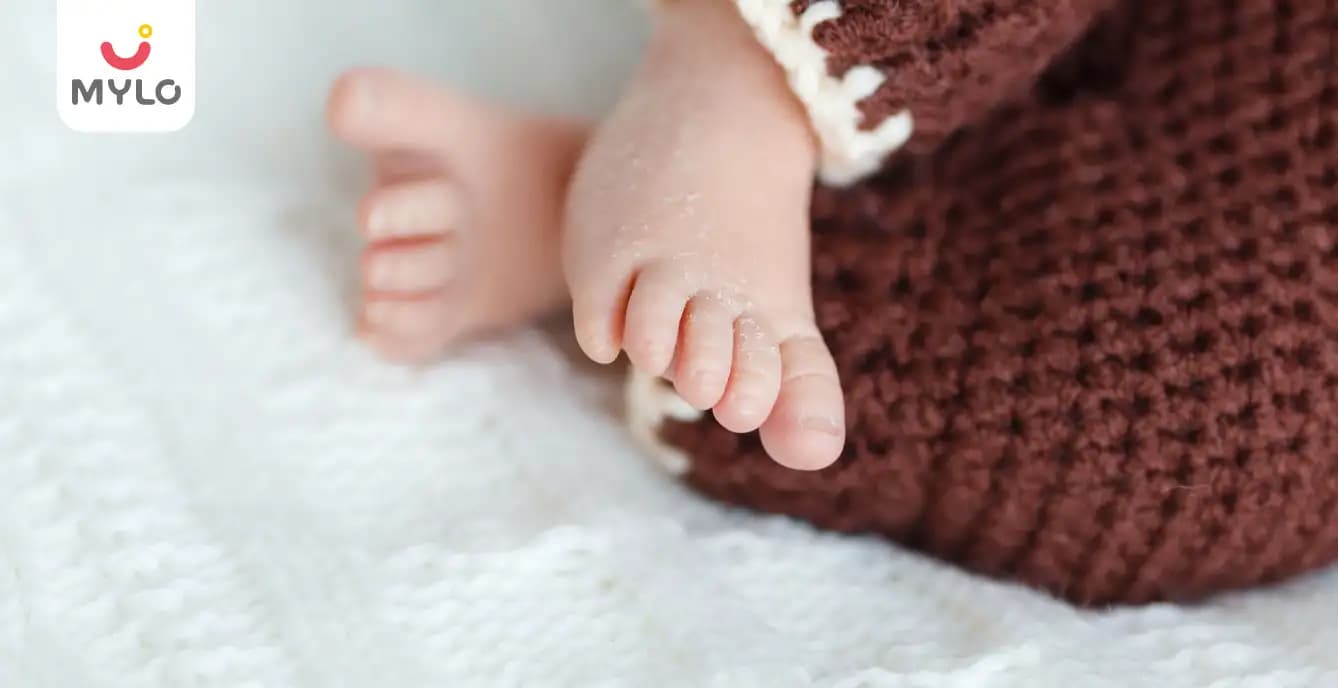
In the womb, your baby's skin is coated in vernix caseosa, a waxy, protective layer that shields the skin from the amniotic fluid and keeps it moisturised. After birth (or once the vernix is wiped away), the outermost layer of skin begins to shed and peel, often on the hands, feet and ankles. This is normal shedding, not a sign that anything is wrong.
What Causes Newborn Skin Peeling?
| Cause | What It Means |
|---|---|
| Loss of vernix (most common) | Once the protective vernix is gone, the top layer of skin naturally sheds and peels |
| Being born past the due date | Post-term babies lost more vernix in the womb, so they tend to peel more |
| Dry environment | Cold weather, heating or air conditioning can dry the skin and increase peeling |
| Eczema (less common) | Makes skin dry, itchy and irritated; tends to appear as red, rough patches |
| Ichthyosis (rare) | A genetic condition causing persistently dry, scaly skin; needs a doctor's diagnosis |
Important correction to a common myth: vernix does not "clog pores" and cause peeling. In fact, leaving vernix on the skin for a while after birth helps protect and moisturise it. Peeling happens after the vernix is gone, not because of it.
How to Care for Peeling, Dry Newborn Skin
Most peeling clears on its own, but gentle care keeps skin comfortable and reduces dryness.
- Bathe less often, and keep baths short: two to three times a week is plenty for a newborn; too much water dries the skin
- Use lukewarm, not hot, water: hot water strips natural oils and worsens dryness
- Moisturise after baths: apply a fragrance-free, hypoallergenic baby moisturiser or cream while the skin is still slightly damp
- Keep baby well fed: hydration for a newborn comes from breast milk or formula, do NOT give water before 6 months
- Avoid extreme temperatures: protect baby from cold wind and dry heat; keep the room comfortable
- Use mild products only: wash gently with plain water or a mild baby cleanser; avoid scrubbing and harsh soaps
- Dress baby in soft cotton: breathable natural fabrics reduce irritation
- Add moisture to the air: a humidifier in baby's room helps in dry weather
- Keep baby out of direct sun: newborn skin is very delicate, and sunscreen is generally not recommended under 6 months, so use shade and clothing instead
One thing not to do: never peel, rub or pull off the flaking skin. Let it come away on its own to avoid hurting the delicate skin underneath.
When Should You See a Doctor?
Simple peeling rarely needs a doctor, but check with your paediatrician if you notice:
- Deep cracks, bleeding or weeping skin
- Very red, inflamed or spreading rashes
- Skin that looks infected (warm, swollen, pus)
- Persistent, thick, scaly skin (possible ichthyosis or eczema)
- Peeling with fever, poor feeding, or a baby who seems unwell
Your doctor can identify any underlying condition and suggest the right treatment.
Indian Context
In India, newborns are often given daily oil massages (malish) and frequent baths, sometimes with besan or other home mixes. A gentle massage with a baby-safe oil can be soothing, but avoid daily long baths and harsh scrubbing, which dry the skin and worsen peeling. Skip strong home remedies like besan scrubs or mustard oil rubs on very delicate peeling skin, and choose a mild, fragrance-free moisturiser instead. In dry winter months or in AC rooms, a humidifier and lighter, more frequent moisturising help.
Myths vs Facts
| Myth | Fact |
|---|---|
| Vernix clogs pores and causes peeling | Vernix protects the skin; peeling happens after it is gone, not because of it |
| Peeling means your baby's skin is unhealthy | It is normal shedding and almost always harmless |
| Give water to keep a peeling newborn hydrated | Under 6 months, hydration comes from breast milk or formula, not water |
| You should peel or scrub the flaky skin off | Never do this; let it shed naturally to protect the skin underneath |
Frequently Asked Questions
Naye born baby ki skin ka chilna (peeling) normal hai kya? (Hinglish)
Haan, janm ke baad pehle kuch hafton mein skin ka chilna bilkul normal aur harmless hota hai. Garbh mein baby ki skin par vernix naam ki protective parat hoti hai, uske hatne ke baad upar ki skin apne aap utarti hai, khaaskar haath, pair aur ankle par. Aksar iska koi ilaaj zaroori nahin, bas halki care kaafi hai.
Peeling skin wale newborn ki care kaise karein? (Hinglish)
Kam aur chhote lukewarm baths dein (hafte mein 2-3 baar), baad mein fragrance-free baby moisturiser lagayein, soft cotton kapde pehnayein, aur direct dhoop se bachayein. Chilti hui skin ko kabhi kheenchein ya ragdein nahin. Baby ko hydrated rakhne ke liye maa ka doodh ya formula hi dein, paani nahin (6 mahine se pehle).
How long does newborn skin peeling last?
It usually clears on its own within about one to three weeks after birth as the outer layer of skin finishes shedding. Gentle care helps in the meantime.
Should I moisturise my newborn's peeling skin?
Yes, a gentle, fragrance-free baby moisturiser after a lukewarm bath helps reduce dryness and peeling. Choose hypoallergenic products and avoid anything with strong fragrance or harsh chemicals.
Can I give my newborn water to stop dry, peeling skin?
No. Babies under 6 months should not be given water; all their hydration comes from breast milk or formula. To help the skin, use a moisturiser and gentle care instead.
References
- American Academy of Pediatrics (HealthyChildren.org). Bathing and Skin Care for the Newborn. www.healthychildren.org
- Cleveland Clinic. Newborn Skin: Peeling and Care. my.clevelandclinic.org
- NHS. Newborn and baby skin. www.nhs.uk
Trusted by Mamas Caring for Newborn Skin
Soft, gentle skincare essentials to soothe and protect your baby's delicate, peeling skin during those tender early weeks.



Related Articles
Mylo: The Made-in-India Pregnancy and Parenting App Built for Indian Parents
 7 min
7 min Diwali During Pregnancy: Safety Tips for Pregnant Women on Crackers, Sweets and Diet
 17 min
 Best Pregnancy and Parenting App in India: 5 Must-Have Features to Look For (2026)
 20 min
 Best Hairstyles for Postpartum Hair Loss and Regrowth
 10 min
Related Topics
.webp&w=32&q=75)
Medical Disclaimer
This content is for informational purposes only and should not replace professional medical advice. Consult with a physician or other health care professional if you have any concerns or questions about your health. If you rely on the information provided here, you do so solely at your own risk.


AWARDS AND RECOGNITION

Mylo wins Forbes D2C Disruptor award

Mylo wins The Economic Times Promising Brands 2022
AS SEEN IN













- Mylo Care: Effective and science-backed personal care and wellness solutions for a joyful you.
- Mylo Baby: Science-backed, gentle and effective personal care & hygiene range for your little one.
- Mylo Community: Trusted and empathetic community of 10mn+ parents and experts.


Product Categories
Baby Carrier | Baby Soap | Baby Wipes | Stretch Marks Cream | Baby Cream | Baby Shampoo | Baby Massage Oil | Baby Hair Oil | Stretch Marks Oil | Baby Body Wash | Baby Powder | Baby Lotion | Diaper Rash Cream | Newborn Diapers | Teether | Baby Kajal | Baby Diapers Pants | Cloth Diapers | Laundry Detergent | Lactation Granules |