


Orders
.png&w=48&q=75 "login")
Profile


Wallet

Left Hand or Right Hand? When Do Toddlers Show Handedness?
 9 min
9 min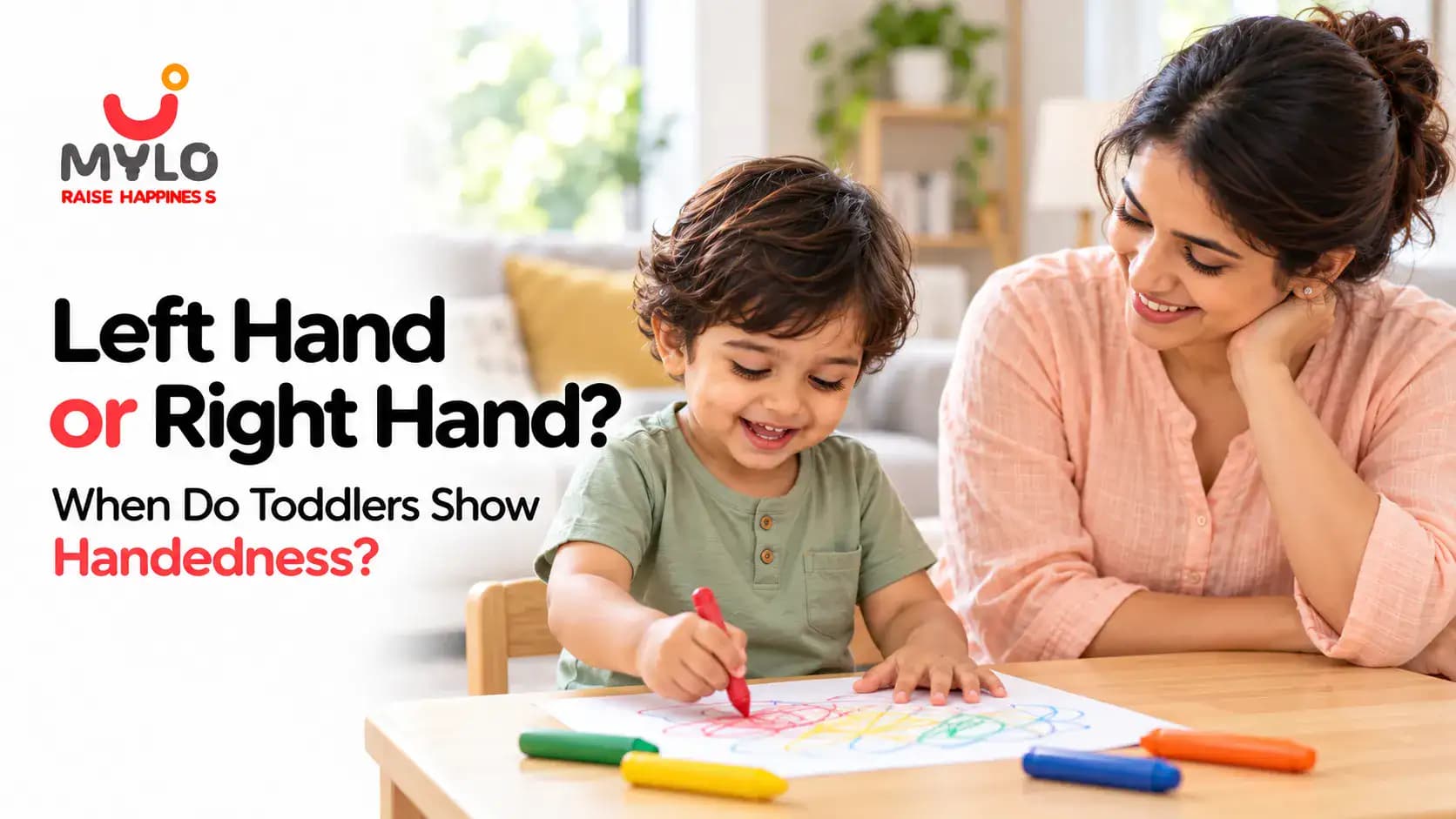
Quick Answer
Most toddlers switch between hands until about age 2. A preference usually starts showing between 2 and 4 years and becomes firm by 4 to 6 years. About 1 in 10 people are left-handed, and that's completely normal. Never force a switch. A strong preference before 12 months needs a doctor's check.
At what age do toddlers choose a dominant hand?
Short answer: A preference starts to show between 2 and 4 years. It usually becomes fixed by 4 to 6 years.
Age | What's typical |
|---|---|
0 to 12 months | Uses both hands. Switching freely is normal. |
12 to 24 months | Switches a lot, sometimes leans to one side for a few weeks |
2 to 3 years | A favourite hand starts to show for spoons, crayons and throwing |
3 to 4 years | The preference gets clearer but can still change |
4 to 6 years | Handedness is usually set before school writing begins |
The Royal Children's Hospital Melbourne's occupational therapy guide gives a similar timeline. Research in Frontiers in Psychology shows hand preference develops gradually over early childhood.
How can I tell if my toddler is left or right-handed?
Short answer: Watch which hand your toddler uses for tasks they choose themselves, many times over a few weeks.
Simple test at home | What to watch for |
|---|---|
Hold a toy at the middle of their chest | Which hand reaches first |
Give a crayon placed in the middle | Which hand holds it to scribble |
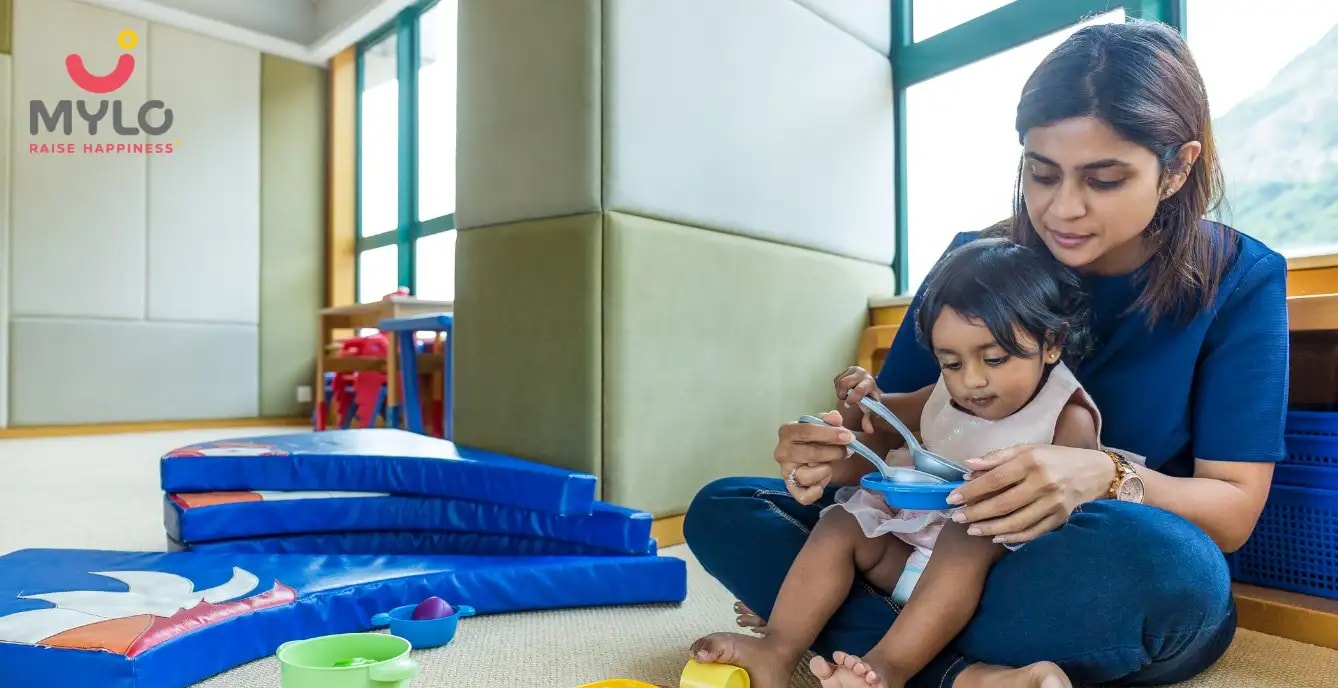
Offer a spoon from the front | Which hand feeds |
Roll a ball and ask them to throw it | Which arm throws |
Ask them to stack blocks | Which hand places the block, and which holds steady |
Always put objects in the middle, not to one side. Otherwise your toddler just uses the closer hand. Note what you see over 2 to 3 weeks, not one day.
Is it normal for a toddler to use both hands?
Short answer: Yes. Switching hands until about age 3 or 4 is normal and healthy.
Using both hands helps toddlers build strength and coordination on both sides. Many children use one hand for eating and the other for throwing. This "mixed handedness" often settles by school age. For more on hand skills by age, see our fine motor milestones and when toddlers start scribbling articles.
What decides whether a child is left-handed?
Short answer: It's a mix of genes and early brain development. Parents can't choose it, and nothing they did caused it.
About 10% of people are left-handed worldwide, according to a large 2020 meta-analysis.
Left-handedness runs in families, but many genes play a small part, so two right-handed parents can have a left-handed child.
It's linked to how the two sides of the brain divide up tasks. It's not a sign of a problem.
Should I make my toddler use the right hand?
Short answer: No. Forcing a switch can frustrate your child and make writing and other skills harder later.
✅ Do | ❌ Don't |
|---|---|
Place objects in the middle and let your toddler choose | Move the spoon or crayon into the right hand |
Praise the effort, not the hand | Scold or tap the left hand |
Sit beside a left-handed child when teaching, on their left | Sit opposite and expect them to copy a mirror image |
Get left-handed scissors later (around 3 to 4 years) | Force right-handed scissors, which pinch lefties |
Tilt paper to the right for left-handed writers in preschool | Call it "ulta haath" (the "wrong hand") |
When is early hand preference a red flag?
Short answer: A strong preference before 12 months, especially with weakness or stiffness on the other side, needs a paediatrician's check.
See a doctor if your toddler... | Why |
|---|---|
Strongly prefers one hand before 12 months | It can point to weakness on the other side |
Keeps one hand fisted, stiff or held close to the body | Possible muscle tone or nerve issue |
Ignores one hand or drops things from it | Possible one-sided weakness |
Also crawled or walked unevenly, dragging one side | Needs a motor assessment |
Loses hand skills they used to have | Always needs a prompt review |
These signs are uncommon, but catching them early helps. Read more on developmental delay.
What should Indian parents know about handedness?
Eating with the right hand is a custom in many Indian homes. That's a family choice, and it's fine to gently model it. Writing, drawing and throwing should stay with whichever hand comes naturally to your child.
Ask grandparents and relatives not to "correct" the left hand.
Preschools: tell the teacher your child is left-handed, so they get a suitable seat (not elbow to elbow with a right-hander) and left-handed scissors.
Free help: if you notice one-sided weakness, ask at your Anganwadi or government health centre about RBSK screening. They can refer your child to a DEIC (District Early Intervention Centre).
Myths vs facts
Myth | Fact |
|---|---|
Left-handedness is bad luck or "ulta". | It's a natural difference in about 1 in 10 people. |
You can tell handedness at 6 months. | A firm preference this early can be a warning sign, not a fact about handedness. |
Left-handed children are slower learners. | Handedness doesn't decide intelligence or school success. |
Switching hands early does no harm. | Forcing a switch can frustrate your child and slow handwriting. |
Using both hands means confusion. | Mixed hand use is normal until 4 to 6 years. |
FAQs
1. Bachcha left handed hai ya right handed, kab pata chalta hai?
Usually between 2 and 4 years. It becomes clear by 4 to 6 years.
2. Kya left hand se khana galat hai?
Medically, no. Eating with the right hand is a family custom. Never force writing or drawing into the right hand.
3. Mera 1 saal ka bachcha sirf ek haath use karta hai, kya chinta ki baat hai?
If your child strongly uses only one hand before 12 months, or the other hand seems weak or stiff, see a paediatrician.
4. Kya dono haath use karna normal hai?
Yes. Using both hands is normal until age 4 to 6.
5. Left handed bachche ko likhna kaise sikhayein?
Sit on their left side, tilt the paper to the right, and use left-handed scissors.
6. Kya left handed hona genetic hai?
Partly. It runs in families, but genes are only one part of it.
Related reads on Mylo
References
The Royal Children's Hospital Melbourne. Hand preference (OT info sheet).
Frontiers in Psychology, 2016. Development of hand preference in early childhood.
Papadatou-Pastou M et al. Human handedness: a meta-analysis. Psychological Bulletin, 2020.
Bimanual hand preference in infants. PMC, 2015.
Ministry of Health and Family Welfare. Rashtriya Bal Swasthya Karyakram (RBSK).
Medical disclaimer
This article is for general information only and does not replace advice from your paediatrician or a paediatric occupational therapist. Every child develops at their own pace. If you notice weakness or stiffness on one side, please see a doctor.


Shop Now
Baby Essentials





Article Posted Under
Related Articles

Related Topics
.webp&w=32&q=75)
Medical Disclaimer
This content is for informational purposes only and should not replace professional medical advice. Consult with a physician or other health care professional if you have any concerns or questions about your health. If you rely on the information provided here, you do so solely at your own risk.


AWARDS AND RECOGNITION

Mylo wins Forbes D2C Disruptor award

Mylo wins The Economic Times Promising Brands 2022
AS SEEN IN













- Mylo Care: Effective and science-backed personal care and wellness solutions for a joyful you.
- Mylo Baby: Science-backed, gentle and effective personal care & hygiene range for your little one.
- Mylo Community: Trusted and empathetic community of 10mn+ parents and experts.


Product Categories
Baby Carrier | Baby Soap | Baby Wipes | Stretch Marks Cream | Baby Cream | Baby Shampoo | Baby Massage Oil | Baby Hair Oil | Stretch Marks Oil | Baby Body Wash | Baby Powder | Baby Lotion | Diaper Rash Cream | Newborn Diapers | Teether | Baby Kajal | Baby Diapers Pants | Cloth Diapers | Laundry Detergent | Lactation Granules |