


Orders
.png&w=48&q=75 "login")
Profile


Wallet

How Much Protein Is Needed During Pregnancy?
 9 min
9 minKey Takeaways
Quick overview in 30 seconds.webp&w=32&q=75)
- Protein needs rise during pregnancy, mostly from the second trimester onward, to support your baby's growth, placenta, extra blood and maternal tissues.
- ACOG suggests about 1.1 grams of protein per kg body weight daily, roughly 71 grams a day, while ICMR-NIN recommends extra protein for Indian mothers.
- Meet your protein target through dal, paneer, eggs, milk, curd, soya, nuts and seeds, spread across every meal and snack for better absorption.
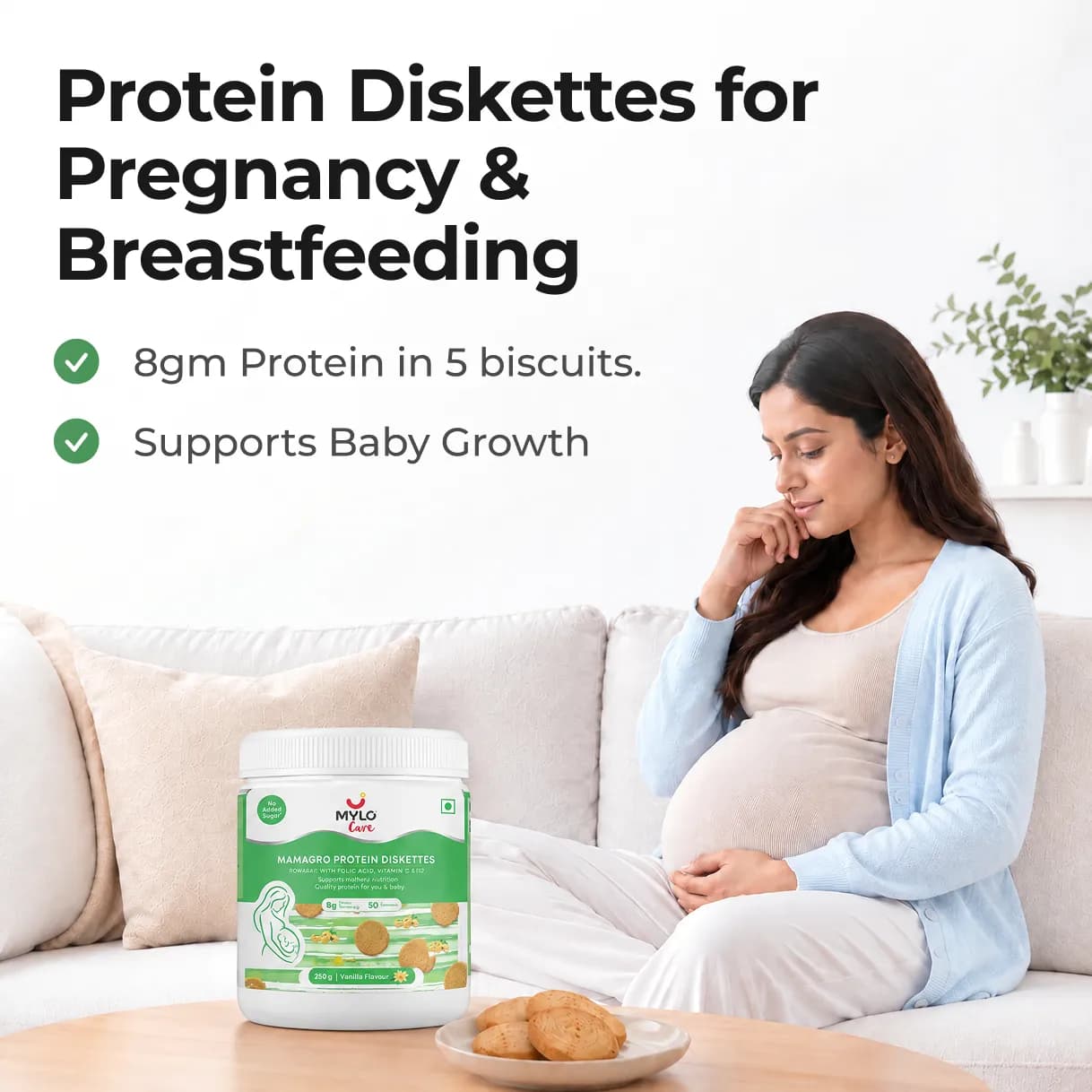
- Struggling to meet your daily protein needs? Explore our MamaGro™ Protein Diskettes - High Protein & No Added Sugar - 250gm (50 Diskettes).
 4.6
4.6Quick Answer
Protein needs rise in pregnancy because your body is building your baby, the placenta, extra blood and new tissue. In the first trimester your needs are close to normal, but from the second trimester onward they go up. A common guide is about 1.1 grams of protein per kilogram of body weight per day, which works out to roughly 71 grams a day for many pregnant women (ACOG). For Indian mothers, the ICMR-National Institute of Nutrition recommends an additional amount of protein each day as pregnancy progresses (ICMR-NIN 2020). Most women need somewhere between 60 and 100 grams a day depending on their weight and trimester. The best approach is to spread good protein across all your meals, from dal, paneer, eggs, milk, curd and soya to nuts and seeds. Always confirm your personal target with your doctor.
Author: Mylo Editorial Team, Mylo Parenting Desk
Medically reviewed by: Mylo Editorial Board, aligned with ICMR-NIN, ACOG and NHS guidance
Last updated: 4 August 2026
Medical Disclaimer: This article is for informational purposes only and is not a substitute for professional medical advice. Your exact protein needs depend on your weight, activity, trimester and any health conditions (such as diabetes or kidney issues). Discuss your personal target and any supplements or protein products with your doctor or dietitian.
Key Takeaways
Protein needs increase in pregnancy, mostly from the second trimester onward.
A common guide is about 1.1 g per kg of body weight per day, roughly 71 g a day for many women (ACOG).
ICMR-NIN recommends extra protein each day for Indian pregnant women (ICMR-NIN 2020).
Most women need between 60 and 100 g a day, depending on weight and trimester.
Protein builds your baby's tissues, the placenta, extra blood and maternal tissue.
Spread protein across all meals rather than eating it all at once.
Good sources include dal, paneer, eggs, milk, curd, soya, nuts and seeds.
How Much Protein Do You Need During Pregnancy?
Your requirement changes as pregnancy progresses. Here is a simple guide.
Stage | Approximate protein need |
|---|---|
First trimester | Close to your pre-pregnancy need (about 0.8 g per kg per day) |
Second and third trimester | Higher, about 1.1 g per kg per day, roughly 71 g a day for many women (ACOG) |
India (ICMR-NIN 2020) | An additional daily amount of protein over your baseline as pregnancy advances |
As a rough example, a woman weighing about 60 kg may need around 66 g of protein a day in later pregnancy, and one weighing about 65 kg around 71 g a day. Individual needs vary with body weight, activity level, and whether you are carrying twins, so treat these as a starting point and confirm your target with your doctor.
Why Does Protein Matter So Much in Pregnancy?
Protein is the building block of the body, and pregnancy is a period of rapid building (NHS):
It helps form your baby's tissues and organs as they grow.
It supports the placenta, which nourishes your baby.
It is needed for your increased blood volume in pregnancy.
It supports the growth of your uterus and breast tissue.
Adequate protein is linked to healthy birth weight and maternal wellbeing.
Best Sources of Protein in Pregnancy
You can meet your needs from everyday Indian foods, both vegetarian and non-vegetarian.
Vegetarian sources | Non-vegetarian sources |
|---|---|
Dal, rajma, chana and other legumes | Eggs |
Paneer, milk, curd and buttermilk | Chicken |
Soya, tofu and soya chunks | Fish (low-mercury, well-cooked) |
Sattu, besan and sprouts | Lean meat |
Nuts and seeds (almonds, peanuts, pumpkin seeds) |
|
Combining cereals with pulses (such as roti with dal, or rice with rajma) gives a good mix of protein through the day.
How to Get Enough Protein Every Day
Include protein at every meal: add dal, curd, paneer, egg or sprouts to breakfast, lunch and dinner.
Choose protein-rich snacks: a handful of nuts, roasted chana, a boiled egg, or a glass of milk.
Pair cereals with pulses for a fuller protein profile.
Spread it out across the day rather than eating most of your protein in one meal, which helps absorption.
Stay hydrated and eat enough overall energy so protein is used for building, not fuel.
What If You Struggle to Meet Your Protein Needs?
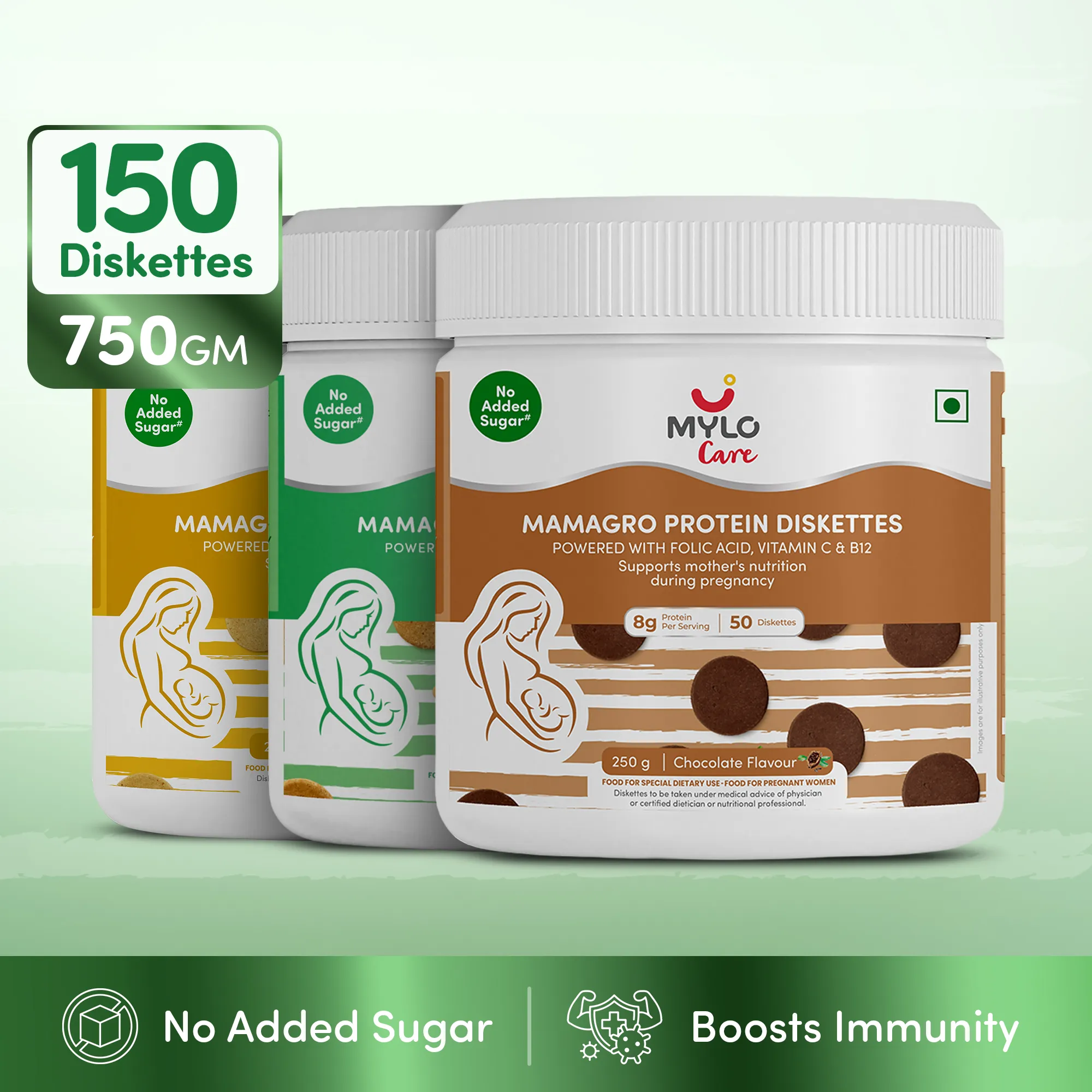
Between nausea, food aversions and a busy routine, many mothers find it hard to hit their protein target through meals alone. A balanced diet always comes first, but a fortified, pregnancy-friendly protein snack can help bridge the gap. For example, Mylo's Protein Biscuits for Pregnancy offer added protein in an easy-to-digest snack, which can support your daily intake alongside regular meals. Treat products like this as a top-up, not a replacement for whole foods, and check with your doctor about how they fit your personal plan, especially if you have gestational diabetes or any dietary restriction.
Can You Have Too Much Protein?
For most healthy pregnant women, meeting the recommended amount from food is safe and beneficial. Very high-protein diets or heavy reliance on supplements are not recommended, and can be a concern if you have kidney issues. Balance is key: aim for your target across a varied diet, and speak to your doctor before using high-dose protein supplements.
Myths vs Facts
Myth | Fact |
|---|---|
You need to double your protein in pregnancy | Needs rise, but to about 1.1 g per kg per day in later pregnancy, not double (ACOG). |
Only non-vegetarians can meet protein needs | Dal, paneer, soya, curd, nuts and seeds can meet needs on a vegetarian diet. |
More protein always means a healthier baby | Aim for the recommended amount; very high-protein diets are not advised. |
A protein supplement can replace meals | Whole foods come first; products are a top-up, used with your doctor's guidance. |
First trimester needs a big protein boost | First-trimester needs are close to normal; the increase comes later (ICMR-NIN, ACOG). |
Frequently Asked Questions
How much protein do I need each day during pregnancy?
A common guide is about 1.1 g per kg of body weight per day from the second trimester, roughly 71 g a day for many women, with most needing between 60 and 100 g depending on weight and trimester (ACOG). ICMR-NIN recommends extra protein for Indian mothers as pregnancy advances.
Does protein need increase in every trimester?
First-trimester needs are close to your normal amount. The increase mainly applies to the second and third trimesters, when your baby grows fastest.
What are the best protein foods in pregnancy?
Dal, rajma, chana, paneer, milk, curd, soya, eggs, chicken, fish, nuts and seeds are all good sources. Pairing cereals with pulses helps.
Can I get enough protein on a vegetarian diet?
Yes. Combining pulses, dairy, soya, nuts and seeds across your meals can meet your needs on a vegetarian diet.
Do I need a protein supplement in pregnancy?
Most women can meet their needs through food. If you struggle, a fortified protein snack can help bridge the gap, but use it alongside meals and with your doctor's guidance.
Can too much protein harm my pregnancy?
Meeting the recommended amount from food is safe. Very high-protein diets or high-dose supplements are not recommended, especially with kidney issues, so aim for balance and check with your doctor.
How do I know if I am getting enough protein?
Include a protein source at every meal and snack, and discuss your intake at your antenatal visits. Your doctor or dietitian can help you set and check a personal target.
References
ICMR-National Institute of Nutrition. Nutrient Requirements for Indians (RDA and EAR), 2020. nin.res.in
American College of Obstetricians and Gynecologists (ACOG). Nutrition During Pregnancy. acog.org
NHS UK. Have a healthy diet in pregnancy. nhs.uk
ICMR-National Institute of Nutrition. Dietary Guidelines for Indians, 2024. nin.res.in

Trusted by expecting mothers meeting daily protein goals
When meals alone feel like too much, a pregnancy-friendly protein snack can gently support your daily intake.

Article Posted Under
Related Articles


Related Topics
.webp&w=32&q=75)
Medical Disclaimer
This content is for informational purposes only and should not replace professional medical advice. Consult with a physician or other health care professional if you have any concerns or questions about your health. If you rely on the information provided here, you do so solely at your own risk.


AWARDS AND RECOGNITION

Mylo wins Forbes D2C Disruptor award

Mylo wins The Economic Times Promising Brands 2022
AS SEEN IN












- Mylo Care: Effective and science-backed personal care and wellness solutions for a joyful you.
- Mylo Baby: Science-backed, gentle and effective personal care & hygiene range for your little one.
- Mylo Community: Trusted and empathetic community of 10mn+ parents and experts.


Product Categories
Baby Carrier | Baby Soap | Baby Wipes | Stretch Marks Cream | Baby Cream | Baby Shampoo | Baby Massage Oil | Baby Hair Oil | Stretch Marks Oil | Baby Body Wash | Baby Powder | Baby Lotion | Diaper Rash Cream | Newborn Diapers | Teether | Baby Kajal | Baby Diapers Pants | Cloth Diapers | Laundry Detergent | Lactation Granules |