

Orders
.png&w=48&q=75 "login")
Profile


Wallet

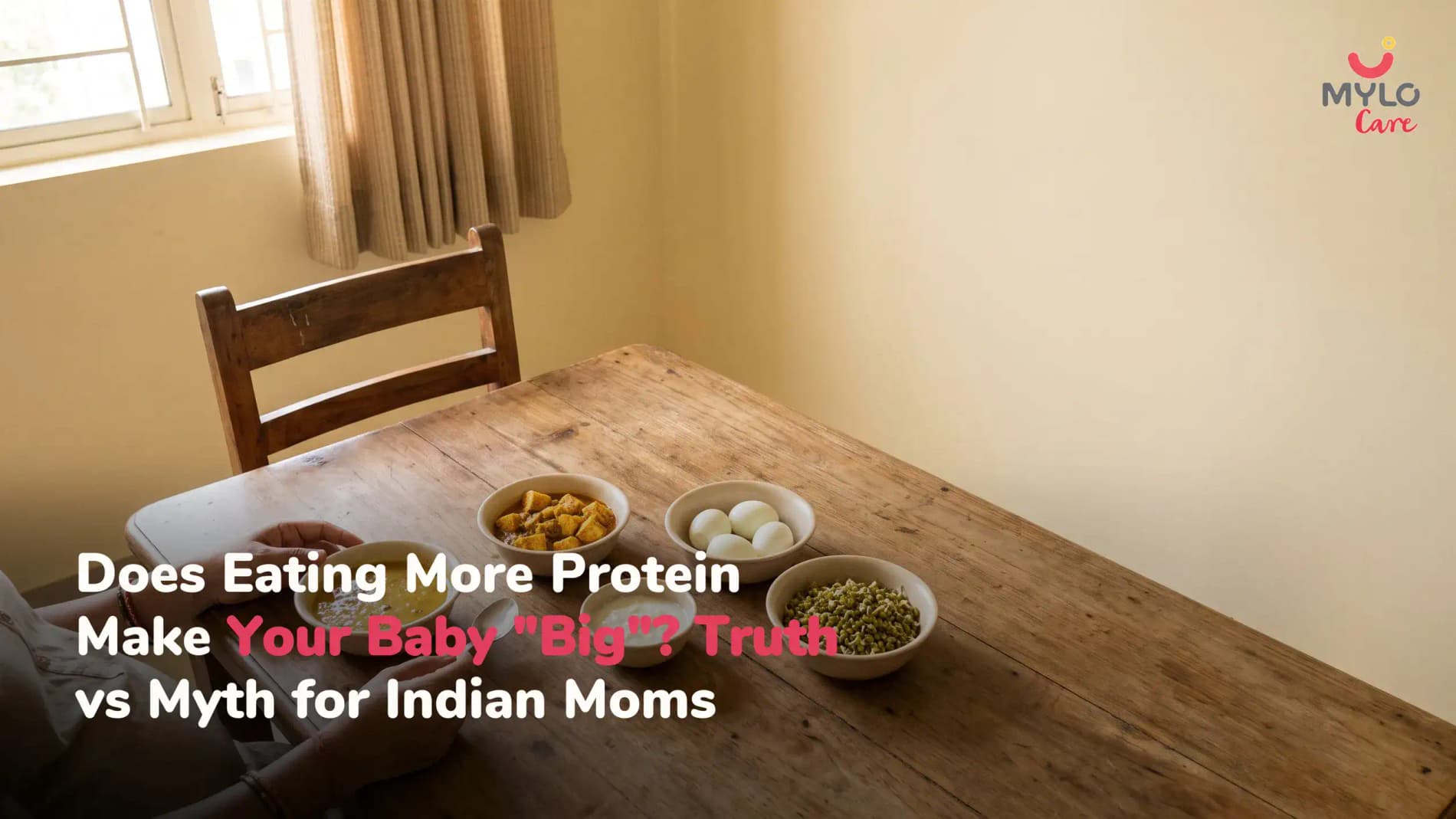
Does Eating More Protein Make Your Baby "Big"? Truth vs Myth for Indian Moms
 11 min

RMNCH+A, MCH & Midwifery, Program Management & National Trainer (ToT/ToN), WHO, MoHFW, ECHO Model · 11 years experience
TL;DR
A common pregnancy myth says eating more protein will make your baby too big, but it is not true (ACOG, ICMR-NIN). Adequate protein supports healthy fetal development, not abnormal growth. What actually shapes a baby's birth weight is a mix of genetics, total calorie intake, blood sugar control (gestational diabetes), overall diet balance and how far along the pregnancy is, not protein alone. In fact, a diet high in sugar and refined carbs affects baby size more than protein does. Protein needs rise to about 50 to 75 grams a day across the trimesters, and meeting them through balanced meals and smart snacks benefits both mother and baby without excessive weight gain.
Quick Answer
No, eating adequate protein does not make your baby too big. Birth weight is shaped by genetics, total calories, blood sugar control, overall diet balance and pregnancy duration, not protein alone. A diet high in sugar and refined carbs matters more. Aim for about 50 to 75 grams of protein a day.
Author: Mylo Editorial Team, Mylo Parenting Desk Medically reviewed by: Mylo Editorial Board, aligned with ACOG, ICMR-NIN, WHO and FOGSI guidance Last updated: 24 June 2026
Medical Disclaimer: This article is for informational purposes only and is not a substitute for professional medical advice. If you have concerns about your baby's growth or your diet, especially with gestational diabetes, follow your doctor's or dietitian's guidance.
Key Takeaways
Eating adequate protein does not automatically make your baby too big (ACOG)
Protein supports healthy fetal development, not abnormal growth
Birth weight depends on genetics, total calories, blood sugar and pregnancy duration
High sugar and refined carbs affect baby size more than protein does
Gestational diabetes, with high blood sugar, can increase fetal growth
Protein needs rise to about 50 to 75 grams a day across the trimesters
Balanced nutrition and portion control matter more than any single nutrient
Distribute protein across meals and snacks for steady, healthy growth
Why Is Protein Essential During Pregnancy?
Protein is one of the most important nutrients in pregnancy because it builds the basic structures of life. Your body uses it to build your baby's organs and tissues, support brain development, form the placenta, increase your blood volume and maintain your own muscle and tissue (WHO, ICMR-NIN). Without enough protein, both your health and your baby's development can be affected. So protein is something to meet, not fear.
Featured answer: No, eating adequate protein does not make your baby too big. Protein supports healthy fetal development, not abnormal growth. A baby's birth weight is shaped by genetics, total calorie intake, blood sugar control, overall diet balance and pregnancy duration, not protein alone. In fact, a diet high in sugar and refined carbs affects baby size more than protein. Aim for about 50 to 75 grams of protein a day across balanced meals and snacks.
How Much Protein Do Pregnant Women Actually Need?
Protein needs rise as pregnancy progresses, and these amounts support healthy growth without excessive weight gain (ICMR-NIN, ACOG).
Trimester | Approximate daily protein |
|---|---|
First trimester | About 50 to 60 grams |
Second trimester | About 60 to 70 grams |
Third trimester | About 70 to 75 grams |
What Actually Determines a Baby's Birth Weight?
Several factors shape whether a baby is small, average or larger, and protein is not the main one (ACOG, WHO).
Factor | How it affects baby size |
|---|---|
Genetics | Parents' body size strongly influences birth weight |
Total calorie intake | Eating far more calories than needed adds weight |
Gestational diabetes | High blood sugar can increase fetal growth |
Overall diet balance | High sugar and refined carbs matter more than protein |
Pregnancy duration | Babies born later naturally weigh more |
Why Does the "Protein Makes Baby Big" Myth Exist?
The myth likely grew because protein is associated with growth and muscle. But growth in pregnancy depends on balanced nutrition, not on overloading one nutrient (ICMR-NIN). Eating appropriate protein supports healthy development, not abnormal size. If anything, the bigger driver of excess fetal growth is high blood sugar and excess calories from sugar and refined carbs, not protein.
What Are the Benefits of Adequate Protein?
Getting enough protein helps you (ACOG, ICMR-NIN):
Maintain steady energy levels
Support your baby's organ development
Reduce fatigue
Feel fuller and curb unhealthy cravings
Balanced protein intake benefits both mother and baby.
What Are Healthy Protein Sources in Pregnancy?
Protein can come from both plant and animal foods (ICMR-NIN).
Source | Examples |
|---|---|
Dairy | Milk, curd, paneer |
Eggs, meat and fish | Eggs, lean meat, fish |
Plant proteins | Dal, rajma, chana, sprouts, soya, nuts, seeds |
Snacks like yogurt, roasted chana, nuts and low-sugar protein biscuits help maintain protein across the day, supplementing balanced meals rather than replacing them.
🤍 Smart Protein Habits, Without the Worry
Focus on balance, not fear of protein:
Distribute protein: Spread it across breakfast, lunch, dinner and snacks
Mind the sugar, not the protein: Limit sugary, refined-carb foods
Watch total calories: Excess calories, not protein, drive weight gain
Keep snacks low-sugar: Yogurt, chana, nuts or a low-sugar protein biscuit
Stay active: Gentle activity, as advised, supports healthy weight
Attend antenatal visits: Growth is monitored properly at checkups
Mind GDM: If you have gestational diabetes, control blood sugar as advised
Healthy growth comes from balance and consistency, not from avoiding protein.
How Do Protein Biscuits Fit In?
Between meals, a low-sugar protein biscuit is a handy top-up. A typical protein biscuit has about 70 to 100 calories and 4 to 8 grams of protein per piece, which suits a moderate, portion-controlled snack (ICMR-NIN, FSSAI).
Type | Protein | Sugar |
|---|---|---|
Regular biscuit | 1 to 2 g | Higher |
Protein-enriched biscuit | 6 to 8 g | Lower |
A label note: regular biscuits may contain 4 to 6 grams of sugar per piece, which can spike blood sugar, while protein versions often contain less. When choosing, look for 6 to 8 grams of protein, low added sugar, moderate calories and clear labelling.
What Are Common Misconceptions About Protein in Pregnancy?
A few myths circulate widely (ACOG, ICMR-NIN):
Eating more protein makes babies too large
Protein supplements are always necessary
Protein-rich foods cause excessive weight gain
In reality, balanced nutrition and portion control matter far more than fearing protein.
Indian Context: What Indian Moms Should Know
Ignore the "protein makes baby big" advice: Adequate protein supports healthy growth; sugar and excess calories are the real concern (ICMR-NIN)
Many Indian diets are protein-short: Especially vegetarian ones, so do not cut protein out of fear; include dal, paneer, curd, eggs and sprouts
Limit sugar and refined carbs: Sweets, sugary drinks and maida-heavy foods affect baby size more than protein
Mind GDM: If you have gestational diabetes, blood sugar control is what matters for fetal growth, so follow your plan
Read FSSAI labels: Check protein, sugar and calories on packaged snacks
Keep up iron and IFA: Anemia is common, so include palak, dates and gur alongside protein
Emergency number: Dial 108 for ambulance services across most states
Myths vs Facts About Protein and Baby Size
Myth | Fact | Source |
|---|---|---|
"More protein makes the baby too big" | Birth weight depends on genetics, calories and blood sugar, not protein alone | ACOG |
"Protein-rich foods cause excess weight gain" | Excess calories and sugar, not protein, drive weight gain | ICMR-NIN |
"Cut protein to keep the baby small" | Cutting protein can harm healthy development | WHO |
"Sugar is fine as long as protein is low" | High sugar can increase fetal growth more than protein | ICMR-NIN |
"Protein supplements are always needed" | Most needs are met through balanced food | ACOG |
Frequently Asked Questions
Does eating more protein make your baby bigger? No. Baby size is influenced by genetics, total calorie intake, blood sugar control and pregnancy duration, not protein alone (ACOG). Adequate protein supports healthy development.
Kya zyada protein khane se baby bada ho jata hai? (Hinglish) Nahi, paryapt protein khane se baby zaroorat se zyada bada nahi hota. Baby ka weight genetics, total calories, blood sugar control (jaise gestational diabetes), aur pregnancy ki avadhi par nirbhar karta hai, sirf protein par nahi. Asal mein, zyada sugar aur refined carbs baby ke size ko protein se zyada prabhavit karte hain.
How much protein should pregnant women eat daily? About 50 to 75 grams a day, depending on the trimester (ICMR-NIN). These amounts support healthy growth without excessive weight gain.
What really affects my baby's birth weight? Genetics, total calorie intake, blood sugar control (gestational diabetes), overall diet balance and how far along the pregnancy is (ACOG). A diet high in sugar and refined carbs affects size more than protein.
How much sugar is in a biscuit? Regular biscuits may contain about 4 to 6 grams of sugar per piece (ICMR-NIN), which can spike blood sugar. Lower-sugar options keep energy steadier.
How many calories are in a typical protein biscuit? Most contain about 70 to 100 calories, with 4 to 8 grams of protein per piece (FSSAI), making them a moderate snack with controlled portions.
Which biscuit has more protein? Protein-enriched biscuits (around 6 to 8 grams per serving) contain significantly more than regular biscuits (around 1 to 2 grams), improving satiety and nutrition (ICMR-NIN).
Should I cut protein to avoid a big baby? No. Cutting protein can harm your baby's healthy development (WHO). Instead, eat balanced protein, limit sugar and refined carbs, watch total calories, and attend your antenatal checkups where growth is monitored.
Final Thoughts: Balance Matters More Than Quantity
Protein is one of the most important nutrients in pregnancy, but eating adequate amounts will not make your baby too big. Healthy growth depends on balanced nutrition, appropriate calories, stable blood sugar and regular prenatal care.
Rather than worrying about myths, focus on a well-rounded diet with protein spread across meals and snacks. When your nutrition is balanced and informed, both you and your baby benefit, supporting a healthy, confident pregnancy journey.
References
American College of Obstetricians and Gynecologists (ACOG). "Nutrition and Weight Gain During Pregnancy." https://www.acog.org/womens-health/faqs/nutrition-during-pregnancy
Indian Council of Medical Research, National Institute of Nutrition (ICMR-NIN). "Dietary Guidelines for Indians." https://www.nin.res.in
World Health Organization (WHO). "Nutrition in Pregnancy." https://www.who.int
NHS UK. "Healthy Eating and Weight in Pregnancy." https://www.nhs.uk/pregnancy/
FOGSI (Federation of Obstetric and Gynaecological Societies of India). https://www.fogsi.org
Food Safety and Standards Authority of India (FSSAI). "Food Labelling Standards." https://www.fssai.gov.in
Article Posted Under
Related Articles
Right Side Abdominal Pain: Common Causes, Home Care and When to See a Doctor
 14 min
 Growth Scan in Pregnancy: When It Is Done, What It Checks and What Your Report Means
 17 min
 Hair Colour During Pregnancy: Is It Safe? Trimester Guide, Mehndi and Safer Options
 14 min
 Mylo: The Made-in-India Pregnancy and Parenting App Built for Indian Parents
 7 min
7 min
Related Topics
.webp&w=32&q=75)
Medical Disclaimer
This content is for informational purposes only and should not replace professional medical advice. Consult with a physician or other health care professional if you have any concerns or questions about your health. If you rely on the information provided here, you do so solely at your own risk.


AWARDS AND RECOGNITION

Mylo wins Forbes D2C Disruptor award
Mylo wins The Economic Times Promising Brands 2022
AS SEEN IN












- Mylo Care: Effective and science-backed personal care and wellness solutions for a joyful you.
- Mylo Baby: Science-backed, gentle and effective personal care & hygiene range for your little one.
- Mylo Community: Trusted and empathetic community of 10mn+ parents and experts.


Product Categories
Baby Carrier | Baby Soap | Baby Wipes | Stretch Marks Cream | Baby Cream | Baby Shampoo | Baby Massage Oil | Baby Hair Oil | Stretch Marks Oil | Baby Body Wash | Baby Powder | Baby Lotion | Diaper Rash Cream | Newborn Diapers | Teether | Baby Kajal | Baby Diapers Pants | Cloth Diapers | Laundry Detergent | Lactation Granules |