


Orders
.png&w=48&q=75 "login")
Profile


Wallet

Cloth Diapers vs Disposables in India: The Real Cost and Rash Math


MBBS, MD (Pediatric) · 26 years experience
 13 min
AI-Generated Summary
Quick overview in 30 seconds.webp&w=32&q=75)
- In India, disposable diaper pants cost Rs 70,000 to Rs 1,30,000 per child across 2.5 years, while a reusable cloth stash of 20-25 diapers is a one-time Rs 13,000 to Rs 30,000 outlay.
- A 2024 study of 1,389 infants found no significant difference in diaper rash between cloth (47.5% mild) and disposable (47.0% mild) users, debunking a common worry.
- What actually causes diaper rash is trapped wetness, friction, contact with urine and stool, and detergent residue, not the diaper category itself.
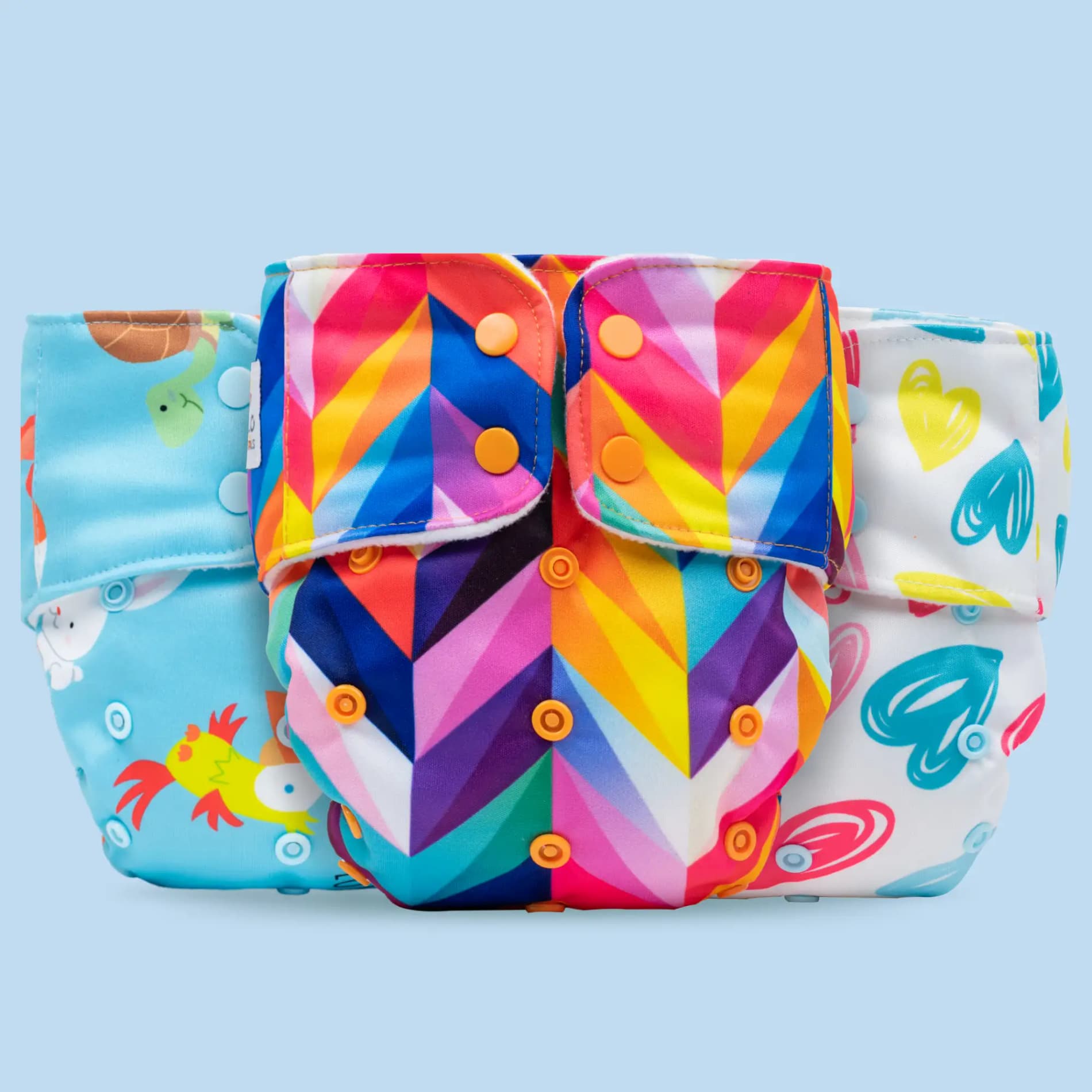
- Which diaper option fits your family best? Explore our Adjustable & Reusable Cloth Diaper - Red & Blue - Pack of 2.
 4.0
4.0Quick answer
In India, the real difference between cloth and disposable diapers is cost and convenience, not diaper rash. Disposable diaper pants retail at roughly Rs 10 to Rs 20 per piece, and at the 6 to 10 daily changes a baby needs, that adds up to around Rs 70,000 to Rs 1,30,000 per child across the roughly 2.5-year diapering window. A reusable cloth stash of 20 to 25 diapers plus accessories costs Rs 13,000 to Rs 30,000 once, and can be reused for later children. On rash, the largest recent study, a 2024 questionnaire-based study of 1,389 infants in the Jornal de Pediatria, found no statistically significant difference in diaper dermatitis between cloth and disposable users (Uber et al., 2025). A Cochrane review reached the same broad conclusion: there is not enough good-quality trial evidence to favour either type. What actually decides whether a baby gets a rash is changing frequency, barrier cream and detergent choices, not the diaper itself.
Author: Mylo Editorial Team, Mylo Parenting Desk
Medically reviewed by: Dr Rajan Gupta, MBBS, MD (Pediatrics), on 27 May 2026
Last updated: 17 July 2026
Medical disclaimer: This article is for informational purposes only and does not replace professional medical advice. Consult a qualified paediatrician for guidance specific to your child.
What does cloth vs disposable actually cost in India?
Paediatric guidance is to change a diaper every 2 to 3 hours and immediately after a stool, which works out to roughly 6 to 10 changes a day, heaviest in the newborn months and tapering as the baby grows (AAP). That changing frequency is the engine of the cost difference.
Disposable diaper pants | Reusable cloth diapers | |
|---|---|---|
Unit cost | Rs 10 to Rs 20 per pant | Rs 500 to Rs 1,000 per diaper |
What you buy | A fresh pack every few weeks, for 2.5 years | A one-time stash of 20 to 25 diapers plus accessories |
Spending pattern | Ongoing: roughly Rs 2,000 to Rs 6,000 per month | Upfront: Rs 13,000 to Rs 30,000 once, then close to zero |
Cost across the diapering window | Roughly Rs 70,000 to Rs 1,30,000 per child | The same Rs 13,000 to Rs 30,000 stash, plus laundry costs |
Reusable for the next child | No | Yes, the same stash |
At 6 to 10 changes a day and Rs 10 to Rs 20 per pant, the daily disposable spend is Rs 60 to Rs 200, about Rs 2,000 to Rs 6,000 a month. Across the roughly 30 months a child is in diapers, and allowing for heavier early use, the total lands around Rs 70,000 to Rs 1,30,000 per child. The cloth stash is a single Rs 13,000 to Rs 30,000 outlay that carries through the whole window. Mylo states that switching to cloth can save up to Rs 20,000 a year compared with disposables, and the saving grows if the same stash is reused for a second child.
What are the hidden running costs of cloth diapers?
Cloth is not free after the initial purchase. The running costs are water, electricity and time: a full-time setup means roughly three wash cycles a week, a real consideration in Indian cities with metered or limited water. Drying is the other constraint, each diaper needs several hours, longer in humid coastal regions or the monsoon, which is exactly why a working stash is 20 to 25 diapers rather than a handful. For disposables, the hidden cost is environmental rather than financial: they add steadily to landfill and take a long time to break down. Neither is a dealbreaker, they just mean the choice is about your household setup, not only the sticker price.
Do cloth diapers cause more diaper rash?
This is the question most parents worry about, and the popular belief that cloth causes more rash is not supported by the best recent evidence. The largest recent comparison, a 2024 study in the Jornal de Pediatria, used questionnaires to compare diaper dermatitis in 1,389 infants (1,269 using disposables, 120 using cloth). The results were close enough to be statistically indistinguishable:
Diaper rash frequency | Disposable (n=1,269) | Cloth (n=120) | p-value |
|---|---|---|---|
Mild diaper rash | 47.0% | 47.5% | 0.47 |
Severe diaper rash | 13.0% | 10.7% | 0.66 |
Source: Uber et al., Jornal de Pediatria, 2025. A p-value above 0.05 means the difference is not statistically significant.
The study concluded that cloth diapers did not increase the frequency of diaper dermatitis versus disposables. Two honest caveats: it was questionnaire-based (parent-reported, not doctor-examined) and conducted in Brazil, not India. A Cochrane systematic review of randomised trials reached a compatible conclusion, that there is not enough good-quality evidence to support or refute either type, though it noted a weak signal in favour of modern absorbent disposables. Some case reports have linked poorly rinsed cloth diapers to dermatitis, but the overall picture is clear: diaper type is not the main driver.
What actually causes diaper rash, if not the diaper type?
Diaper rash, clinically called irritant diaper dermatitis, is driven by three factors: skin wetness, friction, and prolonged contact with urine and stool. When urine and stool sit against the skin, they raise its pH and break down its protective barrier, and that triggers the rash, whether the diaper is cloth or disposable (Mayo Clinic).
One factor is specific to cloth: detergent residue left in a diaper that has not been rinsed thoroughly can itself irritate the skin. This is solvable, rinse cloth diapers two to three times, skip fabric softeners, and use a gentle detergent. The practical rule is the same whichever type you use: change every 2 to 3 hours and promptly after stools, apply a thick zinc-oxide barrier cream at each change, and avoid wipes with alcohol or fragrance (AAD).
Read more: Types of diaper rash: causes, treatment and remedies
How have Indian cloth and disposable diapers changed?
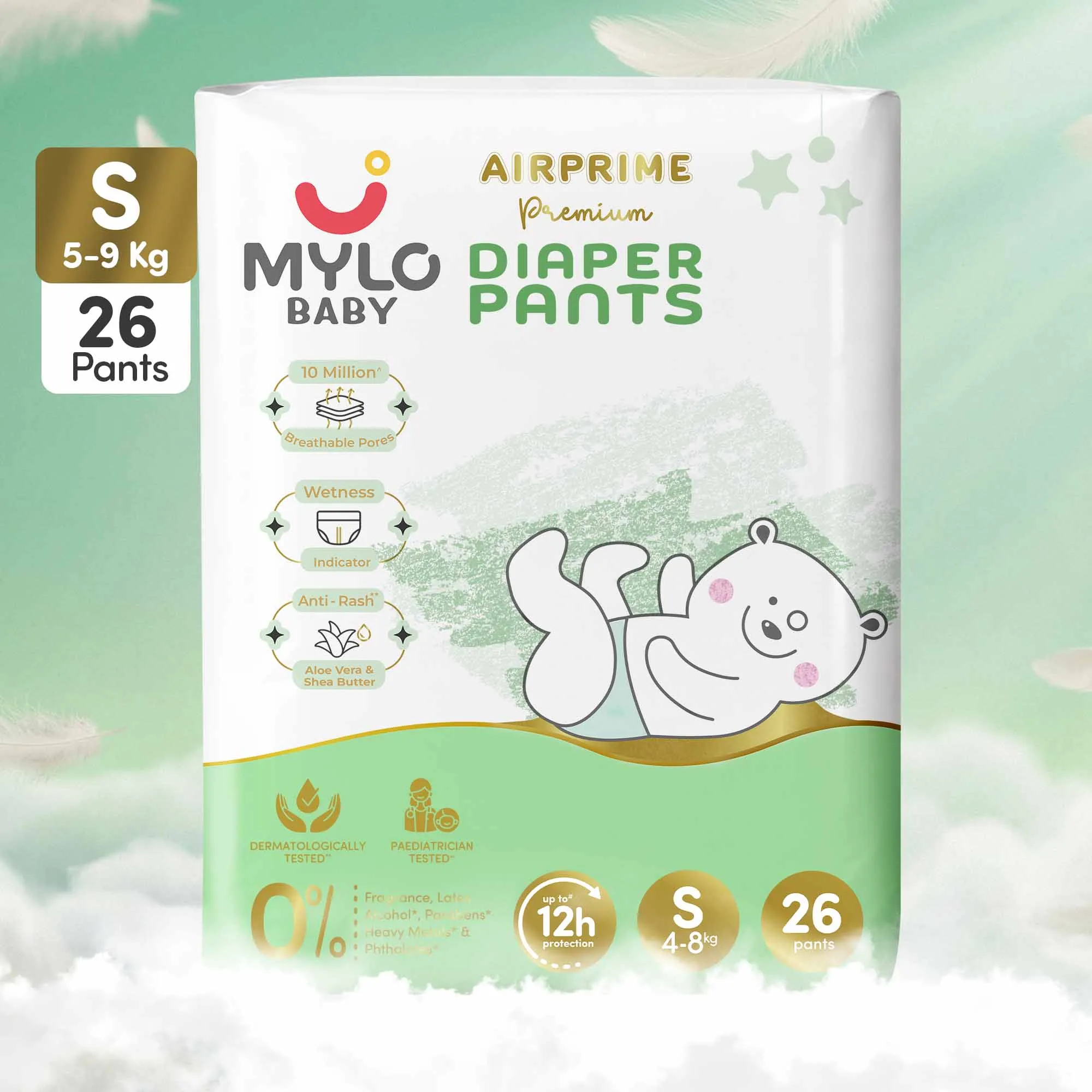
Both categories have moved a long way. Modern disposables use an Acquisition Distribution Layer (ADL), engineered to pull fluid in and spread it evenly so it is not sitting against the skin, plus breathable top sheets. Mylo's Baby Diaper Pants are disposable pants made with OEKO-TEX certified materials, an aloe vera-infused top layer, ADL technology, breathable fabric, and a leakproof rating of up to 12 hours (a leak rating, not a reason to skip changes), from Newborn size upward.
Indian cloth diapers have moved beyond the traditional cotton langot. Mylo's Reusable Cloth Diapers use hypoallergenic, OEKO-TEX certified fabric, are size-adjustable by snap buttons for babies from 3 months to 3 years, and come with an absorbent insert.
A word on OEKO-TEX, since both carry it: it is an independent international textile certification, a fabric carrying it has been tested and confirmed free from a defined list of harmful substances. For anything worn against a baby's skin all day, that is a meaningful, verifiable assurance, and one of the few diaper-category labels that is independently checked rather than self-declared.
Which should you choose for your family?
Since rash incidence is not the differentiator, the decision comes down to cost, time, environmental footprint, and how your household runs:
Cloth suits families with home washing and drying infrastructure, those focused on cost across the full window, or those planning more than one child. A practical starting stash is 20 to 25 diapers
Disposables suit families who travel often, have limited drying space (especially in the monsoon), or place a high value on time saved on laundry
Many Indian families go hybrid: cloth at home, disposables for travel, daycare and overnight, capturing most of the savings without the inconvenience at the hardest moments
Whichever you choose, the rash-prevention rules do not change: change every 2 to 3 hours, change promptly after stools, use a zinc-oxide barrier cream, and keep the diaper area clean and dry.
Frequently asked questions
Do cloth diapers actually cause more diaper rash?
No. The largest recent study (1,389 infants, Jornal de Pediatria) found no statistically significant difference: mild rash in 47.0% of disposable users versus 47.5% of cloth users, and severe rash in 13.0% versus 10.7% (Uber et al., 2025). A Cochrane review similarly found insufficient evidence to favour either type. What matters far more is how often the diaper is changed, whether a barrier cream is used, and, for cloth, whether detergent is rinsed out thoroughly.
How much can I save by switching to cloth in India?
Disposables run roughly Rs 2,000 to Rs 6,000 a month, totalling around Rs 70,000 to Rs 1,30,000 per child, whereas a full cloth stash costs Rs 13,000 to Rs 30,000 once. Mylo states cloth can save up to Rs 20,000 a year, and more if the stash is reused for a second child. Against that, factor in the running cost of water, electricity and laundry time.
How many cloth diapers do I need to start?
A practical full-time stash is 20 to 25. That number is set by the wash-and-dry cycle: with about three loads a week and several hours to dry each diaper, a smaller stash leaves you short on a slow-drying day. A minimal 12 to 15 works if you wash every two days, a reasonable way to try cloth before committing. Lean higher in humid regions or the monsoon.
Are disposable diapers harmful for sensitive baby skin?
Not inherently. Modern disposables with OEKO-TEX certified materials, breathable top sheets and aloe vera linings are designed for daily use on sensitive skin, and current evidence shows similar rash rates for both types. The single biggest factor in keeping skin healthy is changing the diaper promptly when wet or soiled.
What is OEKO-TEX certification, and why does it matter?
It is an independent international textile certification confirming a fabric has been tested free from a defined list of harmful substances, dyes and heavy metals. For a diaper worn against delicate skin for hours, that is a verifiable assurance rather than a brand's own word. Both Mylo's Baby Diaper Pants and Reusable Cloth Diapers carry it.
Key takeaways
The real cloth vs disposable difference in India is cost and convenience, not rash
Disposables: about Rs 2,000 to Rs 6,000 a month, around Rs 70,000 to Rs 1,30,000 per child overall
Cloth: a one-time Rs 13,000 to Rs 30,000 stash of 20 to 25 diapers, reusable across siblings; Mylo says it can save up to Rs 20,000 a year
Rash evidence: no significant difference (47.0% vs 47.5% mild, 13.0% vs 10.7% severe) in a 2024 study of 1,389 infants
Cochrane: not enough good-quality trial evidence to favour either type
What drives rash: trapped wetness, friction, contact with urine and stool, and detergent residue, not the diaper category
Cloth's hidden costs are water, power and drying time; disposables' is landfill waste
Choose on cost, time and lifestyle; change every 2 to 3 hours and use a barrier cream whichever you pick
References
Uber M, Imoto RR, Carvalho VO. Cloth versus disposable diapers: an exploratory study on family habits. Jornal de Pediatria, 2025; 101(2):276-281. pubmed.ncbi.nlm.nih.gov
Cochrane Review CD004262. Disposable nappies for preventing napkin dermatitis in infants. cochranelibrary.com
American Academy of Pediatrics (HealthyChildren.org). Common Diaper Rashes and Treatments. healthychildren.org
Mayo Clinic. Diaper rash: Symptoms and causes. mayoclinic.org
American Academy of Dermatology (AAD). How to treat diaper rash. aad.org
Cleveland Clinic. Diaper Rash (Diaper Dermatitis). my.clevelandclinic.org
Contemporary Pediatrics. Cloth diapers: Are they the answer to less diaper rash? (2026)
Mylo. Baby Diaper Pants and Reusable Cloth Diapers. mylofamily.com

Trusted by Indian Mamas for Everyday Diapering
Whether you choose cloth or disposables, gentle diapers and a good barrier cream keep your baby's skin happy and rash-free.



Article Posted Under
Related Articles


Related Topics
.webp&w=32&q=75)
Medical Disclaimer
This content is for informational purposes only and should not replace professional medical advice. Consult with a physician or other health care professional if you have any concerns or questions about your health. If you rely on the information provided here, you do so solely at your own risk.


AWARDS AND RECOGNITION

Mylo wins Forbes D2C Disruptor award

Mylo wins The Economic Times Promising Brands 2022
AS SEEN IN












- Mylo Care: Effective and science-backed personal care and wellness solutions for a joyful you.
- Mylo Baby: Science-backed, gentle and effective personal care & hygiene range for your little one.
- Mylo Community: Trusted and empathetic community of 10mn+ parents and experts.


Product Categories
Baby Carrier | Baby Soap | Baby Wipes | Stretch Marks Cream | Baby Cream | Baby Shampoo | Baby Massage Oil | Baby Hair Oil | Stretch Marks Oil | Baby Body Wash | Baby Powder | Baby Lotion | Diaper Rash Cream | Newborn Diapers | Teether | Baby Kajal | Baby Diapers Pants | Cloth Diapers | Laundry Detergent | Lactation Granules |