


Orders

Profile


Wallet

How to Grow Baby Hair Faster and Thicker: When Baby Hair Grows and What Really Helps
 12 Likes|
 8 min


MBBS, DCH, DNB (Pediatrics), FICM (Fellowship in Intensive Care Medicine), FIDM (Fellowship in Diabetes Mellitus), MNAMS · 18 years experience
Key Takeaways
Quick overview in 30 seconds
- Baby hair growth depends on factors like genetics, nutrition, hair care practices, environmental exposure, and overall health, with each playing a unique role in growth patterns.
- Choose hair growth oils with natural, hypoallergenic, mild, and certified organic ingredients like coconut, almond, or castor oil to nourish your baby's delicate scalp safely.
- Apply oil with gentle circular massages, do a patch test first, use moderate amounts consistently before bedtime, and track progress to see steady, healthy hair growth.
- Looking for the perfect hair oil for your baby? Explore our Organic Aloe Vera (300 ml).

 4.3
Quick Answer
Baby hair grows at its own pace, mostly decided by genes. Many babies shed hair at the back of the head around 2 to 3 months, and it grows back on its own. Shaving (mundan) does not make it thicker. Gentle care with a mild oil such as Baby Hair Oil - 100 ml, keeps the scalp comfortable.
If your baby was born with a full head of hair that is now thinning, or with almost none at all, you may be getting a lot of advice from family about oils, home remedies and shaving. It is natural to wonder whether something is wrong. In most babies, nothing is. Here is when baby hair grows, why it falls, what genuinely helps, and when to see a doctor.
When does baby hair grow?
There is no fixed age. Some babies are born with thick hair, others are almost bald, and both are normal. How much hair your baby has, how fast it grows and how thick it becomes depend mostly on genes, so it often follows the pattern in your family.
Hair also changes a lot in the early years. The first fine hair is often replaced by new hair that can look different in colour or texture. Many babies who were bald at birth have a good head of hair by the time they are toddlers.
Why is my baby losing hair?
Hair loss in the first months is common and usually harmless. A study of newborns found that hair loss at the back of the head appeared at about 2 to 3 months after birth and affected around 1 in 5 babies (Kim et al., 2011). Researchers believe it happens because many hair roots enter their resting phase together around birth and then shed together a few weeks later.
Doctors call this transient neonatal hair loss, and it improves with age without treatment (Xu and Liu, 2017). Rubbing against the bed or pillow can also make the bald patch at the back of the head more noticeable.
Does shaving (mundan) make baby hair grow thicker?
No. Shaving cuts the hair at the surface and does not change the roots under the skin. The Mayo Clinic explains that shaving does not change hair's thickness, colour or rate of growth (Mayo Clinic). Regrowing hair can feel coarse at first because of its blunt tip, which is why many people believe it has become thicker.
Mundan is an important tradition for many Indian families, and it is completely fine to do it for cultural or religious reasons. Just do it gently and hygienically, protect the scalp from nicks, and do not expect it to change how thick the hair grows. Read more in our mundan ceremony guide.
What really helps baby hair stay healthy?
You cannot speed up your baby's hair growth beyond what genes allow, but you can keep the scalp healthy and avoid damage.
Feed well: breast milk or formula gives your baby the nutrition they need. After 6 months, offer a balanced diet with dal, eggs (if you eat them), vegetables, fruit and grains.
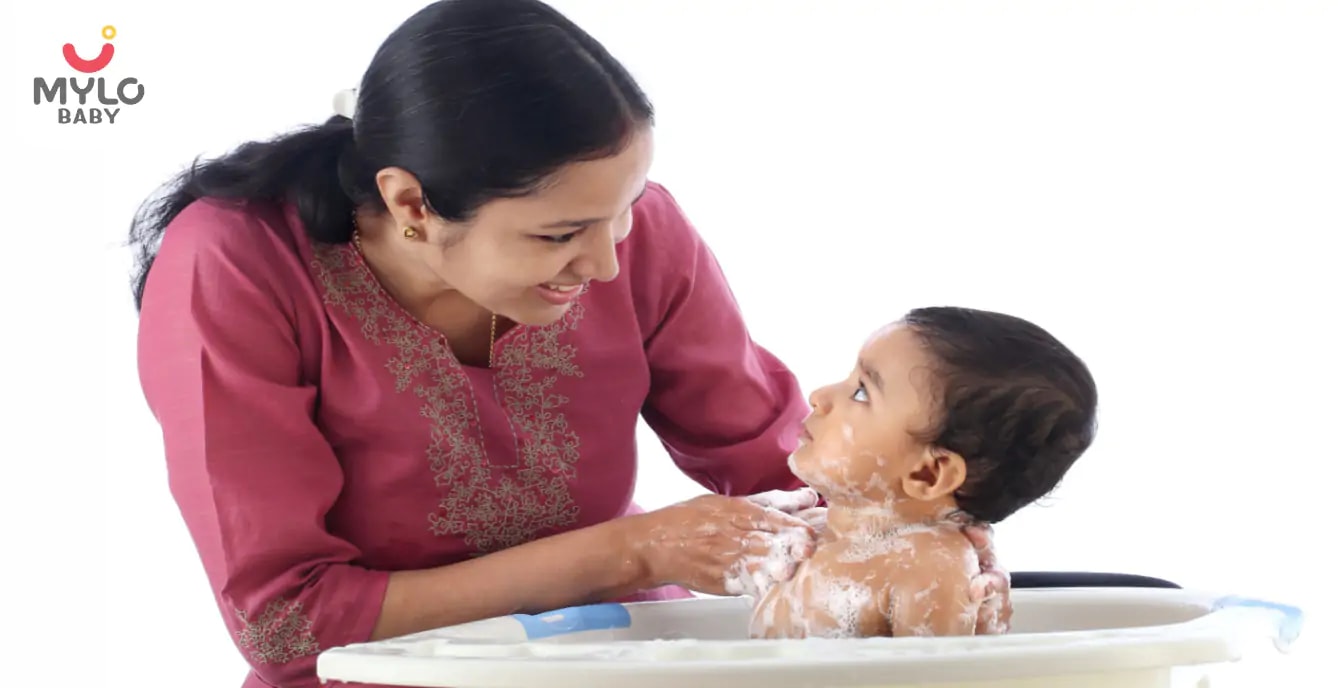
Wash gently: use plain water or a mild baby shampoo a few times a week. Avoid adult shampoos and fragranced products on a baby's scalp (NHS).
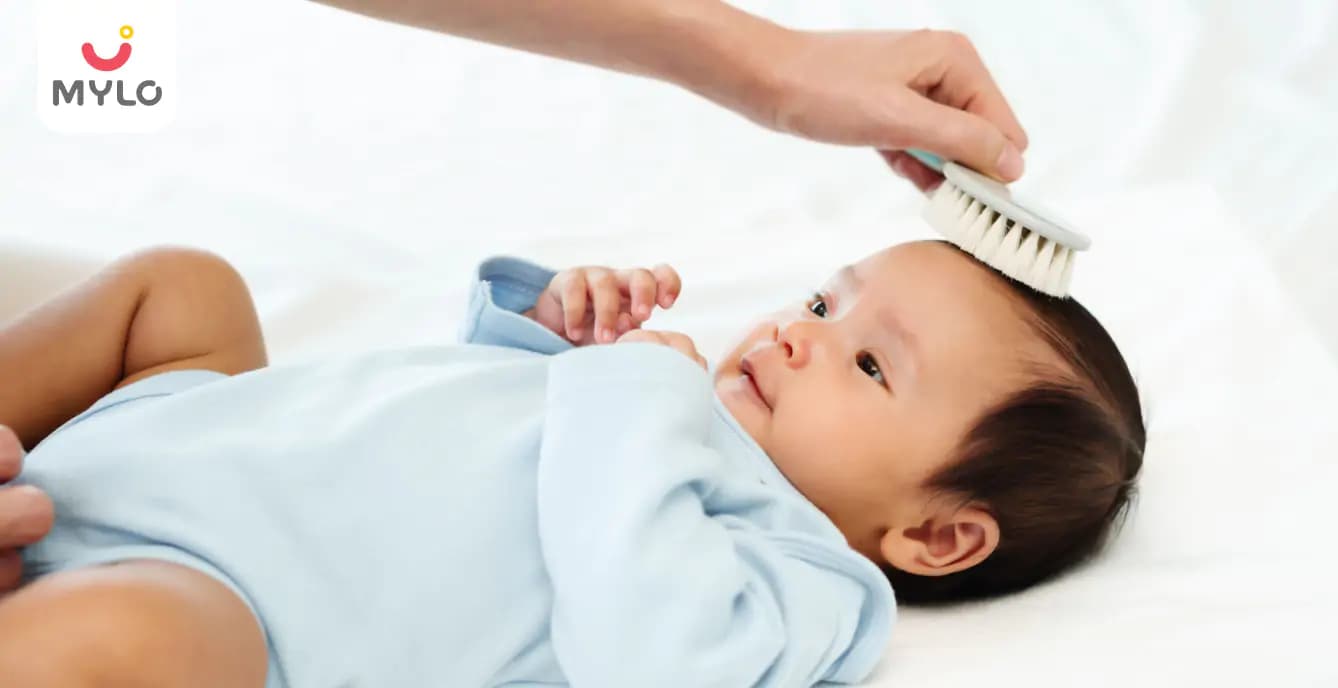
Use a soft brush: brush gently with a soft baby brush. Avoid tight bands, clips or hairstyles that pull.
Change positions: give plenty of supervised tummy time while your baby is awake, which also reduces rubbing on the back of the head. Always put your baby to sleep on their back.
Oil gently, if you like: a light massage with a mild baby oil feels soothing and can soften dry flakes. Do a small patch test first, and use only a little. Oil is for scalp comfort; there is no good evidence that any oil makes hair grow faster. If you want a ready option, Mylo's Baby Hair Oil - 100 ml is made for babies.
What about cradle cap?
Cradle cap is a harmless skin condition that is common in babies. It causes greasy, scaly patches on the scalp, and your baby's hair may come away with the scales, but it soon grows back (NHS).
To care for it, the NHS suggests:
lightly massaging a moisturiser (emollient) or coconut oil onto the scalp to loosen the scales
gently brushing with a soft brush, then washing with baby shampoo
not picking the crusts, as this can increase the chance of infection
not using olive oil or peanut oil, soap, adult shampoo or fragranced products
Our guide on cradle cap causes and treatment has more detail.
Baby hair myths vs facts
Myth | Fact |
|---|---|
Shaving the head (mundan) makes hair grow back thicker. | Shaving does not change hair thickness or growth rate (Mayo Clinic). |
A bald patch at the back of the head means a deficiency. | It is common at 2 to 3 months and is part of normal shedding (Kim et al., 2011). |
Applying lots of oil every day will make hair grow fast. | Oil can soothe the scalp, but hair growth depends mostly on genes. Too much oil can clog the scalp. |
A baby born with no hair will always have thin hair. | Hair often changes a lot in the first years, and many bald babies grow plenty of hair later. |
When should you see a doctor?
Most baby hair loss needs no treatment. See your paediatrician if you notice:
round, completely smooth bald patches, or hair falling out in clumps
red, scaly, itchy or oozing patches on the scalp
cradle cap that does not improve after a few weeks, or crusts that bleed, leak fluid or look swollen (NHS)
hair loss along with poor weight gain, poor feeding or other signs your baby is unwell
hair that is still thinning or not growing well after the first year
Frequently asked questions
At what age does baby hair become thick?
It varies from child to child and largely follows family genes. Many children's hair becomes noticeably fuller in the toddler years.
Is it normal for my baby to have no hair at 6 months?
Yes, it can be normal. Some babies simply grow hair later. If your baby is feeding and growing well and the scalp looks healthy, there is usually nothing to worry about.
Can I use coconut oil on my baby's hair?
Yes, a little coconut oil is generally gentle on a baby's scalp, and the NHS mentions it for loosening cradle cap scales (NHS). Do a patch test first and avoid putting oil on broken or irritated skin.
Should I cut my baby's hair to make it grow?
Cutting or shaving will not make it grow faster or thicker. Trim it only if it gets in the eyes or for neatness.
Will my baby's hair colour change?
It may. The first hair often sheds and is replaced by new hair, which can be a different colour or texture.
How often should I wash my baby's hair?
A few times a week with plain water or a mild baby shampoo is usually enough. Daily washing is not needed unless the scalp is sweaty or dirty.
Related Articles
Related Products
References
Kim MS, Na CH, Choi H, et al. Prevalence and factors associated with neonatal occipital alopecia: a retrospective study. Ann Dermatol. 2011. https://pmc.ncbi.nlm.nih.gov/articles/PMC3162256/
Xu L, Liu KX, Senna MM. A practical approach to the diagnosis and management of hair loss in children and adolescents. Front Med. 2017. https://pmc.ncbi.nlm.nih.gov/articles/PMC5522886/
NHS. Cradle cap. https://www.nhs.uk/conditions/cradle-cap/
Mayo Clinic. Does shaving unwanted body hair make it grow back thicker and darker? https://www.mayoclinic.org/healthy-lifestyle/adult-health/expert-answers/hair-removal/faq-20058427
Medical disclaimer: This article is for general information only and does not replace advice from your paediatrician. Please consult a doctor if you are worried about your baby's hair or scalp.
Trusted by Mamas Nurturing Their Baby's First Curls
Gentle, natural hair care essentials to nourish your little one's scalp and support soft, healthy hair growth every day.



Article Posted Under

Medical Disclaimer
This content is for informational purposes only and should not replace professional medical advice. Consult with a physician or other health care professional if you have any concerns or questions about your health. If you rely on the information provided here, you do so solely at your own risk.


AWARDS AND RECOGNITION

Mylo wins Forbes D2C Disruptor award

Mylo wins The Economic Times Promising Brands 2022
AS SEEN IN













- Mylo Care: Effective and science-backed personal care and wellness solutions for a joyful you.
- Mylo Baby: Science-backed, gentle and effective personal care & hygiene range for your little one.
- Mylo Community: Trusted and empathetic community of 10mn+ parents and experts.


Product Categories
Baby Carrier | Baby Soap | Stretch Marks Cream | Baby Cream | Baby Shampoo | Baby Massage Oil | Baby Hair Oil | Stretch Marks Oil | Baby Body Wash | Baby Powder | Baby Lotion | Diaper Rash Cream | Teether | Baby Kajal |