


Orders
.png&w=48&q=75 "login")
Profile


Wallet

The Let-Down Reflex: What It Is and How to Trigger It
 11 min
Key Takeaways
Quick overview in 30 seconds.webp&w=32&q=75)
- The let-down reflex is your milk flowing, driven by oxytocin, which squeezes milk out within 30 to 60 seconds of your baby suckling.
- Signs include tingling, warmth, or leaking from the other breast, but feeling nothing is also completely normal during let-down.
- A slow let-down eases with calm, warmth, skin-to-skin contact and comfort, while a forceful let-down is managed with reclined feeding positions.
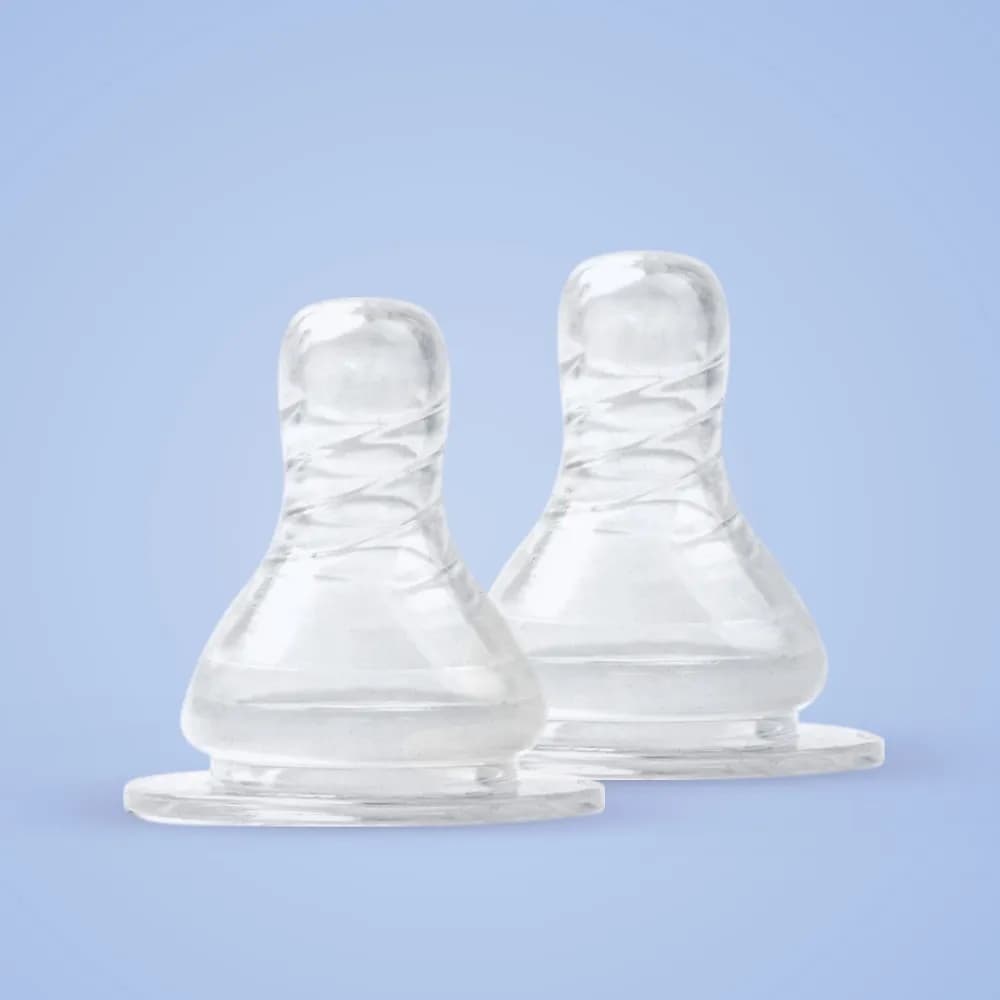
- Looking for gentle support during your breastfeeding journey? Explore our Anti Colic Slow (S) Flow Grooved Baby Nipple - Pack of 2.
 4.8
4.8.webp&w=1900&q=75) 4.5
4.5Quick Answer
The let-down reflex, also called the milk ejection reflex, is what makes your milk flow when your baby feeds. When your baby suckles, your body releases the hormone oxytocin, which squeezes the tiny muscle cells around your milk glands so stored milk is pushed down the ducts and out to your baby, usually within 30 to 60 seconds of suckling (NCBI). Many mothers feel it as a tingling, warmth or fullness, and often notice milk leaking from the other breast, though some feel nothing at all, which is also normal (Cleveland Clinic). Because oxytocin responds to how you feel, a slow let-down is usually eased by relaxing, warmth and comfort, while an overactive or forceful let-down is managed with positions that slow the flow. This guide covers why milk flows, and how to handle both a slow and an over-fast let-down.
Author: Mylo Editorial Team, Mylo Parenting Desk
Medically reviewed by: Mylo Editorial Board, aligned with WHO, NHS and Cleveland Clinic guidance
Last updated: 29 July 2026
Medical Disclaimer: This article is for informational purposes only and is not a substitute for professional medical advice. If your baby is struggling to feed, not gaining weight well, or your let-down is consistently painful, please speak to your doctor, a lactation consultant or your health visitor.
Key Takeaways
The let-down reflex is your milk flowing, driven by the hormone oxytocin.
It usually happens within 30 to 60 seconds of your baby starting to suckle (NCBI).
Common signs are tingling, warmth, or leaking from the other breast, but feeling nothing is also normal.
Let-down can be triggered by thinking of, seeing or hearing your baby, not only by suckling.
A slow let-down is usually eased by calm, warmth, comfort and skin-to-skin (Cleveland Clinic).
An overactive or forceful let-down is managed with reclined positions and by slowing the flow (La Leche League).
Let-down responds to how you feel, so stress and pain can hold it up.
What Is the Let-Down Reflex, and Why Does Milk "Flow"?
Milk does not just sit at the nipple waiting to be sipped. It is made and stored deep in the breast, in tiny clusters of milk-making glands. To reach your baby, it has to be actively pushed out, and that push is the let-down reflex.
Here is what happens. When your baby suckles, nerve signals travel to your brain and trigger the release of oxytocin. Oxytocin makes the small muscle cells that wrap around your milk glands contract, squeezing milk out of the glands, down the ducts, and out through the nipple (WHO). That squeeze is why milk suddenly flows, sometimes fast enough to spray. You can have several let-downs during a single feed, not just one.
Let-down can also become a conditioned reflex: many mothers find their milk flows when they hear their baby cry, look at their baby, or even just think about feeding. This is completely normal and shows the reflex is working (Cleveland Clinic).
Signs of Let-Down
Let-down feels different for everyone. You may notice one, several, or none of these, and any of these patterns can be normal:
What you may feel or see | What it means |
|---|---|
Tingling, pins-and-needles, warmth or pressure in the breast | The classic let-down sensation as milk is released |
Milk dripping or spraying from the other breast | Let-down happens in both breasts at once |
Baby's suck changes from quick and shallow to slow, deep swallows | Milk has started to flow and baby is drinking |
A feeling of calm, relaxation, thirst or sleepiness | Oxytocin's wider effects on the body |
No obvious sensation at all | Also normal; many mothers never feel let-down |
Because not feeling let-down is common, the most reliable sign is your baby's swallowing and steady weight gain, not what you sense.
How to Trigger a Let-Down
Since oxytocin responds to how you feel, the goal is to feel calm, warm and connected to your baby. These steps help the reflex kick in, and are especially useful if your let-down feels slow or you are pumping (Cleveland Clinic):
Relax before you feed. Try a few slow breaths, calming music, or simply sitting somewhere quiet.
Get warm. A warm compress on the breast or a cosy blanket helps, since feeling cold makes the body tense.
Use skin-to-skin contact. Holding your baby against your skin is one of the strongest triggers.
Gently massage the breast. Light massage or hand expression can start the flow.
Engage your senses. Look at your baby, hold them, or if pumping, look at a photo or smell their clothing.
Get comfortable. A supported, relaxed feeding position reduces tension and pain.
Slow or Delayed Let-Down
A slow let-down means your milk takes longer than usual to start flowing, which can leave your baby fussing at the breast early in a feed. It nearly always traces back to oxytocin being held up, most often by stress or discomfort (Cleveland Clinic). Common causes include:
Anxiety, stress or feeling rushed or embarrassed.
Pain, for example from a poor latch or sore nipples.
Feeling cold, or being very tired.
Excess caffeine, smoking, or alcohol.
Some medications (check with your doctor if you suspect this).
What helps: use the triggers above, fix any painful latch with help from a lactation consultant, feed in a calm and private space, and give it time. A slow let-down is common and usually improves once you are more relaxed and comfortable. It does not mean you have low supply.
Overactive or Forceful Let-Down
The opposite problem is an overactive let-down, sometimes called a forceful or fast let-down, where milk sprays out so quickly that your baby struggles to keep up. It is often, though not always, linked with an oversupply of milk (La Leche League).
Signs in your baby: gulping, coughing or choking at the breast, pulling off mid-feed, clamping down, fussiness, lots of gas, frequent large spit-ups, and sometimes green or explosive stools. Signs in you: milk spraying when your baby comes off, and heavy leaking from the other breast (La Leche League).
What helps:
Try reclined, laid-back feeding. With you leaning back and your baby on top, gravity slows the flow.
Catch the first spray. Let the initial forceful let-down flow into a cloth, then latch your baby once it slows.
Feed when your baby is calm or sleepy. A relaxed baby suckles more gently and copes better.
Burp more often. Fast feeding means more swallowed air.
Consider one breast per feed. If oversupply is involved, this can help; get guidance from a lactation consultant before block feeding.
Overactive let-down often settles as your supply regulates over the first few months.
A Note on Milk Supply and Let-Down
It helps to separate two things: let-down is about releasing milk and depends on oxytocin, calm and comfort, while your milk supply depends on frequent, effective feeding. A galactagogue or lactation food will not trigger a let-down; only relaxation and suckling do that. Where nourishment can play a supportive role is in overall supply during the demanding early weeks. Some mothers use blends such as Mylo LactoMama™ Lactation Granules, which use shatavari as the hero ingredient, alongside a good diet and frequent feeding. Treat this as support for supply, not as a way to force let-down, and see a lactation consultant if let-down or supply is a real concern.
Myths vs Facts
Myth | Fact |
|---|---|
If I cannot feel let-down, it is not working | Many mothers feel nothing; your baby's swallowing and weight gain are the real signs. |
Let-down should happen the instant baby latches | It usually takes 30 to 60 seconds of suckling to start (NCBI). |
A slow let-down means low milk supply | Slow let-down is about oxytocin and comfort, not the amount of milk you make. |
Forceful let-down means I am doing something wrong | It is common, often linked to oversupply, and usually settles with time and positioning. |
Supplements can trigger a let-down | Let-down responds to suckling and relaxation, not to any food or supplement. |
Frequently Asked Questions
What is the let-down reflex in breastfeeding?
It is the release of milk from your breast during a feed, driven by the hormone oxytocin, which squeezes stored milk out toward your baby, usually within 30 to 60 seconds of suckling (NCBI).
What does let-down feel like?
Often a tingling, warmth or pressure in the breast, sometimes with milk leaking from the other side. Some mothers feel a wave of calm or thirst, and many feel nothing at all, which is normal.
How do I trigger a let-down?
Relax, get warm, hold your baby skin-to-skin, gently massage the breast, and engage your senses by looking at or thinking about your baby. Comfort and calm are the key (Cleveland Clinic).
Why is my let-down slow or delayed?
Usually because oxytocin is held up by stress, pain, cold or tiredness. Fixing a painful latch, feeding in a calm space, and relaxing all help. A slow let-down does not mean low supply.
What is an overactive or forceful let-down?
It is when milk sprays out too fast, so your baby gulps, coughs, chokes or pulls off. It is often linked to oversupply and is managed with reclined feeding and by slowing the flow (La Leche League).
Can I have let-down when I am not feeding?
Yes. Let-down can become a conditioned reflex, so hearing your baby cry or even thinking about your baby can trigger it.
Does a strong let-down mean I have lots of milk?
Not necessarily. Let-down is about how milk is released, not how much you make, although a forceful let-down does sometimes go along with oversupply.
Can stress stop my milk from letting down?
Stress and pain can delay let-down by interfering with oxytocin, but they rarely stop it completely. Calming down and getting comfortable usually gets it flowing again.
References
NIH, StatPearls. Physiology, Lactation. ncbi.nlm.nih.gov
World Health Organization (NCBI Bookshelf). The physiological basis of breastfeeding. ncbi.nlm.nih.gov
Cleveland Clinic. How To Trigger a Breastfeeding Let-Down. health.clevelandclinic.org
La Leche League International. Breast Milk Oversupply and Overactive Milk Ejection Reflex. llli.org
.webp)

Trusted by mamas nurturing their breastfeeding bond
Gentle, mama-loved essentials to support your milk supply and comfort as you nourish your little one every day.
Anti Colic Slow (S) Flow Grooved Baby Nipple - Pack of 2
BPA Free | Breast-Like Nipple | Food Grade Material | Wide Base for Better Latch | Can be Sterilized | Microwave Safe | Fits Most Standard Bottles



Increase Breast Milk Supply with LactoMama ™ Lactation Granules - 300g - Pack of 2 | Elaichi
100% Natural Ingredients | Improves Lactation | Clinically Tested | Rich in Vitamins, Minerals, Iron & Calcium

Article Posted Under
Related Articles




Related Topics
.webp&w=32&q=75)
Medical Disclaimer
This content is for informational purposes only and should not replace professional medical advice. Consult with a physician or other health care professional if you have any concerns or questions about your health. If you rely on the information provided here, you do so solely at your own risk.


AWARDS AND RECOGNITION

Mylo wins Forbes D2C Disruptor award

Mylo wins The Economic Times Promising Brands 2022
AS SEEN IN













- Mylo Care: Effective and science-backed personal care and wellness solutions for a joyful you.
- Mylo Baby: Science-backed, gentle and effective personal care & hygiene range for your little one.
- Mylo Community: Trusted and empathetic community of 10mn+ parents and experts.


Product Categories
Baby Carrier | Baby Soap | Baby Wipes | Stretch Marks Cream | Baby Cream | Baby Shampoo | Baby Massage Oil | Baby Hair Oil | Stretch Marks Oil | Baby Body Wash | Baby Powder | Baby Lotion | Diaper Rash Cream | Newborn Diapers | Teether | Baby Kajal | Baby Diapers Pants | Cloth Diapers | Laundry Detergent | Lactation Granules |