


Orders
.png&w=48&q=75 "login")
Profile


Wallet

Swelling (Edema) in Pregnancy: How Low Protein Can Make It Worse
 12 min
TL;DR
Swelling, or edema, in the feet, ankles and hands is a very common and usually normal part of pregnancy, caused by extra fluid, hormonal changes and pressure from your growing uterus (ACOG, NHS). But there is a nutrition angle many moms do not know: proteins in your blood, especially albumin, help hold fluid inside your blood vessels. When protein intake is too low, this balance is disturbed and fluid can leak into your tissues, making swelling worse. Getting enough protein, about 50 to 75 grams a day, supports healthy fluid balance and can help keep excess swelling in check. Alongside protein, stay hydrated, limit excess salt, keep moving and elevate your feet. Importantly, sudden or severe swelling of the face and hands with a headache or vision changes can signal pre-eclampsia and needs urgent care.
Quick Answer
Swelling in pregnancy is usually normal, from extra fluid and pressure on your veins. Low protein can make it worse, because blood proteins like albumin help keep fluid inside your vessels, and too little protein lets fluid leak into tissues. Enough protein supports fluid balance. Seek urgent care for sudden facial or hand swelling with headache.
Medical Disclaimer: This article is for informational purposes only and is not a substitute for professional medical advice. Seek urgent care if you have sudden or severe swelling of the face or hands, a bad headache, vision changes, or swelling in one painful leg, as these can be signs of pre-eclampsia or a blood clot.
Author: Mylo Editorial Team, Mylo Parenting Desk Medically reviewed by: Mylo Editorial Board, aligned with ACOG, ICMR-NIN, WHO and FOGSI guidance Last updated: 10 July 2026
Key Takeaways
Mild swelling of the feet, ankles and hands is common and usually normal in pregnancy (ACOG)
Blood proteins like albumin help keep fluid inside your blood vessels
Low protein intake can worsen swelling by letting fluid leak into tissues
Getting enough protein, about 50 to 75 grams a day, supports healthy fluid balance
Hydration, limiting excess salt, movement and elevating feet also help
Good protein sources include dal, paneer, eggs, curd, sprouts and milk
Not all swelling is from low protein; most is normal fluid retention
Sudden facial or hand swelling with a headache can signal pre-eclampsia and needs urgent care
What Is Edema (Swelling) in Pregnancy?
Edema is the medical word for swelling caused by extra fluid building up in your body's tissues. In pregnancy, it most often shows up in the feet, ankles, legs and hands, especially in the second and third trimesters and toward the end of the day (NHS, ACOG). For most women it is mild, uncomfortable rather than dangerous, and eases with rest and simple measures. Understanding why it happens, and how nutrition plays a role, can help you manage it better.
Why Does Swelling Happen in Pregnancy?
Several normal changes lead to swelling (ACOG, Mayo Clinic):
Your body makes more blood and fluid to support your baby
Your growing uterus presses on the veins that return blood from your legs
Pregnancy hormones cause your body to hold on to more fluid
Gravity pulls fluid down to your feet and ankles
Heat and long periods of standing make it more noticeable
Most of this is a normal part of pregnancy. But your nutrition, especially protein, can influence how much fluid stays where it should.
How Can Low Protein Make Swelling Worse?
Featured answer: Low protein can make pregnancy swelling worse because proteins in your blood, especially albumin, help hold fluid inside your blood vessels. When protein intake is too low, blood albumin can drop, and fluid leaks out into your tissues, increasing swelling. Getting enough protein, around 50 to 75 grams a day, supports this fluid balance and can help reduce excess swelling. Most mild swelling is still normal, but adequate protein helps keep it in check.
So while low protein is not the only cause of swelling, it can tip the balance and make it more pronounced, which is why good protein intake matters.
What Is the Protein-Fluid Balance Connection?
Your blood vessels and tissues are constantly exchanging fluid, and protein helps keep that exchange in balance (ICMR-NIN, WHO).
How protein helps | Effect on swelling |
|---|---|
Maintains blood albumin | Helps hold fluid inside blood vessels |
Supports fluid balance | Reduces fluid leaking into tissues |
Prevents deficiency-related swelling | Helps keep excess swelling in check |
When protein is very low, this system weakens, and swelling can increase. When protein is adequate, fluid is more likely to stay where it belongs.
How Much Protein Do You Need?
Protein needs rise through pregnancy (ICMR-NIN).
Trimester | Approximate daily protein |
|---|---|
First trimester | About 50 to 60 grams |
Second trimester | About 60 to 70 grams |
Third trimester | About 70 to 75 grams |
Which Foods Support Healthy Fluid Balance?
Protein-rich foods, along with good hydration and potassium-rich produce, support balance (ICMR-NIN).
Nutrient | Indian food sources |
|---|---|
Protein | Dal, paneer, curd, eggs, sprouts, milk, soya, nuts |
Potassium | Banana, coconut water, spinach, sweet potato |
Fluids | Water, coconut water, chaas, soups |
Where Does Mylo MamaGro Fit In?
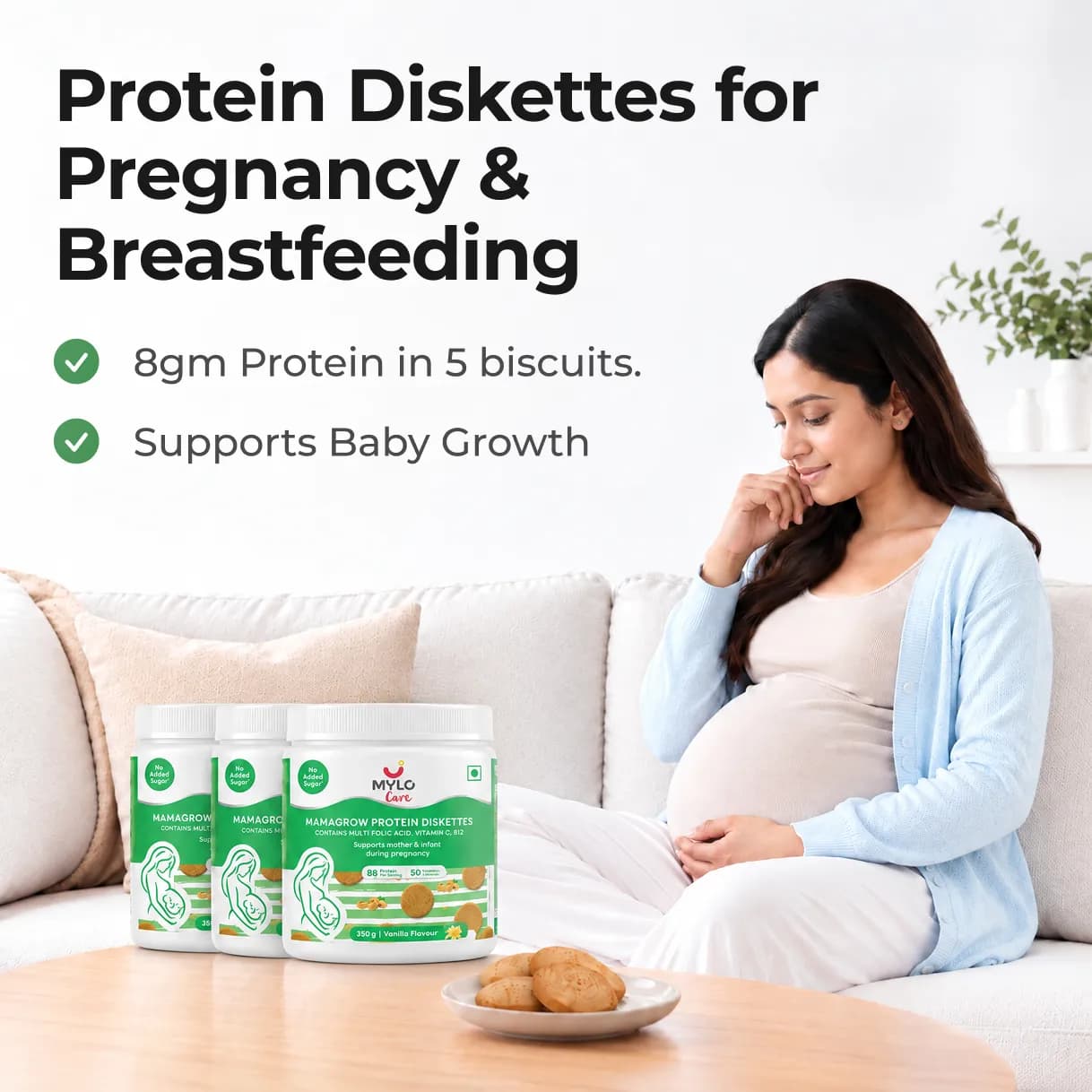
Meeting your daily protein target can be hard, especially with a low appetite, nausea or a busy routine. A maternal nutrition drink like Mylo MamaGro is designed to provide protein along with key nutrients, offering a convenient way to support your daily protein intake, which in turn supports healthy fluid balance during pregnancy and breastfeeding. Used alongside a balanced diet, and on your doctor's advice, it can help you close protein gaps. You can explore Mylo MamaGro here: Mylo MamaGro. Remember, a nutrition drink supplements a balanced diet, it does not replace nutritious meals, and it is not a treatment for swelling caused by pre-eclampsia.
How Can You Reduce Pregnancy Swelling Safely?
Alongside good protein intake, these simple steps genuinely help (NHS, Mayo Clinic).
Simple Ways to Ease Swelling in Pregnancy
Try these gentle measures:
Get enough protein: Include dal, paneer, eggs, curd and sprouts daily
Stay hydrated: Drinking water actually helps your body release excess fluid
Limit excess salt: Too much salt encourages fluid retention
Keep moving: Gentle walking and ankle circles improve circulation
Elevate your feet: Rest with your legs raised when you can
Avoid long standing: Take breaks and shift position often
Sleep on your left side: This eases pressure on major veins
Wear comfortable footwear: And consider compression stockings if advised
If swelling is sudden, severe or one-sided, do not manage it at home, contact your doctor right away.
Myths vs Facts About Swelling and Protein in Pregnancy
Myth | Fact | Source |
|---|---|---|
"All pregnancy swelling is due to low protein" | Most swelling is normal fluid retention; low protein can worsen it | ACOG |
"Drinking less water reduces swelling" | Good hydration actually helps release excess fluid | NHS |
"Swelling is always harmless" | Sudden facial or hand swelling with headache can signal pre-eclampsia | ACOG |
"Only cutting salt fixes swelling" | Protein, hydration and movement all matter too | ICMR-NIN |
"A protein drink can treat pre-eclampsia swelling" | Pre-eclampsia needs medical care, not a nutrition drink | FOGSI |
Indian Context: What Indian Moms Should Know
Many Indian diets are protein-short: Especially vegetarian ones, so include dal, paneer, curd, sprouts and nuts daily (ICMR-NIN)
Watch the hidden salt: Pickles, papad, namkeen and packaged foods add salt that worsens swelling
Stay hydrated in the heat: Water, coconut water and chaas help release excess fluid
Add potassium-rich foods: Banana, coconut water and spinach support fluid balance
Keep up antenatal checkups: Your doctor checks your blood pressure and urine for pre-eclampsia
Do not ignore sudden swelling: Especially of the face or hands with a headache
Emergency number: Dial 108 for ambulance services across most states
When Should You See a Doctor?
Most swelling is normal, but some signs need prompt or urgent care (ACOG, NHS):
Sudden or severe swelling of the face, around the eyes, or hands
Swelling with a bad headache, vision changes or upper tummy pain, which can signal pre-eclampsia
Swelling in one leg that is painful, red or warm, which can signal a blood clot (DVT)
Swelling that comes on very quickly or gets much worse
Any swelling that worries you
Seek urgent care for sudden facial or hand swelling with a headache, and always attend your antenatal visits where your blood pressure and urine are checked.
FAQs About Swelling and Protein in Pregnancy
Why do I have swelling in pregnancy? Swelling is usually normal, caused by extra fluid, hormonal changes and your growing uterus pressing on veins (ACOG). It is most common in the feet, ankles and hands later in pregnancy.
Pregnancy mein sujan (swelling) kyun hoti hai? (Hinglish) Pregnancy mein sujan aksar normal hoti hai, jo extra fluid, hormonal badlav, aur badhte uterus ke veins par dabav ki wajah se hoti hai. Yeh zyadatar pairon, takhnon aur haathon mein dikhti hai, khaaskar baad ke mahinon mein. Halki sujan aam hai, lekin achhi protein aur hydration madad karti hain.
How does low protein make swelling worse? Blood proteins like albumin help hold fluid inside your blood vessels (WHO). When protein is too low, fluid can leak into your tissues, worsening swelling. Enough protein supports healthy fluid balance.
Kya kam protein se sujan badh sakti hai? (Hinglish) Haan, kam protein se sujan badh sakti hai. Khoon mein maujood protein (jaise albumin) fluid ko blood vessels ke andar rakhne mein madad karta hai. Jab protein bahut kam ho jata hai, to fluid tissues mein ris sakta hai, jisse sujan badhti hai. Paryapt protein fluid balance ko sahi rakhta hai.
How much protein do I need to help with fluid balance? About 50 to 75 grams a day, rising by trimester (ICMR-NIN). Include protein at every meal from foods like dal, paneer, eggs and curd.
Does drinking water reduce or increase swelling? Drinking enough water actually helps your body release excess fluid and can reduce swelling (NHS). Limiting fluids is not the answer; staying hydrated is.
Can a nutrition drink like MamaGro help with swelling? It can help you meet your protein needs, which supports fluid balance, alongside a balanced diet and on your doctor's advice (ICMR-NIN). It is not a treatment for swelling caused by pre-eclampsia, which needs medical care.
When is swelling a warning sign? Sudden or severe swelling of the face or hands with a headache or vision changes can signal pre-eclampsia, and a painful, swollen, warm leg can signal a blood clot (ACOG). Both need urgent medical care.
Final Thoughts: Balance Fluid, Nourish Your Body
Swelling in pregnancy is usually a normal, if uncomfortable, part of carrying your baby. Most of it comes down to extra fluid and pressure on your veins. But nutrition plays a quiet role too: when protein runs low, your body finds it harder to keep fluid in the right place, and swelling can worsen.
Support your body by getting enough protein from dal, paneer, eggs, curd and sprouts, staying hydrated, limiting excess salt, moving gently and resting with your feet up. If meals fall short, a maternal nutrition drink like Mylo MamaGro can help fill protein gaps on your doctor's advice. Above all, never ignore sudden swelling of the face or hands with a headache, which needs urgent care. With good nutrition and simple habits, you can keep swelling more comfortable and your body better balanced.
References
American College of Obstetricians and Gynecologists (ACOG). "Swelling, Pre-eclampsia and Nutrition in Pregnancy." https://www.acog.org/womens-health/faqs/preeclampsia-and-high-blood-pressure-during-pregnancy
NHS UK. "Swollen Ankles, Feet and Fingers in Pregnancy." https://www.nhs.uk/pregnancy/
Indian Council of Medical Research, National Institute of Nutrition (ICMR-NIN). "Dietary Guidelines and RDA for Indians." https://www.nin.res.in
World Health Organization (WHO). "Nutrition in Pregnancy." https://www.who.int
Mayo Clinic. "Swelling During Pregnancy." https://www.mayoclinic.org
FOGSI (Federation of Obstetric and Gynaecological Societies of India). https://www.fogsi.org
Mylo MamaGro. https://mylofamily.com/product/mylo-protein-biscuits-for-pregnancy-500gm-4228




Article Posted Under
Related Articles


Related Topics
.webp&w=32&q=75)
Medical Disclaimer
This content is for informational purposes only and should not replace professional medical advice. Consult with a physician or other health care professional if you have any concerns or questions about your health. If you rely on the information provided here, you do so solely at your own risk.


AWARDS AND RECOGNITION

Mylo wins Forbes D2C Disruptor award

Mylo wins The Economic Times Promising Brands 2022
AS SEEN IN












- Mylo Care: Effective and science-backed personal care and wellness solutions for a joyful you.
- Mylo Baby: Science-backed, gentle and effective personal care & hygiene range for your little one.
- Mylo Community: Trusted and empathetic community of 10mn+ parents and experts.


Product Categories
Baby Carrier | Baby Soap | Baby Wipes | Stretch Marks Cream | Baby Cream | Baby Shampoo | Baby Massage Oil | Baby Hair Oil | Stretch Marks Oil | Baby Body Wash | Baby Powder | Baby Lotion | Diaper Rash Cream | Newborn Diapers | Teether | Baby Kajal | Baby Diapers Pants | Cloth Diapers | Laundry Detergent | Lactation Granules |