


Orders
.png&w=48&q=75 "login")
Profile


Wallet

Saffron During Pregnancy: Is Kesar Safe for You and Your Baby?
 10 min
TL;DR
-
Small culinary amounts of pure kesar (1 to 2 strands in milk or food) are generally considered safe in pregnancy
-
High or medicinal doses can stimulate uterine contractions and should be avoided, particularly in the first trimester
-
Saffron does not change a baby's complexion or skin colour; that is set by genetics, not maternal diet
-
As a topical ingredient, saffron appears in Mylo's Stretch Marks Cream alongside Striover, shea butter, coconut oil, and kokum
-
Saffron sold as a food supplement is regulated by FSSAI and is not intended to treat or cure any condition
-
Always confirm with your gynaecologist before adding any supplement
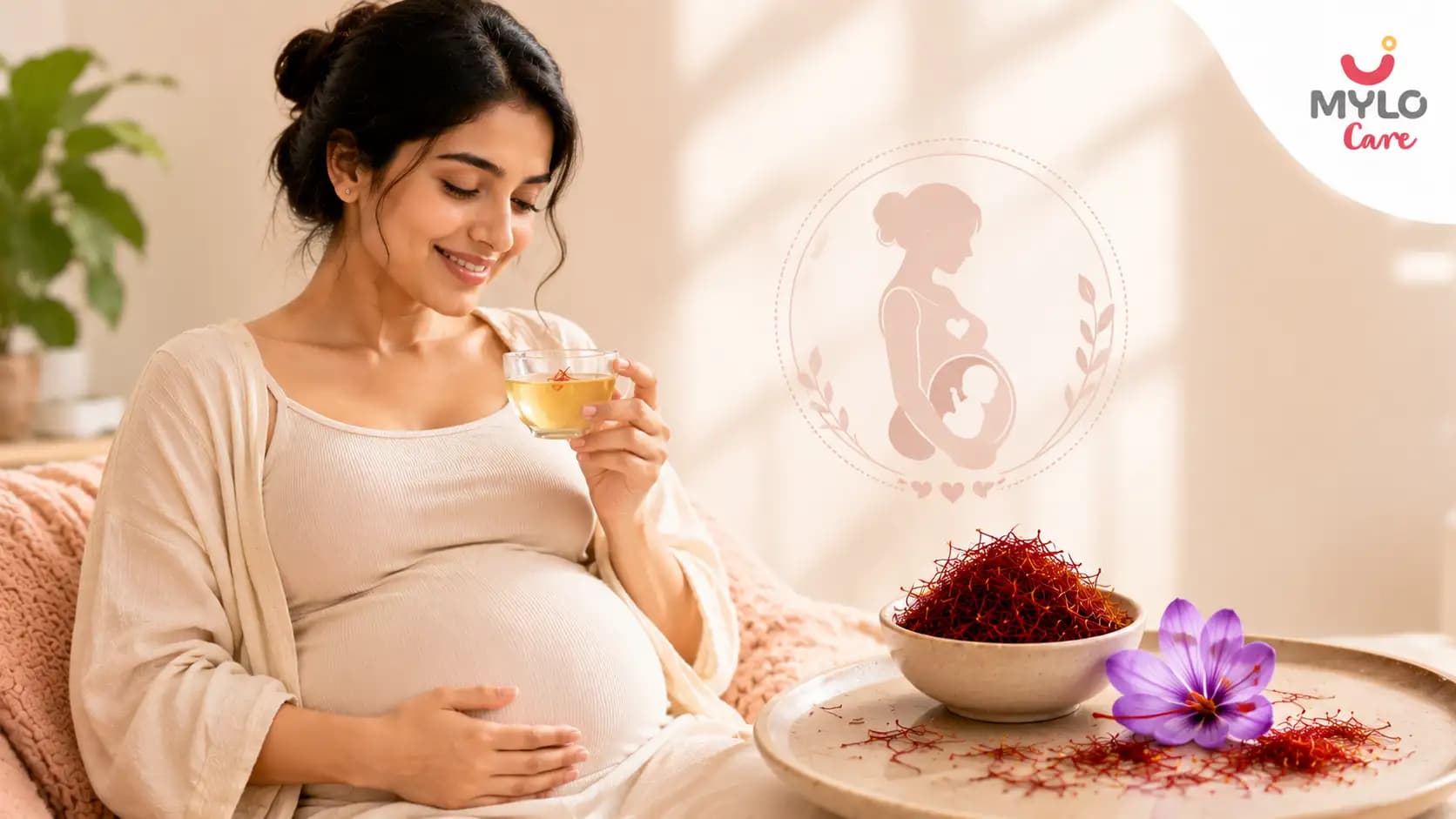
Saffron (kesar) has a real and specific place in Indian pregnancy wellness. Pure long-grain kesar used in small culinary amounts, a strand or two in warm milk or food, is widely used and generally considered safe in pregnancy. The important caveat is dose: saffron in large or medicinal amounts can act as a uterine stimulant, so high doses are not advised, especially in early pregnancy. The popular claims that saffron makes a baby fairer or boosts brain development are traditional beliefs without scientific support. Here is the honest, evidence-based picture.
Is it safe to eat saffron during pregnancy?
In the small amounts used in Indian kitchens, yes, saffron is generally considered safe. The key is moderation. Saffron's active compounds, including crocin and safranal, can stimulate smooth muscle, and laboratory and review evidence shows saffron can increase uterine contractility at higher exposures (NIH/PMC review). That is why high or concentrated doses are cautioned against in pregnancy, and why a common piece of traditional advice is to begin only in the second trimester, once the early-pregnancy period has passed.
Mylo's own product guidance reflects this restraint: Mylo's Saffron is meant to be used at just 1 to 2 strands steeped in about 20 ml of warm milk or water, a food-level amount rather than a medicinal dose. No daily dose in grams, no fixed trimester protocol, and no pharmacological claim is published for it, and none should be assumed. If you have any complication, bleeding, or a high-risk pregnancy, check with your gynaecologist before using saffron at all.
Does saffron during pregnancy improve a baby's complexion?
No. A baby's skin colour and pigmentation are determined by genetics, not by what the mother eats during pregnancy. There is no credible scientific evidence that saffron, milk, or any food changes fetal complexion. The same applies to the claim that saffron during pregnancy boosts the baby's brain development: it is a traditional belief, not an evidence-based fact.
These ideas persist because they are passed down across generations with genuine care, and they deserve to be treated with respect rather than ridicule. But honest pregnancy guidance separates what tradition values from what evidence shows. Mylo's published Mylo Promise specifically prohibits fear-based claims, "natural equals safe" framing, and speculative ingredient claims, which is why you will not see Mylo market saffron as a complexion or intelligence enhancer.
What is the difference between eating saffron and using it in a cream?
These are two distinct applications with different regulatory frameworks and different evidence.
Ingested saffron is a food and falls under India's FSSAI nutraceutical rules. Every FSSAI-regulated food supplement carries mandatory framing: not intended to diagnose, treat, cure, or prevent any disease; not for medical use; not a substitute for a varied diet; to be used as a food supplement only.
Topical saffron, formulated into a cosmetic cream alongside other ingredients, is applied to the skin rather than ingested, and is governed as a cosmetic, not a food. Treating the two as interchangeable misreads both the science and the regulation. The clinical data Mylo reports for its cream applies to the finished cream formula, not to saffron eaten as a spice, and vice versa.
How should I read a saffron supplement label under FSSAI rules?
The label language most buyers skip past is a legal requirement, not brand boilerplate.
|
Label claim |
What it means |
What it does not mean |
|
"Food supplement only" |
Regulated as a dietary addition, not a medicine |
It does not treat or cure any condition |
|
"Not a substitute for a varied diet" |
Complements nutrition, does not replace meals |
It cannot replace prescribed prenatal iron or folic acid |
|
"Not intended to diagnose or treat" |
No disease claim is being made |
It cannot be marketed as treating PCOS, anaemia, or hormonal disorders |
|
"Consult your doctor" |
A mandatory advisory for nutraceuticals |
Some conditions need medical supervision before use |
Mylo's own standards add to this baseline: the brand avoids "clinically proven" without a cited study, avoids "100% safe" because no product is absolutely safe for everyone, and avoids "doctor recommended" without a named, verifiable endorsement.
What does saffron do in a stretch marks cream, and why does formulation matter?
Mylo's Stretch Marks Cream (100 g) combines saffron with four other ingredients, each with a cosmetic role:
-
Saffron contributes antioxidant content and is used traditionally in Indian skincare for an even, brighter-looking tone. The brightening association is cosmetic and traditional, not a proven clinical mechanism.
-
Striover is a branded actives blend marketed to support skin elasticity and the appearance of stretch marks.
-
Shea butter reinforces the skin barrier and reduces water loss, easing the dryness common as skin stretches.
-
Coconut oil is a well-tolerated emollient that moisturises and softens skin.
-
Kokum butter is a non-comedogenic Indian fruit butter, high in stearic acid, that soothes and conditions stressed skin.
Mylo reports an in-house NABL-accredited lab study on 100 post-delivery women in which most participants found the cream helped reduce the appearance of stretch marks. Treat that as brand-reported data rather than independent peer-reviewed evidence, and note that it applies to this specific certified formulation, not to raw saffron in isolation. The cream is Made Safe certified, free from silicone, artificial fragrance, paraben, and mineral oil, and labelled safe during pregnancy and breastfeeding.
How do I identify pure kesar and avoid adulterated saffron?
Saffron is one of the most adulterated spices in global trade, often bulked with safflower petals, dyed corn silk, or synthetic colour. A pregnant woman buying adulterated saffron is not getting the ingredient she thinks she is.
Look for a named long-grain variety, a stated source of origin, a listed manufacturer, and clean free-from declarations with no added colourants or preservatives. Mylo's kesar is sold in 1 g and 2 g packs as long-grain pure Kashmiri saffron, described as BIS grade-A, tested for oral safety, FSSAI licensed, with a certified source of origin, and you can find it in the daily wellness range. No extract concentration is published, which keeps the claim within what the evidence supports.
FAQ
Is it safe to consume saffron during pregnancy? In small culinary amounts, yes, it is generally considered safe and widely used in Indian pregnancy diets. The caution is about dose: large or medicinal quantities can stimulate uterine contractions and should be avoided, especially early in pregnancy. Mylo's kesar is meant to be used at just 1 to 2 strands in warm milk or water. Consult your gynaecologist before starting, particularly if you have any pregnancy complication or are on medication.
Which trimester is saffron safe to use in pregnancy? A common tradition is to begin only in the second trimester, which is a sensible precaution because saffron can act as a uterine stimulant at higher doses and the early weeks are the most vulnerable. There is no precise evidence-based trimester protocol, and Mylo publishes none, so the best approach is to keep amounts small and confirm timing with your healthcare provider rather than following internet rules.
Does eating saffron during pregnancy make the baby fair? No. A baby's skin colour is determined by genetics, not by the mother's diet, and no credible study supports the complexion claim. It is a traditional belief passed down with care, but it is not evidence-based, and Mylo's published standards specifically prohibit marketing products on such unverified claims.
How do I identify pure kesar and avoid adulteration? Check for a named long-grain variety, a stated source of origin, a listed manufacturer, and clean free-from declarations. Mylo's kesar is sold in 1 g and 2 g packs as BIS grade-A, FSSAI-licensed, source-certified Kashmiri saffron. Because saffron is heavily adulterated, pack-level purity and certification signals are the first things to verify.
What is the difference between saffron in a stretch marks cream and saffron as a food supplement? They are different applications. Topical saffron in the Stretch Marks Cream is one of five cosmetic ingredients applied to the skin and regulated as a cosmetic. Edible kesar is ingested and regulated by FSSAI as a food supplement. The cream's brand-reported lab study applies to the full cream formula, not to saffron eaten as a spice.
Can saffron supplements replace prescription prenatal vitamins? No. FSSAI-regulated saffron is a food addition, not a medicine, and it cannot replace prescribed prenatal iron, folic acid, calcium, or DHA at clinically determined doses. Saffron wellness products and prenatal prescriptions serve entirely different purposes, so confirm your full supplement plan with your gynaecologist.
Disclaimer: This article is general information for Indian mothers and is not medical advice or a diagnosis. Saffron can act as a uterine stimulant in large doses, so amounts and timing during pregnancy should be discussed with your gynaecologist, especially in the first trimester or in a high-risk pregnancy. Mylo's Saffron is a food supplement and the Stretch Marks Cream is a cosmetic; neither is intended to diagnose, treat, cure, or prevent any disease.
Medically reviewed by Dr. Shruti Tanwar, MBBS, MD (Obstetrics & Gynaecology) on 27 June 2026
Last updated: 30 June 2026
Sources
-
Review of Crocus sativus (saffron) smooth-muscle and uterine activity, NIH/PMC (saffron compounds can affect uterine contractility; high-dose caution in pregnancy).
-
Food Safety and Standards (Health Supplements, Nutraceuticals) Regulations, FSSAI (mandatory label language for ingestible food supplements in India).
-
Mylo product pages: Saffron 1 g, Saffron 2 g, daily wellness range, and Stretch Marks Cream.
-
Mylo Promise editorial and claim-discipline standards (prohibited claims and expert sign-off), per Mylo's published material.
Article Posted Under
Related Articles


Related Topics
.webp&w=32&q=75)
Medical Disclaimer
This content is for informational purposes only and should not replace professional medical advice. Consult with a physician or other health care professional if you have any concerns or questions about your health. If you rely on the information provided here, you do so solely at your own risk.


AWARDS AND RECOGNITION

Mylo wins Forbes D2C Disruptor award

Mylo wins The Economic Times Promising Brands 2022
AS SEEN IN












- Mylo Care: Effective and science-backed personal care and wellness solutions for a joyful you.
- Mylo Baby: Science-backed, gentle and effective personal care & hygiene range for your little one.
- Mylo Community: Trusted and empathetic community of 10mn+ parents and experts.


Product Categories
Baby Carrier | Baby Soap | Baby Wipes | Stretch Marks Cream | Baby Cream | Baby Shampoo | Baby Massage Oil | Baby Hair Oil | Stretch Marks Oil | Baby Body Wash | Baby Powder | Baby Lotion | Diaper Rash Cream | Newborn Diapers | Teether | Baby Kajal | Baby Diapers Pants | Cloth Diapers | Laundry Detergent | Lactation Granules |