


Orders
.png&w=48&q=75 "login")
Profile


Wallet

How Much Protein Do You Actually Need in Pregnancy, and Why Indian Diets Often Fall Short
 15 min
TL;DR
-
The baseline is 0.83 g/kg/day, more for cereal diets. ICMR-NIN 2020 sets the adult protein requirement at 0.83 g per kg per day, rising to 1 g per kg per day for cereal-based, lower-quality-protein diets (ICMR-NIN, 2020).
-
Pregnancy adds to that, mostly later on. The additional requirement rises across pregnancy and is largest in the third trimester, as estimated specifically in Indian women (Kuriyan et al., American Journal of Clinical Nutrition, 2019).
-
Quantity is rarely the real gap; quality is. Indians average 55.6 g of protein a day, but nearly half comes from low-quality cereals, far above the recommended share (CEEW, 2025).
-
Cereal protein is lysine-limited. Once corrected for quality, the effective protein intake of many Indians falls to about 0.8 g per kg per day, and roughly a third of the rural population is at risk of falling short (Swaminathan et al., 2012).
-
More protein is not automatically better. The evidence for protein supplementation is strongest as balanced nutrition for women who are genuinely short, where it lowers the risk of a small baby (Imdad and Bhutta, BMC Public Health, 2011).
-
Close the gap with quality, not megadoses. Combine grains with pulses and dairy, and use a complete-protein top-up like Mylo Pregnancy Protein Diskettes when appetite or time is limited.
Quick answer: Protein need rises in pregnancy, with the increase concentrated in the second and especially the third trimester. India's baseline, set by ICMR-NIN 2020, is about 0.83 g of protein per kg of body weight per day, roughly 46 g for a 55 kg woman, but the same guideline raises that to 1 g per kg per day for the cereal-heavy, lower-quality diets most Indians eat (ICMR-NIN, 2020). The more useful insight is that the problem is rarely the total grams. On average Indians get an adequate quantity of protein, but nearly half comes from cereals like rice and wheat that are low in the amino acid lysine, and so lower in quality (CEEW, 2025; Swaminathan et al., British Journal of Nutrition, 2012). Closing the gap is mostly about protein quality and consistency: meals built around dals, dairy, eggs, soy and nuts, plus a higher-quality top-up such as Mylo Pregnancy Protein Diskettes on days when full meals are hard.
How Much Protein Do You Actually Need in Pregnancy?
Start with the baseline. ICMR-NIN 2020, India's official nutrient reference, sets the protein requirement for a healthy adult at 0.83 g per kg of body weight per day, with an estimated average requirement of 0.66 g/kg/day (ICMR-NIN, 2020). For a 55 kg woman, the reference Indian adult woman, that is roughly 46 g of protein a day before pregnancy.
There is an important Indian footnote to that number. The same guideline states that for people consuming a cereal-based diet with low-quality protein, the requirement is 1 g per kg per day, not 0.83 (ICMR-NIN, 2020). That single line captures a national reality: most Indian diets are built on rice, wheat and millets, so the practical requirement for many women is closer to the higher figure, around 55 g a day for a 55 kg woman.
Pregnancy then raises the bar further. The additional protein requirement is modest in early pregnancy and increases as the baby grows, with the largest increase in the third trimester. This was estimated specifically in Indian pregnant women using a whole-body potassium counter, and the figures were broadly in line with international recommendations; that study informed the ICMR-NIN pregnancy allowance (Kuriyan et al., American Journal of Clinical Nutrition, 2019). The practical takeaway is that protein matters most in the back half of pregnancy, and that is exactly when nausea has usually eased and appetite has returned, which makes the timing manageable.
Why Do Indian Diets Fall Short, Even When They Look Adequate?
Here is the part most pregnancy advice gets wrong. The Indian protein gap is not mainly a shortage of grams. According to a 2025 analysis by the Council on Energy, Environment and Water (CEEW) of the 2023-24 national consumption survey, Indians consume an adequate average of 55.6 g of protein a day at home (CEEW, 2025). On a simple quantity measure, the average looks fine.
The real issues are quality and distribution. The same CEEW analysis found that cereals such as rice, wheat, suji and maida supply nearly 50% of India's protein, far above the 32% the National Institute of Nutrition recommends, while pulses contribute just 11% against a recommended 19% (CEEW, 2025). In other words, too much of the protein comes from the lowest-quality source, crowding out higher-quality pulses, dairy and animal foods. CEEW also found stark inequality, with the richest tenth of households consuming 1.5 times more protein than the poorest, so national averages hide real individual shortfalls.
This is where the science of protein quality matters. Indian diets derive about 60% of their protein from cereals, and cereal protein is limited by the amino acid lysine, which lowers its biological quality (Swaminathan et al., British Journal of Nutrition, 2012). When intake is corrected for that quality, the effective protein supply across rural, urban and tribal groups drops to about 0.8 g per kg per day, and roughly a third of the sedentary rural population is at risk of not meeting requirements (Swaminathan et al., 2012). For a pregnant woman whose needs are rising, a quality-corrected intake at or below the baseline is the gap that actually deserves attention.
Is It Quantity or Quality That Matters Most for a Pregnant Woman?
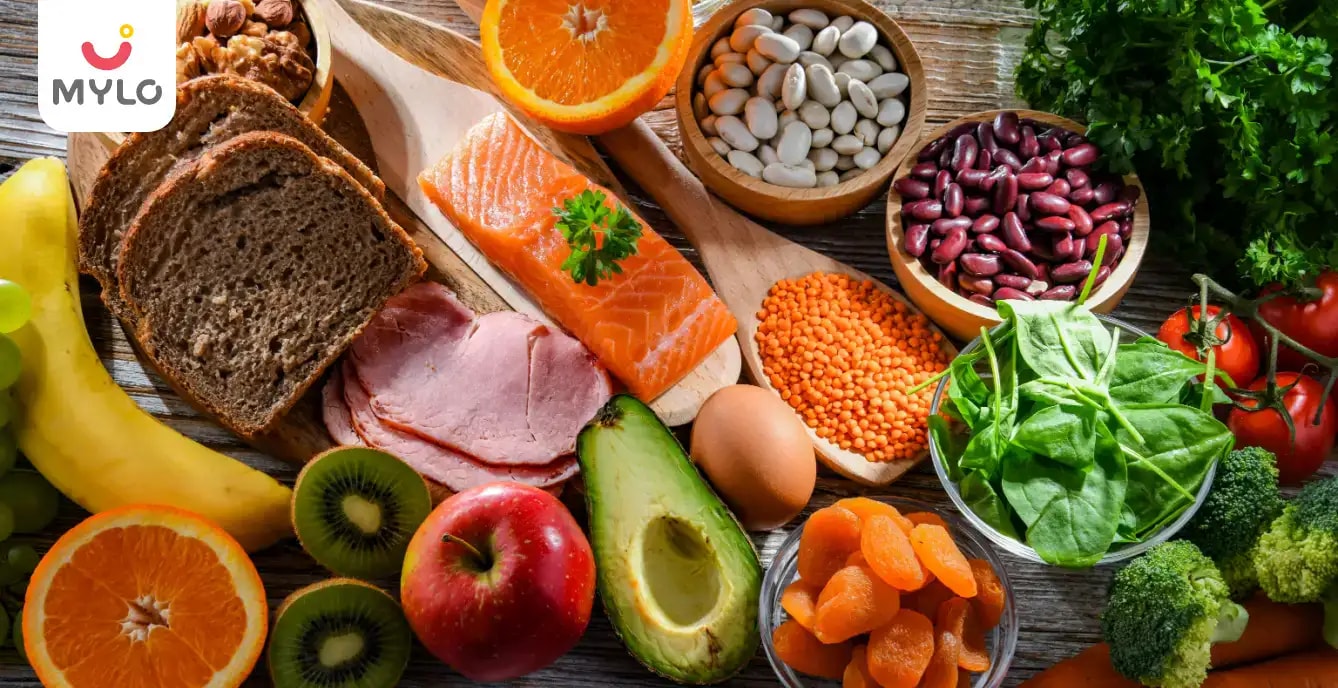
Quality, in most Indian diets. A useful term here is a complete protein, which is a protein that provides all nine indispensable amino acids in the proportions the body needs. Animal proteins such as egg, dairy, fish and meat are complete. Most single plant foods are not: cereals are low in lysine, and pulses are relatively low in the sulphur amino acids, so each on its own is an incomplete protein.
The classic Indian solution is built into traditional meals. Combining a cereal with a pulse, dal with rice, rajma with roti, idli with sambar, complements the two amino acid profiles so the mix approaches a complete protein. Adding dairy, curd, paneer or a glass of milk, lifts both quantity and quality at once. For vegetarian mothers, who make up a large share of Indian women, this combining is the single most effective everyday move, because it fixes the quality problem rather than just adding more of the same cereal.
Two groups especially need to watch this: vegetarian and vegan mothers, who rely on plant proteins that must be deliberately combined and varied, and women whose nausea or food aversions lead to skipped meals, who can slip below even the baseline without realising it. For both, a reliable higher-quality protein source becomes a practical tool rather than a luxury.
Does Eating More Protein Automatically Mean a Healthier Baby?
No, and this is worth stating plainly because supplement marketing often implies the opposite. The strongest evidence for protein supplementation in pregnancy is for balanced protein-energy supplementation, where protein provides less than a quarter of the added energy, in women who are genuinely undernourished. A meta-analysis of 11 trials found that this kind of balanced supplementation reduced the risk of a small-for-gestational-age baby by 31% and modestly increased birth weight, with the benefit most pronounced in malnourished women (Imdad and Bhutta, BMC Public Health, 2011).
The key word is balanced. The benefit comes from closing a genuine nutritional gap, not from loading up on protein. For a woman who is already eating well, piling on protein well beyond requirements has not been shown to improve outcomes and is not the goal. The sensible aim in pregnancy is to reach the requirement consistently with good-quality protein, then stop, rather than to chase ever-higher numbers.
This is the right lens for any protein product: it is a way to reliably reach an adequate, good-quality intake, especially on difficult days, not a performance booster for the baby.
How Can You Close the Protein Gap in an Indian Pregnancy Diet?
The practical plan has three parts: prioritise quality, combine smartly, and top up the gaps. The table below summarises where common Indian protein sources fit.
|
Protein source |
Quality |
Where it fits in pregnancy |
|
Egg, dairy, fish, meat |
Complete protein, all nine amino acids |
The most efficient way to lift both quantity and quality; one egg or a glass of milk adds roughly 6 to 8 g |
|
Dals and legumes |
Good, but limited in sulphur amino acids |
A daily staple; pair with cereals to complete the amino acid profile |
|
Cereals (rice, wheat, millets) |
Lower quality, limited in lysine |
Bulk of the plate already; not where to add more protein |
|
Soy, paneer, nuts and seeds |
High among plant sources |
Strong vegetarian additions for both quality and quantity |
|
Pregnancy protein top-up |
Complete blend, fortified |
A convenient backup on low-appetite or busy days |
On that last row, Mylo Pregnancy Protein Diskettes are designed for the gap that quality and consistency leave. Each serving of five diskettes provides 8 g of protein, which the brand equates to about 250 ml of milk or one large egg. The protein is a complete blend of casein, whey and plant proteins, so it supplies the full amino acid profile that a single cereal cannot. They also carry added iron and folic acid, two nutrients that matter in pregnancy, and contain no refined sugar, no maida and no preservatives, in a light vanilla biscuit format that is easier to manage than a heavy meal when appetite is low.
Used sensibly, a top-up like this is a backup, not a replacement for meals. The foundation is still a varied plate that combines cereals with pulses and dairy, plus eggs, fish or meat for those who eat them. Any persistent concern about diet or weight gain in pregnancy is worth raising with your obstetrician or a registered dietitian.
Frequently Asked Questions
How much protein does a pregnant woman need per day in India? The starting point is ICMR-NIN's adult requirement of 0.83 g per kg of body weight per day, about 46 g for a 55 kg woman, which the same guideline raises to 1 g per kg per day, around 55 g, for the cereal-based diets most Indians eat (ICMR-NIN, 2020). Pregnancy adds to this, with the additional need rising through pregnancy and largest in the third trimester (Kuriyan et al., American Journal of Clinical Nutrition, 2019). Rather than fixating on a single number, the practical approach is to make sure protein is good quality and that you are reaching an adequate intake consistently, especially in the later months. Your obstetrician or dietitian can give you a target suited to your weight and stage.
Are Indian women really protein deficient in pregnancy? The picture is more nuanced than a simple yes. On average, Indian protein quantity is adequate, with national intake around 55.6 g a day, but nearly half of it comes from low-quality cereals (CEEW, 2025). Once protein is corrected for quality, effective intake falls to about 0.8 g per kg per day for many people, and roughly a third of the rural population is at risk of falling short (Swaminathan et al., 2012). So the more accurate statement is that many Indian women, particularly those on heavily cereal-based or vegetarian diets, or those skipping meals due to nausea, are at risk of inadequate good-quality protein, which a rising pregnancy requirement makes more important to address.
Is vegetarian protein enough during pregnancy? Yes, a vegetarian diet can meet pregnancy protein needs, but it takes more planning because most single plant foods are incomplete proteins. Cereals are low in lysine and pulses are relatively low in sulphur amino acids, so the reliable strategy is to combine them, dal with rice or rajma with roti, and to include dairy, soy, paneer, nuts and seeds across the day (Swaminathan et al., 2012). This combining fixes the quality problem rather than just adding more cereal. Vegetarian and vegan mothers should be especially deliberate about variety, and a complete-protein top-up can help cover days when meals fall short.
Does eating extra protein make the baby healthier? Not automatically. The clearest benefit from protein supplementation is for balanced protein-energy supplementation in undernourished women, where it lowered the risk of a small-for-gestational-age baby by 31% and modestly raised birth weight (Imdad and Bhutta, BMC Public Health, 2011). The benefit comes from closing a real gap, not from high-protein loading, which has not been shown to improve outcomes in well-nourished women. The goal is to reach an adequate, good-quality intake consistently, then maintain it, rather than to push protein ever higher.
What are good high-protein snacks during pregnancy? Useful options include a boiled egg, a bowl of curd or a glass of milk, roasted chana, a handful of nuts, paneer cubes, or a cereal-and-pulse combination like dhokla or idli with sambar, all of which add protein in a light form. Purpose-made options such as Mylo Pregnancy Protein Diskettes provide 8 g of complete protein per five-diskette serving with added iron and folic acid and no refined sugar, which suits low-appetite or busy days. The aim with any snack is to add good-quality protein without a lot of refined sugar or empty calories.
Can I rely on a protein supplement instead of food in pregnancy? No. A protein top-up is a backup for the gaps, not a substitute for balanced meals. Whole foods bring fibre, a range of vitamins and minerals, and a fuller nutritional profile that a single supplement cannot match. A product like Mylo Pregnancy Protein Diskettes is best used alongside a varied plate of cereals combined with pulses, dairy and, where eaten, eggs, fish and meat, on days when a full meal is hard. If you have specific dietary concerns, gestational diabetes, or questions about weight gain, speak to your obstetrician or a registered dietitian before relying on any product.
This article is for general information and is not a substitute for personalised medical or dietary advice. Protein and overall nutrition needs vary with your weight, stage of pregnancy and health. If you have nausea that limits eating, gestational diabetes, a restricted diet, or any concern about your nutrition or your baby's growth, please consult your obstetrician or a registered dietitian. [Reviewed by: obstetrician or registered dietitian reviewer name and credentials to be added.]
Sources
-
ICMR-NIN. "A Brief Note on Nutrient Requirements for Indians, the Recommended Dietary Allowances (RDA) and the Estimated Average Requirements (EAR), 2020." Indian Council of Medical Research / National Institute of Nutrition. nin.res.in
-
Kuriyan R., Naqvi S., Bhat K.G., et al. "Estimation of protein requirements in Indian pregnant women using a whole-body potassium counter." American Journal of Clinical Nutrition 2019;109(4):1064-1070. DOI 10.1093/ajcn/nqz011. pubmed.ncbi.nlm.nih.gov
-
Council on Energy, Environment and Water (CEEW). "Indians are getting protein, but of poor quality: nearly 50% comes from cereals." 10 December 2025, analysing NSSO Household Consumption Expenditure Survey 2023-24. ceew.in
-
Swaminathan S., Vaz M., Kurpad A.V. "Protein intakes in India." British Journal of Nutrition 2012;108:S50-S58. DOI 10.1017/S0007114512002413. cambridge.org
-
Imdad A., Bhutta Z.A. "Effect of balanced protein energy supplementation during pregnancy on birth outcomes." BMC Public Health 2011;11(Suppl 3):S17. DOI 10.1186/1471-2458-11-S3-S17. bmcpublichealth.biomedcentral.com
Article Posted Under
Related Articles



Related Topics
.webp&w=32&q=75)
Medical Disclaimer
This content is for informational purposes only and should not replace professional medical advice. Consult with a physician or other health care professional if you have any concerns or questions about your health. If you rely on the information provided here, you do so solely at your own risk.


AWARDS AND RECOGNITION

Mylo wins Forbes D2C Disruptor award

Mylo wins The Economic Times Promising Brands 2022
AS SEEN IN












- Mylo Care: Effective and science-backed personal care and wellness solutions for a joyful you.
- Mylo Baby: Science-backed, gentle and effective personal care & hygiene range for your little one.
- Mylo Community: Trusted and empathetic community of 10mn+ parents and experts.


Product Categories
Baby Carrier | Baby Soap | Baby Wipes | Stretch Marks Cream | Baby Cream | Baby Shampoo | Baby Massage Oil | Baby Hair Oil | Stretch Marks Oil | Baby Body Wash | Baby Powder | Baby Lotion | Diaper Rash Cream | Newborn Diapers | Teether | Baby Kajal | Baby Diapers Pants | Cloth Diapers | Laundry Detergent | Lactation Granules |