


Orders
.png&w=48&q=75 "login")
Profile


Wallet

Diabetes Symptoms: What to Look For, How It Is Diagnosed, and How to Manage It
 18 min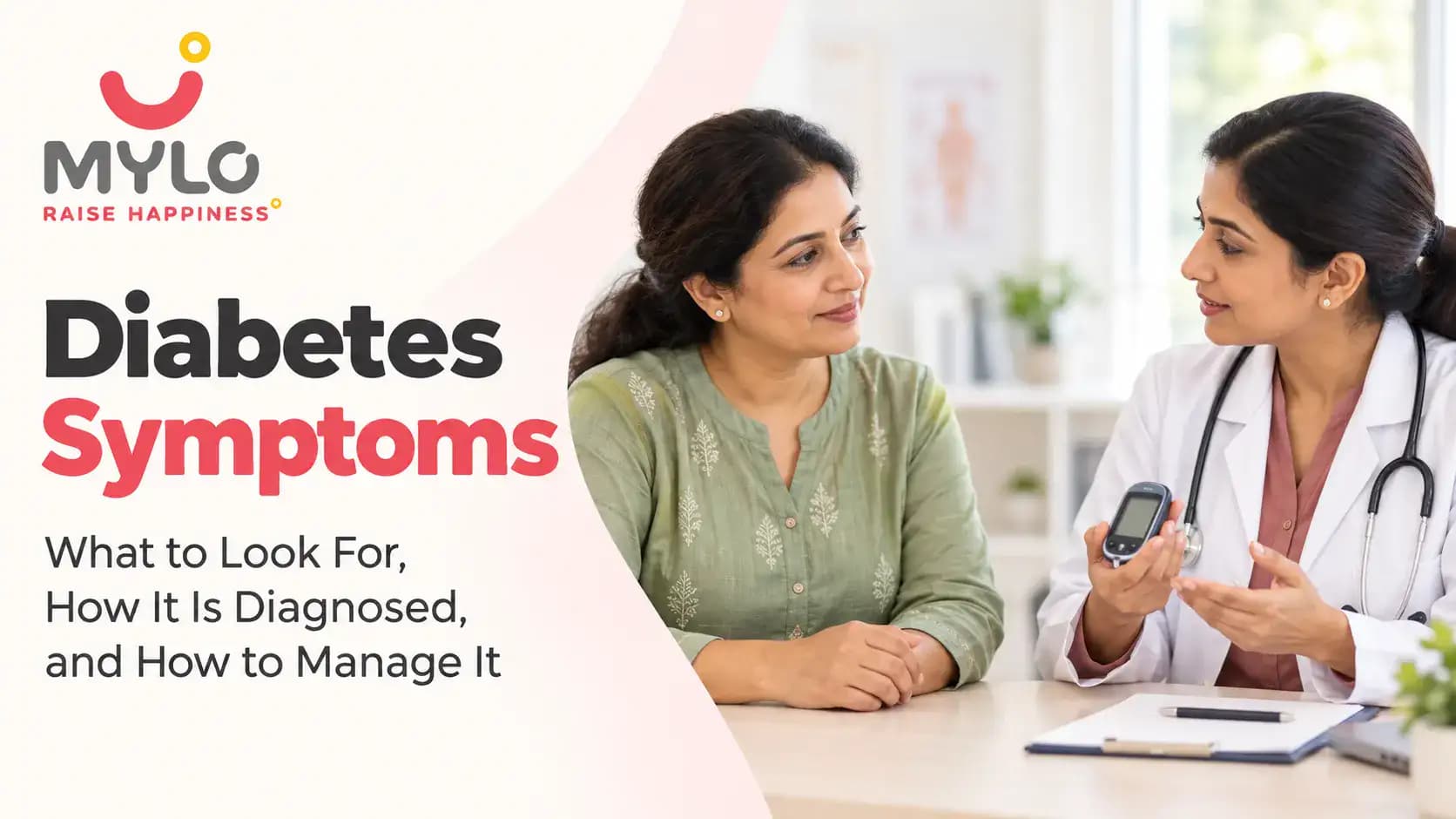
Quick answer
The classic early symptoms of diabetes are passing urine frequently, especially at night, feeling unusually thirsty, unexplained weight loss and persistent tiredness. Many people have no symptoms at all in the early stages, which is why testing matters. Diagnosis is made on blood tests, not on symptoms. In India, screening is recommended earlier than in Western countries because diabetes develops younger and at lower body weights.
Key takeaways
Symptoms often appear late. Type 2 diabetes can be present for years without any noticeable signs, so a blood test is the only reliable way to know.
India develops diabetes younger and slimmer. Indians are affected at lower body weights and earlier ages than Western populations, so the usual "screen after 40 if overweight" advice does not fit.
Gestational diabetes is screened differently in India. National guidance uses a single-step non-fasting glucose test at the first antenatal visit and again at 24 to 28 weeks.
In children, diabetes symptoms can escalate fast. A child who is suddenly thirsty, losing weight, or wetting the bed again after being dry needs testing urgently, not next week.
Know the two emergencies. Very high sugar with vomiting, deep breathing and drowsiness, and very low sugar with sweating, shaking and confusion, both need immediate action.
What is diabetes?
Diabetes is a condition where blood glucose stays higher than it should, either because the body does not make enough insulin, or because it cannot use insulin properly, or both.
Type | What happens | Who it affects |
|---|---|---|
Type 1 | The body stops producing insulin. It is an autoimmune condition, not a lifestyle one | Usually children, teenagers and young adults, though it can start at any age. Requires insulin from diagnosis |
Type 2 | The body becomes resistant to insulin and gradually produces less | Most commonly adults, but increasingly diagnosed in young adults and even adolescents in India |
Gestational (GDM) | Raised blood glucose first identified in pregnancy | Pregnant women. Usually resolves after delivery, but raises future risk |
Prediabetes | Glucose above normal but below the diabetes range | A warning stage, and often reversible |
Scale in India matters here. The ICMR-INDIAB study estimated that over 100 million adults in India are living with diabetes and a larger number again with prediabetes. Indians also tend to develop it about a decade earlier than Western populations, and at lower body mass index, with more fat around the abdomen relative to overall weight. This is why Indian guidance uses lower weight thresholds and earlier screening.
What are the common symptoms of diabetes?
Symptom | What it feels like | Why it happens |
|---|---|---|
Passing urine often, especially at night | Waking more than once or twice to urinate | The kidneys excrete excess glucose, pulling water with it |
Excessive thirst | A dry mouth and constant need to drink | Fluid loss through urine |
Unexplained weight loss | Losing weight without trying | The body breaks down fat and muscle when it cannot use glucose |
Persistent tiredness | Fatigue that rest does not fix | Glucose is not reaching the cells efficiently |
Increased hunger | Hungry soon after eating | Same underlying reason |
Blurred vision | Vision that fluctuates | High glucose affects the lens of the eye |
Slow-healing cuts and sores | Wounds taking weeks | Impaired circulation and immune response |
Repeated infections | Recurrent skin, gum, urinary or fungal infections. Recurrent thrush is a common early clue in women | Raised glucose supports bacterial and fungal growth |
Tingling or numbness in hands and feet | Pins and needles, burning, reduced sensation | Nerve damage from prolonged high glucose |
Dry, itchy skin | Particularly on the legs | Dehydration and circulation changes |
Dark, velvety patches on the neck, armpits or groin | Acanthosis nigricans. Frequently mistaken for dirt or poor hygiene | A visible sign of insulin resistance, often the earliest external clue |
The most important point about this list: many people with type 2 diabetes have none of these symptoms for years. Symptoms are a reason to test. The absence of symptoms is not a reason to skip testing.
Warning signs in children
Type 1 diabetes in children progresses over days to weeks, not years, and it is frequently missed until the child is seriously unwell.
Test urgently if a child has:
Started drinking much more than usual, and asking for water at night
Started passing urine much more, or has begun wetting the bed again after being reliably dry
Lost weight, or looks thinner in the face
Become unusually tired, irritable or withdrawn
Developed recurrent thrush or nappy rash that will not clear
Go to a hospital immediately if a child also has:
Vomiting, tummy pain, and deep, rapid or sighing breathing
A sweet or fruity smell to their breath
Drowsiness, confusion, or being hard to rouse
These suggest diabetic ketoacidosis, which is a medical emergency. It is often initially mistaken for a stomach infection, so it is worth asking directly: "Could this be diabetes?" A finger-prick blood glucose test takes seconds and is available in any clinic.
How is diabetes diagnosed?
On blood tests, not on symptoms. Any one of the following, generally confirmed on a second occasion unless symptoms are clear and the reading is high:
Test | Normal | Prediabetes | Diabetes |
|---|---|---|---|
Fasting blood glucose (8 hours, no food) | Below 100 mg/dL | 100 to 125 mg/dL | 126 mg/dL or above |
HbA1c (average of about 3 months) | Below 5.7% | 5.7 to 6.4% | 6.5% or above |
2-hour value in a 75g oral glucose tolerance test | Below 140 mg/dL | 140 to 199 mg/dL | 200 mg/dL or above |
Random blood glucose with classic symptoms | 200 mg/dL or above |
Practical notes. A home glucometer reading is useful for monitoring, but diagnosis needs a laboratory test. HbA1c can be misleading if you have anaemia, a haemoglobin variant such as thalassaemia trait, or recent blood loss, all of which are relevant in India, so your doctor may prefer a glucose-based test.
Who should be screened, and from what age?
Indian guidance recommends screening earlier than Western guidance, because the disease appears earlier here.
Get tested from around age 30, and earlier if you have any of:
A parent, brother or sister with diabetes
Overweight by Asian Indian standards, meaning a BMI of 23 or above, or a waist over 90 cm for men and 80 cm for women
A previous pregnancy affected by gestational diabetes
Polycystic ovary syndrome
High blood pressure or abnormal cholesterol
A sedentary lifestyle
A previous prediabetes result
Waist matters as much as weight in Indians. Someone with a normal BMI but a large waist can still carry significant risk, which is why "I am not fat, so I am fine" is unreliable here.
Gestational diabetes: what pregnant women should know
Gestational diabetes is raised blood glucose first identified during pregnancy. It is common, usually manageable, and usually resolves after delivery.
How it is screened in India
Indian national guidance uses a single-step test that does not require fasting, which makes it far more practical in routine antenatal care. A 75 gram glucose drink is given regardless of when you last ate, and blood glucose is checked two hours later.
A 2-hour value of 140 mg/dL or above is taken as gestational diabetes
Testing is recommended at the first antenatal visit, and repeated at 24 to 28 weeks if the first test was normal
Some hospitals use fasting-based criteria instead, with different thresholds. Both are in use in India, so ask which test you are having and what your result means.
Why it is treated
Well-controlled gestational diabetes usually leads to a normal pregnancy and a healthy baby. Poorly controlled GDM raises the chance of a large baby, difficult delivery, caesarean birth, pre-eclampsia, and low blood sugar in the baby after birth.
How it is managed
Diet and portion changes first, usually with a dietitian. This alone controls the majority of cases
Regular walking after meals, if your obstetrician approves exercise
Home glucose monitoring, usually fasting and after meals
Insulin if needed. Insulin is safe in pregnancy and does not harm the baby. Needing it is not a failure
Extra scans to monitor the baby's growth
The part that gets forgotten
Get an oral glucose tolerance test 6 to 12 weeks after delivery, and then regularly for life. A large proportion of women with gestational diabetes go on to develop type 2 diabetes, and this postpartum test is one of the most commonly skipped steps in Indian antenatal care. Put it in your calendar before you deliver.
Breastfeeding is associated with a lower risk of later type 2 diabetes for the mother, which is one more reason to seek good feeding support.
If you already have diabetes and are planning pregnancy
Speak to your doctor before conceiving. Blood glucose targets are tighter before and during pregnancy, some medications need changing, a higher dose of folic acid is usually advised, and certain drugs such as ACE inhibitors and statins are stopped. This is a planned conversation, not a post-positive-test one.
How is diabetes managed?
Lifestyle, which does most of the work
Area | What actually helps |
|---|---|
Food | Smaller portions of rice and wheat, more dal, vegetables and protein at every meal. Eat vegetables and protein before the carbohydrate portion of a meal. Whole grains over refined |
Sugar and sweetened drinks | Cut sweetened tea and coffee, packaged juices and soft drinks first. This is usually the single easiest large win |
Physical activity | At least 30 minutes most days. A 10 to 15 minute walk after meals lowers post-meal glucose noticeably |
Weight | Losing 5 to 10 percent of body weight makes a measurable difference, and can reverse prediabetes |
Sleep | Short sleep and untreated sleep apnoea both worsen glucose control |
Tobacco | Stop all forms, including gutkha and khaini |
Alcohol | Limit. It can cause delayed low blood sugar, especially if you take insulin or sulfonylureas |
Stress | Genuine effect on glucose. Worth addressing rather than dismissing |
On rice specifically, since it comes up in every Indian consultation: rice is not forbidden. Portion size, what you eat alongside it, and total daily carbohydrate are what matter. A smaller serving of rice with plenty of dal, sabzi, curd and salad behaves very differently from a large plate of rice alone.
Medication
Medication is decided by your doctor based on your glucose levels, other conditions, kidney function, weight and cost. Options range from metformin and other oral medicines to newer drug classes and insulin.
Two things worth saying plainly:
Insulin is not a last resort or a punishment, and it is not addictive. For some people it is the right treatment from the start.
Do not stop or reduce medication because your sugar has improved. Improvement usually means the treatment is working. Any change should come from your doctor.
Monitoring and complication checks
Check | How often |
|---|---|
HbA1c | Usually every 3 to 6 months |
Blood pressure | Every visit |
Eye examination (dilated retina check) | Yearly. Damage is silent until advanced |
Foot examination | Yearly, and check your own feet daily if you have any numbness |
Kidney tests (urine albumin, creatinine) | Yearly |
Lipid profile | Yearly, or as advised |
Emergency warning signs
Go to hospital immediately for high blood sugar with:
Vomiting, and inability to keep fluids down
Abdominal pain
Deep, rapid or sighing breathing
A fruity or sweet smell on the breath
Drowsiness, confusion or difficulty waking
Very high glucose readings that are not coming down
Treat low blood sugar immediately. This mainly affects people on insulin or sulfonylurea tablets. Signs include sweating, shaking, palpitations, sudden hunger, irritability, confusion, slurred speech and blurred vision.
What to do: take about 15 grams of fast-acting sugar, such as three to four teaspoons of glucose powder or sugar in water, or half a glass of regular soft drink or fruit juice. Wait 15 minutes and recheck. Repeat if still low, then eat a snack or meal.
Call for emergency help if the person is unconscious, fitting, or unable to swallow. Do not put food or liquid into the mouth of someone who is not fully conscious.
Also seek prompt care for: a foot ulcer, wound or blister that is not healing, any black or discoloured area on the foot, sudden vision loss, chest pain, or breathlessness.
Myths worth clearing up
Myth | Reality |
|---|---|
Eating sugar causes diabetes | A high-sugar diet contributes to weight gain, which raises risk. Sugar itself is not the single cause |
Only overweight people get diabetes | Indians frequently develop diabetes at normal BMI. Waist size and family history matter |
Thin people cannot have gestational diabetes | They can, which is why screening is universal in Indian antenatal care |
Insulin means the disease has become serious, or is addictive | Neither. It is one effective treatment among several, and it is safe in pregnancy |
You can stop medicines once sugar is normal | Normal readings usually mean the treatment is working. Never stop without your doctor |
Karela, jamun, methi or amla can cure diabetes | They are fine as foods. No food cures diabetes, and relying on them instead of treatment is dangerous |
Sugar-free products can be eaten freely | Many still contain carbohydrate, fat and calories. Read labels |
Gestational diabetes ends at delivery | Glucose usually normalises, but future risk is substantially raised. The postpartum test matters |
Diabetes always has symptoms | It very often has none for years |
When should you see a doctor?
Book a test if you have:
Any of the classic symptoms, particularly thirst, frequent urination or unexplained weight loss
Recurrent infections, thrush, boils or slow-healing wounds
Numbness or tingling in the feet
Dark velvety patches on the neck or armpits
A family history of diabetes and you are over 30 and have never been tested
A previous pregnancy affected by gestational diabetes
PCOS, high blood pressure or high cholesterol
Seek care the same day if:
A child has thirst, weight loss or new bedwetting, especially with vomiting or drowsiness
Anyone has very high readings with vomiting, abdominal pain or deep breathing
Low blood sugar is not improving with sugar, or the person is confused or unconscious
There is a non-healing foot wound, or any black or discoloured area on the foot
There is sudden vision loss
Frequently asked questions
What are the first signs of diabetes?
Frequent urination, especially at night, unusual thirst, tiredness and unexplained weight loss. Many people have no symptoms at all early on, so testing matters more than waiting for signs.
At what age should Indians get tested for diabetes?
Earlier than Western guidance suggests. From around age 30, and sooner if you have a family history, a large waist, PCOS, high blood pressure, or a previous gestational diabetes pregnancy.
Can you have diabetes without symptoms?
Yes, commonly. Type 2 diabetes can be present for years before it causes any noticeable symptom, which is why screening exists.
What is the normal blood sugar level?
Fasting below 100 mg/dL and HbA1c below 5.7% are considered normal. Fasting of 126 mg/dL or more, or HbA1c of 6.5% or more, is in the diabetes range. Your doctor interprets this alongside your overall picture.
How is gestational diabetes tested in India?
Usually with a single-step 75 gram glucose test that does not require fasting, with a 2-hour value of 140 mg/dL or above indicating gestational diabetes. It is done at the first antenatal visit and repeated at 24 to 28 weeks.
Will gestational diabetes harm my baby?
Well-controlled gestational diabetes usually leads to a healthy pregnancy and baby. Poor control raises the risk of a large baby, delivery complications and low blood sugar in the newborn, which is why monitoring matters.
Is insulin safe in pregnancy?
Yes. Insulin does not cross to the baby in a harmful way and is the standard treatment when diet alone is not enough.
Does gestational diabetes go away after delivery?
Blood glucose usually returns to normal, but the risk of developing type 2 diabetes later is substantially raised. Have an oral glucose tolerance test 6 to 12 weeks after delivery, and continue regular testing afterwards.
Can I still eat rice if I have diabetes?
Yes, in controlled portions and alongside dal, vegetables, curd and protein. Total carbohydrate across the day is what matters, not banning one food.
Can diabetes be reversed?
Prediabetes can often be reversed with weight loss and activity. Some people with early type 2 diabetes achieve remission with substantial weight loss, though it requires medical supervision and ongoing monitoring. Type 1 diabetes cannot be reversed.
The bottom line
Diabetes frequently announces itself late or not at all, which makes testing more useful than symptom-watching, particularly in India where it develops earlier and at lower body weights than the standard advice assumes. If you are pregnant, make sure you are screened at both the recommended points, and book the postpartum test before you forget about it. And learn the two emergencies, because very high sugar with vomiting and drowsiness, and very low sugar with confusion, are both situations where knowing what to do in the first ten minutes matters.
Sources
Indian Council of Medical Research, guidelines for management of type 2 diabetes, and the ICMR-INDIAB national study
Ministry of Health and Family Welfare, Government of India, national guidelines for diagnosis and management of gestational diabetes mellitus
World Health Organization, classification and diagnostic criteria for diabetes mellitus, and diagnostic criteria for hyperglycaemia in pregnancy
American Diabetes Association, Standards of Care in Diabetes
International Diabetes Federation, Diabetes Atlas
Research Society for the Study of Diabetes in India (RSSDI), clinical practice recommendations
Federation of Obstetric and Gynaecological Societies of India, gestational diabetes guidance
This article is for general information and is not a substitute for medical advice. Diagnosis and treatment must come from a doctor. Seek emergency care for vomiting with drowsiness and deep breathing, or for low blood sugar with confusion or loss of consciousness.
Article Posted Under
Related Articles




Related Topics
.webp&w=32&q=75)
Medical Disclaimer
This content is for informational purposes only and should not replace professional medical advice. Consult with a physician or other health care professional if you have any concerns or questions about your health. If you rely on the information provided here, you do so solely at your own risk.


AWARDS AND RECOGNITION

Mylo wins Forbes D2C Disruptor award

Mylo wins The Economic Times Promising Brands 2022
AS SEEN IN













- Mylo Care: Effective and science-backed personal care and wellness solutions for a joyful you.
- Mylo Baby: Science-backed, gentle and effective personal care & hygiene range for your little one.
- Mylo Community: Trusted and empathetic community of 10mn+ parents and experts.


Product Categories
Baby Carrier | Baby Soap | Baby Wipes | Stretch Marks Cream | Baby Cream | Baby Shampoo | Baby Massage Oil | Baby Hair Oil | Stretch Marks Oil | Baby Body Wash | Baby Powder | Baby Lotion | Diaper Rash Cream | Newborn Diapers | Teether | Baby Kajal | Baby Diapers Pants | Cloth Diapers | Laundry Detergent | Lactation Granules |