


Orders
.png&w=48&q=75 "login")
Profile


Wallet

Is a Manual Breast Pump Helpful for Working Mothers?

 4 Likes|
 5 min
5 minA manual breast pump is a hand-operated device to extract milk from the breasts.
Manual breast pumps are small and portable, making them an ideal choice for working mothers who want to continue breastfeeding but may not have access to an electric breast pump.
How To Use Manual Breast Pump?
To use a manual breast pump, the mother first attaches the suction cup to her breast. She then uses the hand pump to create a vacuum, which draws milk from the breast and into the pump’s collecting chamber.
Manual breast pumps typically have two settings – one for stimulating milk flow and one for continuous suction. Mothers can experiment with both settings to see which works better for them.
What Is a Manual Breast Pump Made Of?
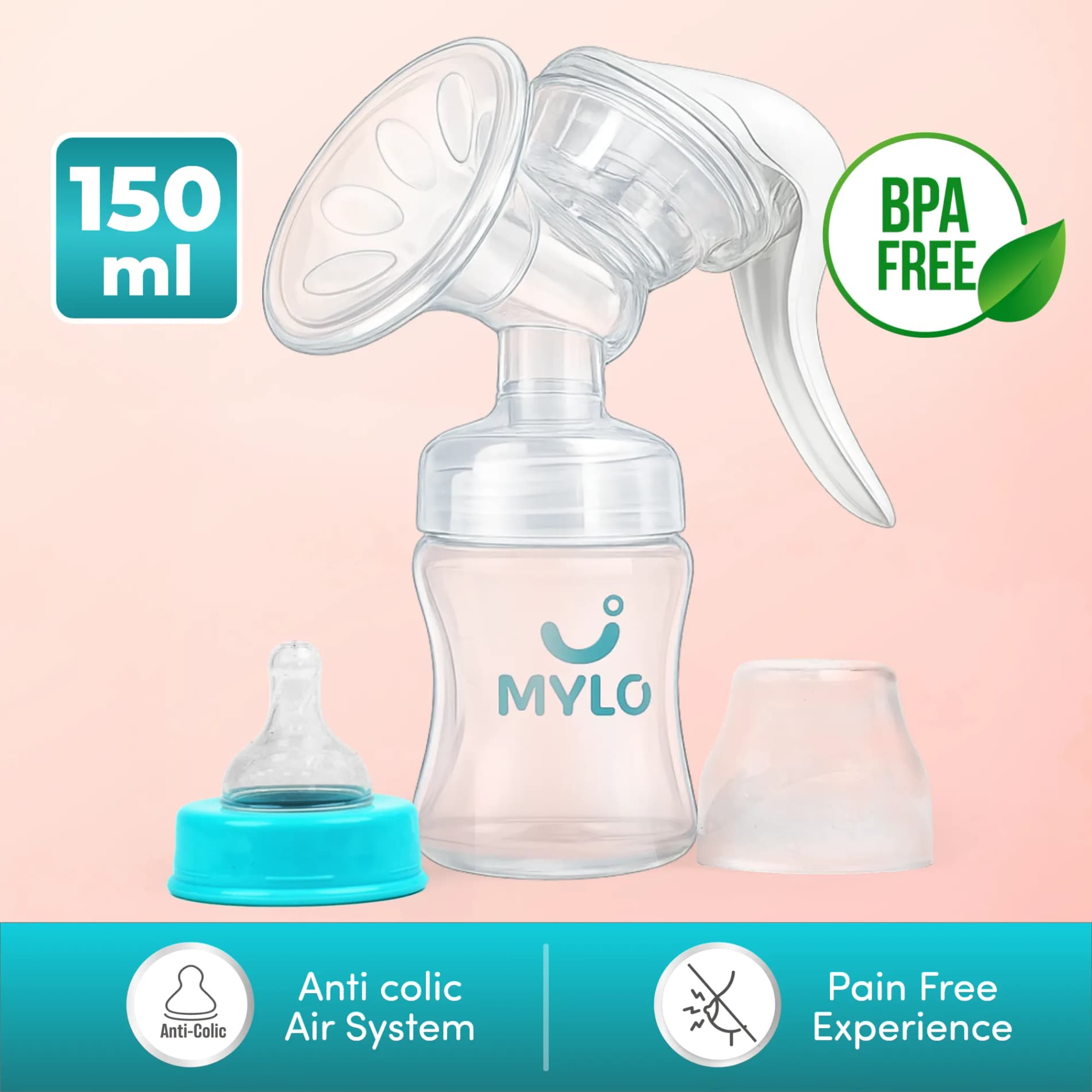
Manual breast pumps are usually made of plastic, with some models including a small amount of metal. Manual breast pumps are BPA-free and typically dishwasher safe. They mainly consist of three parts:
-
Pump
Manual pumps usually have a handle that needs to be pumped up and down to create suction.
-
Flange
The flange is the part of the pump that goes over the nipple and areola. It's important to ensure the flange is the right size, as an ill-fitting flange can cause pain and lead to decreased milk production.
-
Collection Bottle
This is where the milk will be stored once it has been expressed. Manual breast pumps typically come with either standard or wide-neck bottles.
How does a breast pump helps make breastfeeding easier?
Breastfeeding can be a demanding and time-consuming task, especially for working mothers. A breast pump can help to make breastfeeding easier by allowing the mother to pump milk ahead of time and store it in the refrigerator or freezer.
In this way, she can have bottles of expressed milk ready to be fed when the baby needs them. Additionally, a breast pump can help to relieve engorgement (when the breasts are painfully full of milk) and prevent mastitis (an infection of the breast tissue).
What are some tips for using a manual breast pump?
Here are some tips for using a manual breast pump:
-
Before starting pumping, wash your hands thoroughly and sterilize the breast pump parts that will come into contact with the breast milk.
-
It may take a few tries to get the hang of using a manual breast pump. Be patient, and don’t be discouraged if it doesn’t work perfectly the first time.
-
To help stimulate milk flow, try massaging breasts or putting a warm compress on them before starting pumping.
-
If there is any trouble getting the suction cup to stay in place, try using a breast shield or flange.
-
Pump for 10-15 minutes on each breast until the milk flow slows down.
-
After finishing pumping, wash all of the breast pump parts that come into contact with the milk. Store the milk in clean, airtight containers in the refrigerator or freezer.
What is the difference between handle and suction pumps?
Two main types of manual breast pumps are handle pumps and suction pumps. Handle pumps are operated by a handle that is squeezed in an up-and-down motion.
Suction pumps, on the other hand, have a lever or plunger that is pushed down to create suction. Some mothers find handle pumps easier to use, while others prefer suction pumps. Using a suction pump may require some effort.
What is the best breast pump for working moms?
The best breast pump for working moms is the one that meets their individual needs. Ultimately, the best breast pump for a working mom is the one she feels most comfortable using, and in this case, Feels Natural Manual Breast Pump, as lactation consultants often recommend.
This manual breast pump has a soft silicone cup that creates a gentle suction and is designed to mimic the baby's natural nursing rhythm. Additionally, it is compact and lightweight, making it easy to carry in a diaper bag. Feels Natural Manual Breast Pump also comes with a carrying case and two bottles, ready to use right out of the box.
Conclusion
Manual breast pumps have several advantages over electric breast pumps. They are small and lightweight, making them easy to carry around. Manual breast pumps are also considerably less expensive than electric breast pumps, and they don’t require batteries or electricity.
Additionally, manual breast pumps can be a good choice for mothers who want to pump occasionally or want a backup pump in case their electric breast pump breaks down.
You may also like: Is it safe to use reusable nursing pads during breastfeeding? (mylofamily.com)
Consider watching this, if you wish to nurture the breasfeeding experience even more:




Article Posted Under
Related Articles
Mylo: The Made-in-India Pregnancy and Parenting App Built for Indian Parents
 7 min
7 min Diwali During Pregnancy: Safety Tips for Pregnant Women on Crackers, Sweets and Diet
 17 min
 Best Pregnancy and Parenting App in India: 5 Must-Have Features to Look For (2026)
 20 min
 Best Hairstyles for Postpartum Hair Loss and Regrowth
 10 min
Medical Disclaimer
This content is for informational purposes only and should not replace professional medical advice. Consult with a physician or other health care professional if you have any concerns or questions about your health. If you rely on the information provided here, you do so solely at your own risk.


AWARDS AND RECOGNITION

Mylo wins Forbes D2C Disruptor award

Mylo wins The Economic Times Promising Brands 2022
AS SEEN IN













- Mylo Care: Effective and science-backed personal care and wellness solutions for a joyful you.
- Mylo Baby: Science-backed, gentle and effective personal care & hygiene range for your little one.
- Mylo Community: Trusted and empathetic community of 10mn+ parents and experts.


Product Categories
Baby Carrier | Baby Soap | Baby Wipes | Stretch Marks Cream | Baby Cream | Baby Shampoo | Baby Massage Oil | Baby Hair Oil | Stretch Marks Oil | Baby Body Wash | Baby Powder | Baby Lotion | Diaper Rash Cream | Newborn Diapers | Teether | Baby Kajal | Baby Diapers Pants | Cloth Diapers | Laundry Detergent | Lactation Granules |