


Orders
.png&w=48&q=75 "login")
Profile


Wallet

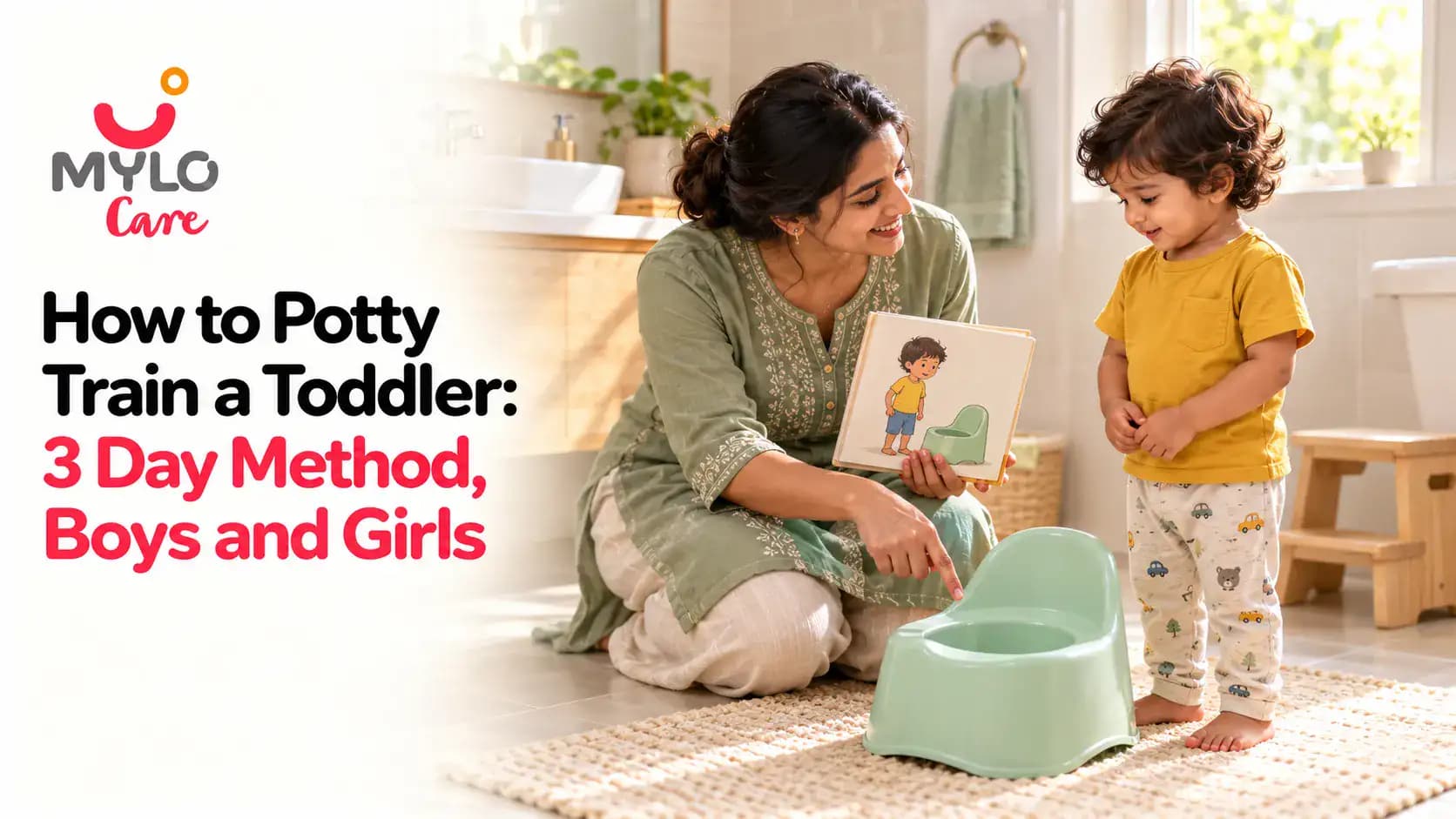
How to Potty Train a Toddler: 3 Day Method, Boys and Girls
 21 min
Quick Answer
Potty training is teaching a toddler to notice when they need to pee or poop and use a potty or toilet instead of a diaper. For example, a 2 year old who tugs at their diaper and says "susu" is ready to start. Most children learn between 2 and 3 years with patience and praise.
At a Glance
Topic | Key Point |
|---|---|
Best age | Usually 2 to 3 years, when your child shows readiness signs |
Methods | Gradual (child-led) or intensive (like the 3 day method) |
Daytime vs night | Day dryness comes first. Night dryness often takes months or years longer |
Boys | Start sitting down, standing up to pee can come later |
Girls | Teach wiping front to back |
Accidents | Normal for weeks or months. Stay calm, never punish |
Diapers to underwear | Cotton underwear in the day, diaper pants for naps, nights and outings |
Key Facts
Most children show readiness for potty training between 18 months and 3 years, and many complete daytime training between 2 and 3.5 years.
Starting before your child is ready usually makes training take longer, not shorter.
Night dryness is controlled by body development. Many children are not dry at night until 5 or 6 years.
Boys often take a little longer to train than girls on average, but every child is different.
Constipation is a common reason for potty refusal and accidents.
Is My Toddler Ready to Start?
Short answer: Start when your toddler stays dry for about 2 hours, shows interest in the toilet, can tell you they need to go, and can pull pants up and down with help.
Readiness Sign | Example |
|---|---|
Stays dry for 1 to 2 hours | Dry diaper after naps |
Notices a wet or dirty diaper | Tugs at it, asks for a change |
Tells you or hides to poop | Goes behind the sofa, says "potty" or "susu" |
Interest in the toilet | Follows you to the bathroom, copies family |
Can follow simple instructions | "Sit here", "Wash hands" |
Can walk and sit steadily | Sits on a potty for a few minutes |
For more on age and readiness, read when to begin toilet training your child.
How to Potty Train a Toddler: Step by Step
Short answer: Get a potty, introduce it calmly, set regular sitting times, watch for signs, praise every try, switch to underwear in the day, and stay patient through accidents.
Step | What to Do | Tip |
|---|---|---|
1. Prepare | Get a potty or toilet seat reducer, read potty books, let them watch family use the toilet | Let your toddler pick the potty colour |
2. Introduce the potty | Sit on it fully clothed first, then without a diaper | Keep it in the bathroom or play area |
3. Choose words | Use simple family words: "susu", "potty", "chhi" | Use the same words everyone at home uses |
4. Set potty times | After waking, after meals, before bath, before bed, before going out | Every 1.5 to 2 hours at first |
5. Watch for signs | Squatting, holding, going quiet, wriggling | Take them to the potty straight away |
6. Sit for a short time | 3 to 5 minutes, with a book or song | Never force them to sit longer |
7. Praise every try | "You sat on the potty! Well done!" | Praise effort, even if nothing comes |
8. Switch to underwear | Cotton underwear in the day once they use the potty often | Easy-to-pull-down clothes help |
9. Teach hygiene | Wiping, flushing, washing hands with soap | Make handwashing a song |
10. Expect accidents | Clean up calmly, say "Next time we'll try the potty" | Never shame or punish |
What Is the 3 Day Potty Training Method?
Short answer: The 3 day method is an intensive approach where you stay home for 3 days, remove diapers completely, watch your toddler closely and take them to the potty at every sign. It works for some children, but many need longer.
How the 3 Day Method Works
Day | What Happens |
|---|---|
Before you start | Choose 3 free days at home. Stock up on underwear, snacks, drinks and cleaning supplies. Tell your toddler "Bye bye diapers!" |
Day 1 | No diaper (bare bottom or loose clothes). Offer plenty of drinks. Take your toddler to the potty every 15 to 30 minutes and at any sign. Expect many accidents |
Day 2 | Your toddler starts noticing the feeling. Begin short outings (like a walk) right after a potty visit |
Day 3 | Fewer reminders. Try underwear with loose pants. Praise every success |
After day 3 | Keep going. Most children still have accidents for a few weeks |
Is the 3 Day Method Right for Your Child?
It May Work Well If | It May Not Suit If |
|---|---|
Your child shows clear readiness signs | Your child is under 2 or shows few signs |
You can stay home fully for 3 days | You have a newborn, a move or big changes at home |
Your child likes routine and praise | Your child resists strongly or gets upset |
You can stay calm through many accidents | Your child is constipated |
The 3 day method has little formal research behind it. Many children do well with a slower, gradual approach. Choose the method that suits your child and family.
Gradual vs 3 Day Method
Gradual (Child-Led) | 3 Day (Intensive) | |
|---|---|---|
Time | Weeks to months | 3 days of focus, then practice |
Diapers | Slowly reduced | Removed all at once in the day |
Parent effort | Spread out | Very high for 3 days |
Stress | Usually low | Can be high if the child isn't ready |
Best for | Most toddlers, busy families | Ready toddlers, parents with 3 free days |
Potty Training Boys vs Girls
Short answer: The basic steps are the same. Boys usually start by sitting down for both pee and poop and learn to stand later. Girls need to learn to wipe from front to back.
Boys | Girls | |
|---|---|---|
Starting position | Sitting down for both, with penis pointed down to avoid spraying | Sitting down, knees apart, feet supported |
Standing to pee | Can learn after sitting is going well, often by copying papa or an older brother | Not applicable |
Aim practice | A small piece of cereal or a toilet target in the bowl makes it a game | Not applicable |
Wiping | Shake or dab, wash hands | Wipe front to back to prevent infections |
Average timing | Often a little later on average | Often a little earlier on average |
Common issue | Getting distracted, splashing | Holding pee too long, urine infections |
How to Potty Train a Boy
Start sitting down for both pee and poop.
Show him how to point his penis down into the potty.
Use a potty with a splash guard if possible.
Once sitting is going well, let him copy an adult male family member standing to pee.
Make aiming fun with a cereal piece target in the toilet.
How to Potty Train a Girl
Teach her to sit with knees apart and feet supported on a stool.
Teach wiping from front to back, every time.
Remind her not to hold pee for long, as this can lead to urine infections.
Let her copy mummy or an older sister.
From Diapers to Underwear: How to Switch
Short answer: Switch to cotton underwear during the day once your toddler uses the potty regularly. Keep diapers or diaper pants for naps, nights and long outings until they stay dry.
Stage | What to Use |
|---|---|
Starting potty training | Diapers or diaper pants, with regular potty sits |
Using the potty most of the day | Cotton underwear at home in the day |
Outings and travel | Diaper pants as a backup, plus spare clothes |
Naps | Diaper pants until naps are dry most days |
Night | Diaper pants until mornings are dry for a few weeks in a row |
Underwear or Diaper Pants?
Cotton Underwear | Diaper Pants (Pull-Ups) |
|---|---|
Your toddler feels wet, which helps them learn | Absorb accidents, less mess |
Best for home in the day | Best for naps, nights, travel and outings |
More washing | Easy to pull up and down like underwear |


How to Handle Potty Accidents
Short answer: Accidents are a normal part of learning. Clean up calmly, remind your toddler gently, and never shout, shame or punish.
Do | Don't |
|---|---|
Stay calm: "Oops, pee came out. Next time we'll try the potty" | Shout, shame or call them dirty |
Let them help clean up a little (put clothes in the bucket) | Punish or threaten |
Remind them to sit at regular times | Put them back in diapers as a punishment |
Carry spare clothes everywhere | Compare them with other children |
Potty Training Away From Home
Short answer: Plan ahead: take your toddler to the toilet before leaving, carry a travel potty seat or foldable potty, spare clothes and wipes, and know where toilets are. Use diaper pants for long trips if needed.
Situation | What Helps |
|---|---|
Before leaving home | Potty visit right before you step out |
Short outings | Spare clothes, wipes, plastic bag for wet clothes |
Long outings, travel | Foldable travel potty or toilet seat cover, diaper pants as backup |
Public toilets | Carry seat covers or a foldable seat reducer, hold your toddler steady, cover auto-flush sensors with a sticky note so they don't scare your child |
Indian (squat) toilets | Hold your toddler in a safe squat over the toilet, or use a travel potty |
Daycare or playschool | Tell teachers your child's potty words and timings, send 2 sets of spare clothes |
Relatives' homes and weddings | Show your toddler where the bathroom is when you arrive |
Long car or train journeys | Plan stops every 1.5 to 2 hours, or carry a travel potty |
Away-from-home potty bag: foldable potty seat, toilet seat covers, wipes, hand sanitiser, 2 spare sets of clothes and underwear, diaper pants, plastic bags.
Read travelling with a toddler, daycare vs nanny and choosing a playschool in India.
Why Is My Toddler Refusing the Potty?
Short answer: Common reasons are not being ready, fear of the toilet, constipation, pressure from adults, or big changes like a new sibling. Take a short break and try again calmly.
Reason | What Helps |
|---|---|
Not ready yet | Take a break of 2 to 4 weeks, then try again |
Fear of falling in or the flush | Use a small potty on the floor. Flush after they leave the bathroom |
Constipation (painful poop) | More water, fruits, vegetables and fibre. See your doctor if it continues |
Power struggle | Give choices: "Blue potty or the big toilet?" Stop asking every 5 minutes |
Big changes | Wait until things settle: new baby, new home, starting daycare |
Holding poop | Let them poop in a diaper in the bathroom at first, then move to the potty slowly |
Constipation is a common cause of potty problems. Read toddler constipation, loose motion and vomiting.
Potty Training Regression
Short answer: Regression means a potty-trained toddler starts having accidents again. It is common at 2 to 4 years after stress, illness, a new baby or a change in routine, and usually passes within a few weeks if you stay calm.
Trigger | Why It Happens | What Helps |
|---|---|---|
New baby | Toddler wants the same attention as the baby | Special one-on-one time daily, praise "big kid" skills. Read preparing your toddler for a new baby |
Starting daycare or playschool | New toilet, new people, busy play | Practise with the school toilet, ask teachers for regular reminders |
Illness | Loose motions or tiredness affect control | Go back to diaper pants until well, then restart |
Constipation | Pain makes the child avoid the potty | Treat constipation first |
Travel or moving home | New toilets, no routine | Carry a travel potty seat, keep potty times regular |
Too much pressure | Child feels stressed about the potty | Reduce reminders, more praise, fewer questions |
Just 2 weeks after starting | Novelty wears off, the child is still learning | Normal. Keep going with routine and praise |
What to do during regression:
Stay calm. Don't show disappointment or anger.
Check for medical causes: burning, fever, constipation.
Go back to regular potty times (after meals, before bed, before going out).
Use diaper pants for outings and nights if needed, without calling it a punishment.
Give extra attention for dry times and potty visits.
See your doctor if it continues for more than a few weeks or there are other symptoms.
Night Time Potty Training
Short answer: Night dryness depends on your child's body making a hormone that reduces urine at night and their bladder growing. You can't train it. Keep diaper pants at night until your child wakes up dry for a few weeks in a row.
Encourage a potty visit right before bed.
Avoid large drinks in the hour before bed, but don't restrict water during the day.
Use a night light so the way to the bathroom is easy.
Bedwetting is common until 5 years. Talk to your doctor if your child still wets the bed regularly after 7 years, or suddenly starts wetting after being dry.
For more, read bedwetting (nocturnal enuresis): causes and treatment.
When to Talk to Your Paediatrician
Short answer: See your doctor if your child has pain while peeing or pooping, blood in urine or stool, ongoing constipation, or is not potty trained by about 4 years in the day.
Sign | Possible Reason |
|---|---|
Pain or burning while peeing, fever, smelly urine | Urine infection |
Hard, painful poop, holding poop, blood on stool | Constipation, anal fissure |
Suddenly wetting again after being dry for months | Infection, constipation, stress or other causes |
Not daytime trained by around 4 years | Needs a check-up |
Dribbling urine all the time | Needs medical review |
Indian Context: What Parents Should Know
Indian toilets: use a child seat reducer on Western toilets, or a small potty for Indian (squat) toilets. A squatting position with feet supported helps toddlers poop more easily.
Grandparents' early training: many Indian grandparents hold babies over the toilet with "sssss" sounds from infancy. This is a form of early training. It can help with timing, but true control comes with readiness.
Washing: teach your toddler to wash with water (lota or health faucet) with your help, and always wash hands with soap.
Summer is easier: fewer clothes and quicker drying make summer a good time to start.
Playschool: many playschools prefer potty-trained children. Start a few months before, without pressure.
Myths vs Facts
Myth | Fact |
|---|---|
Starting early means finishing early | Starting before readiness often makes training take longer |
Boys are lazy about potty training | Boys may train a little later on average, but it's not laziness |
The 3 day method works for every child | It works for some. Many children need weeks to months |
Punishing accidents teaches faster | Punishment creates fear and often leads to holding and constipation |
Night dryness can be trained | Night dryness depends on body development |
Diaper pants delay potty training | Used for naps, nights and outings, they don't delay daytime learning |
FAQs
1. How long does potty training take?
It varies. Some children learn the basics in days, but most take a few weeks to a few months to be fully trained in the day.
2. Does the 3 day potty training method really work?
It can work for toddlers who are ready and parents who can stay home for 3 days. Most children still have accidents for some weeks afterwards.
3. Should my son pee sitting or standing?
Start sitting for both pee and poop. Standing to pee can come later once he is confident.
4. When should I switch from diapers to underwear?
Once your toddler uses the potty most of the time in the day. Keep diaper pants for naps, nights and outings.
5. What if my toddler refuses to sit on the potty?
Take a break of 2 to 4 weeks, check for constipation, and try again calmly with choices and praise.
6. How do I potty train my toddler at night?
You can't train night dryness directly. Use diaper pants at night until your child wakes up dry for several weeks, and encourage a potty visit before bed.
7. Bacche ko potty training kaise dein?
Jab baccha 2 ghante tak sukha rahe aur susu ya potty ke baare mein bataye, tab shuru kijiye. Khane ke baad, sone se pehle aur uthne ke baad potty par 3 se 5 minute bithaiye, har koshish par taareef kijiye, aur galti hone par kabhi daantiye mat.
8. Ladke ko khade hokar susu karna kab sikhayein?
Shuru mein ladke ko baith kar susu aur potty dono karna sikhaiye. Jab woh baith kar aaram se karne lage, tab papa ya bade bhai ko dekhkar khade hokar karna sikh sakta hai.
Related Reads
References
American Academy of Pediatrics, HealthyChildren.org. Toilet Training; The Right Age to Toilet Train. https://www.healthychildren.org
NHS. Potty training tips. https://www.nhs.uk/conditions/baby/babys-development/potty-training-and-bedwetting/
Blum NJ, Taubman B, Nemeth N. Relationship between age at initiation of toilet training and duration of training: a prospective study. Pediatrics, 2003.
Azrin NH, Foxx RM. Toilet Training in Less Than a Day. 1974.
Indian Academy of Pediatrics. Parent guidelines on toilet training. https://iapindia.org
Medical Disclaimer
This article is for general information only and does not replace advice from your paediatrician. If your child has pain, blood in urine or stool, or ongoing constipation, please consult your doctor.
Recommended for you
Potty training picks for your toddler





Article Posted Under
Related Articles



Related Topics
.webp&w=32&q=75)
Medical Disclaimer
This content is for informational purposes only and should not replace professional medical advice. Consult with a physician or other health care professional if you have any concerns or questions about your health. If you rely on the information provided here, you do so solely at your own risk.


AWARDS AND RECOGNITION

Mylo wins Forbes D2C Disruptor award

Mylo wins The Economic Times Promising Brands 2022
AS SEEN IN













- Mylo Care: Effective and science-backed personal care and wellness solutions for a joyful you.
- Mylo Baby: Science-backed, gentle and effective personal care & hygiene range for your little one.
- Mylo Community: Trusted and empathetic community of 10mn+ parents and experts.


Product Categories
Baby Carrier | Baby Soap | Baby Wipes | Stretch Marks Cream | Baby Cream | Baby Shampoo | Baby Massage Oil | Baby Hair Oil | Stretch Marks Oil | Baby Body Wash | Baby Powder | Baby Lotion | Diaper Rash Cream | Newborn Diapers | Teether | Baby Kajal | Baby Diapers Pants | Cloth Diapers | Laundry Detergent | Lactation Granules |