


Orders
.png&w=48&q=75 "login")
Profile


Wallet

How Many Cloth Diapers Do You Actually Need? The Math and the Laundry Cycle
 10 min
TL;DR
-
The formula: daily changes × days between washes + 4 to 6 buffer diapers = stash size
-
Newborn (0-3 months): 10-12 changes per day, stash 24-30
-
Infant (3-12 months): 8-10 changes per day, stash 20-24
-
Toddler (12-24 months): 6-7 changes per day, stash 16-20
-
Older toddler (24+ months): 4-6 changes per day, stash 12-18
-
Add 4-6 more diapers during monsoon to absorb the slower drying cycle
-
Wash every 24 to 48 hours; never let soiled diapers sit longer than 48 hours in Indian humidity
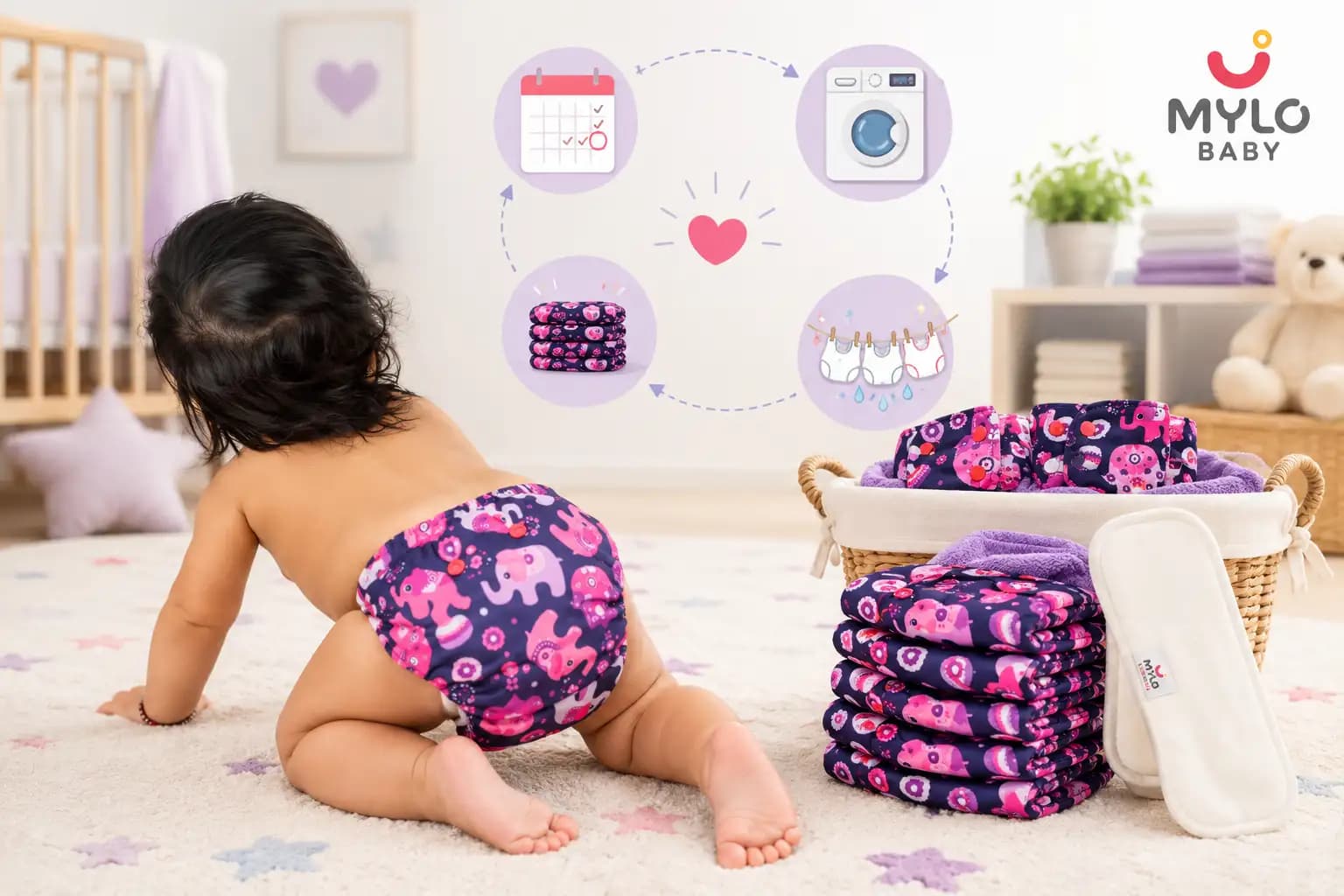
The honest answer is that most Indian families need 18 to 30 cloth diapers. The exact number depends on your baby's age, how often you plan to wash, and whether you cloth diaper through the monsoon. A newborn goes through 10 to 12 cloth diapers a day. A toddler may need only 5 or 6. Layer in a 2-day wash cycle, a few buffer diapers, and the slower drying time of an Indian July, and the math is straightforward. This guide walks through the formula, realistic stash sizes by age, and what changes when humidity is battling with your laundry rack.
Cloth diaper stash size by age and wash frequency
|
Age |
Changes per day |
Stash if washing daily |
Stash if washing every 2 days |
Stash if washing every 3 days |
Monsoon adjustment |
|
0-3 months |
10-12 |
14-18 |
24-30 |
34-42 |
+4-6 |
|
3-12 months |
8-10 |
12-15 |
20-24 |
28-34 |
+4-6 |
|
12-24 months |
6-7 |
10-12 |
16-20 |
22-26 |
+3-4 |
|
24-36 months |
4-6 |
8-10 |
12-18 |
16-22 |
+2-3 |
What is the simple formula for cloth diaper stash size?
Take the number of daily diaper changes, multiply by the days between washes, and add 4 to 6 buffer diapers for unexpected blowouts, teething stretches, and the half-day your inserts take to dry.
Daily changes × days between washes + buffer = stash size
A worked example: a 6-month-old needing 9 changes a day, with laundry every 2 days, needs (9 × 2) + 5 buffer = 23 diapers. Round up to 24. If you cloth diaper through monsoon, add 4 more. Total stash: 28.
The buffer is not optional. Babies have growth spurts, illness days, and mornings where they soil three diapers in an hour.
How many cloth diapers does a newborn need each day?
Newborns are at the high end of the curve. Most authoritative cloth diaper resources (Kanga Care, GroVia, Babee Greens) put newborn changes at 10 to 12 per day, some at 12 to 16. They feed every 2 to 3 hours, urinate often, and pass meconium and frequent breast-milk stools in the first weeks.
Important: Mylo's cloth diapers start at 3 months, not at birth. If you want to cloth diaper from day one, plan separately for the 0-3 month window, either with a newborn-specific cloth diaper brand or with disposables for the first weeks. Most Indian families using cloth start at 3 months for fit and convenience reasons, with disposables overnight and during the newborn weeks.
How many cloth diapers do you need for an infant (3 to 12 months)?
Daily changes drop to 8 to 10. Bladder capacity grows, solids are introduced from around 6 months and reduce stool frequency, and most infants settle into a more predictable pattern. A 2-day wash cycle plus a buffer gives a stash of 20 to 24 diapers, the most-recommended bracket across the industry.
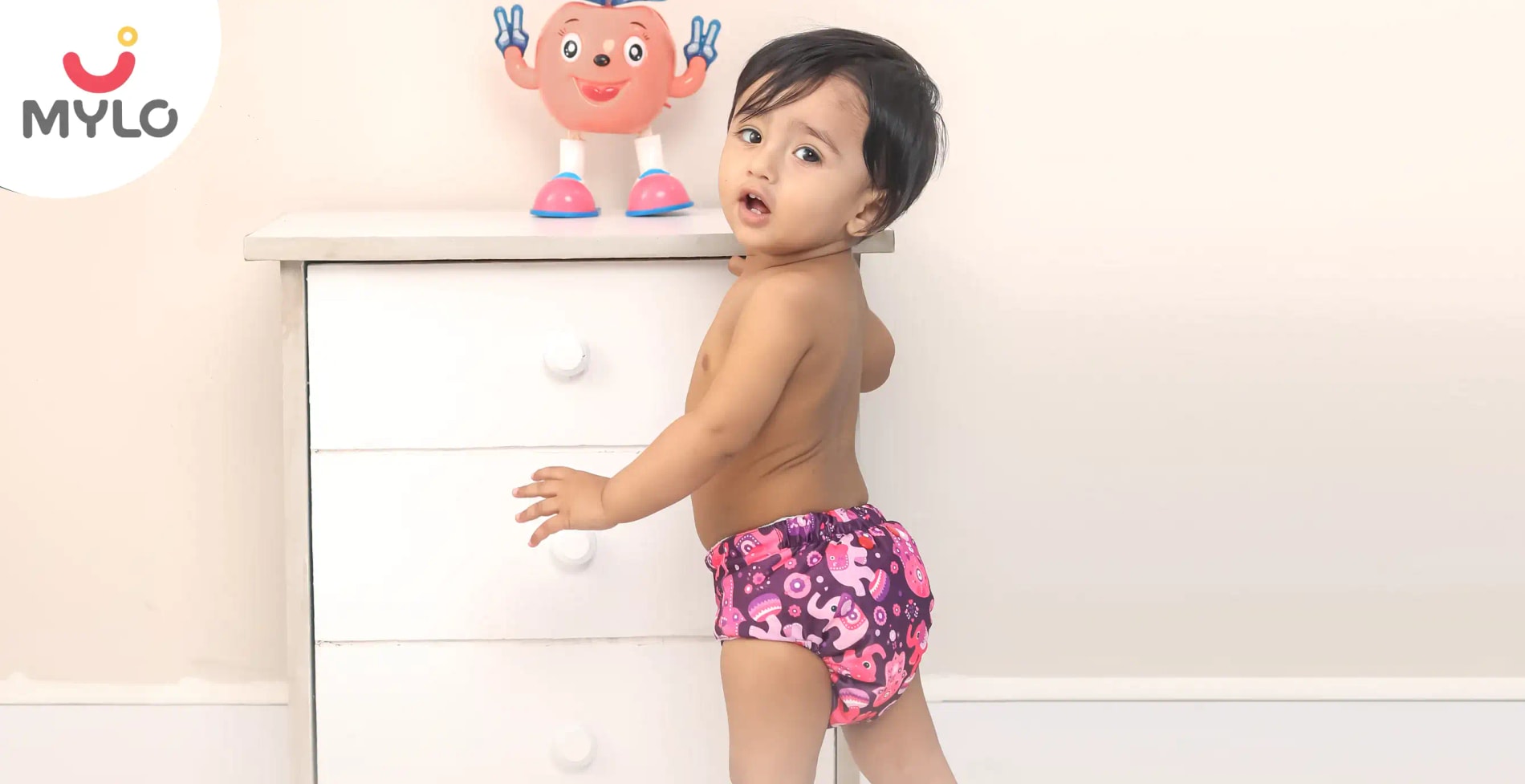
This is where one-size adjustable diapers like the Mylo Reusable Cloth Diapers earn their place. Each diaper adjusts via snap buttons across the 3 months to 3 years window (5 to 17 kg), so the stash you buy now stretches across the next two and a half years.
How many cloth diapers do you need for a toddler (1 to 3 years)?
A 12 to 24 month old typically needs 6 to 7 changes per day, dropping to 4 to 6 as you approach 2 years and potty training. The stash shrinks accordingly. Sixteen to 20 diapers, washed every 2 days, covers most toddlers comfortably. Older toddlers (24+ months) often manage on 12 to 18.
The shift to fewer changes is partly bladder maturity and partly behavioural: toddlers communicate discomfort, so wet diapers get noticed and changed promptly rather than being missed.
How does India's monsoon change the math?
The Indian monsoon is the single biggest variable in cloth diaper math. From June to September across most of the country, humidity sits at 75 to 95 percent, temperatures hover at 26 to 32 degrees, and a washed cotton diaper that dries in 4 to 6 hours in March can take 18 to 24 hours in July.
Three practical changes for monsoon:
-
Add 4 to 6 diapers to your stash to absorb the longer drying window
-
Wash every 12 to 24 hours rather than every 48, because damp soiled diapers in a wet bag grow mould fast
-
Dry under a ceiling fan on high, not just on a balcony rack; airflow matters more than ambient temperature
If drying gets unmanageable, most cloth-diapering families switch to disposables for the worst monsoon weeks and resume cloth in the post-monsoon dry months.
What is the ideal cloth diaper wash cycle?
For most Indian conditions, the sweet spot is washing every 24 to 48 hours. Daily washing means smaller stash and lower mould risk, but more time at the washing machine. Every other day balances stash size with effort. Beyond 48 hours, ammonia builds up, fabric absorbency degrades, and humid storage starts to grow bacteria.
A standard wash routine in India:
-
Pre-rinse soiled diapers under a jet spray or tap; flick solid waste into the toilet
-
Store in a breathable wet bag or open pail until wash day, never airtight
-
Main wash in warm water (40 to 60°C if your washing machine has the setting) with a cloth-diaper-friendly detergent (no fabric softener, no bleach as a routine)
-
Extra rinse to clear detergent residue, which can irritate baby skin and reduce absorbency
-
Dry in direct airflow; sunlight if available, ceiling fan as backup
How long do cloth diapers take to dry in India?
Drying time varies enormously by season and city. Some realistic ranges:
-
October to March in Delhi, Bangalore, Pune (low humidity): 3 to 5 hours on a sunny balcony
-
April to May in most of India (hot, dry): 2 to 4 hours
-
June to September monsoon (high humidity): 12 to 24 hours, sometimes longer
-
Chennai, Kolkata, Mumbai year-round (consistently humid): 6 to 12 hours
Inserts (the absorbent layer inside the diaper) dry slower than the outer shell. If you want to halve your drying time, hang the insert and shell separately rather than as a snapped unit.
How much do cloth diapers actually save in India?
Mylo states that switching to cloth saves up to ₹20,000 per year compared with disposables. The math, roughly: an average Indian baby uses 6 to 8 disposable diapers a day in the first year, at ₹15 to ₹25 per diaper, which is ₹35,000 to ₹70,000 in disposables annually. A starter stash of 24 Mylo cloth diapers at ₹400 to ₹500 each comes to roughly ₹10,000 to ₹12,000 one-time. Detergent, water, and electricity add ~₹3,000 to ₹5,000 per year. Net savings in year one are real, and the second year (same stash, no fresh purchase) is where the gap widens.
FAQs
Can I use just one cloth diaper for a whole day? No. Cloth diapers should be changed every 4 to 5 hours or sooner if soiled, which means 5 to 12 changes daily depending on age. One diaper is never enough for a full day.
Should I wash cloth diapers every day or every other day? In Indian humidity, every other day is the maximum safe window. During monsoon, every 24 hours is safer to avoid mould and ammonia buildup.
Can I use a washing machine for cloth diapers? Yes. A warm cycle (40 to 60°C) with a cloth-diaper-friendly detergent, plus an extra rinse, is the standard approach. Avoid fabric softeners, which coat the fibres and reduce absorbency.
Do I need a separate stash for nighttime? Many Indian families use a more absorbent nighttime insert (or double up two inserts) rather than a separate diaper. Mylo's reusable cloth diapers come with one insert; adding a second for night is a common adaptation.
Are Mylo cloth diapers suitable for newborns? No. Mylo's cloth diapers are designed for 3 months to 3 years (5 to 17 kg). For the newborn window, use disposables or a newborn-specific cloth brand.
What if I run out of cloth diapers? Keep a small disposable stash for backup, especially during travel, illness, or sudden monsoon downpours that disrupt drying. Most Indian cloth-diapering families use a hybrid approach rather than purist all-cloth.
Disclaimer: This article is for general information. Diaper choice, change frequency, and laundry routine should be adapted to your baby's skin, your home setup, and your local climate. If your baby develops persistent diaper rash or skin reactions, consult a paediatrician.
Medically reviewed by Dr. Shruti Tanwar, MBBS, MD (Obstetrics & Gynaecology) on 27 June 2026
Last updated: 30 June 2026
Sources
-
Kanga Care. How Many Cloth Diapers Do I Need? Stash Size Guide.
-
Babee Greens. Determining the Right Number of Cloth Diapers for Your Child.
-
Bayrli®. How Many Cloth Diapers Do I Need? A Guide by Age and Wash Frequency.
-
Cloth Diapers for Beginners. How Many Diapers Will Your Baby Use?
-
SuperBottoms. Monsoon Cloth Diapering: Hygiene, Washing & Drying Tips.
-
LuvLap. Cloth Diaper Care & Washing Tips: A Practical Guide for Indian Parents.
-
MommyingBabyT. Cloth Diaper Laundry: my wash routine.
-
Mylo Cloth Diaper — India's First OEKO-TEX Certified Cloth Diaper. mylofamily.com.
Article Posted Under
Related Articles
Debunking the Top 8 Myths About Diapering with Cloth Diapers
 2·
2· 6 min
6 min Top 5 Reasons to Use a Separate Detergent for Your Baby's Clothes
 6·5 min
 Keeping Cloth Diaper Inserts Clean and Germ-Free for Your Baby: Tips for Proper Washing and Reuse
 26·4 min
 Ultimate Guide to Choosing the Perfect Cloth Diaper Inserts for Your Baby
 15·5 min
Related Topics
.webp&w=32&q=75)
Medical Disclaimer
This content is for informational purposes only and should not replace professional medical advice. Consult with a physician or other health care professional if you have any concerns or questions about your health. If you rely on the information provided here, you do so solely at your own risk.


AWARDS AND RECOGNITION

Mylo wins Forbes D2C Disruptor award

Mylo wins The Economic Times Promising Brands 2022
AS SEEN IN












- Mylo Care: Effective and science-backed personal care and wellness solutions for a joyful you.
- Mylo Baby: Science-backed, gentle and effective personal care & hygiene range for your little one.
- Mylo Community: Trusted and empathetic community of 10mn+ parents and experts.


Product Categories
Baby Carrier | Baby Soap | Baby Wipes | Stretch Marks Cream | Baby Cream | Baby Shampoo | Baby Massage Oil | Baby Hair Oil | Stretch Marks Oil | Baby Body Wash | Baby Powder | Baby Lotion | Diaper Rash Cream | Newborn Diapers | Teether | Baby Kajal | Baby Diapers Pants | Cloth Diapers | Laundry Detergent | Lactation Granules |