


Orders
.png&w=48&q=75 "login")
Profile


Wallet

Foremilk vs Hindmilk: What's the Difference?
 10 min
Key Takeaways
Quick overview in 30 seconds.webp&w=32&q=75)
- Foremilk and hindmilk are the same breast milk from one feed—foremilk comes at the start and is lower in fat, hindmilk comes later and is creamier.
- Fat content rises gradually through the feed, so there is no exact switch point. Simply letting your baby finish one breast before offering the other ensures they receive both.
- A true foremilk-hindmilk imbalance (lactose overload) is uncommon and usually linked to oversupply, showing green frothy stools, gassiness and fussiness together—consult a lactation expert before assuming it.
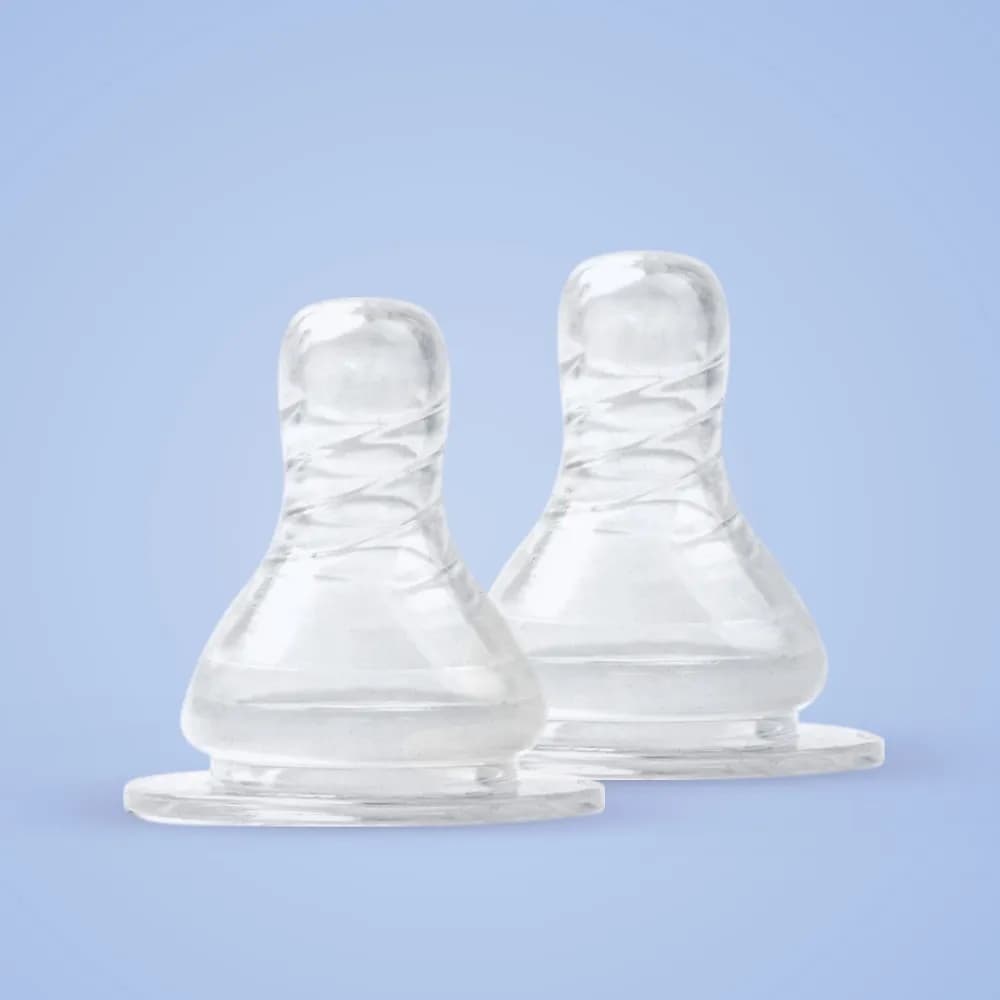
- Looking for gentle support for your breastfeeding journey? Explore our Anti Colic Slow (S) Flow Grooved Baby Nipple - Pack of 2.
 4.8
4.8 4.2
4.2.webp&w=1900&q=75) 4.5
4.5Quick Answer
Foremilk and hindmilk are not two different kinds of milk. They are the same milk from the same feed, and the only real difference is fat content. Foremilk is the milk your baby gets at the start of a feed: it is thinner, lower in fat and looks slightly bluish or watery. Hindmilk is the milk that comes later in the feed: it is creamier and higher in fat, because fat content rises steadily as the breast drains (WHO). There is no sudden switch between them, just a gradual increase in richness. For most babies you do not need to do anything special to "get" the hindmilk. The simplest rule is to let your baby finish one breast before offering the other, so they naturally reach the fattier milk (La Leche League). A true foremilk and hindmilk imbalance does exist, but it is uncommon and usually linked to oversupply.
Author: Mylo Editorial Team, Mylo Parenting Desk
Medically reviewed by: Mylo Editorial Board, aligned with WHO, NHS and NIH guidance
Last updated: 29 July 2026
Medical Disclaimer: This article is for informational purposes only and is not a substitute for professional medical advice. If your baby is very unsettled, gassy, not gaining weight well, or has persistent green frothy stools, please speak to your doctor, a lactation consultant or your health visitor.
Key Takeaways
Foremilk and hindmilk are the same milk, not two separate types.
The difference is fat: foremilk (start of feed) is lower in fat; hindmilk (later) is richer (WHO).
Fat content rises gradually through a feed; there is no exact cut-off point.
For most babies, simply finishing one breast before switching means they get both (La Leche League).
Foremilk is not "bad" or watery in a harmful way; it hydrates while hindmilk adds calories.
A true foremilk and hindmilk imbalance (lactose overload) is real but uncommon, usually from oversupply.
Do not assume imbalance unless you see the specific symptoms together; check with a professional first.
The Real Difference (and the Big Confusion)
This is one of the most searched and most misunderstood breastfeeding topics, so let us clear it up first: foremilk and hindmilk are simply the beginning and end of the same feed, from the same breast. Your body does not make two products. What changes is how much fat is in the milk as the feed goes on (WHO).
Because the change is gradual, there is no magic moment when foremilk "becomes" hindmilk and no fixed number of minutes. The milk just gets progressively creamier the more the breast is drained. Thinking of it as one continuous feed, rather than two milks you have to unlock, takes away a lot of unnecessary worry.
Foremilk vs Hindmilk at a Glance
| Foremilk | Hindmilk |
|---|---|---|
When in the feed | At the start | Later, as the breast drains |
Fat content | Lower in fat | Higher in fat (rises through the feed) |
Look | Thinner, slightly bluish or watery | Creamier, whiter |
Main role | Hydrates and quenches thirst | Adds calories and helps baby feel full |
Is it a separate milk? | No, same milk | No, same milk |
Why Does the Milk Get Fattier During a Feed?
The reason is physical, not a change in what your body produces. As milk is made and stored between feeds, the fat globules tend to stick to each other and to the walls of the milk-making glands and ducts. The watery, lower-fat part of the milk moves forward toward the nipple, while much of the fat stays "stuck" further back (La Leche League).
So at the start of a feed, your baby first gets the lower-fat foremilk that had collected near the front. As the feed continues and the breast drains, more of the fattier milk is released, which is the hindmilk. This also means the longer the gap since the last feed, the lower the fat in the very first milk your baby gets, because more low-fat milk has pooled at the front (WHO).
Do I Need to Worry About "Getting" the Hindmilk?
For the vast majority of mothers and babies, no. You do not need to time feeds or watch the clock to make sure your baby gets hindmilk. The reliable approach is simple:
Let your baby finish the first breast before offering the second, rather than switching too soon.
Follow your baby's cues and let them come off the breast when they are ready.
Watch nappies and weight, not minutes. Steady weight gain and plenty of wet and dirty nappies tell you your baby is getting enough of both.
A baby who feeds effectively and finishes a side naturally receives the full range of milk from watery to creamy.
Foremilk and Hindmilk Imbalance (Lactose Overload)
You may have read scary things about "foremilk hindmilk imbalance," sometimes called lactose overload. It is real, but it is uncommon, and it is often confused with normal newborn fussiness or gassiness (La Leche League). It happens when a baby takes in a large volume of lower-fat milk that moves through the gut faster than the milk sugar (lactose) can be digested.
It is usually linked to:
A significant oversupply of milk.
Switching breasts too soon, before the first is well drained.
The specific signs, seen together, may include:
Consistently green, frothy or explosive stools.
A baby who is very gassy, fussy, arching, or pulling on and off the breast.
Lots of discomfort despite gaining weight well.
What can help: make sure your baby finishes one breast fully before switching, and if oversupply is the cause, a lactation consultant may suggest strategies such as feeding from one breast per session or "block feeding." Do not start block feeding on your own, as reducing supply too much can backfire. Because these symptoms overlap with many normal and some medical causes, it is best to get a proper assessment before assuming imbalance.
A Note on Milk Supply
It helps to keep two ideas separate. Foremilk versus hindmilk is about the composition of a single feed, and it is not something a food or supplement can change. Milk supply, meaning how much you make overall, is a different question, driven mostly by frequent, effective feeding. Some mothers who want to support supply alongside a good diet use traditional lactation blends such as Mylo LactoMama™ Lactation Granules, which use shatavari as the hero ingredient. One caution: if your concern is an oversupply-related imbalance, increasing supply is the opposite of what you need, so speak to a lactation consultant before using any galactagogue in that situation.
Myths vs Facts
Myth | Fact |
|---|---|
Foremilk and hindmilk are two different milks | They are the same milk; fat simply rises through the feed (WHO). |
Foremilk is low quality or "just water" | Foremilk hydrates and still contains nutrients; it is a normal part of the feed. |
You must feed for a set number of minutes to reach hindmilk | There is no fixed time; letting baby finish one breast is what matters. |
Every gassy or green-stool baby has an imbalance | True imbalance is uncommon and needs the specific signs together, ideally confirmed by a professional. |
Pumping foremilk off first will fix everything | This can worsen oversupply; get guidance before changing your routine. |
Frequently Asked Questions
What is the difference between foremilk and hindmilk?
They are the same milk from one feed. Foremilk at the start is lower in fat and thinner, while hindmilk later in the feed is creamier and higher in fat, because fat content rises as the breast drains (WHO).
Is foremilk bad for my baby?
No. Foremilk is a normal, useful part of the feed that helps hydrate your baby. Together with the fattier hindmilk, it gives a complete feed.
How do I make sure my baby gets hindmilk?
Let your baby finish the first breast before offering the second, and follow their cues. Feeding effectively on one side naturally delivers the fattier milk.
Is foremilk and hindmilk imbalance real?
Yes, but it is uncommon. Known as lactose overload, it is usually linked to oversupply or switching breasts too soon, and it needs specific signs together, so it is best confirmed by a professional (La Leche League).
What are the signs of a foremilk hindmilk imbalance?
Consistently green, frothy or explosive stools, a very gassy and fussy baby, and discomfort despite good weight gain. These should appear together, not as a single symptom.
Does the colour of my milk mean something is wrong?
No. Foremilk often looks thin and bluish, and hindmilk looks creamier. Both are normal and simply reflect the changing fat content.
Can a supplement change my foremilk or hindmilk?
No. Foremilk and hindmilk are about the composition of a feed, which supplements do not change. Supplements are sometimes used to support overall supply, which is a separate matter.
Should I stop switching breasts during a feed?
Not necessarily. Just make sure your baby finishes the first breast well before you offer the second, so they receive the fattier milk before moving on.
References
World Health Organization (NCBI Bookshelf). The physiological basis of breastfeeding. ncbi.nlm.nih.gov
NIH, StatPearls. Physiology, Breast Milk. ncbi.nlm.nih.gov
La Leche League International. Foremilk and Hindmilk: Myths and Facts. llli.org
NIH (NCBI). Differences in Levels of Free Amino Acids and Total Protein in Human Foremilk and Hindmilk. ncbi.nlm.nih.gov
.webp)

Trusted by Breastfeeding Mamas Nurturing Every Feed
Gentle, mama-loved essentials to support your breastfeeding journey, comfort, and confidence as you nourish your little one.
Anti Colic Slow (S) Flow Grooved Baby Nipple - Pack of 2
BPA Free | Breast-Like Nipple | Food Grade Material | Wide Base for Better Latch | Can be Sterilized | Microwave Safe | Fits Most Standard Bottles



Baby Wellness Kit | Skincare Gift Set for Newborns



Increase Breast Milk Supply with LactoMama ™ Lactation Granules - 300g - Pack of 2 | Elaichi
100% Natural Ingredients | Improves Lactation | Clinically Tested | Rich in Vitamins, Minerals, Iron & Calcium
Article Posted Under
Related Articles




Related Topics
.webp&w=32&q=75)
Medical Disclaimer
This content is for informational purposes only and should not replace professional medical advice. Consult with a physician or other health care professional if you have any concerns or questions about your health. If you rely on the information provided here, you do so solely at your own risk.


AWARDS AND RECOGNITION

Mylo wins Forbes D2C Disruptor award

Mylo wins The Economic Times Promising Brands 2022
AS SEEN IN













- Mylo Care: Effective and science-backed personal care and wellness solutions for a joyful you.
- Mylo Baby: Science-backed, gentle and effective personal care & hygiene range for your little one.
- Mylo Community: Trusted and empathetic community of 10mn+ parents and experts.


Product Categories
Baby Carrier | Baby Soap | Baby Wipes | Stretch Marks Cream | Baby Cream | Baby Shampoo | Baby Massage Oil | Baby Hair Oil | Stretch Marks Oil | Baby Body Wash | Baby Powder | Baby Lotion | Diaper Rash Cream | Newborn Diapers | Teether | Baby Kajal | Baby Diapers Pants | Cloth Diapers | Laundry Detergent | Lactation Granules |