


Orders
.png&w=48&q=75 "login")
Profile


Wallet

Diet for a Breastfeeding Mother: Protein, Milk Supply, and What Indian Moms Actually Need
 17 min
Key Takeaways
Quick overview in 30 seconds.webp&w=32&q=75)
- A breastfeeding mother needs about 600 extra calories and 16.9 grams of extra protein daily in the first six months, plus around 1000 mg calcium and 29 mg iron, from a balanced Indian plate.
- Milk supply is driven by frequent milk removal, not by how much you eat, so feeding or expressing often is the single most powerful lever for building your supply.
- Galactagogues like Moringa (sahjan) and Shatavari have research supporting milk production, while protein snacks like MamaGro Diskettes support your own recovery, not milk supply.
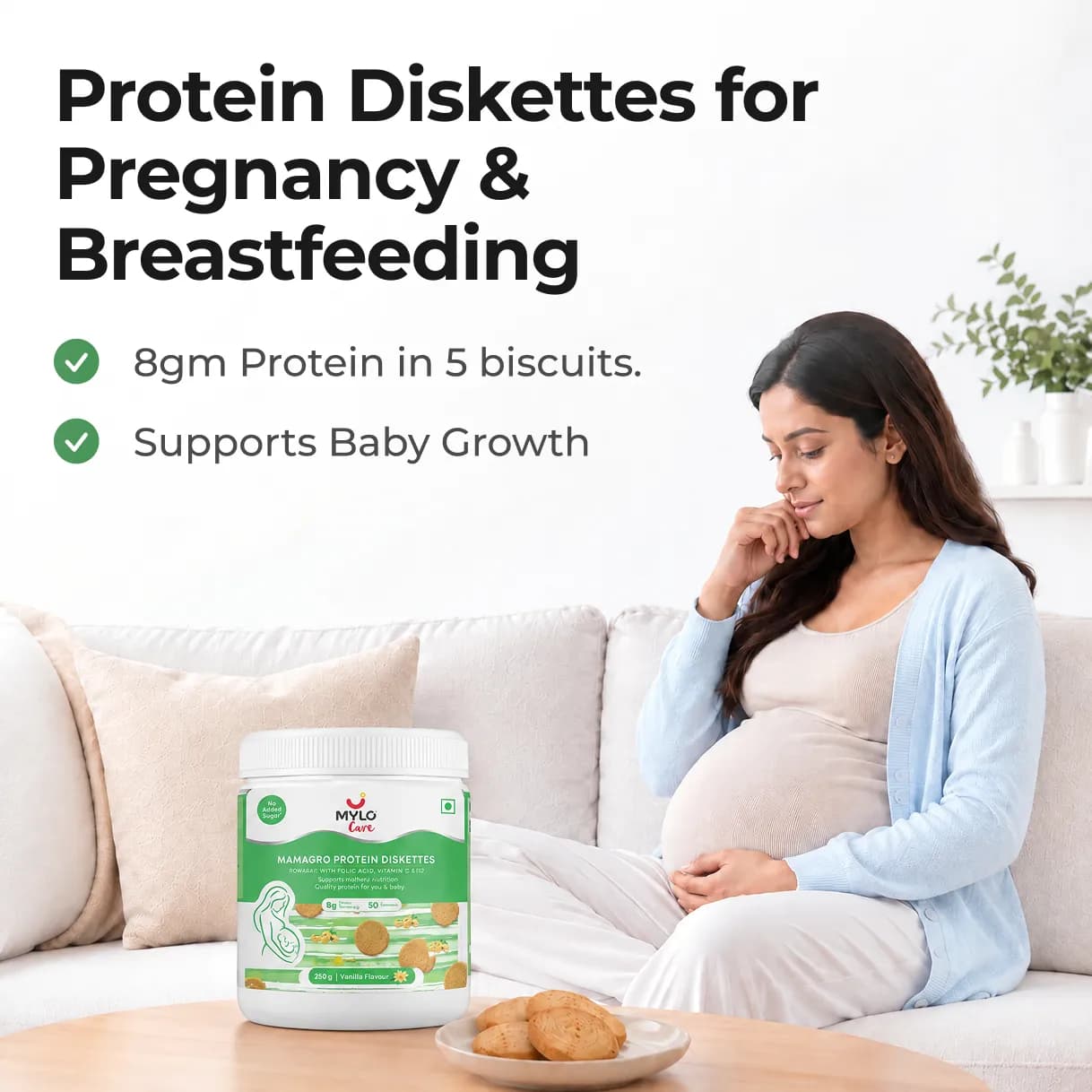
- Which supplements can support your breastfeeding journey? Explore our MamaGro™ Protein Diskettes - High Protein & No Added Sugar - 250gm (50 Diskettes).
 4.6
4.6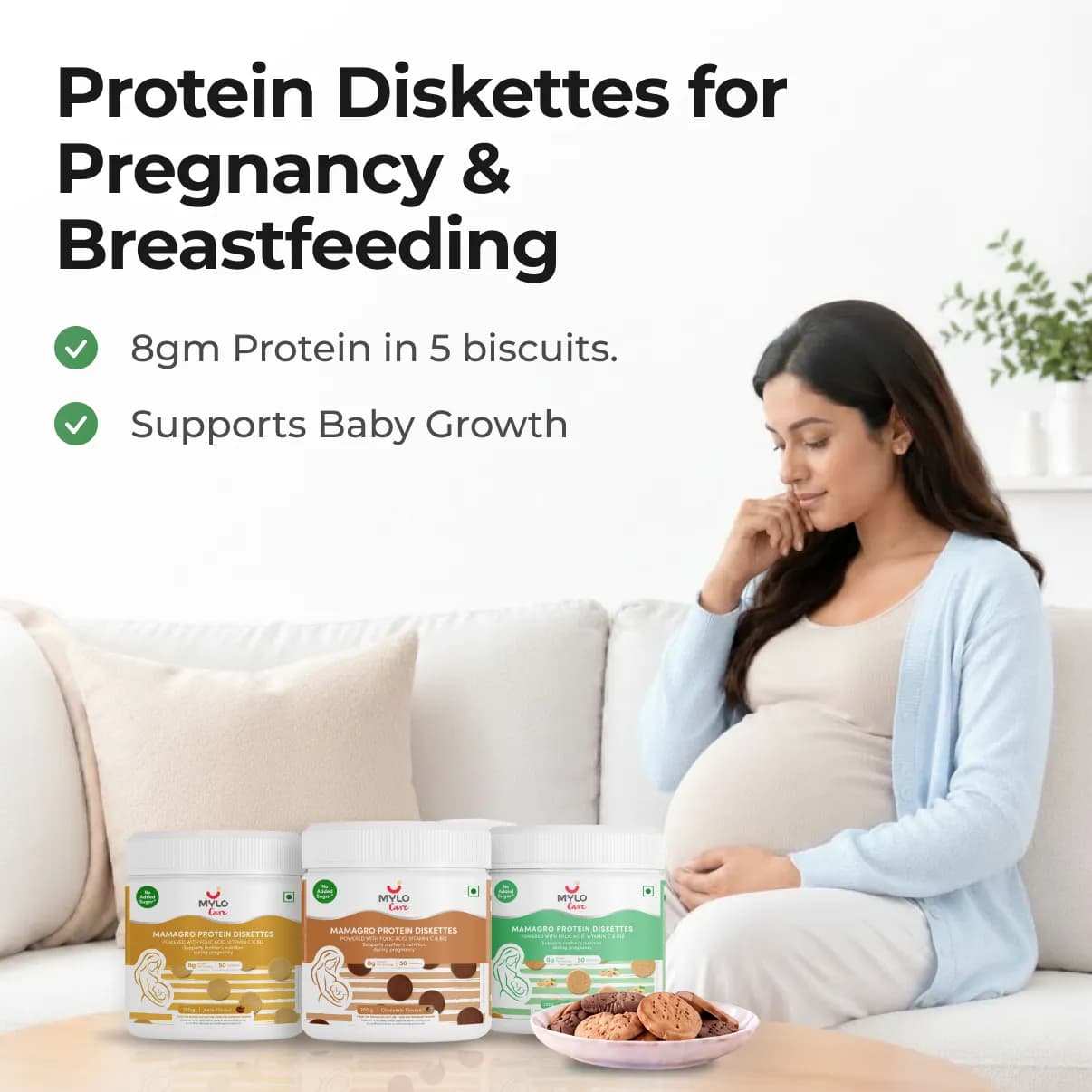 4.6
4.6TL;DR:
ICMR-NIN 2020 sets a breastfeeding mother's needs at about +600 kcal/day and +16.9 g protein/day in the first six months, with calcium around 1000 mg and iron around 29 mg. Milk supply is driven by milk removal, not by how much you eat (WHO), so frequent feeding is the main lever. Certain galactagogue foods and herbs, such as Moringa (sahjan) and Shatavari, have evidence for supporting supply, and that is the job of a supplement like Mylo LactoMama. Protein, including MamaGro Protein Diskettes, is for your recovery and nutrition, not for boosting milk. After a caesarean, early skin-to-skin and frequent feeding matter even more.
Last updated: 07 August 2026. Medically reviewed by [Dr Sweta Baajaj, MBBS, MS (Obstetrics & Gynaecology)]. This article is for information only and does not replace a consultation with your own doctor or a lactation expert.
A good diet for a breastfeeding mother is a balanced Indian plate carrying more energy, more protein, and more calcium and iron than she needed before pregnancy, spread across three meals and two to three snacks a day. According to ICMR-NIN 2020, a breastfeeding mother needs roughly 600 extra calories and 16.9 grams of extra protein a day in the first six months, on top of a high demand for calcium and iron. Eating well rebuilds your body after birth and keeps you from running on empty. What it does not do, on its own, is decide how much milk you make, because milk supply runs mainly on demand.
What Should a Breastfeeding Mother Eat Every Day?
A breastfeeding mother should eat a balanced plate at every meal: a protein, a whole grain, a dairy or calcium source, and vegetables or fruit, with iron-rich and fluid-rich foods built in. The principle is simple. You are now nourishing two bodies, so nutrient density matters more than quantity alone.
Build each meal around four anchors. Include a protein such as dal, rajma, paneer, curd, eggs, fish or chicken. Add a whole grain like roti, brown rice, oats or millets. Include a calcium source, most often milk, curd, paneer or ragi. Fill the rest of the plate with vegetables and a seasonal fruit.
A simple day of eating for a breastfeeding mother can look like this:
Early morning: a handful of soaked almonds and a glass of milk, or a gondh or methi laddoo, to start the day with energy and calcium.
Breakfast: besan or moong dal chilla, vegetable poha with peanuts, or idli with sambar, plus a fruit, so the first meal carries protein and not just carbohydrate.
Lunch: two rotis or a bowl of rice, a dal or rajma, a cooked vegetable, a katori of curd, and a salad.
Snack: a protein-forward option such as roasted chana, curd, sprouts, or a MamaGro Protein Diskette between meals.
Dinner: khichdi, or roti with a paneer, egg or fish curry and a cooked vegetable, kept a little lighter than lunch.
Hydration sits alongside food, not above it. Drinking to thirst, with water, milk, buttermilk, soups and dals, is enough for most mothers, and there is no need to force litres of fluid. For a ready plan, see Mylo's diet chart for breastfeeding mothers and this sample Indian meal plan for breastfeeding mothers.
How Many Extra Calories and How Much Protein Do You Need While Breastfeeding?
In the first six months of exclusive breastfeeding, ICMR-NIN 2020 recommends an extra 600 calories a day and an extra 16.9 grams of protein a day, over and above your normal adult requirement. From six to twelve months the additions ease to about 520 extra calories and 13.2 grams of extra protein a day.
This is a substantial and sustained increase, because your body is now repairing itself after birth and producing milk at the same time. For a woman whose baseline protein need is around 46 to 55 grams, that pushes the total to roughly 63 to 72 grams a day in the early months.
Two minerals deserve special attention. ICMR-NIN 2020 sets an adult woman's calcium requirement at 1000 mg a day and iron at 29 mg a day, and both stay high during breastfeeding, calcium to protect your bones and iron to rebuild after delivery blood loss.
Nutrient | Breastfeeding need (first 6 months) | Source |
Extra energy | +600 kcal/day (ICMR); global bodies cite +330 to 400 kcal (CDC) | ICMR-NIN 2020 / CDC 2026 |
Extra protein | +16.9 g/day over baseline | ICMR-NIN 2020 |
Calcium | About 1000 mg/day | ICMR-NIN 2020 |
Iron | About 29 mg/day | ICMR-NIN 2020 |
Iodine | 290 mcg/day | CDC 2026 |
Choline | 550 mg/day | CDC 2026 |
Note the calorie gap. India's ICMR uses 600 extra calories, while global bodies such as the US CDC cite a smaller top-up of 330 to 400 calories, because the two use different assumptions about how much energy your body pulls from fat stores. For an Indian mother, the ICMR figure is the more relevant target. This is exactly where a clean protein source helps, and where Mylo MamaGro Protein Diskettes fit, delivering about 8 grams of protein per serving with no added sugar, no refined maida and no preservatives, to help you reach that protein number without extra fried or sugary snacks.
Does Eating More Actually Increase Your Breast Milk Supply?
No. Eating more food does not, by itself, increase your breast milk supply. Milk is made on supply and demand, and the main driver is how often and how well milk is removed from the breast.
The World Health Organization's account of lactation is direct: when milk is removed from the breast, production continues, and when milk is not removed, a natural inhibitor builds up in the breast and slows it down. In practical terms, the single most powerful thing you can do for supply is feed or express often and effectively. The hormone prolactin drives milk secretion, and oxytocin triggers the let-down that releases it.
Food plays a supporting role, in two specific ways. First, eating enough keeps you from becoming depleted, which protects your energy and your own health while your body makes milk. Second, certain galactagogue foods and herbs have evidence linking them to milk production, and those are covered in the next section.
Protein is worth separating out clearly here. Protein rebuilds the tissues stretched and stressed by pregnancy and birth, and it helps you recover. Protein is not a milk-supply booster. So think of your diet as two separate jobs: nourish and rebuild yourself with enough protein and calories, and support supply through frequent feeding plus, if needed, specific galactagogues.
Which Foods and Herbs Are Linked to a Better Milk Supply?
A galactagogue is a food, herb or medicine believed to support breast milk production. Several traditional Indian galactagogues now have modern research behind them, and they work best as an addition to frequent feeding, not a replacement for it.
Moringa (sahjan, drumstick leaves). A 2026 meta-analysis of 14 studies and 865 mothers found moderate-quality evidence that Moringa oleifera supplementation significantly increases breast milk production, with mild side effects in only 0.3% of participants (Golshan-Tafti et al., 2026). Moringa is also densely nutritious, carrying iron, calcium and vitamin A, which makes it a useful food for a recovering mother.
Shatavari (Asparagus racemosus). The root of this plant has centuries of use in Ayurveda as a galactagogue and contains plant compounds called steroidal saponins and phytoestrogens, which are thought to act on prolactin. The clinical evidence is mixed: a 2025 double-blind trial of 120 mothers found greater milk volume and faster breast fullness at 72 hours versus placebo, while a 1996 Indian trial found no significant difference.
Safed Jeera (cumin) and Sowa (dill seeds). Both are traditional Indian lactation and digestive seeds. Cumin adds iron, and dill is a carminative that is traditionally taken to ease gas, in the mother and, through her, sometimes the baby. Their lactation evidence is largely traditional rather than trial-based, so treat them as supportive foods.
Everyday staples. Oats, methi (fenugreek), saunf (fennel), garlic, leafy greens and dals are the workhorses of an Indian lactation diet.
For the full breakdown of these foods, see Mylo's guide to the South Asian foods that support milk supply. The honest summary is that galactagogues can help some mothers, the evidence is stronger for Moringa than for most, and none of them replaces removing milk often.
When Do Lactation Supplements Like LactoMama Help?
A lactation supplement helps when a mother is feeding frequently but still wants added support, or finds it hard to eat these herbs in useful amounts through daily food. This is the role a galactagogue supplement fills, and it is a different job from a protein supplement.
Two Mylo products sit on two different jobs, and keeping them straight matters:
Product | What it is for | Key ingredients | How it is taken |
LactoMama Lactation Granules | Supporting breast milk supply | Shatavari, Moringa, Safed Jeera, Sowa (dill), Palak | Two servings a day in warm milk or water |
MamaGro Protein Diskettes | Your protein intake and recovery, not milk supply | Protein with iron, folic acid, calcium | Eaten as a snack through the day |
LactoMama Lactation Granules combine Shatavari and Moringa, the two ingredients with the most galactagogue research, with Safed Jeera, Sowa and Palak in a granule you stir into warm milk or water twice a day. It is AYUSH-licensed (License No. HP-252-Ay). LactoMama may help support milk supply as part of good feeding practice, and it is worth discussing with your doctor or a lactation consultant. To see how to fold it into a routine, read how to increase breast milk naturally with LactoMama.
MamaGro Protein Diskettes are the other half of the wedge. They help you hit the raised protein target from ICMR-NIN 2020 cleanly, without the refined sugar and maida of ordinary biscuits, and they support your recovery rather than your milk supply.
How Do You Increase Breast Milk After a C-Section?
After a caesarean, the fastest ways to build supply are early skin-to-skin contact, frequent feeding or expressing from the first hours, comfortable positioning that protects your incision, and good nutrition and hydration to support recovery. These matter more after a C-section because surgery can make the early days harder.
Research links caesarean delivery with higher odds of low milk supply. A 2022 cohort study of 418 mothers found caesarean delivery was significantly associated with low milk supply, with adjusted odds of about 1.6 times that of vaginal birth (Singh et al., 2022). Mature milk generally comes in between two and four days after any delivery (WHO), and after a caesarean it can feel slightly slower, which is exactly why early and frequent milk removal counts.
Here is what helps most after a C-section:
Start skin-to-skin as soon as you can, even in the recovery room, because close contact prompts feeding and the hormones behind let-down.
Feed or express often, aiming for frequent sessions day and night, since removal is what tells your body to make more.
Use a comfortable hold, such as the side-lying or football hold, so your baby's weight stays off your incision.
Prioritise protein and iron to rebuild tissue and recover from surgical blood loss, foods like eggs, dal, paneer, chicken and leafy greens. See Mylo's guide on what to eat after a C-section for recovery.
Stay ahead of pain and hydration, because pain and dehydration make feeding harder in the first week.
Which Foods and Drinks Should a Breastfeeding Mother Limit?
Most foods are safe while breastfeeding, and Indian mothers are often told to avoid far more than they need to. The short list that genuinely matters is caffeine, alcohol and high-mercury fish. You do not need to give up spicy food, "gassy" vegetables or your usual meals unless your baby clearly reacts.
Keep caffeine to about 300 mg a day, roughly two to three cups of coffee, since some passes into breast milk and can disturb a baby's sleep (CDC). Avoid alcohol, or time any occasional drink well away from feeds. Skip high-mercury fish such as shark, swordfish and king mackerel, which can affect an infant's developing nervous system.
The traditional practice of cutting out onions, garlic, spices or citrus is usually unnecessary, and over-restricting can leave you undernourished at the exact time you need more nutrients. For the evidence-based version, see Mylo's guide to the foods to actually avoid while breastfeeding. If you suspect a specific food upsets your baby, remove it for a couple of weeks and watch, rather than cutting many foods at once.
Frequently Asked Questions About a Breastfeeding Diet
What is the best diet for a breastfeeding mother?
The best breastfeeding diet is a balanced Indian plate at every meal: a protein such as dal, paneer, eggs or fish, a whole grain, a calcium source like milk or curd, and vegetables and fruit, with three meals and two to three snacks a day. Per ICMR-NIN 2020, aim for about 600 extra calories and 16.9 grams of extra protein daily in the first six months, plus roughly 1000 mg calcium and 29 mg iron. Drink to thirst, and do not over-restrict foods you normally eat.
Which foods increase breast milk supply?
Traditional galactagogue foods linked to milk supply include Moringa (sahjan), Shatavari, oats, methi (fenugreek), saunf (fennel), garlic and leafy greens. Moringa has the strongest research: a 2026 meta-analysis of 14 studies found moderate-quality evidence that it significantly increases milk production. That said, no food replaces the main driver of supply, which is frequent, effective milk removal by feeding or expressing.
Does eating more protein increase breast milk?
No. Protein rebuilds your body after birth and helps you recover, but it does not directly increase how much milk you make. Milk supply is governed by demand: the more milk is removed, the more your body produces (WHO). Eat enough protein for your own recovery, and support supply separately through frequent feeding and, if needed, galactagogues.
How can I increase breast milk after a C-section?
Start skin-to-skin contact as early as possible, feed or express frequently from the first hours, use a hold that keeps pressure off your incision, and prioritise protein, iron and fluids for recovery. Caesarean birth is associated with higher odds of low early supply (Singh et al., 2022), and mature milk may feel slightly slower to come in, so frequent removal in the first days is the most important step.
How many extra calories do I need while breastfeeding?
ICMR-NIN 2020 recommends about 600 extra calories a day in the first six months of exclusive breastfeeding, easing to around 520 from six to twelve months. Global bodies such as the US CDC cite a smaller range of 330 to 400 extra calories, based on different assumptions. For an Indian mother, the ICMR figure is the better target, taken from nutrient-dense foods rather than empty calories.
Are lactation supplements like LactoMama safe and do they work?
Lactation supplements built on galactagogues such as Shatavari and Moringa may help support milk supply, and LactoMama is AYUSH-licensed. Moringa has moderate-quality evidence for increasing milk production, while Shatavari's trial evidence is mixed. They work best alongside frequent feeding, not instead of it, and you should confirm any supplement with your doctor, especially if you have a medical condition.
What foods should I avoid while breastfeeding?
The foods that genuinely matter are limited: keep caffeine under about 300 mg a day, avoid alcohol or time it away from feeds, and skip high-mercury fish like shark and swordfish. Spicy food, garlic, onions and "gassy" vegetables usually do not need to be cut. Over-restricting your diet can leave you short of nutrients when your needs are highest.
How much water should a breastfeeding mother drink?
Drink to thirst. Breastfeeding does increase your fluid needs, and keeping water, milk, buttermilk, dals and soups within reach through the day usually covers it. There is no need to force a fixed number of litres, and drinking far beyond thirst does not increase milk supply.
Sources
ICMR-NIN, "A Brief Note on Nutrient Requirements for Indians, RDA and EAR, ICMR-NIN 2020," National Institute of Nutrition. https://www.nin.res.in/rdabook/brief_note.pdf
Centers for Disease Control and Prevention, "Maternal Diet and Breastfeeding," last reviewed March 2026. https://www.cdc.gov/breastfeeding-special-circumstances/hcp/diet-micronutrients/maternal-diet.html
World Health Organization, "The physiological basis of breastfeeding," Infant and Young Child Feeding, 2009. https://www.ncbi.nlm.nih.gov/books/NBK148970/
Golshan-Tafti M, et al. "Efficacy and safety of Moringa oleifera supplementation for increasing breast milk production: a systematic review and meta-analysis," Egyptian Pediatric Association Gazette, 2026. https://link.springer.com/article/10.1186/s43054-026-00539-y
Drugs and Lactation Database (LactMed), "Wild Asparagus (Asparagus racemosus / Shatavari)," National Institute of Child Health and Human Development. https://www.ncbi.nlm.nih.gov/books/NBK501813/
Singh J, Scime NV, Chaput KH. "Association of Caesarean delivery and breastfeeding difficulties," Canadian Journal of Public Health, 2022. https://pmc.ncbi.nlm.nih.gov/articles/PMC9849537/

Trusted by New Mothers Nurturing Their Little Ones
Gentle, mother-focused nutrition to support your milk supply, protein needs, and recovery during the demanding breastfeeding months.
MamaGro™ Protein Diskettes - 250gm - Vanilla
Supports Healthy Placenta | Supports Fetal Development



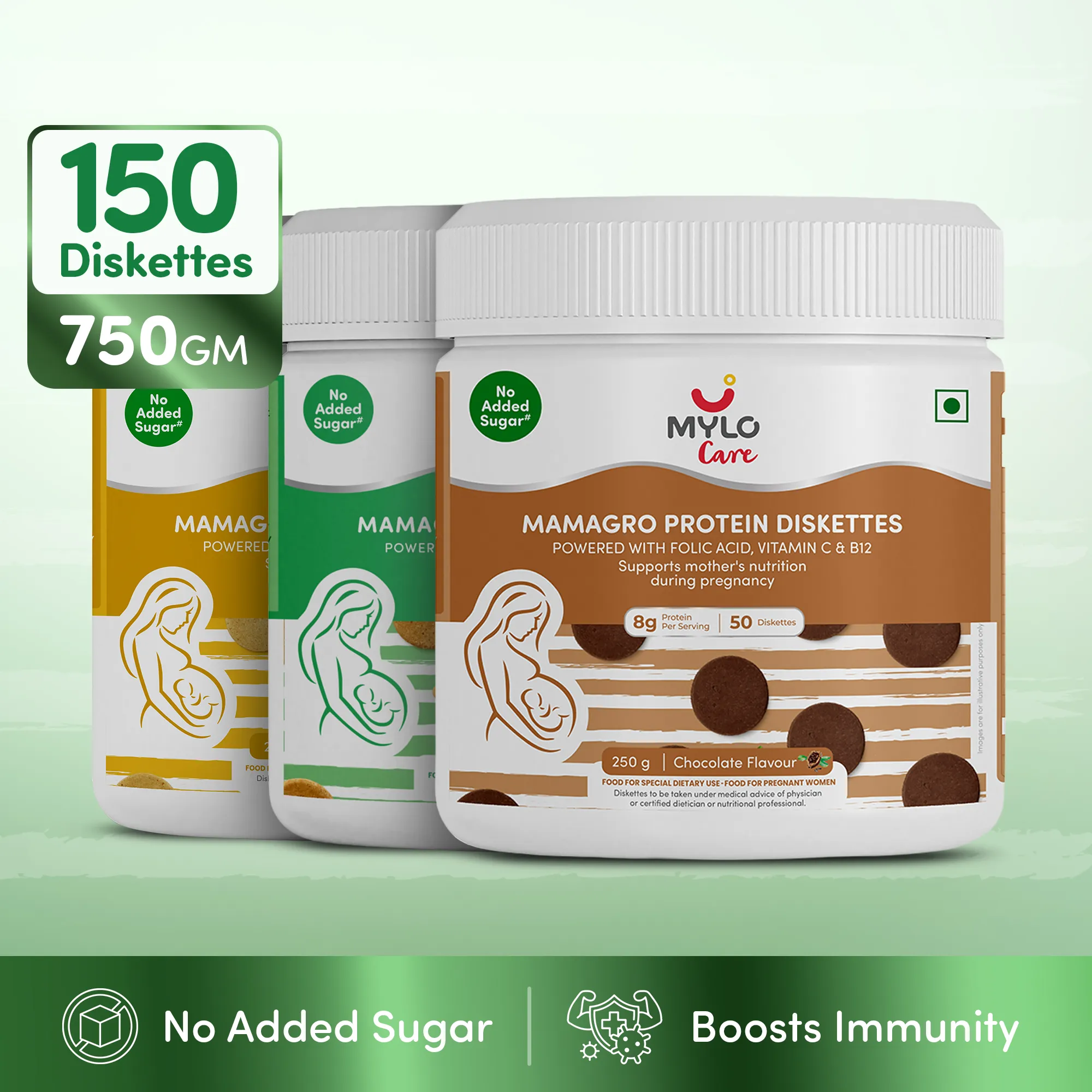
MamaGro™ Protein Diskettes - 750gm (50 Vanilla + 50 Jeera + 50 Chocolate Diskettes)
High Protein Pregnancy Biscuits | Fortified Nutrition | No Added Sugar | Easy To Digest

Article Posted Under



Medical Disclaimer
This content is for informational purposes only and should not replace professional medical advice. Consult with a physician or other health care professional if you have any concerns or questions about your health. If you rely on the information provided here, you do so solely at your own risk.


AWARDS AND RECOGNITION

Mylo wins Forbes D2C Disruptor award

Mylo wins The Economic Times Promising Brands 2022
AS SEEN IN












- Mylo Care: Effective and science-backed personal care and wellness solutions for a joyful you.
- Mylo Baby: Science-backed, gentle and effective personal care & hygiene range for your little one.
- Mylo Community: Trusted and empathetic community of 10mn+ parents and experts.


Product Categories
Baby Carrier | Baby Soap | Baby Wipes | Stretch Marks Cream | Baby Cream | Baby Shampoo | Baby Massage Oil | Baby Hair Oil | Stretch Marks Oil | Baby Body Wash | Baby Powder | Baby Lotion | Diaper Rash Cream | Newborn Diapers | Teether | Baby Kajal | Baby Diapers Pants | Cloth Diapers | Laundry Detergent | Lactation Granules |