


Orders
.png&w=48&q=75 "login")
Profile


Wallet

10 Best Pregnancy Snacks in India (2026): Healthy, High-Protein Options for Every Craving
 13 min

RMNCH+A, MCH & Midwifery, Program Management & National Trainer (ToT/ToN), WHO, MoHFW, ECHO Model · 11 years experience
Choosing the right snacks in pregnancy is not about eating less, it is about eating smart, foods that add protein, iron, calcium and fibre without a sugar spike. The 10 best pregnancy snacks in India below are affordable, easy to find, and mostly desi, from roasted chana and paneer to sprouts, sattu and curd, each giving you steady energy and real nutrition between meals. Pregnant women need roughly 50 to 75g of protein a day, rising through the trimesters, and smart snacks are one of the easiest ways to close the gap (ICMR-NIN) (ACOG). Here is the list, with why each works and how to eat it.
Quick Answer
The 10 best pregnancy snacks in India are roasted chana, paneer cubes, boiled eggs, curd or Greek yogurt, sprouts chaat, a handful of nuts and seeds, sattu drink, roasted makhana, fruit with peanut butter, and high-protein biscuits with milk. They are chosen for being high in protein, low in added sugar, moderate in calories and easy to digest. Aim for snacks with around 6g or more of protein, and pair protein with fibre or healthy fat to stay full longer. Pregnant women need about 50 to 75g of protein a day.
Author: Priyanka Verma, Senior Nutrition Content Editor, Mylo Parenting DeskReviewed against: ICMR-NIN, ACOG, Harvard Nutrition Source and FOGSI guidanceLast updated: 26 July 2026
Medical Disclaimer: This article is for informational purposes only and is not a substitute for professional medical or dietary advice. If you have gestational diabetes, a food allergy, or any dietary condition, ask your doctor or dietitian which snacks and portions are right for you.
Key Takeaways
Pregnancy snacks should add protein, iron, calcium and fibre, not just calories
Aim for snacks with around 6g or more of protein and low added sugar
Most of the best options are affordable, desi and easy to find
Pair protein with fibre or healthy fat to stay full longer
Keep portions moderate, even healthy snacks add up
Pregnant women need about 50 to 75g of protein daily (ICMR-NIN)
For gestational diabetes, choose low-sugar snacks and confirm portions with your doctor
What Makes a Good Pregnancy Snack?
Before the list, here is the checklist a snack should meet (ACOG) (Harvard Nutrition Source):
Good protein, around 6g or more per serving
Low in added sugar, to avoid blood sugar spikes
Moderate calories, roughly a light snack, not a meal
Easy to digest, gentle on a sensitive pregnancy stomach
Nutrient-rich, adds iron, calcium or fibre where possible
Convenient, something you will actually reach for
The 10 Best Pregnancy Snacks in India
# | Snack | Approx. Protein | Best For |
|---|---|---|---|
1 | Roasted chana | About 6g per 30g | Iron + fibre |
2 | Paneer cubes | About 9g per 50g | High protein + calcium |
3 | Boiled eggs | About 6g per egg | Complete protein |
4 | Curd or Greek yogurt | 5 to 12g per cup | Protein + probiotics |
5 | Sprouts chaat | About 7g per cup | Protein + folate |
6 | Nuts and seeds | About 6g per handful | Protein + healthy fats |
7 | Sattu drink | About 6 to 7g per glass | Cooling protein drink |
8 | Roasted makhana | Light, calcium-rich | Low-calorie munching |
9 | Fruit with peanut butter | About 4g + fruit | Energy + protein |
10 | High-protein biscuits with milk | About 8g + 7g | Convenient, on the go |
1. Roasted Chana (Bhuna Chana)
A classic Indian snack and a genuine nutrition powerhouse. Dry-roasted chana (without heavy added salt or oil) provides plant-based protein, iron, and fiber. Roasting breaks down complex antinutrients (phytates), making the iron more bioavailable and reducing gas and bloating compared to raw or boiled whole legumes. Pairing it with a squeeze of lemon (Vitamin C) significantly enhances non-heme iron absorption. It is crunchy, filling and travels well.How to eat it: a small bowl on its own, or mixed with a few nuts. Pair with a vitamin C food (a squeeze of lemon, or fruit) to boost iron absorption.
2. Paneer Cubes
Paneer is one of the most protein-dense vegetarian foods, and it brings calcium too. A small portion keeps you full for hours.How to eat it: Ensure all paneer, curd, and milk products are made from pasteurized milk to eliminate Listeria risks. Keep added chat masala and table salt minimal, as high sodium intake exacerbates pregnancy-induced fluid retention (edema) and elevated blood pressure.
3. Boiled Eggs
Eggs are a complete protein with vitamin B12, iron and choline, all helpful in pregnancy. They are quick, cheap and portable.How to eat it: one or two well-cooked boiled eggs (cook until both white and yolk are firm). Avoid runny or raw eggs in pregnancy.
4. Curd or Greek Yogurt (Dahi)
Curd adds protein, calcium and gut-friendly probiotics, and it is cooling and easy to digest. Greek yogurt packs even more protein.How to eat it: plain curd with a little fruit, or a bowl of Greek yogurt. Skip the sugary flavoured tubs; add fresh fruit instead.
5. Sprouts Chaat (Moong)
Sprouted moong is light, protein-rich and a good source of folate, important in early pregnancy. Sprouting also makes it easier to digest.How to eat it: sprouts with chopped tomato, onion, cucumber, lemon and light spices. Always steam or cook sprouts thoroughly before eating. Raw or lightly rinsed sprouts carry a high risk of bacterial contamination (Listeria, Salmonella, E. coli), which can cause severe foodborne illness during pregnancy. Steaming ensures microbial safety without compromising protein or folate content
6. A Handful of Nuts and Seeds
Almonds, walnuts, pumpkin and sunflower seeds give protein, healthy fats, iron and magnesium in a small, satisfying portion.How to eat it: Limit portion size to 1 small closed handful (approx. 20–30g daily, e.g., 5–6 soaked almonds, 2 whole walnuts, and 1 teaspoon of pumpkin/chia seeds). While rich in healthy omega-3 fatty acids and protein, excessive nut consumption late in the day can trigger delayed gastric emptying and heartburn
7. Sattu Drink
Sattu (roasted gram flour) is an underrated Indian protein hero, cooling in summer and very filling.How to eat it: 2 tablespoons of sattu in a glass of water or buttermilk, with a pinch of salt or a little lemon and jeera. Skip added sugar; a savoury version is best for blood sugar.
8. Roasted Makhana (Fox Nuts)
Makhana is the ideal light, low-calorie munch when you want something crunchy without a heavy snack. It adds calcium and is easy on the stomach.How to eat it: dry-roasted makhana with a little ghee and pepper. A great replacement for chips or fried namkeen.
9. Fruit with Peanut Butter
Pairing fruit with a protein or fat (like unsweetened peanut butter or nuts) blunts the postprandial. It also helps with cravings.How to eat it: apple or banana slices with a tablespoon of natural peanut butter, or fruit with a small handful of nuts. Choose unsweetened peanut butter.
10. High-Protein Biscuits with Milk
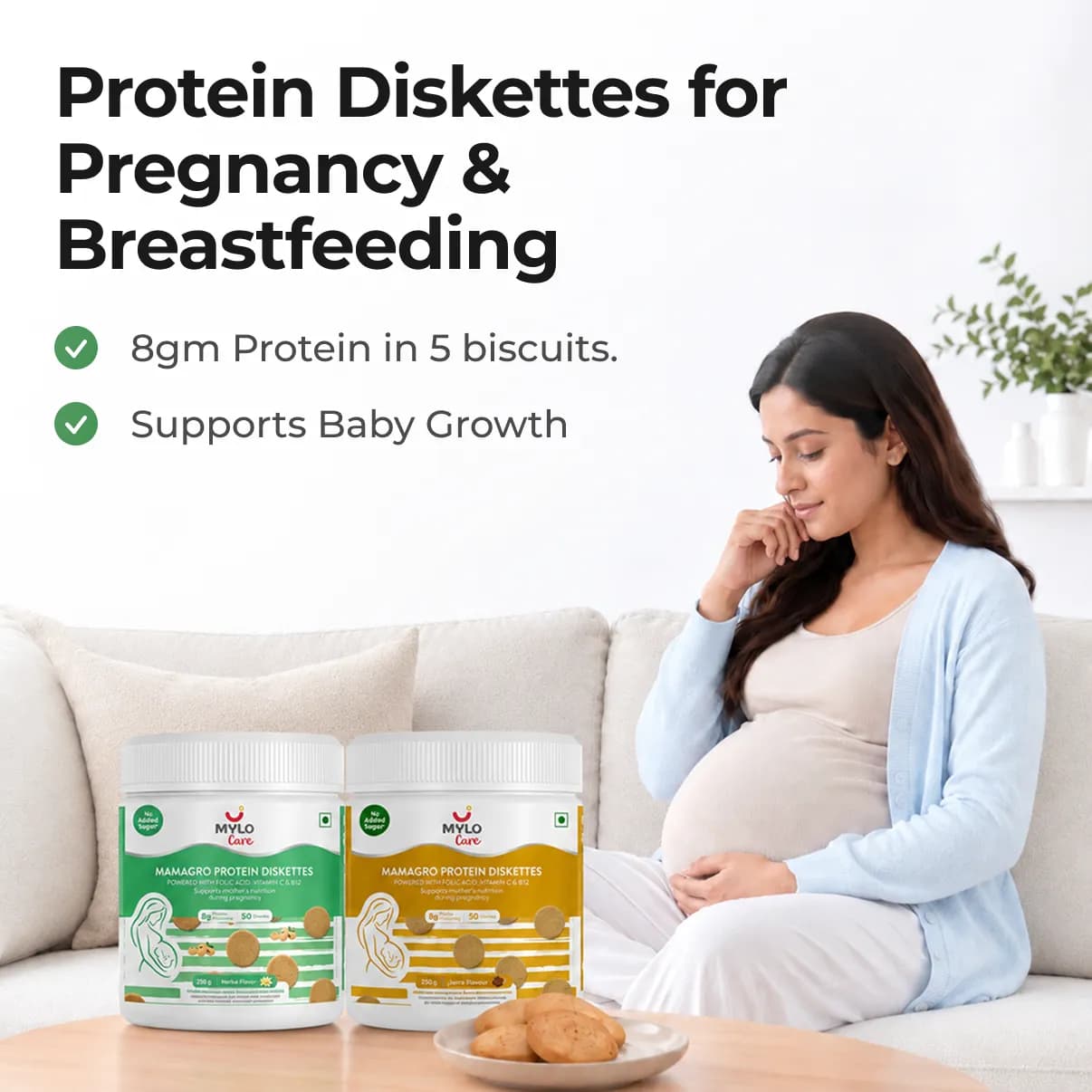
For busy days, travel or work, a no-added-sugar high-protein biscuit with a glass of milk is a convenient, portion-controlled option, a genuine upgrade over regular sugary biscuits. Options like Mylo protein biscuits are made for pregnancy with no refined maida or added sugar.How to eat it: a serving with a glass of milk as a mid-morning or evening snack. Treat it as a supplement to whole foods, not a meal replacement.
How Much Protein Do You Need in Pregnancy?
Protein needs rise as your baby grows (ICMR-NIN) (ACOG):
Stage | Approx. Daily Protein |
|---|---|
First trimester | About 50 to 60g |
Second trimester | About 60 to 70g |
Third trimester | About 70 to 75g |
Snacks are an easy way to add 10 to 20g across the day, on top of protein from your main meals. For your exact target, ask your doctor or dietitian.
A Simple Smart-Snacking Strategy
Know your trimester protein target (roughly 50 to 75g a day)
Estimate protein from your main meals (dal, curd, eggs, paneer, chicken)
Add one 6 to 8g protein snack where you fall short
Keep snacks light, a light snack, not a meal
Rotate variety, so you get different nutrients and do not get bored
Pair protein with fibre or healthy fat to stay full
Use packaged snacks as a supplement, not a replacement for whole foods
Common Snacking Mistakes to Avoid
Overeating "healthy" snacks, calories still add up
Ignoring sugar on labels, "healthy" does not always mean low sugar
Relying only on packaged foods, whole foods should lead
Skipping protein at breakfast, which causes mid-morning energy dips
Choosing fried namkeen or sugary biscuits over protein-rich options
Snacking With Gestational Diabetes
If you have gestational diabetes, snacks matter even more (Harvard Nutrition Source):
Choose protein-forward, low-sugar snacks (eggs, paneer, sprouts, roasted chana, savoury sattu)
Pair carbs with protein or fat to slow the sugar rise
Avoid sugary biscuits, juices and sweets
Watch portions even for healthy foods, and follow your doctor or dietitian's plan
Indian Context: What Indian Mothers Should Know
Desi protein is affordable: curd, paneer, dal, roasted chana, sprouts, sattu and eggs are cheap and accessible (FOGSI)
Start the day with protein: it prevents energy crashes and cravings later
Mind anaemia: pair iron-rich snacks (chana, sprouts) with vitamin C for better absorption
Read FSSAI labels: check protein and sugar before buying packaged snacks
Hygiene first: wash fruits and vegetables well, and avoid raw or undercooked eggs
Variety matters: rotate snacks so you get a spread of nutrients
Myths vs Facts About Pregnancy Snacks
Myth | Fact | Source |
|---|---|---|
"A healthy label means high protein" | False. Always check the actual numbers | |
"Sugary biscuits give lasting energy" | False. They spike blood sugar, then crash | |
"You can eat healthy snacks freely" | False. Portion control still matters | |
"Snacks can replace meals" | False. They supplement, not replace, whole meals | |
"More protein is always better" | False. Aim for balanced, trimester-specific amounts |
FAQs: Best Pregnancy Snacks in India
What are the best pregnancy snacks in India?
The 10 best are roasted chana, paneer cubes, boiled eggs, curd or Greek yogurt, sprouts chaat, a handful of nuts and seeds, sattu, roasted makhana, fruit with peanut butter, and high-protein biscuits with milk (ICMR-NIN). They are high in protein, low in added sugar and easy to find.
How much protein should a pregnant woman eat per day?
About 50 to 75g a day, rising through the trimesters (roughly 50 to 60g in the first, 60 to 70g in the second, 70 to 75g in the third) (ACOG). Your dietitian can set an exact target for you.
What are good high-protein snacks during pregnancy?
Eggs, paneer, curd or Greek yogurt, roasted chana, sprouts, nuts, sattu and high-protein biscuits are all strong options, each giving around 6g or more of protein per serving. Pair them with fibre or a healthy fat to stay full longer.
Which pregnancy snacks are best for gestational diabetes?
Protein-forward, low-sugar snacks such as boiled eggs, paneer, sprouts, roasted chana and savoury sattu (Harvard Nutrition Source). Avoid sugary biscuits and juices, pair carbs with protein, and follow your doctor's portion guidance.
Are protein biscuits safe during pregnancy?
Yes, a no-added-sugar, high-protein biscuit made for pregnancy is a convenient snack, best used to supplement whole foods rather than replace them. Check the FSSAI label for protein and sugar, and confirm with your doctor if you have gestational diabetes.
What snacks help with pregnancy nausea?
Light, bland, easy-to-digest options often help: roasted makhana, plain curd, a few nuts, or dry roasted chana. Small, frequent snacks tend to be gentler than large portions when you feel nauseous.
How many times a day should I snack in pregnancy?
Most women do well with 2 to 3 small snacks between meals, especially to manage nausea, energy dips or blood sugar. Keep each snack light and protein-rich, and let your appetite and your doctor's advice guide you.
References
ICMR-NIN. "Dietary Guidelines for Indians." https://www.nin.res.in/dietaryguidelines/pdfjs/locale/DGI07052024P.pdf
ACOG. "Nutrition During Pregnancy." https://www.acog.org/womens-health/faqs/nutrition-during-pregnancy
Harvard T.H. Chan School of Public Health. "Carbohydrates and Blood Sugar." Carbohydrates and Blood Sugar • The Nutrition Source
FOGSI (Federation of Obstetric and Gynaecological Societies of India). https://www.fogsi.org/



Article Posted Under



.webp&w=32&q=75)
Medical Disclaimer
This content is for informational purposes only and should not replace professional medical advice. Consult with a physician or other health care professional if you have any concerns or questions about your health. If you rely on the information provided here, you do so solely at your own risk.


AWARDS AND RECOGNITION

Mylo wins Forbes D2C Disruptor award

Mylo wins The Economic Times Promising Brands 2022
AS SEEN IN













- Mylo Care: Effective and science-backed personal care and wellness solutions for a joyful you.
- Mylo Baby: Science-backed, gentle and effective personal care & hygiene range for your little one.
- Mylo Community: Trusted and empathetic community of 10mn+ parents and experts.


Product Categories
Baby Carrier | Baby Soap | Baby Wipes | Stretch Marks Cream | Baby Cream | Baby Shampoo | Baby Massage Oil | Baby Hair Oil | Stretch Marks Oil | Baby Body Wash | Baby Powder | Baby Lotion | Diaper Rash Cream | Newborn Diapers | Teether | Baby Kajal | Baby Diapers Pants | Cloth Diapers | Laundry Detergent | Lactation Granules |