.png&w=48&q=75 "login")


120 Week Old Toddler: Your Toddler's Development and Your Recovery This Week
Your toddler is 120 weeks old (28 months). Your toddler is starting to notice other kids, and starting to want in on the game. For you, around 29 months. Saying "thank you", "sorry", "please", basic etiquette starts taking shape. This week's activity is Manners Practice, all of it tracked below.
Week 120
Your baby is 2 years 4 months old
Baby says this week
I want you to read that storybook for me for the 12th time in a row because I am learning something new with your repeated action Mummy. Even though I dress up imperfectly but I love to try on my clothing. I will now try to speak pronouns like “I” and “Me”. I will keep saying “No” to you Mummy because that's my favorite word. When I am angry, I might bite, push or hit others because I am unable to understand my emotions and that makes me frustrated. I crave a lot of affection from you, my dear Mummy and Daddy.
 Ideal Weight10.4 - 16.1 kg
 Ideal Height84.2 - 96.6 cm
Your Toddler's Development

2 min read
Your toddler is starting to notice other kids, and starting to want in on the game.
Around 27 months, most toddlers are making short eye contact with other children, copying your tone of voice (and words you wish they wouldn't), and imitating favourite gestures. Pretend play is fuller, feeding a doll, making "tea", pretending to drive. Two- and three-word phrases are common, and they understand far more than they say.
Parallel play is the norm at this age, two toddlers playing next to each other without really playing together. Real sharing does not land until closer to 3 years, and that is fine. Do not push it.
Choking foods, still off the menuTwo-year-old mouths look ready for everything but their airways are not. The no-go list stays the same as when they were 12 months:
- Whole grapes, whole cherry tomatoes, halve them lengthwise
- Whole nuts, popcorn, hard candy, gummy candies
- Peanut butter in lumps (thin it with a spoonful of yogurt)
- Sausages in round slices, split lengthwise first
- Chunks of cheese or raw carrot, grate or steam
Toddlers this age have small, short-lived crises several times a day, dropped biscuit, wrong colour cup, sibling touched their toy. The shortcut:
- Acknowledge: "The cup was blue. You wanted red."
- Offer a choice, not a fix: "Do you want this red cup, or a blue one from the cabinet?"
- When they cool down, move on, do not replay the drama.
- If your toddler refuses food and water for more than a day, has blood in their stool, or has no bowel movement for 3+ days with hard pellets, call your pediatrician.
Parallel play, pretend chai and borrowed gestures are tender 2 year old milestones, each one a step toward the friend and person your child is becoming. You have a front-row seat to it all, and no one claps louder for them than you.
Your Health & Lifestyle
2 min read
Around 29 months. Saying "thank you", "sorry", "please", basic etiquette starts taking shape.
What's happening for you
- You're modelling all of this. The way you talk to family, helpers, strangers, your toddler is watching.
Things that often help
- Say please and thank you to your toddler ("can you hand me the spoon, please?")
- Apologise when you're wrong, including to them
- Let them see you treating helpers, drivers, vegetable vendors with respect
- Don't model what you don't want them to learn
For mum's role
- Modelling values is mostly invisible work. The pre-school you in front of your toddler is the model they internalise.
Eating well
- Three meals + two snacks. Real food, real meals.
Worth flagging
- If your own behaviour around your toddler concerns you, yelling at helpers, dismissive to drivers, judgmental about strangers, and you want to change, that's a fixable pattern. Therapy can help. So can deliberate practice.
Indian-context note
- In Indian homes with helpers, how you treat them is a major lesson for your toddler. Equal humanity, appropriate boundaries, respect, these shape your child's lifelong assumptions.
Indian-tradition kept
Greeting elders with namaste, touching their feet on auspicious days, addressing relatives with respectful suffixes (-ji, mausi, chacha)
- these small daily rituals carry real cultural weight. Your toddler learns from watching.
Indian-mum reminder
- Don't perform when relatives visit. Be the same mum you are alone, that's the mum your toddler learns from.
An Indian-mum tradition kept
- A weekly oil massage, head, shoulders, lower back, with warm sesame, mustard or coconut oil. Done by yourself or family for 15-20 minutes. Indian aunties have known this is restorative for centuries. Modern medicine agrees.
Being watched so closely by little eyes can feel like pressure, but it is also proof of how much you matter. Modelling rest, honest apologies and kindness to yourself is mother self care your child learns from too; the way you treat yourself becomes part of their education.
Care That Grows With You
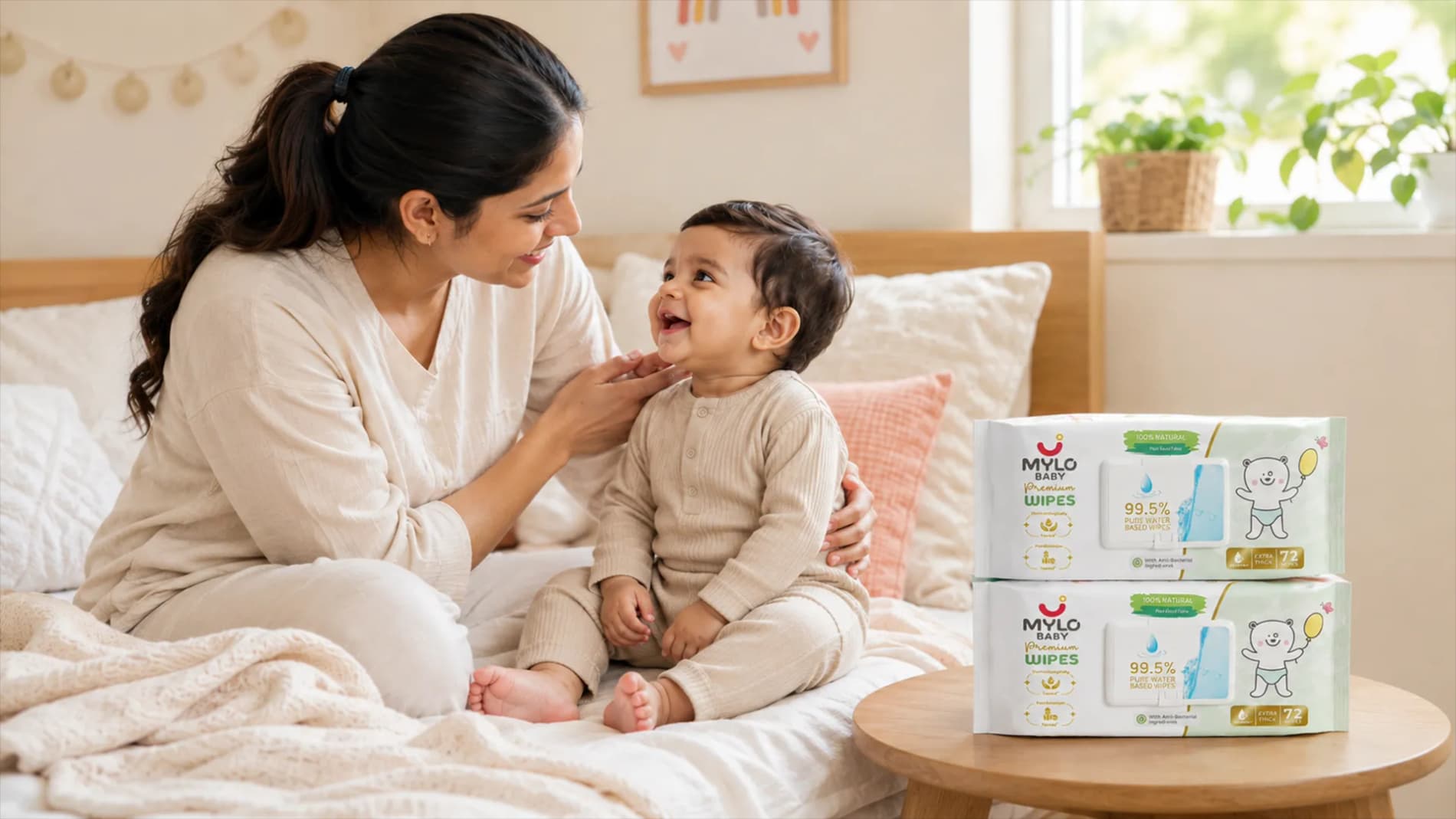
By week 120, with sticky toddler face after lassi, mucky hands after sandbox, and snack-spill rescue across the day, wipes are the constant tool. 99% water + plant-fibre wipes (no alcohol, no fragrance) clean without irritating. Try Mylo Plant-Based Wipes that:
- 99% Water, Skin-Safe.
- Face, Hands, Surfaces.
- Plant-Fibre, No Alcohol.
Parenting a toddler means carrying half your home in your bag and wiping the day off little hands a dozen times over. In between the clean-ups, remember that your hands deserve gentleness too; they do so much holding.

Week 120, pure organic aloe vera gel is the multi-use saviour: face moisturiser, lip balm, dry-patch fix, scalp soother. Refrigerate for cool finish. Cools Indian summer prickly heat and AC-dry winter patches. Try Mylo Aloe Vera Gel that:
- 100% Organic, No Additives.
- Cools Sun-Stressed Skin.
- Light, Matte Finish.
A cool touch of gel at the end of a long day can feel like a small kindness you hand back to yourself. These tiny rituals are mother self care in miniature, and they add up to a woman who feels looked after, by her own hands.

Organic Aloe Vera (300 ml)
Nurtures Skin & Hair | Reduces Suntan | Soothes Burns | Enhances Hair Resilience
Mom and Baby Tools


Unlock more ways to
support your journey
Explore powerful tools and features available
exclusively on the Mylo app.
 Make Baby Sleep
 My Calendar
 Feeding Tracker
 Baby Diet Chart
 Breast Feeding Diet Charts
 Save Memories
 Weight Tracker
Activity This Week: Manners Practice

2 min read
Modelling and prompting basic etiquette. By 27 months, toddler learns by watching and copying.
How to do itUse "please" and "thank you" yourself. Prompt toddler: "Can you say thank you?" Let them try. Repeat daily during meals and giving/receiving.
What it builds- Social skills, language, courtesy, and lifelong patterns.
- Indian etiquette is rich, namaste to elders, touching feet on auspicious days, saying "khaana acha tha" after meal. Model what your family values.
- Persistent disinterest in any activity, or sudden loss of skills toddler had, both worth mentioning at the next pediatrician visit.
- During meals, gift exchanges, greetings.
- If toddler forgets, gentle reminder, not scolding.
- Multiple adults using please/thank you = toddler picks up faster.
- Same activity at roughly the same time daily for 1–2 weeks builds skills faster than scattered attempts. Toddler learning compounds with repetition. Indian-home rhythms support this naturally, pick a slot, stick to it.
- Multiple adults playing, dadi, papa, mausi, adds variety. Toddler builds adaptability through different voices, paces, and patience levels.
- "Namaste" for greeting elders, "shukriya / thank you" after receiving anything, "bye" with a hand wave. Three is enough at this age.
- They love it and don't get tired of repeating. Joint families have a built-in advantage here.
- Gentle reminder, not a scolding. "Did we say thank you?", toddler corrects without feeling bad.
- How you treat helpers, drivers, vegetable vendors is the manners lesson. Toddler watches everything.
Every namaste and every small thank you your child copies is toddler development happening in the most human way: through watching you. The kindness you show the world is the kindness they will carry into it.
Handpicked for You &
Your Little One in Week 120
63.3K Moms bought Mylo Products in Week 120






What To Expect
Sorry & Thank You
Modelling these in your own day teaches toddler.
Routine Repetition
Same instructions, same words, slowly absorbed.
Healthy Habits Now
Hand wash, water save, switch off, habits that stay.
Less Bad-Habit Praise
Save attention for positive behaviour.

- Say sorry to toddler too
- Same kind tone always
- Praise the small good things

Mylo Airprime™ Premium Diaper Pants with Wetness Indicator - S(5-9 Kgs) - 26 Count
₹559
₹699
21% Off
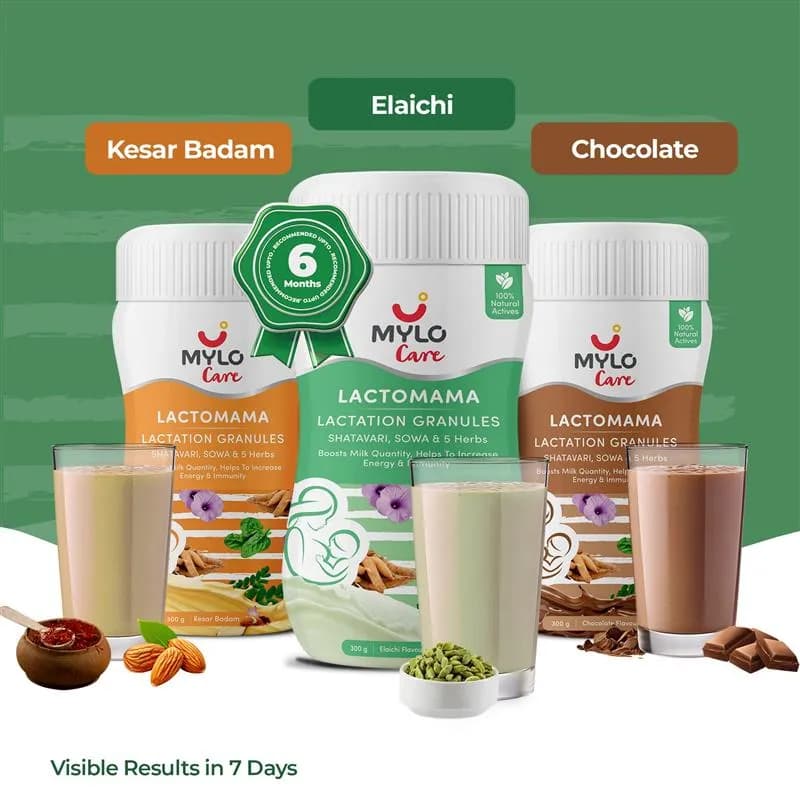
Mylo LactoMama ™ | With Shatavari, Sowa & 5 herbs | Natural Supplement for Boosting Breast Milk Supply | 100% Natural Ingredients | 300g | Pack of 1 each | Elaichi + Chocolate + Kesar
₹1399
₹2097
34% Off
.webp&w=1900&q=75)
Baby Safe Liquid Detergent for Baby Clothes | Tough on stains | Gentle on clothes | Keeps Color & Softness Intact | Suitable for Front & Top Load Washing Machine | 1 litre - Pack of 2
₹599
₹1198
50% Off

MamaGro™ Protein Diskettes - 500gm - Vanilla
₹929
₹1298
29% Off

Mylo Baby Diaper Pants Small (S) Size, 4-8 kgs with ADL Technology - 84 Count - 12 Hours Protection
₹679
₹1030
35% Off

Stretch Marks Kit - Removes Scars | Made with Natural Ingredients | Tightens Skin - (Stretch Mark Oil - 100 ml, Stretch Marks Cream - 100ml)
₹611
₹848
28% Off