


Orders
.png&w=48&q=75 "login")
Profile


Wallet

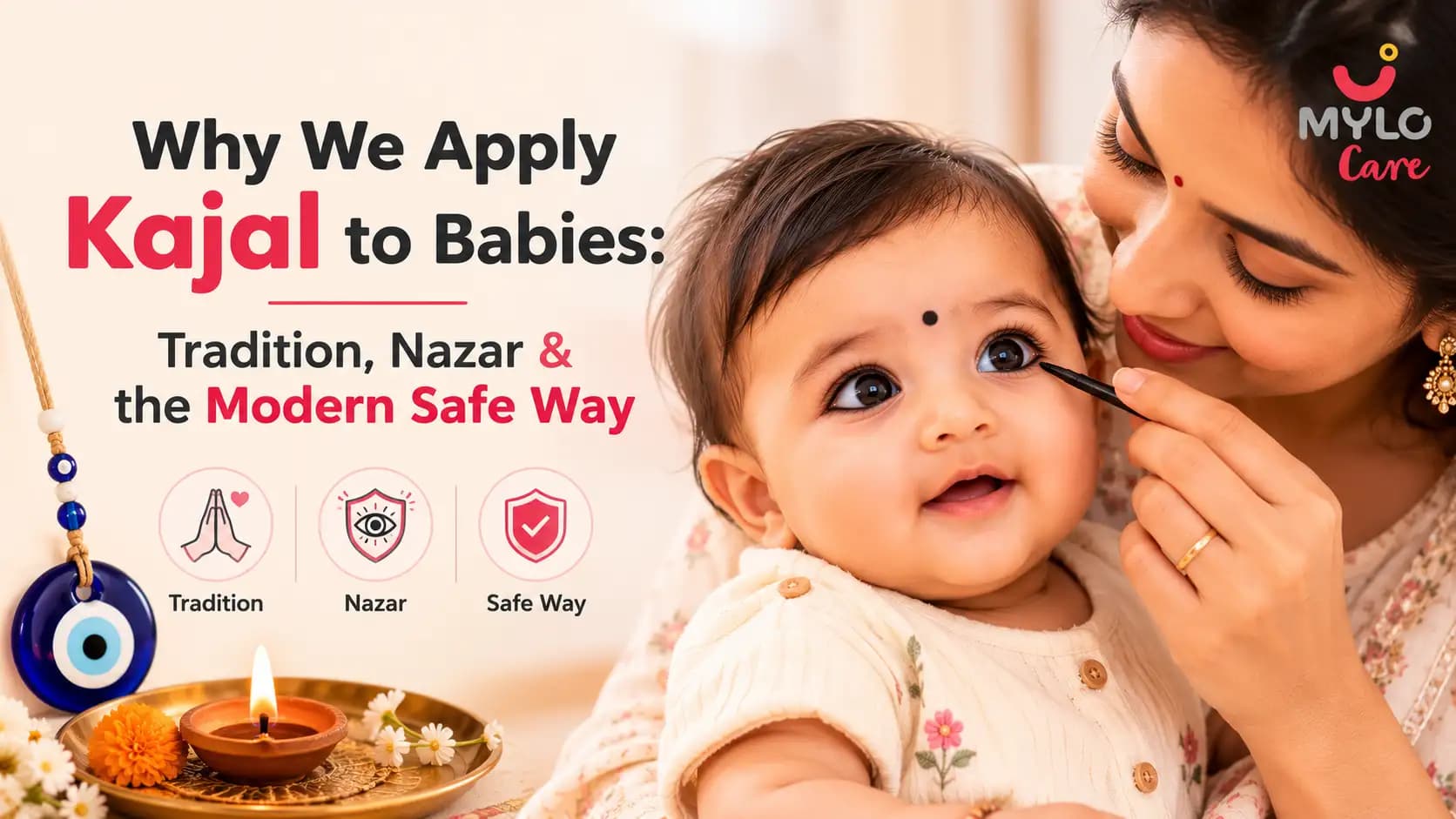
Why We Apply Kajal to Babies: Tradition, Nazar and the Modern Safe Way
 12 min
TL;DR
Applying kajal to babies is a loving tradition across India, believed to ward off the evil eye (nazar), make the eyes bigger and more beautiful, and protect the baby (IAP, WHO). These beliefs come from deep cultural affection, but there is no scientific evidence that kajal enlarges eyes, improves eyesight or protects from the evil eye. More importantly, traditional and homemade kajal often contains lead, which is toxic and can harm a baby's brain, while kajal in the eyes can cause infections and irritation. The good news is that you can honour this beautiful tradition safely: apply a small protective dot (kala teeka) on the cheek, behind the ear or on the foot instead of the eyes, and if you use kajal, choose a certified, lead-free, tested product rather than homemade surma.
Quick Answer
Indian families apply kajal to babies out of love, to ward off nazar (the evil eye), enhance the eyes and protect the child. These are cultural beliefs, not medical facts, and traditional kajal can contain toxic lead. You can honour the tradition safely by applying a small dot away from the eyes and using only certified, lead-free products. (55 words)
Medical Disclaimer: This article is for informational purposes only and is not a substitute for professional medical advice. If your baby shows any eye redness, swelling, discharge or signs of lead exposure, consult your pediatrician promptly.
Author: Mylo Editorial Team, Mylo Parenting Desk Medically reviewed by: Mylo Editorial Board, aligned with WHO, CDC, US FDA and IAP guidance Last updated: 10 July 2026
Key Takeaways
- Applying kajal to babies is a loving, generations-old Indian tradition (IAP)
- Families believe it wards off nazar, beautifies the eyes and protects the baby
- There is no scientific proof that kajal enlarges eyes, improves vision or blocks the evil eye
- Traditional and homemade kajal often contains toxic lead (CDC, US FDA)
- Lead can harm a baby's brain and development, even in small amounts (WHO)
- Kajal in the eyes can cause infections, blocked tear ducts and irritation
- You can honour the tradition with a small dot away from the eyes
- If you use kajal, choose a certified, lead-free, tested product, not homemade surma
What Is the Tradition of Applying Kajal to Babies?
In countless Indian homes, one of the first things done for a newborn is a gentle line of kajal around the eyes, or a small black dot on the forehead, cheek or foot. This ritual, often performed by mothers and grandmothers, is passed down through generations (IAP). It is an act of love and protection, woven into how families welcome and care for a new baby. Understanding why we do it, and how to do it safely, lets you honour this heritage while keeping your baby healthy.
Why Do Indian Families Believe Kajal Protects Babies?
The beliefs behind kajal are heartfelt, though modern medicine tells a different story (WHO, AAP).
| Traditional belief | What science says |
|---|---|
| Wards off the evil eye (nazar) | A cultural belief with no medical basis |
| Makes eyes bigger and more beautiful | Eye shape is genetic; kajal does not change it |
| Improves the baby's eyesight | No evidence; it can actually harm the eyes |
| Cools and protects the eyes | Not proven; it can irritate delicate eyes |
| Keeps the baby healthy and safe | Lead-based kajal can harm a baby's health |
What Is Nazar, and Why Is Kajal Linked to It?
Nazar, or the "evil eye," is a widespread cultural belief that admiration or envy from others can bring harm or bad luck to a beautiful baby. To protect against it, families apply a black mark, kajal or a kala teeka, believing the small imperfection distracts the evil eye and shields the child (IAP). This belief is deeply comforting and tied to a parent's instinct to protect. It is important to respect the emotion behind it, even as we recognise that the protection is symbolic and cultural, not medical.
Does Kajal Actually Protect or Benefit a Baby?
Featured answer: No, kajal does not medically protect or benefit a baby. There is no scientific evidence that it wards off the evil eye, makes the eyes bigger or improves eyesight. These are cultural beliefs. In fact, traditional and homemade kajal often contains toxic lead, and kajal in the eyes can cause infections and irritation. You can still honour the tradition safely by applying a small dot away from the eyes and using only certified, lead-free products.
The love and intention behind the ritual are real and beautiful. The physical benefits, however, are not supported by evidence, and the risks of traditional kajal are very real.
Why Is Traditional Kajal Risky?
The biggest concern is lead. Homemade and unbranded kajal, kohl and surma frequently contain lead, often from an ingredient called galena (US FDA, CDC). Lead is a poison with no safe level, and babies absorb it far more easily than adults (WHO). Repeated use can lead to:
- Harm to the developing brain and nervous system
- Learning and developmental problems
- Anemia (low blood count)
- Damage to other organs over time
On top of this, applying kajal in the delicate eyes can cause infections, blocked tear ducts, watering and irritation.
What Is the Modern, Safe Way to Honour the Tradition?
You do not have to choose between tradition and safety. You can keep the loving ritual alive while protecting your baby (IAP, CDC).
How to Keep the Tradition, Safely
Honour the ritual without risking your baby's eyes:
- Apply a small dot, not eye liner: A kala teeka on the cheek, chin or foot keeps the protective gesture
- Never put kajal in the eyes or on the waterline: This is where most harm happens
- Avoid homemade surma and unbranded kajal: These are the most likely to contain lead
- Choose a certified, lead-free, tested product: Look for clear safety and dermatological testing
- Wash your hands and use a clean applicator: Reduces the risk of infection
- Focus on the love behind it: The intention to protect your baby is what truly matters
- Stop if your baby reacts: Watch for any redness, watering or irritation
If you prefer a ready-made option over homemade surma, a certified, lead-free baby kajal such as Mylo Baby Kajal is designed to be gentle for babies. Whatever you choose, keep it away from the eyes.
Here are safe spots for a small protective dot instead of the eyes.
| Instead of the eyes, apply a small dot | Why it works |
|---|---|
| Behind the ear | Discreet, and keeps the protective gesture |
| On the cheek or chin | A visible tilak-style mark, away from the eyes |
| On the sole of the foot | A traditional spot for a kala teeka |
| On the side of the forehead | Symbolic protection without any eye risk |
Myths vs Facts About Kajal for Babies
| Myth | Fact | Source |
|---|---|---|
| "Kajal protects a baby from the evil eye" | A cultural belief with no medical basis | IAP |
| "Kajal makes a baby's eyes bigger" | Eye shape is genetic; kajal does not change it | AAP |
| "Kajal improves a baby's eyesight" | It does not, and it can harm the eyes | WHO |
| "Homemade surma is natural, so it is safe" | It often contains toxic lead | CDC |
| "A little kajal in the eye is harmless" | Even small amounts can infect the eye or add to lead exposure | US FDA |
Indian Context: What Indian Parents Should Know
- Respect the emotion, choose safety: The tradition comes from love; you can honour it while protecting your baby (IAP)
- A kala teeka works too: A small dot on the cheek, foot or behind the ear preserves the protective gesture without eye risk
- Homemade surma is the biggest danger: It is the most likely to contain lead, so avoid it
- Gently guide grandparents: Elders apply kajal out of deep affection; share this information calmly and agree on a safe way
- Choose lead-free, tested products: If you use kajal, check the label for lead-free and dermatological testing
- Never in the eyes: Whatever you use, keep it away from the eyes and waterline
- Emergency number: Dial 108 for ambulance services across most states
When Should You See a Doctor?
Contact your pediatrician promptly if your baby has (AAP, NHS):
- Redness, swelling or discharge from the eyes
- Constant watering or a blocked tear duct
- Rubbing the eyes, discomfort or an allergic reaction after applying kajal
- Symptoms that could suggest lead exposure, such as poor feeding, constipation, tiredness or irritability
If you have used homemade or lead-containing kajal regularly, tell your doctor, who may advise a blood lead test.
FAQs About Applying Kajal to Babies
Why do Indian families apply kajal to babies? Out of love, to ward off nazar (the evil eye), make the eyes look bigger and more beautiful, and protect the baby (IAP). These are cultural beliefs, cherished across generations.
Log babies ko kajal kyun lagate hain? (Hinglish) Pyaar aur suraksha ke bhaav se. Log maante hain ki kajal buri nazar se bachata hai, aankhein badi aur sundar dikhati hai, aur baby ki raksha karta hai. Ye sanskritik vishwas hain, jo peedhiyon se chale aa rahe hain. Lekin science ke anusaar in cheezon ka koi pramaan nahi hai, aur traditional kajal mein lead ka khatra hota hai.
Does kajal really protect a baby from the evil eye? There is no scientific evidence that kajal protects against the evil eye (IAP). It is a cultural belief. You can honour it safely with a small protective dot away from the eyes.
Kya kajal sach mein buri nazar se bachata hai? (Hinglish) Iska koi vaigyanik pramaan nahi hai ki kajal buri nazar se bachata hai; yeh ek sanskritik vishwas hai. Aap is parampara ko surakshit tareeke se nibha sakti hain, jaise aankhon ke bajaye gaal, kaan ke peeche ya paer par ek chhota kala teeka lagakar.
Is it safe to apply kajal to a baby's eyes? No. Kajal in the eyes can cause infections, blocked tear ducts and irritation, and lead-based kajal can cause lead poisoning (CDC). Keep it away from the eyes.
How can I honour the tradition without harming my baby? Apply a small dot (kala teeka) on the cheek, chin, foot or behind the ear instead of the eyes, avoid homemade surma, and use only a certified, lead-free, tested product (IAP).
Why is homemade surma dangerous? Homemade and unbranded surma often contains lead, a toxic metal that babies absorb easily and that can harm the brain, blood and development (US FDA, WHO).
When should I worry about lead exposure? If you have used homemade or lead-containing kajal regularly and your baby has poor feeding, constipation, tiredness or irritability, talk to your doctor, who may suggest a blood lead test (WHO).
Final Thoughts: Honour the Love, Protect the Baby
Applying kajal to a baby is one of the most tender traditions in Indian parenting, rooted in love, protection and the wish to keep a precious child safe from harm. That intention is beautiful and worth cherishing.
The way we express it, though, can evolve with what we now know. You can keep the tradition alive with a small protective dot away from the eyes, avoid homemade surma, and choose only certified, lead-free products. In doing so, you honour the love and heritage behind the ritual while giving your baby the safest possible start, tradition and health, together.
References
- World Health Organization (WHO). "Lead Poisoning and Health." https://www.who.int/news-room/fact-sheets/detail/lead-poisoning-and-health
- U.S. Food and Drug Administration (FDA). "Kohl, Kajal, Al-Kahal, or Surma: By Any Name, Beware of Lead Poisoning." https://www.fda.gov
- Centers for Disease Control and Prevention (CDC). "Lead in Cosmetics and Folk Remedies." https://www.cdc.gov
- American Academy of Pediatrics (AAP). "Healthy Children: Eye Care and Lead Exposure." https://www.healthychildren.org
- Indian Academy of Pediatrics (IAP). "Child Safety and Lead Exposure Guidance." https://www.iapindia.org
- NHS UK. "Eye Problems in Babies and Children." https://www.nhs.uk
- Mylo. "Mylo Baby Kajal (5g)." https://mylofamily.com/product/mylo-baby-kajal-5g-3498
Article Posted Under
Related Articles

Medical Disclaimer
This content is for informational purposes only and should not replace professional medical advice. Consult with a physician or other health care professional if you have any concerns or questions about your health. If you rely on the information provided here, you do so solely at your own risk.


AWARDS AND RECOGNITION

Mylo wins Forbes D2C Disruptor award

Mylo wins The Economic Times Promising Brands 2022
AS SEEN IN












- Mylo Care: Effective and science-backed personal care and wellness solutions for a joyful you.
- Mylo Baby: Science-backed, gentle and effective personal care & hygiene range for your little one.
- Mylo Community: Trusted and empathetic community of 10mn+ parents and experts.


Product Categories
Baby Carrier | Baby Soap | Baby Wipes | Stretch Marks Cream | Baby Cream | Baby Shampoo | Baby Massage Oil | Baby Hair Oil | Stretch Marks Oil | Baby Body Wash | Baby Powder | Baby Lotion | Diaper Rash Cream | Newborn Diapers | Teether | Baby Kajal | Baby Diapers Pants | Cloth Diapers | Laundry Detergent | Lactation Granules |