


Orders

Profile

Bending During Pregnancy: What's Safe By Trimester, What's Risky, And What Indian Gynaecologists Recommend In 2026
 6 Likes|
 14 min

C-section & gynae problems · 4 years experience
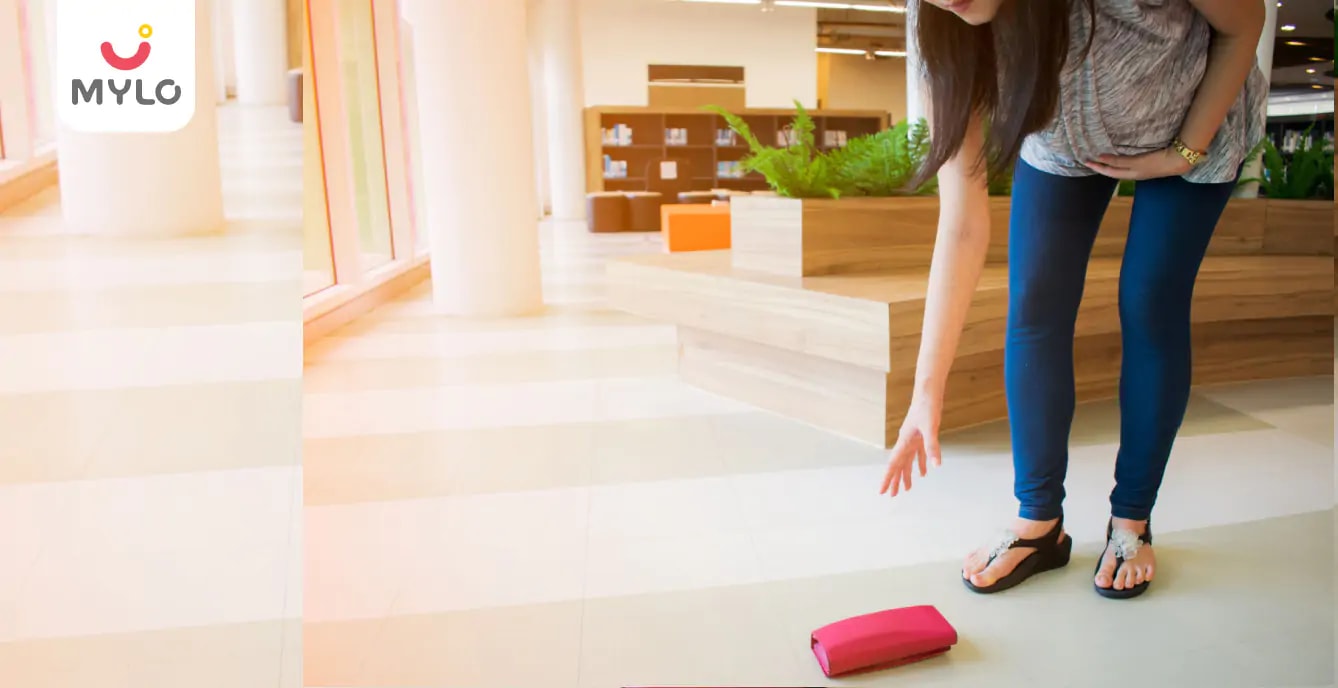
One-line answer: Bending is safe in the first trimester, risky from week 20, and best avoided after week 28; always squat with a straight back instead of bending at the waist.
Quick Answer: You can bend in early pregnancy without harming the baby because the amniotic fluid cushions the foetus. From the second trimester (around week 20), bending strains the back and shifts your centre of gravity. By the third trimester (after week 28), squatting or kneeling is safer than forward bending (FOGSI, 2023; NIOSH, 2025).
Key Takeaways
- First trimester (week 1 to 12): Bending is generally safe; the foetus is small and well protected by the amniotic sac (ACOG, 2020).
- Second trimester (week 13 to 27): Limit deep bending from around week 20 as the bump grows and ligaments loosen under relaxin (RCOG, 2023).
- Third trimester (week 28 onwards): Avoid bending at the waist; squat, kneel, or use a grabber.
- Maximum safe lifting weight: Approximately 10 kg in early pregnancy, reducing to 5 kg by the third trimester per NIOSH lifting guidelines, 2025.
- Can bending hurt the baby? No, occasional correct bending does not harm a healthy baby. Risk is to the mother (falls, back strain, reflux), not the foetus.
- Mylo's editorial stance: Switch from waist-bending to squatting from week 20. If you feel pain, dizziness, or pulling, stop and call your doctor.
Definitions: The Six Terms You Need
| Term | Definition |
|---|---|
| Forward bending | Folding at the waist, which strains the lumbar spine and abdominal muscles. |
| Squat lift | Bending at the knees with a straight back, lifting using the thigh muscles. The recommended technique in pregnancy. |
| Round ligament pain | A sharp or pulling pain in the lower abdomen caused by the stretching of the round ligaments that support the uterus. |
| Relaxin | A hormone that loosens pelvic ligaments to prepare for childbirth, also making joints more vulnerable to strain. |
| Centre of gravity | The body's balance point, which shifts forward as the bump grows, raising the risk of falls. |
| Diastasis recti | Separation of the abdominal muscles during pregnancy, made worse by repeated forward bending or heavy lifting. |
Is It Safe To Bend During Pregnancy?
Bending is safe in pregnancy when done with correct technique, particularly in the first trimester. The baby is cushioned by amniotic fluid and the uterine wall, so occasional bending does not reach the foetus. The risk in later pregnancy is to the mother, not the baby: back pain, dizziness, reflux, and falls. According to the US National Institute for Occupational Safety and Health (NIOSH), the safety of bending depends on your overall health, fitness, flexibility, and stage of pregnancy.
If you have any high-risk pregnancy condition such as placenta previa, cervical incompetence, or a history of preterm labour, your gynaecologist may advise against any deep bending from the first trimester onwards.
When Should I Stop Bending Over During Pregnancy?
Most gynaecologists recommend limiting deep bending from around week 20 and avoiding it entirely after week 28. The bump's weight shifts your centre of gravity forward, the hormone relaxin loosens pelvic ligaments, and the lumbar spine takes on extra load (RCOG Physical Activity and Pregnancy, 2023).
| Trimester | Weeks | Bending guidance | Why |
|---|---|---|---|
| First | 1 to 12 | Generally safe; bend correctly | Foetus is small; no balance issues yet |
| Early second | 13 to 19 | Still safe; start practising squats | Bump is growing; build the habit early |
| Late second | 20 to 27 | Limit forward bending; squat instead | Centre of gravity shifts; ligaments loosen |
| Early third | 28 to 35 | Avoid waist bending; ask for help | High fall risk; reflux worsens |
| Late third | 36 to 40 | No deep bending at all | Maximum bump size; pelvic ligaments at their loosest |
What Is The Correct Way To Bend During Pregnancy?
The correct way is to squat: feet wide, back straight, knees bent, weight in the thighs. Forward bending at the waist is the technique to retire from week 20. Practical steps for a safe squat lift:
- Stand with feet wider than shoulder-width for balance.
- Keep your back straight and look slightly forward, not down.
- Bend at the knees and hips, not the waist or spine.
- Lower yourself slowly; never drop in a jerk.
- Hold the object close to your body to reduce back leverage.
- Push up through the thighs, exhaling on the rise.
- Use a chair, wall, or partner's hand for balance support.
- Limit time in the squat to 10 to 15 seconds to prevent dizziness.
A maternity support belt can take some of the load off the lower back from week 20 onwards.
What Happens If I Bend Incorrectly During Pregnancy?
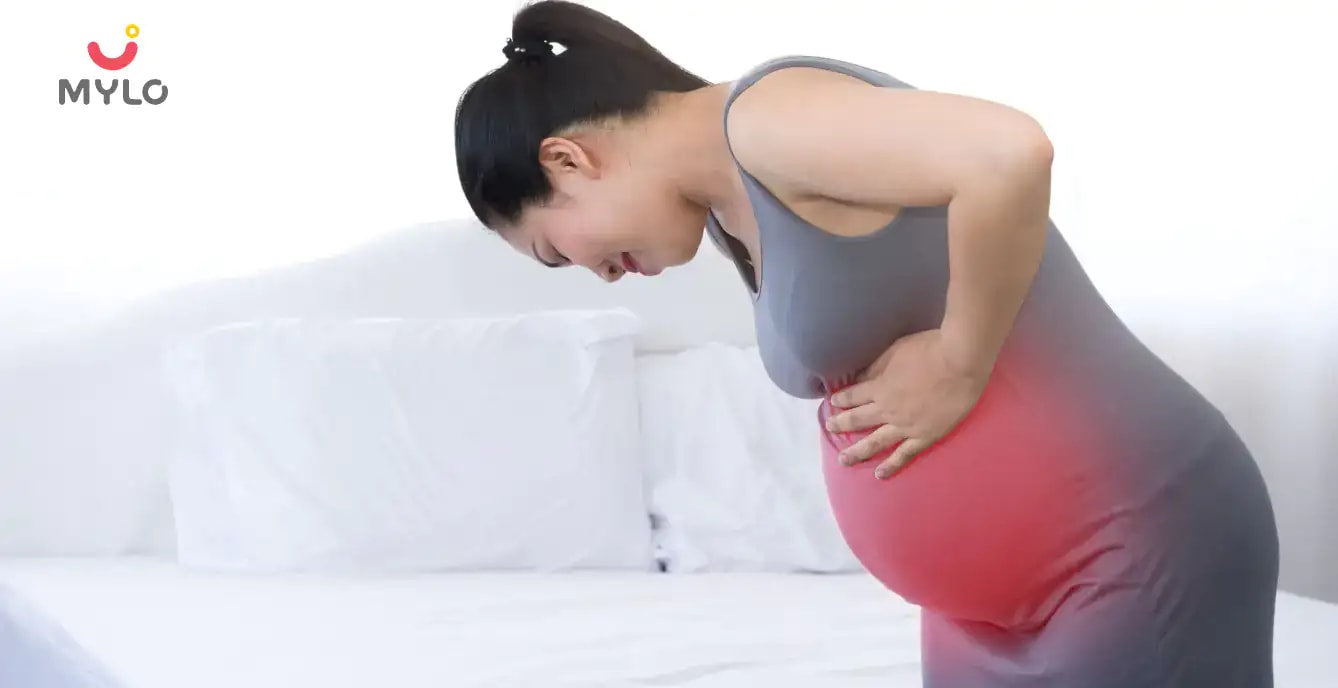
Incorrect bending in pregnancy most commonly causes back pain, sciatica, dizziness, heartburn, and falls. These are mother-side risks, not direct foetal injuries. The six most common consequences:
| Risk | Why it happens |
|---|---|
| Lower back pain | The growing bump weakens core muscles; bending adds spinal load |
| Acid reflux and heartburn | Bending presses the stomach upwards; progesterone relaxes the oesophageal sphincter |
| Dizziness and fainting | Rapid blood flow shifts on bending and rising too fast |
| Preterm contractions | Heavy lifting or prolonged bending can trigger Braxton Hicks or, rarely, true contractions |
| Pulled ligaments | Relaxin keeps pelvic joints loose; sudden movements strain them |
| Falls and accidental tripping | The shifted centre of gravity reduces balance, especially after week 28 |
According to a systematic review of pregnancy biomechanics in the Journal of Functional Morphology and Kinesiology, 2019, lumbar lordosis (the inward curve of the lower back) increases by up to 30% in late pregnancy, which is why forward bending becomes biomechanically risky.
Can Bending Hurt The Baby During Pregnancy?
No, normal bending does not hurt the baby. The amniotic fluid, the muscular uterine wall, and the abdominal wall together absorb everyday movement. Bending cannot cause miscarriage in early pregnancy; first-trimester miscarriage is overwhelmingly caused by chromosomal issues, not physical activity (ACOG, 2020). In the third trimester, prolonged deep bending may temporarily reduce blood flow to the uterus and cause discomfort, but it does not injure a healthy baby.
The exception is deliberate heavy lifting or repetitive occupational bending, which the NIOSH provisional lifting limits link to a higher risk of preterm birth and lower birth weight in some studies.
Why Does My Stomach Hurt When I Bend During Pregnancy?
Mild stomach discomfort while bending is usually round ligament pain, trapped gas, or a stretching uterus. These three causes account for most second-trimester bending pain. Sharp or persistent pain, bleeding, or rhythmic tightening after bending needs urgent medical attention to rule out preterm labour or placental abruption.
Other common causes:
- Gas and indigestion: Progesterone slows the digestive tract, and bending compresses the stomach (constipation in early pregnancy makes this worse).
- Braxton Hicks contractions: Painless tightening triggered by movement; eases with rest and water.
- Diastasis recti: Mild abdominal separation that pulls when you bend forward.
Call your gynaecologist immediately if bending triggers bleeding, a gush of fluid, severe one-sided pain, or contractions less than 10 minutes apart.
What Is The Maximum Weight I Can Lift While Pregnant?
The NIOSH-aligned safe lifting weight in pregnancy is approximately 10 kg in the first trimester, 7 kg in the second, and 5 kg in the third. These are general guidelines; your doctor may set a stricter limit based on your individual pregnancy.
| Pregnancy stage | Safe lift, occasional | Safe lift, repeated | What to avoid |
|---|---|---|---|
| First trimester (1 to 12 weeks) | Up to 10 kg | Up to 5 kg | Lifting above shoulder height |
| Second trimester (13 to 27 weeks) | Up to 7 kg | Up to 3 to 4 kg | Carrying while climbing stairs |
| Third trimester (28 to 40 weeks) | Up to 5 kg | Up to 2 to 3 kg | Any twisting lift |
Source: NIOSH Provisional Recommended Weight Limits for Lifting by Pregnant Workers, 2025.
Which Household Chores Should I Avoid During Pregnancy?
Pregnant women should avoid heavy lifting, prolonged squat-bending, ladder climbing, scrubbing floors, moving furniture, cleaning cat litter, and using strong chemicals. A practical, India-specific list:
- Skip entirely: Lifting a full bucket of water, moving furniture, climbing on stools or ladders, scrubbing floors in a squatting posture, washing heavy curtains, cleaning cat litter (toxoplasmosis risk).
- Modify: Mopping with a long-handle mop, ironing while seated, picking dropped items with a grabber tool, washing dishes with one foot on a low stool to reduce back load.
- Continue safely: Light cooking, folding clothes seated, dusting at chest height, watering plants with a long-spout can.
For more on workplace and home modifications, read in what situations a doctor recommends bed rest during pregnancy and reasons to stop working during pregnancy.
How Can I Maintain Good Posture During Pregnancy?
Keep shoulders back, chest lifted, pelvis neutral, and weight evenly on both feet. A daily posture checklist:
- Sitting: Back straight, lumbar pillow at the lower back, feet flat on the floor or on a stool.
- Standing: Feet hip-width apart, knees soft (not locked), weight evenly distributed.
- Sleeping: Left side, pregnancy pillow between knees and under the bump, head supported.
- Walking: Short steps, supportive flat footwear, eyes forward not on the phone.
- Working: Stand for no more than 30 minutes at a stretch; sit for no more than 60 minutes without moving.
- Exercise: Prenatal yoga, pelvic tilts, and wall squats, all reviewed by your obstetrician.
For workplace planning, see how many hours a pregnant woman should work.
Is It Safe To Do Forward Folds In Prenatal Yoga?
Standing forward folds are safe in the first trimester but should be modified from the second trimester onwards. Replace deep forward folds with wide-leg, hip-hinged versions where the chest stays lifted and the belly is not compressed. Avoid any fold that requires lying flat on the back after week 16 (ACOG Exercise Guidance, 2020).
When Should You Call A Doctor?
Call your gynaecologist immediately on any of these signs after bending. All six are red flags identified by FOGSI and ACOG.
- Vaginal bleeding or a gush of fluid.
- Severe one-sided pelvic or abdominal pain.
- Fainting, blurred vision, or shoulder-tip pain.
- More than 4 contractions in an hour before week 37.
- A noticeable drop in foetal movement after 24 weeks.
- A fall, especially if the bump was hit.
Mylo's Editorial Stance
Mylo recommends switching from waist bending to squat lifting from week 20 onwards and asking for help with anything over 5 kg in the third trimester. Bending in pregnancy is not dangerous when done correctly, but the centre of gravity, loosened ligaments, and reflux risk together mean technique matters more than at any other time in life. Confirm any new exercise or workplace modification with your doctor, especially in a high-risk pregnancy.
Frequently Asked Questions
When should I stop bending during pregnancy?
Most gynaecologists recommend limiting deep forward bending from around week 20 and switching fully to squatting or kneeling from week 28 (RCOG, 2023). Listen to your body: if a bend causes back pain, dizziness, reflux, or a pulling sensation in the lower abdomen, stop and switch to a squat or ask for help.
Can bending during pregnancy hurt the baby?
No, normal bending does not hurt the baby. The amniotic fluid, uterine muscle, and abdominal wall absorb everyday movement. First-trimester miscarriage is caused by chromosomal issues, not bending. The risk in later pregnancy is to the mother (back strain, falls, reflux), not directly to the foetus (ACOG, 2020).
How do I pick things up without bending in pregnancy?
Squat with feet wide and back straight, bending at the knees instead of the waist. Hold the object close to your body and push up through your thighs. For light items, a long-handled grabber tool is the easiest option. Never bend and twist at the same time, and ask for help with anything over 5 kg in the third trimester.
Is bending at work safe during pregnancy?
Bending at work is safe in early pregnancy and should be limited from week 20. Indian law under the Maternity Benefit Act, 2017 entitles you to request lighter duties and avoid arduous work for ten weeks before delivery. Inform your employer, request a sit-down workstation, and avoid repeated bending or lifting above 5 kg in the third trimester.
Can bending cause miscarriage in early pregnancy?
No, normal bending does not cause miscarriage. First-trimester miscarriage is overwhelmingly caused by chromosomal abnormalities, hormonal issues, or anatomical factors, not by everyday physical activity (ACOG, 2020). Avoid heavy lifting and high-impact sports, but routine bending in the first trimester is safe.
Why does my stomach hurt when I bend during pregnancy?
Mild stomach discomfort while bending is most often round ligament pain, trapped gas, or a stretching uterus. Sharp or persistent pain, bleeding, or rhythmic tightening needs urgent medical attention. Rise slowly, sip water, and call your doctor if pain lasts longer than 30 minutes or recurs at every bend.
Can I bend forward in the third trimester?
You can bend forward briefly in the third trimester, but it is not the safest option. The shifted centre of gravity, loosened ligaments, and bigger bump make squatting, kneeling, or using a grabber tool the better default. Limit any forward bend to under 10 seconds and avoid bending and twisting at the same time.
Can sitting cross-legged cause harm in pregnancy?
Sitting cross-legged on the floor for short periods is usually safe, but prolonged cross-legged sitting can restrict pelvic blood flow and worsen back pain in later pregnancy. Sit with feet flat on the floor or on a low stool, use a lumbar pillow, and stand up every 60 minutes to stretch.
Pregnancy me jhukna kab band karna chahiye?
Pregnancy me forward bending (kamar se jhukna) 20 hafte ke baad kam karna chahiye aur 28 hafte ke baad bilkul band kar dena chahiye. Iske badle squat karein: paair chaude rakhein, peeth seedhi rakhein, ghutno se jhukein. 5 kg se zyada wajan na uthayein aur ghar ke heavy kaam jaise ladder, bucket, ya furniture shifting kisi aur se karwayein.
 Yes
Yes
 No
No
Your parenting partner
in your pocket.
supportive community.

Your parenting partner
in your pocket.
supportive community.


Article Posted Under
Helpful Tools & Calculators
.webp&w=32&q=75)











Dr. Shruti Tanwar is well qualified and competent Obstetrician and Gynecologist with more than 4 years of experience. She is well updated and has worked and gained experience from the most prime institute of Delhi-Safdarjung Hospital. She has innate ability to listen and understand your problem and give detailed personalized advice and evidence-based treatment. She specializes in treatment for high-risk pregnancy, vaginal discharge, endometriosis, fibroids, ovarian cysts etc.
Related Articles

Related Videos
Pregnancy Yoga To Help You Move Your Body (24 Weeks!)
Pregnancy yoga for 39 weeks
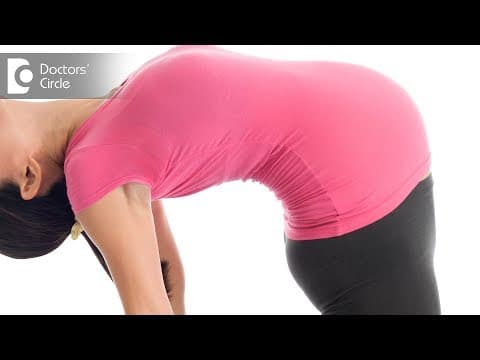
Activities To Avoid During Pregnancy - Dr. Suhasini Inamdar
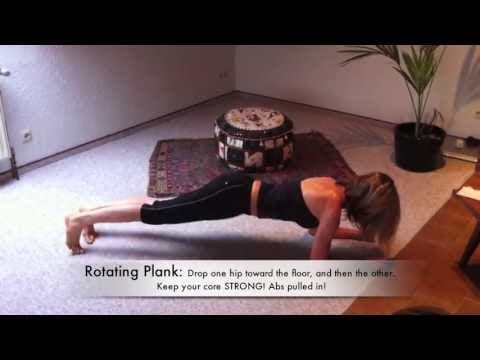
Pre-Pregnancy Exercises - FemFusion Fitness
A Guide to Pregnancy Exercises
Questions about this article
- Asked when 38 weeks pregnant
Hello frnds..still no pain...doctor said head fix nhi hua hai..bt vagina me pain hai aur back pain bhi... anyone having same issues??
- Asked when 23 weeks pregnant
Kon kon c chije aisi hai jo pregnancy mei gas acidity jalan karti hain... Koi btayega plz bcz mujhe aksar khane ke baad hi samagh aata hai ki is chij se gas acidity jalan ho gyi hai. Please share your knowledge
- 14 weeks pregnant
I am 13 week pregnancy. Anyone having Storione-xt tablet. It better to have morning or night ???
- Asked when 10 weeks pregnant
Hlo to be moms....i hv a query...in my 9.5 wk i feel body joint pain like in ankle, knee, wrist, shoulder, toes....pain intensity is high...i cnt sleep....what should i do pls help....cn i cosult my doc.
- Asked when 33 weeks pregnant
Influenza and boostrix injection kisiko laga hai kya 8 month pregnancy me and q lagta hai ye plz reply me
Recently Published Articles
Your body needs extra nutrition this trimester - these can help.
Finger Test For Pregnancy: What Works, What Doesn't, And What Indian Gynaecologists Recommend In 2026
Constipation in early pregnancy
How To Prevent Pregnancy After Sex

What are the Chances of Pregnancy at 40 Years and What to Expect?

Black Grapes During Pregnancy: Benefits, Risks & When to Avoid (2026)
Medical Disclaimer
This content is for informational purposes only and should not replace professional medical advice. Consult with a physician or other health care professional if you have any concerns or questions about your health. If you rely on the information provided here, you do so solely at your own risk.


AWARDS AND RECOGNITION

Mylo wins Forbes D2C Disruptor award

Mylo wins The Economic Times Promising Brands 2022
AS SEEN IN












- Mylo Care: Effective and science-backed personal care and wellness solutions for a joyful you.
- Mylo Baby: Science-backed, gentle and effective personal care & hygiene range for your little one.
- Mylo Community: Trusted and empathetic community of 10mn+ parents and experts.


Product Categories
Baby Carrier | Baby Soap | Baby Wipes | Stretch Marks Cream | Baby Cream | Baby Shampoo | Baby Massage Oil | Baby Hair Oil | Stretch Marks Oil | Baby Body Wash | Baby Powder | Baby Lotion | Diaper Rash Cream | Newborn Diapers | Teether | Baby Kajal | Baby Diapers Pants | Cloth Diapers | Laundry Detergent | Lactation Granules |