


Orders

Profile

Trilaminar Endometrium and Fertility: What It Means, Ideal Thickness and How to Improve It (2026 Guide)
 13 min
AI-Generated Summary
Quick overview in 30 seconds.webp&w=32&q=75)
Summary
- Trilaminar endometrium refers to the three-layered uterine lining that develops during the fertile window, creating an ideal environment for embryo implantation and successful pregnancy.
- Hormonal balance, menstrual cycle regularity, age, uterine abnormalities like fibroids or polyps, and inflammation can all impact the formation of trilaminar uterine lining.
- Achieving trilaminar endometrium boosts IVF success rates, reduces miscarriage risk, and ensures proper blood supply and nourishment for the developing embryo during early pregnancy.
- Looking for support on your fertility journey? Explore our Organic Aloe Vera (300 ml).
TL;DR
A trilaminar endometrium is a three-layered ("triple line") appearance of the uterine lining seen on ultrasound around the fertile window (mid-cycle), and it is considered a good sign for fertility and embryo implantation (NCBI / StatPearls) (ACOG). It forms under the influence of rising estrogen before ovulation. Alongside this pattern, doctors look at endometrial thickness, with about 7 to 14 mm generally considered favourable for implantation in IVF (NCBI). A trilaminar lining suggests good blood supply and hormonal readiness, but pregnancy can still happen without a perfect triple-line pattern. You can support a healthy lining with good hormonal balance, blood flow, nutrition and treatment of any underlying conditions.
Quick Answer
A trilaminar endometrium is a three-layered "triple line" appearance of the uterine lining on ultrasound, seen around ovulation. It signals a receptive, well-prepared lining for embryo implantation and is a positive fertility sign, especially in IVF. Doctors also check thickness (about 7 to 14 mm is favourable). Pregnancy can still occur without a perfect pattern.
Author: Anandita Sharma, Senior Fertility Content Editor, Mylo Parenting Desk Medically reviewed by: Mylo Editorial Board, aligned with ACOG, ESHRE and FOGSI fertility guidance Last updated: 11 June 2026
Medical Disclaimer: This article is for informational purposes only and is not a substitute for professional medical advice. Endometrial assessment and fertility treatment must be individualised. If you are trying to conceive or undergoing IVF, please consult your gynaecologist or fertility specialist for personalised evaluation and care.
Key Takeaways
- A trilaminar endometrium is a three-layered "triple line" lining seen on ultrasound (NCBI)
- It appears around the fertile window under the influence of estrogen
- It is a positive sign for embryo implantation, especially in IVF (ACOG)
- Doctors also assess endometrial thickness (about 7 to 14 mm is often favourable)
- It suggests good blood supply and hormonal readiness of the lining
- Pregnancy can still happen without a perfect trilaminar pattern
- A healthy lining depends on hormones, blood flow, age and uterine health
- Conditions like fibroids, polyps, infection or hormonal imbalance can affect it
What Is a Trilaminar Endometrium?
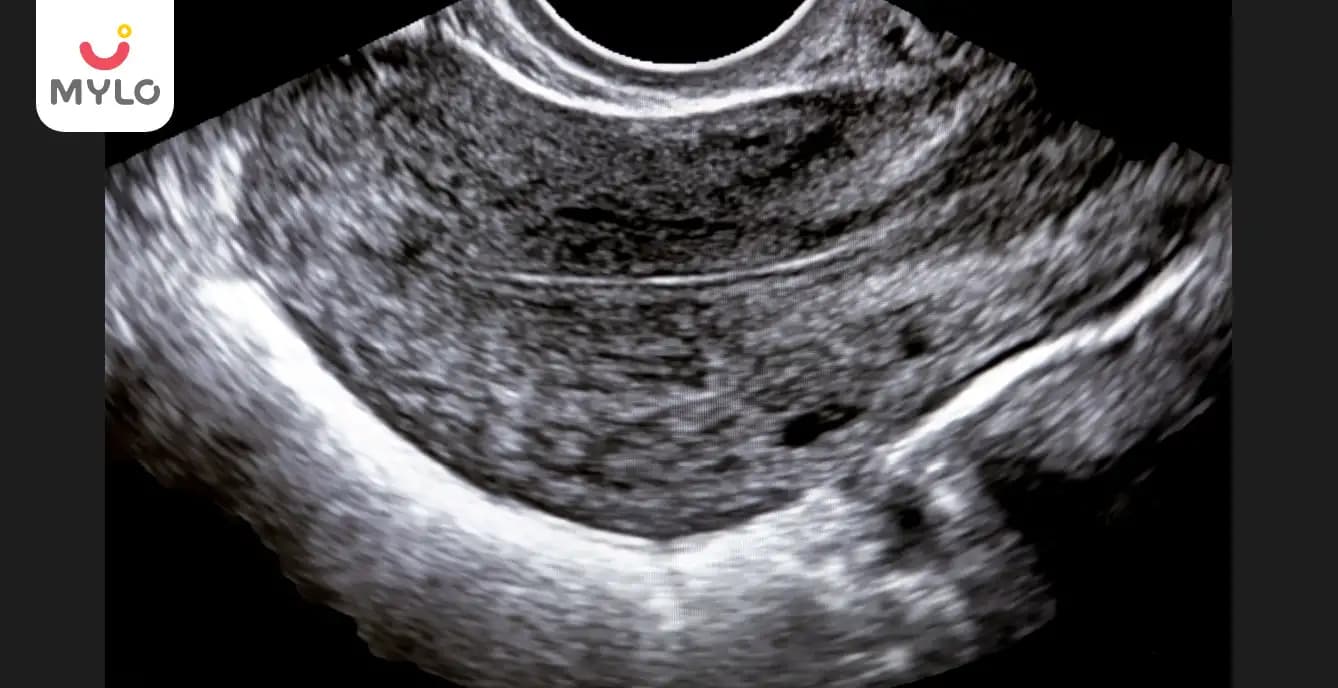
The endometrium is the inner lining of the uterus, where a fertilised embryo implants. "Trilaminar" means three-layered (NCBI / StatPearls).
On an ultrasound around the middle of your cycle (just before ovulation), a receptive endometrium often shows a distinct "triple line" pattern:
- An outer layer (basal layer, appears bright/echogenic)
- A middle layer (appears darker/hypoechoic)
- A central line (where the front and back walls meet, appears bright)
This three-layered look is a sign that the lining is growing and preparing well for a possible pregnancy, driven by rising estrogen before ovulation (NCBI).
Why Does a Trilaminar Endometrium Matter in Fertility?
A trilaminar (triple-line) endometrium is generally a favourable sign because it suggests (NCBI) (ACOG):
- Good estrogen response (the lining is developing as expected)
- Adequate blood supply to nourish an implanting embryo
- A receptive environment for the embryo to attach
- Hormonal synchronisation with the rest of the cycle
- Higher chances of successful implantation, especially in IVF
In IVF, doctors often look for a trilaminar pattern with adequate thickness before an embryo transfer, as it is associated with better implantation rates (NCBI). However, it is one factor among many, not a guarantee.
What Is the Ideal Endometrial Thickness for Implantation?
Endometrial thickness changes through the cycle. For implantation and IVF, doctors generally consider these ranges (NCBI):
| Cycle Phase | Typical Thickness | Notes |
|---|---|---|
| After period (early) | 2 to 4 mm | Thin, just shed |
| Mid-cycle (fertile window) | 7 to 11 mm | Trilaminar pattern often seen |
| Around implantation | About 7 to 14 mm | Generally favourable range |
| Too thin | Below 7 mm | May lower implantation chances |
| Too thick | Above 14 to 16 mm | May need evaluation |
A lining of about 7 to 14 mm with a trilaminar pattern is commonly considered favourable for embryo transfer, though successful pregnancies occur outside these exact numbers (NCBI). Your fertility specialist interprets this for your specific case.
When Does the Endometrium Become Trilaminar?
The trilaminar pattern appears in the proliferative phase, around the fertile window (mid-cycle, before ovulation) (NCBI / StatPearls):
| Cycle Stage | Endometrial Appearance |
|---|---|
| During period (days 1 to 5) | Thin, shedding |
| Early proliferative (days 6 to 9) | Thin, single line |
| Late proliferative / fertile window (days 10 to 14) | Trilaminar (triple line) |
| After ovulation (luteal phase) | Becomes thick, bright (homogeneous), loses triple line |
After ovulation, progesterone changes the lining so it looks uniformly bright (hyperechoic) rather than three-layered. So the triple line is mainly a pre-ovulation finding (NCBI).
How Is the Endometrium Measured?
The endometrium is assessed using (ACOG):
- Transvaginal ultrasound (TVS): The standard method, measures thickness and shows the trilaminar pattern
- Timing in the cycle: Usually checked around the fertile window or before embryo transfer in IVF
- Doppler ultrasound: May assess blood flow to the lining
- Saline infusion sonography (SIS): Checks for polyps or fibroids if needed
- Hysteroscopy: A direct look inside the uterus in certain cases
What Factors Affect the Trilaminar Endometrium?
Several factors influence whether a healthy triple-line lining forms (NCBI) (ACOG):
| Factor | Effect on the Lining |
|---|---|
| Estrogen levels | Estrogen drives lining growth and the triple-line pattern |
| Progesterone timing | Early progesterone changes the pattern prematurely |
| Menstrual cycle regularity | Irregular cycles (PCOS) disrupt timing |
| Age | Lining quality may decline with age |
| Blood flow to the uterus | Poor flow limits lining development |
| Fibroids or polyps | Can distort or interfere with the lining |
| Endometrial infection (endometritis) | Inflammation harms the lining |
| Previous uterine surgery/scarring | Asherman's syndrome can thin the lining |
| Certain medications | Some fertility drugs (e.g. clomiphene) may thin the lining |
| Smoking | Reduces blood flow and lining quality |
How Can You Improve Your Endometrial Lining?
Always work with your fertility specialist, but these approaches may help (ACOG) (ESHRE):
Medical Approaches (Doctor-Guided)
- Estrogen therapy to support lining growth
- Adjusting fertility medications (e.g. switching from clomiphene if it thins the lining)
- Treating infections (endometritis) with antibiotics
- Removing fibroids or polyps if they interfere
- Treating scarring (Asherman's) via hysteroscopy
- Medications to improve uterine blood flow in selected cases
Lifestyle and Supportive Measures
- Stay active: Gentle exercise improves circulation
- Eat a balanced, iron- and antioxidant-rich diet (leafy greens, beetroot, citrus, nuts) (ICMR)
- Stay hydrated
- Manage stress (yoga, meditation, sleep)
- Quit smoking and limit alcohol
- Maintain a healthy weight
- Treat underlying conditions like thyroid disorders or PCOS
Note: Some remedies (like certain supplements or "uterine tonics") are not strongly proven. Always check with your doctor before trying anything to "thicken" the lining.
Can You Get Pregnant Without a Trilaminar Endometrium?
Yes. A trilaminar pattern is a helpful positive sign, but it is not an absolute requirement for pregnancy (NCBI). Many women conceive naturally and through IVF without a textbook triple-line lining.
What matters is the overall receptivity of the uterus, which your doctor assesses using thickness, pattern, blood flow, hormone levels and your full clinical picture, not the triple line alone.
Indian Context: What Indian Couples Should Know
- Common in IVF discussions: Endometrial thickness and the trilaminar pattern are routinely checked at Indian fertility clinics before embryo transfer (FOGSI)
- PCOS is common: PCOS (9 to 22% of Indian women) can disrupt cycle timing and lining development; managing it helps (ICMR)
- Tuberculosis awareness: Genital tuberculosis, more common in India, can damage the endometrium and cause thin lining or scarring; your doctor may test for it if the lining is persistently thin
- Cost of monitoring: Follicular and endometrial scans in an IVF cycle typically cost INR 500 to INR 2,000 each; IVF cycles range widely by city and clinic
- Avoid unproven remedies: Be cautious of advertised "uterus-strengthening" herbal products; discuss any supplement with your specialist
- Nutrition: Iron, folate and antioxidant-rich Indian foods (palak, methi, beetroot, dal, citrus) support overall reproductive health
- ART Act 2021: Regulates fertility clinics in India for safety and transparency
Myths vs Facts About Trilaminar Endometrium
| Myth | Fact | Source |
|---|---|---|
| "You cannot get pregnant without a triple line" | False. It helps but is not mandatory | NCBI |
| "Thicker lining is always better" | False. Too thick (above 14 to 16 mm) may need evaluation | NCBI |
| "Triple line is seen all month" | False. It mainly appears before ovulation | NCBI |
| "Only IVF patients need to know about it" | False. It reflects general uterine receptivity | ACOG |
| "Herbal tonics reliably thicken the lining" | False. Most are unproven; consult your doctor | FOGSI |
| "A thin lining can never improve" | False. Many causes are treatable | ACOG |
| "Endometrial thickness predicts baby's health" | False. It relates to implantation, not baby's health | NCBI |
FAQs: Trilaminar Endometrium and Fertility
Is a trilaminar endometrium good or bad?
Good. A trilaminar (triple-line) endometrium is a positive sign that the uterine lining is developing well and is receptive to embryo implantation, especially valued in IVF (NCBI). However, pregnancy can still happen without a perfect triple-line pattern.
Trilaminar endometrium kya hota hai? (Hinglish)
Trilaminar endometrium uterus ki lining ka ek "triple line" (teen layer wala) pattern hai jo ultrasound par ovulation se pehle dikhta hai. Ye ek accha sign hai kyunki iska matlab hai lining embryo implantation ke liye taiyaar ho rahi hai, khaas kar IVF mein. Lekin iske bina bhi pregnancy ho sakti hai. Doctor thickness (lagbhag 7 se 14 mm) bhi check karte hain.
What is the ideal endometrial thickness for pregnancy?
For implantation and IVF, an endometrial thickness of about 7 to 14 mm with a trilaminar pattern is generally considered favourable (NCBI). A lining below 7 mm may lower implantation chances, but successful pregnancies still occur outside these exact numbers. Your specialist interprets it for your case.
When does the endometrium become trilaminar?
The trilaminar (triple-line) pattern appears in the late proliferative phase, around the fertile window (mid-cycle, before ovulation), when estrogen is high (NCBI / StatPearls). After ovulation, progesterone makes the lining uniformly bright and the triple line disappears.
Endometrium thick karne ke liye kya karein? (Hinglish)
Endometrium lining improve karne ke liye (doctor ki guidance mein):
- Estrogen therapy (agar doctor de)
- Fertility medicine adjust karna (clomiphene lining patli kar sakti hai)
- Infection ya fibroid/polyp ka treatment
- Healthy diet (palak, beetroot, citrus, nuts)
- Regular exercise (blood flow ke liye)
- Stress kam karna aur smoking chhodna Khud se koi herbal tonic na lein, pehle specialist se poochein.
Can I get pregnant with a thin endometrium?
It can be harder, but yes, it is possible. A thin lining (below 7 mm) may lower implantation chances, but many women still conceive (NCBI). Your doctor will look for treatable causes (hormones, infection, scarring) and may adjust your treatment to improve the lining.
Does a trilaminar endometrium guarantee implantation?
No. It is a favourable sign that improves the odds, but implantation also depends on embryo quality, hormone levels, timing and overall uterine health (ACOG). A trilaminar lining improves chances but does not guarantee pregnancy.
What causes a thin or non-trilaminar endometrium?
Common causes include low estrogen, poor uterine blood flow, certain fertility drugs (clomiphene), endometrial infection (endometritis), scarring (Asherman's syndrome), fibroids, polyps and, in India, genital tuberculosis (NCBI). Many of these are treatable.
How is the trilaminar endometrium checked?
It is assessed with a transvaginal ultrasound, usually around the fertile window or before an IVF embryo transfer (ACOG). The scan measures the lining's thickness and shows whether the three-layered (triple-line) pattern is present.
Can PCOS affect the trilaminar endometrium?
Yes. PCOS can cause irregular ovulation and hormonal imbalance, which disrupt the timing and development of the trilaminar lining (NICHD). Managing PCOS (lifestyle, medication) can help restore a more regular cycle and lining development.
Is a thick endometrium always good for fertility?
No. While a lining that is too thin can reduce implantation chances, a lining that is too thick (above 14 to 16 mm) may sometimes need evaluation to rule out polyps, hyperplasia or hormonal issues (NCBI). The pattern and context matter as much as the number.
Does diet help improve the endometrial lining?
A balanced, antioxidant- and iron-rich diet supports overall reproductive health and blood flow, which may help the lining (ICMR). Helpful foods include leafy greens, beetroot, citrus fruits, nuts and whole grains. Diet supports, but does not replace, medical treatment for a thin lining.
References
- NCBI / StatPearls. "Histology, Endometrium." https://www.ncbi.nlm.nih.gov/books/NBK542237/
- NCBI / PMC. "Endometrial Thickness and Pregnancy Outcomes." https://www.ncbi.nlm.nih.gov/pmc/articles/PMC4295087/
- American College of Obstetricians and Gynecologists (ACOG). "Evaluating Infertility." https://www.acog.org/womens-health/faqs/evaluating-infertility
- ESHRE (European Society of Human Reproduction and Embryology). https://www.eshre.eu/
- NICHD. "PCOS." https://www.nichd.nih.gov/health/topics/pcos
- ICMR / NIN. "Dietary Guidelines for Indians." https://www.nin.res.in/dietaryguidelines/pdfjs/locale/DGI07052024P.pdf
- ICMR (Indian Council of Medical Research). https://www.icmr.gov.in/
- FOGSI (Federation of Obstetric and Gynaecological Societies of India). https://www.fogsi.org/
Article Posted Under
Related Articles
Vitamin C for Skin: What It Does for Dark Spots and Dull Skin, and How to Use the Range
13 min Kumkumadi Tailam for Postpartum Skin: What the Evidence Shows and How to Use It
18 min Is Onion Oil Safe During Breastfeeding: What We Know and What We Do Not
12 min 200+ Adorable Nicknames for Baby in 2026: Indian Parent's Pet Name Guide
17 min
Related Topics
.webp&w=32&q=75)
Medical Disclaimer
This content is for informational purposes only and should not replace professional medical advice. Consult with a physician or other health care professional if you have any concerns or questions about your health. If you rely on the information provided here, you do so solely at your own risk.


AWARDS AND RECOGNITION

Mylo wins Forbes D2C Disruptor award

Mylo wins The Economic Times Promising Brands 2022
AS SEEN IN












- Mylo Care: Effective and science-backed personal care and wellness solutions for a joyful you.
- Mylo Baby: Science-backed, gentle and effective personal care & hygiene range for your little one.
- Mylo Community: Trusted and empathetic community of 10mn+ parents and experts.


Product Categories
Baby Carrier | Baby Soap | Baby Wipes | Stretch Marks Cream | Baby Cream | Baby Shampoo | Baby Massage Oil | Baby Hair Oil | Stretch Marks Oil | Baby Body Wash | Baby Powder | Baby Lotion | Diaper Rash Cream | Newborn Diapers | Teether | Baby Kajal | Baby Diapers Pants | Cloth Diapers | Laundry Detergent | Lactation Granules |