


Orders
.png&w=48&q=75 "login")
Profile


Wallet

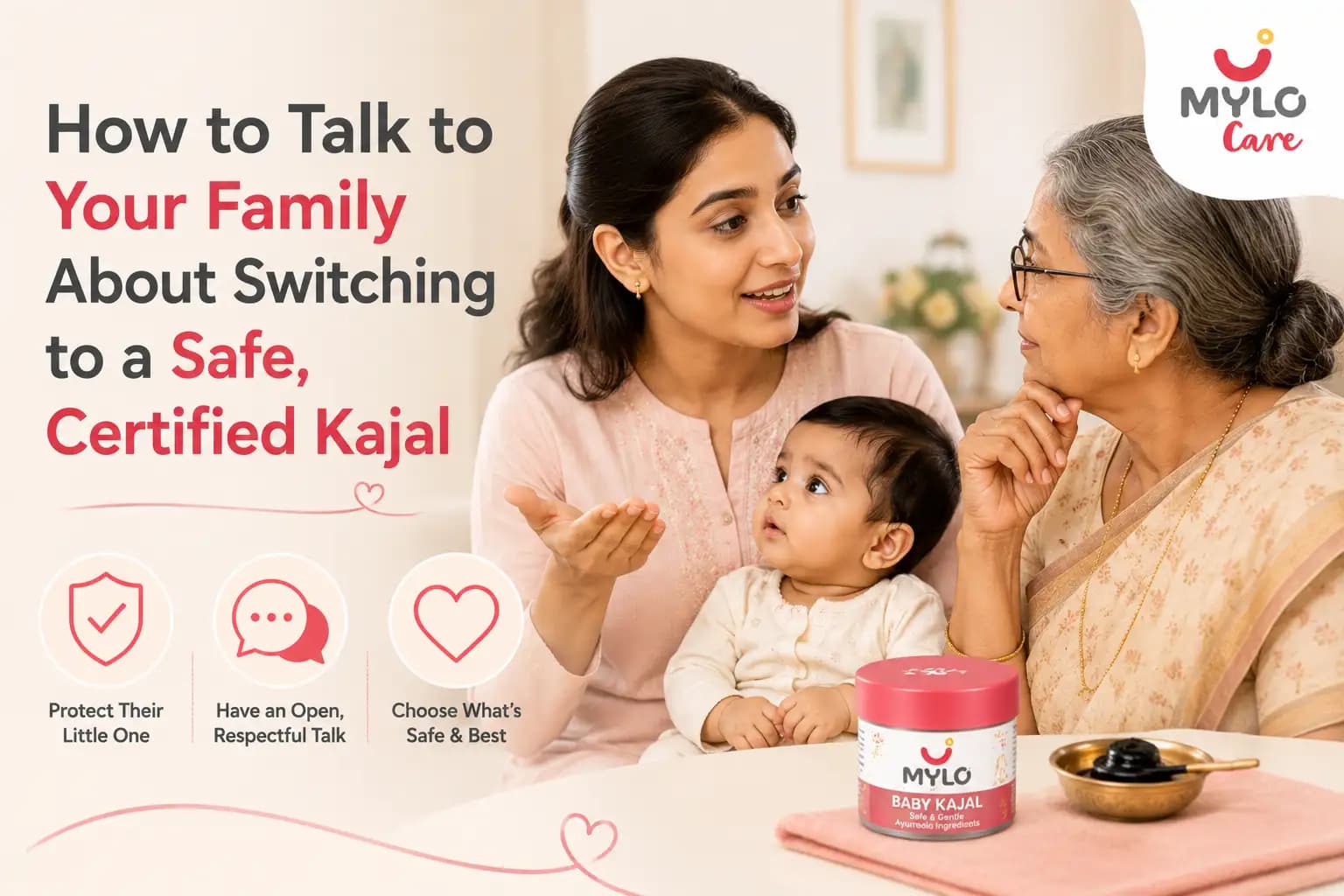
How to Talk to Your Family About Switching to a Safe, Certified Kajal
 12 min
TL;DR
Convincing your family, especially grandparents, to switch from homemade or traditional kajal to a safe, certified one can feel delicate, because the old kajal comes from deep love and tradition (APA, IAP). The key is not to argue or criticise, but to lead with respect, share the facts calmly, and offer a solution. Acknowledge their love, blame the new knowledge rather than the person ("doctors have since learned that traditional kajal often contains lead"), use "we" language, and involve them in the new safe routine. Present a united front with your partner, choose a calm moment, and be patient, since it may take more than one gentle conversation. Offer a certified, lead-free product or a small dot away from the eyes as the loving, modern way to keep the tradition safe.
Quick Answer
To talk to your family about switching to a safe, certified kajal, lead with respect for their love and tradition, share calmly that doctors now know traditional kajal often contains lead, and use "we" language rather than blame. Offer a certified, lead-free product as the solution, involve elders in the new routine, and be patient. (55 words)
Medical Disclaimer: This article is for informational and general guidance purposes only and is not a substitute for professional medical advice. For any concern about your baby's eyes or possible lead exposure, consult your pediatrician promptly.
Author: Mylo Editorial Team, Mylo Parenting Desk Medically reviewed by: Mylo Editorial Board, aligned with WHO, CDC, US FDA and IAP guidance Last updated: 10 July 2026
Key Takeaways
- The conversation is sensitive because homemade kajal comes from love and tradition (IAP)
- Lead with respect, not criticism, and never mock homemade kajal
- Blame the new knowledge or the doctor, not the person (APA)
- Use "we" language and share facts calmly, without lecturing
- Offer a solution, a certified, lead-free product or a safe dot away from the eyes
- Involve elders in the new routine so they feel valued, not sidelined
- Present a united front with your partner and choose a calm, private moment
- Be patient, as it may take more than one gentle conversation
Why Is This Conversation So Hard?
Suggesting a change to how your family cares for a baby can feel like questioning their love and wisdom, and that is exactly why it feels hard (APA). For grandmothers especially, applying homemade kajal is a cherished ritual passed down with affection. When you propose switching to a certified product, they may hear it as "your way was wrong," even though that is not what you mean. Understanding this emotional side is the first step to a conversation that brings the family together instead of causing tension.
Why Does Switching to a Certified Kajal Matter?
The reason behind the switch is simple and important: safety. Traditional and homemade kajal often contains lead, a toxic metal that can harm a baby's developing brain, and kajal in the eyes can cause infections (WHO, CDC). A certified, lead-free, tested kajal removes the biggest unknown. So this is not about rejecting tradition; it is about protecting the baby everyone loves, which is something the whole family already wants.
How Do You Start the Conversation with Love?
Featured answer: Start by acknowledging your family's love and tradition, then share the facts gently: doctors now know that traditional and homemade kajal often contains lead, which can harm babies. Use "we" language, blame the new knowledge rather than the person, and offer a solution such as a certified, lead-free product or a small dot away from the eyes. Involve elders in the new routine, present a united front with your partner, and be patient.
The goal is to make it a shared decision made out of love, not a confrontation. When family members feel respected and included, they are far more open to change.
What Are the Best Ways to Talk to Elders About It?
A little care in how you approach the conversation makes a big difference (APA, IAP).
| Do | Don't |
|---|---|
| Acknowledge their love and tradition | Attack or mock homemade kajal |
| Use "we" language | Blame or shame the person |
| Cite the doctor or new research | Lecture or argue |
| Offer a safe alternative | Only criticise without a solution |
| Involve them in the new routine | Make them feel sidelined |
| Choose a calm, private moment | Confront them in front of others |
What Helpful Phrases Can You Use?
The right words keep the conversation warm and blame-free (APA).
Gentle Phrases to Open the Conversation
Try wording it like this:
- Lead with gratitude: "You have cared for our baby so lovingly, and we are so grateful"
- Blame the knowledge, not them: "Doctors have since learned that traditional kajal can contain lead"
- Use we, not you: "We have decided to switch to a tested, lead-free kajal to be safe"
- Acknowledge their experience: "You raised us beautifully, and some things we now know have changed"
- Offer the solution: "We found a certified, lead-free kajal we can all use"
- Invite them in: "Would you like to apply the safe kajal or a little dot for our baby?"
- Keep the tradition alive: "We can still do the kala teeka, just away from the eyes"
Warmth and inclusion open more doors than facts alone. Let your family feel they are part of the decision, not on the wrong side of it.
How Do You Handle Common Objections?
Elders may push back out of love, and calm, kind responses help (WHO, CDC).
| What they might say | A gentle response |
|---|---|
| "We used it on you and you are fine" | "True, and doctors have since learned it can contain lead, so we want to be safe" |
| "Homemade kajal is pure and natural" | "Even natural surma can have lead, which is why we prefer a tested one" |
| "You do not trust me" | "We trust you completely; this is about new information, not about you" |
| "It is just a small amount" | "Doctors say even small amounts of lead can harm babies" |
| "It is our tradition" | "We love the tradition, and we can keep it with a safe dot away from the eyes" |
What If They Still Refuse?
Sometimes one conversation is not enough, and that is okay (APA). Stay calm and patient rather than forcing the issue in the moment. You can share a simple article or a doctor's note, ask your pediatrician to explain it at the next visit (a neutral authority often helps), and gently hold your boundary that the baby's eyes come first. Reassure your family that this comes from the same love they feel. Most elders come around when they feel respected and understand the switch is about protecting their grandchild, not rejecting them.
Myths vs Facts to Share with Your Family
| Myth | Fact | Source |
|---|---|---|
| "Homemade kajal is always safe" | It is untested and can contain toxic lead | CDC |
| "If it was fine before, it is fine now" | Doctors now know traditional kajal often contains lead | WHO |
| "Suggesting a change disrespects elders" | You can respect elders while choosing safety | APA |
| "Natural means lead-free" | Only testing confirms a kajal is lead-free | US FDA |
| "A small amount of lead is harmless" | There is no safe level of lead for babies | WHO |
Indian Context: What Indian Families Should Know
- Respect for elders and safety can coexist: You can honour grandparents while protecting your baby (APA, IAP)
- Let each partner talk to their own parents: It often lands more gently and eases saas-bahu tension
- Use the pediatrician as a neutral voice: "Doctor ne mana kiya hai" can settle disagreements without anyone losing face
- Offer a middle path: Keep the kala teeka tradition, just switch to a certified product and move it away from the eyes
- Do not battle "log kya kahenge": Focus on your baby's safety, not outside opinions
- Be patient and kind: Change in a joint family often takes a few gentle conversations
- Emergency number: Dial 108 for ambulance services across most states
When Should You See a Doctor?
Contact your pediatrician promptly if your baby has (AAP, NHS):
- Redness, swelling or discharge from the eyes
- Constant watering or a blocked tear duct
- An allergic reaction after applying any kajal
- Symptoms that could suggest lead exposure, such as poor feeding, constipation, tiredness or irritability
If lead-containing or homemade kajal has been used regularly, tell your doctor, who may advise a blood lead test. Your doctor can also help explain the switch to your family.
FAQs About Talking to Family About Safe Kajal
How do I convince my family to switch to a safe kajal? Lead with respect for their love and tradition, share calmly that doctors now know traditional kajal often contains lead, use "we" language, and offer a certified, lead-free product as the solution (APA). Involve elders and be patient.
Family ko safe kajal par switch karne ke liye kaise manayein? (Hinglish) Pehle unke pyaar aur parampara ka samman karein, phir shaanti se batayein ki doctors ab jaante hain ki traditional kajal mein aksar lead hoti hai. "Aap galat the" ke bajaye "hum" wali baasha istemal karein, aur ek certified, lead-free product ya aankhon se door ek chhota dot ka solution dein. Elders ko involve karein aur dheeraj rakhein.
How do I talk to my mother or dadi without hurting her feelings? Acknowledge her love, blame the new knowledge and not her ("doctors have since learned this"), and invite her to apply the safe kajal or dot herself (APA). Make it a shared, loving decision.
Saas ya dadi ko bina thes pahunchaye kaise samjhayein? (Hinglish) Unke pyaar ko maanein, aur vyakti ko nahi balki nayi jaankari ko wajah banayein, jaise "doctor ne ab yeh bataya hai." Unhe safe kajal ya dot khud lagane ke liye kahein, taaki woh involved mehsoos karein. Ise ek saath liya gaya pyaar bhara faisla banayein, ladai nahi.
What if my family refuses to stop using homemade kajal? Stay patient, share a doctor's note or article, and ask your pediatrician to explain it at the next visit as a neutral authority (IAP). Gently hold the boundary that your baby's eyes come first.
Is it disrespectful to question elders about kajal? No. You can deeply respect elders while making a safe choice for your baby (APA). Framing it around new information, not blame, keeps it respectful.
How do I keep the tradition while staying safe? Keep the kala teeka ritual but move it away from the eyes, and use a certified, lead-free product instead of homemade surma (CDC). This honours the tradition safely.
When should I involve the doctor in the conversation? Whenever your family is unsure or resistant. A pediatrician acts as a trusted, neutral voice, and hearing the facts from a doctor often reassures elders (AAP).
Final Thoughts: Same Love, Safer Choice
Talking to your family about switching to a safe, certified kajal is really a conversation between people who all love the same baby. Your grandmother's homemade kajal and your wish for a tested product come from the exact same place: love and protection.
Lead with respect, share the facts kindly, blame the new knowledge and not the person, and offer a solution everyone can feel good about, a certified, lead-free product and a small dot away from the eyes. Involve your elders, be patient, and let your pediatrician help if needed. When the whole family understands that this is about protecting their grandchild, tradition and safety can walk hand in hand.
References
- World Health Organization (WHO). "Lead Poisoning and Health." https://www.who.int/news-room/fact-sheets/detail/lead-poisoning-and-health
- American Psychological Association (APA). "Family Communication and Relationships." https://www.apa.org
- Centers for Disease Control and Prevention (CDC). "Lead in Cosmetics and Folk Remedies." https://www.cdc.gov
- U.S. Food and Drug Administration (FDA). "Kohl, Kajal, Al-Kahal, or Surma: By Any Name, Beware of Lead Poisoning." https://www.fda.gov
- American Academy of Pediatrics (AAP). "Healthy Children: Eye Care and Lead Exposure." https://www.healthychildren.org
- Indian Academy of Pediatrics (IAP). "Child Safety and Lead Exposure Guidance." https://www.iapindia.org
- NHS UK. "Eye Problems in Babies and Children." https://www.nhs.uk
- Mylo. "Mylo Baby Kajal (5g)." https://mylofamily.com/product/mylo-baby-kajal-5g-3498
Article Posted Under
Related Articles





Medical Disclaimer
This content is for informational purposes only and should not replace professional medical advice. Consult with a physician or other health care professional if you have any concerns or questions about your health. If you rely on the information provided here, you do so solely at your own risk.


AWARDS AND RECOGNITION

Mylo wins Forbes D2C Disruptor award

Mylo wins The Economic Times Promising Brands 2022
AS SEEN IN













- Mylo Care: Effective and science-backed personal care and wellness solutions for a joyful you.
- Mylo Baby: Science-backed, gentle and effective personal care & hygiene range for your little one.
- Mylo Community: Trusted and empathetic community of 10mn+ parents and experts.


Product Categories
Baby Carrier | Baby Soap | Baby Wipes | Stretch Marks Cream | Baby Cream | Baby Shampoo | Baby Massage Oil | Baby Hair Oil | Stretch Marks Oil | Baby Body Wash | Baby Powder | Baby Lotion | Diaper Rash Cream | Newborn Diapers | Teether | Baby Kajal | Baby Diapers Pants | Cloth Diapers | Laundry Detergent | Lactation Granules |