


Orders
.png&w=48&q=75 "login")
Profile


Wallet

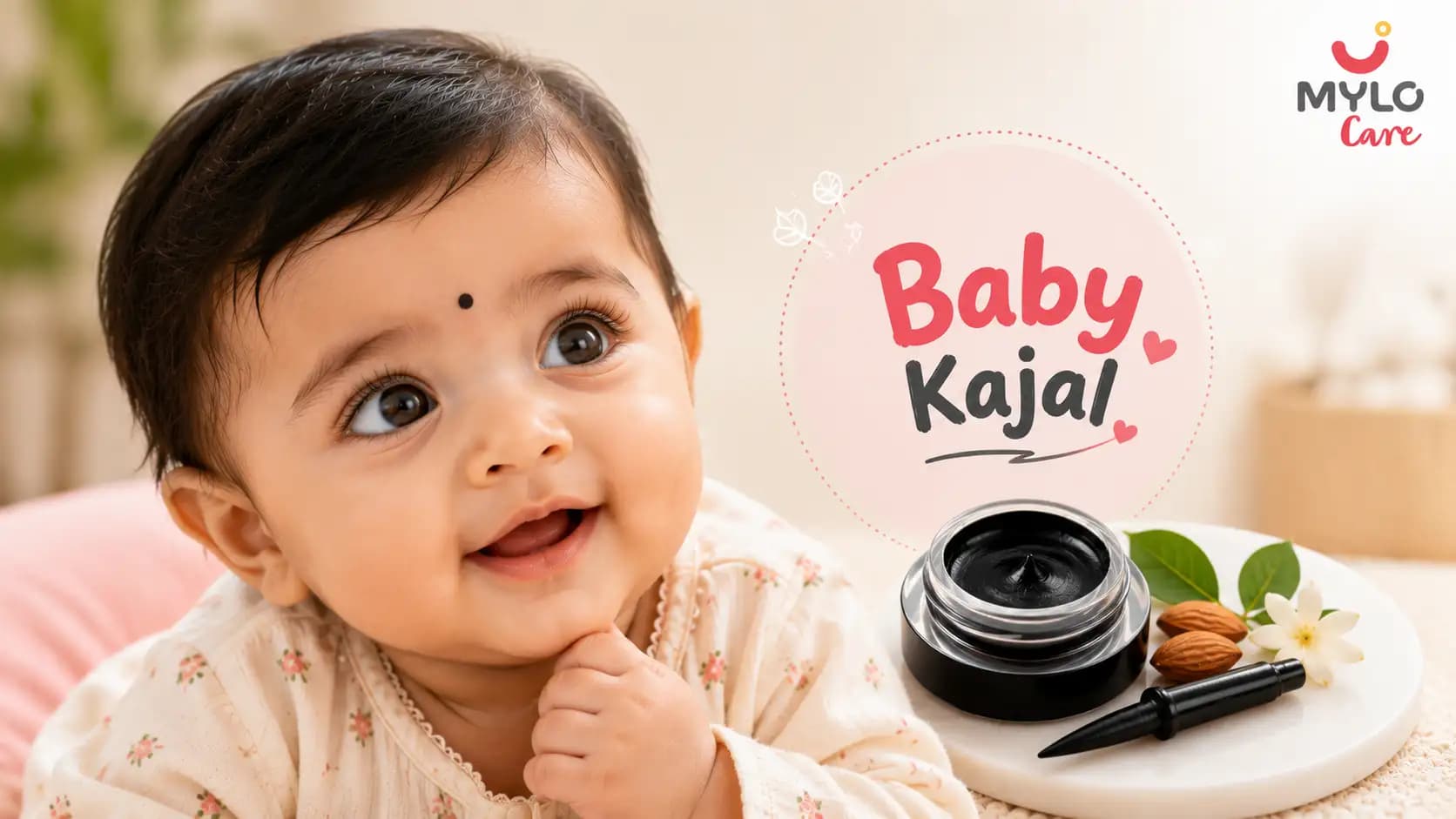
Is Kajal Safe for Babies Eyes? An Honest, Doctor-Informed Guide
 13 min
TL;DR
Applying kajal (kohl, surma) in or around a baby's eyes is not considered safe by paediatric and health authorities (AAP) (WHO). Traditional and many homemade kajals can contain lead, which is dangerous to babies even in tiny amounts and has been linked to developmental delays, anaemia and lead poisoning (US FDA) (CDC). Kajal in the eyes can also cause irritation, watering, blocked tear ducts and eye infections (AAO). The popular beliefs that kajal makes eyes bigger, sharper or wards off the "evil eye" have no scientific basis. If you want to follow tradition, apply a tiny dot behind the ear or on the sole of the foot instead of near the eyes, and speak to your paediatrician.
Quick Answer
No, kajal is not safe for a baby's eyes. Traditional and homemade kajal often contain lead, which can cause poisoning, anaemia and developmental delays in babies. Kajal near the eyes can also trigger irritation, watering, blocked tear ducts and infections. It does not enlarge or sharpen the eyes, those are myths. If you wish to follow custom, apply a small dot away from the eyes and check with your doctor.
Author: Mylo Editorial Team, Mylo Parenting Desk
Medically reviewed by: Mylo Editorial Board, aligned with AAP, WHO and IAP guidance
Last updated: 09-07-2026
Medical Disclaimer: This article is for informational purposes only and is not a substitute for professional medical advice. If your baby has had kajal applied and shows symptoms like poor feeding, constipation, irritability, persistent eye redness or discharge, contact your paediatrician promptly. When in doubt, get your child checked.
Key Takeaways
- Kajal is not recommended in or around a baby's eyes by health authorities (AAP)
- Traditional and homemade kajals can contain lead, unsafe for babies at any level (WHO)
- Lead exposure is linked to developmental delays, anaemia and poisoning (CDC)
- The US FDA warns against kohl/kajal/surma due to lead content (US FDA)
- Kajal in the eyes can cause irritation, watering, blocked tear ducts and infection (AAO)
- "Kajal makes eyes bigger, sharper, or wards off evil eye" are myths with no evidence
- A baby's tear ducts self-clean the eyes; kajal is unnecessary
- If following tradition, apply a tiny dot away from the eyes (behind the ear/on the foot) and ask your paediatrician
Why Do Families Apply Kajal to Babies?
Applying kajal to newborns is a deep-rooted custom across India and South Asia, usually done with loving intentions (IAP). Common reasons families give:
- To make the baby's eyes look bigger, darker or more beautiful
- To "sharpen" or improve the baby's eyesight
- To ward off the nazar (evil eye) with a black dot on the cheek or forehead
- Because it is a family tradition passed down through generations
- Belief that homemade kajal is "natural" and therefore safe
These beliefs are cultural, not medical. None of them are supported by scientific evidence, and the practice carries real risks that most families are simply not told about.
What Is Kajal Actually Made Of?
The safety problem lies in the ingredients, especially in traditional and homemade preparations (US FDA):
| Type of Kajal | What It May Contain | Safety Concern |
|---|---|---|
| Traditional surma/kohl | Lead sulphide (galena), soot, ash | High lead content; lead poisoning risk |
| Homemade "ghee" kajal | Lamp soot (carbon), ghee, camphor | Soot particles, contamination, no sterility |
| Local/unbranded kajal | Unregulated pigments, heavy metals | Unknown lead/metal levels; no testing |
| Branded cosmetic kajal | Regulated pigments, waxes, oils | Made for adult skin, not infant eyes |
Even "branded" or "herbal" kajal is formulated for adult use, not for placement inside a baby's delicate eye. And homemade kajal, often assumed to be the safest, has no quality control, no sterility, and can still be contaminated with lead from utensils or ingredients (WHO).
Why Is Lead in Kajal So Dangerous for Babies?
Lead is a toxic heavy metal, and babies are far more vulnerable to it than adults (CDC):
- No safe level: Health authorities state there is no known safe blood lead level in children (WHO)
- Easily absorbed: A baby's body absorbs lead much more readily than an adult's
- Affects the brain: Lead can interfere with brain and nervous system development, affecting learning and behaviour
- Enters the body easily: Kajal near the eye can pass through the tear duct, be rubbed into the mouth, or absorbed through delicate tissue
- Builds up over time: Repeated daily application means small doses accumulate
Possible signs of lead exposure in babies include poor appetite, constipation, irritability, tiredness, pale skin (anaemia) and developmental delays (CDC). Because these signs are vague, lead poisoning is often missed until it is advanced.
What Eye Problems Can Kajal Cause?
Beyond lead, placing any foreign substance in a baby's eye creates direct local risks (AAO):
| Problem | Why It Happens |
|---|---|
| Eye irritation and redness | Gritty particles rub against the delicate cornea |
| Excessive watering | The eye tries to flush out the foreign material |
| Blocked tear ducts | Kajal can clog the tiny tear drainage channels |
| Eye infections (conjunctivitis) | Non-sterile kajal introduces bacteria |
| Corneal scratches | Solid particles can abrade the eye's surface |
| Allergic reactions | Dyes and additives can trigger swelling or rash |
A newborn's eyes are self-cleaning through natural tears and do not need kajal for cleanliness or protection (AAP).
Does Kajal Improve a Baby's Eyesight or Enlarge the Eyes?
No. This is the single most common belief, and it is false (AAP):
- Eye size is determined by genetics, not by kajal
- Vision develops naturally in the first months and years; no cosmetic affects it
- The "bigger eyes" appearance is only a temporary optical effect of dark outlining, it changes nothing about the actual eye
- There is no medical mechanism by which kajal could sharpen sight
Applying kajal for "better eyesight" offers zero benefit while exposing the baby to real risk.
What Are Safer Alternatives if You Want to Follow Tradition?
Many families want to honour custom without harming the baby. Reasonable compromises include (IAP):
- Move it away from the eyes: If a family elder insists, apply a tiny dot behind the ear, on the cheek, or on the sole of the foot, never inside or on the eyelids
- Use it symbolically, not daily: A one-time ceremonial dot is lower risk than daily eye application
- Choose a known, tested product: Avoid loose, unbranded or imported surma; never use homemade lamp-soot kajal in the eyes
- Skip it entirely: The safest choice is not to apply kajal to a baby at all
- Talk to your paediatrician: They can help you explain the risks to family members with medical backing
- For the "evil eye": A cloth kala teeka or a black thread achieves the same cultural purpose with no chemical risk
When Should You See a Doctor?
Contact your paediatrician promptly if your baby has had kajal applied and shows (CDC) (AAO):
- Persistent eye redness, swelling or discharge
- Constant watering or the baby rubbing the eyes
- A white or cloudy spot on the eye surface
- Poor feeding, vomiting or constipation
- Unusual irritability, drowsiness or developmental concerns
- Pale skin or low energy (possible anaemia)
- Any suspicion of lead exposure, ask your doctor about a blood lead test
Myths vs Facts About Kajal for Babies
| Myth | Fact | Source |
|---|---|---|
| "Kajal makes a baby's eyes bigger" | False. Eye size is genetic; kajal only creates a temporary outline effect | AAP |
| "Kajal improves or sharpens eyesight" | False. No cosmetic affects vision development | AAO |
| "Homemade kajal is completely safe" | False. It can still contain lead and is non-sterile | WHO |
| "A little lead cannot harm a baby" | False. There is no known safe level of lead for children | CDC |
| "Kajal protects the eyes from dust and infection" | False. It can cause infection, not prevent it | AAO |
| "Branded kajal is made for babies' eyes" | False. Cosmetic kajal is formulated for adult use | US FDA |
| "Kajal wards off the evil eye" | Cultural belief, not medical; a cloth teeka does the same safely | IAP |
Indian Context: What Indian Parents Should Know
- A near-universal custom: Applying kajal to newborns is widespread across India; grandparents often apply it with love, unaware of the lead risk (IAP)
- Regulation: In India, cosmetics are regulated by the CDSCO, and there are legal limits on lead in cosmetics, but loose, unbranded and homemade surma escapes any testing (CDSCO)
- Homemade is not safer: The common belief that ghee-and-soot "ghar ka kajal" is pure is a misconception; contamination and lead are still possible (WHO)
- Handling elders gently: Explain the risk with your paediatrician's support rather than confrontation; suggest the behind-the-ear dot as a compromise
- Anaemia overlap: Anaemia is already common in Indian infants; added lead exposure worsens the risk, so avoid anything that adds to it (CDC)
- When worried: If kajal has been used regularly, ask your doctor whether a blood lead test is advisable
- Emergency number: For any serious symptom, dial 108 for ambulance services in most states
FAQs: Kajal for Babies' Eyes
Is it safe to apply kajal to a newborn's eyes?
No. Health and paediatric authorities advise against it because traditional and homemade kajal can contain lead, and any substance in the eye can cause irritation, blocked tear ducts and infection (AAP) (AAO). A newborn's eyes clean themselves naturally and need nothing added.
Kya bacchon ki aankhon mein kajal lagana safe hai? (Hinglish)
Nahi, safe nahi hai. Traditional aur ghar ka kajal dono mein lead ho sakta hai, jo baby ke liye bahut nuksaandeh hai, isse lead poisoning, anaemia aur development mein delay ho sakta hai. Kajal aankh mein irritation, paani aana, tear duct block aur infection bhi kar sakta hai. Kajal se aankhein na badi hoti hain na tez, ye sirf myth hai. Agar parampara nibhani hai to kaan ke peeche chhota sa dot laga dein aur doctor se poochein.
Does homemade ghee kajal avoid the lead problem?
Not reliably. Homemade kajal made from lamp soot is non-sterile and can still be contaminated with lead from ingredients or utensils, so it is not a safe substitute for the eyes (WHO). The soot particles themselves can also irritate the eye.
Can kajal really make my baby's eyes bigger or sharper?
No. Eye size is determined by genetics and vision develops on its own; kajal only creates a temporary dark outline that looks like bigger eyes but changes nothing physically (AAP). It offers no benefit to eyesight.
Bacche ki aankh mein kajal se koi infection ho sakta hai? (Hinglish)
Haan. Kajal sterile nahi hota, isliye usmein maujood bacteria se conjunctivitis (aankh ka infection), redness, paani aana aur tear duct block ho sakta hai. Solid particles aankh ki surface ko scratch bhi kar sakte hain. Agar baby ki aankh laal ho, sujan ho ya discharge aaye to turant doctor ko dikhayein.
How does lead from kajal actually enter a baby's body?
Lead near the eye can drain through the tear duct into the nose and throat, be rubbed by tiny hands into the mouth, or be absorbed through delicate tissue (CDC). Daily application means repeated small doses that build up over time.
What are the signs of lead poisoning in babies?
Signs can be vague: poor appetite, constipation, irritability, tiredness, pale skin (anaemia) and developmental delays (CDC). Because they overlap with common infant issues, lead poisoning is easy to miss, which is why prevention matters most.
My family insists on applying kajal. What can I do?
Suggest a compromise: a tiny dot behind the ear, on the cheek or on the sole of the foot instead of the eyes, or a cloth kala teeka for the evil-eye purpose (IAP). Involving your paediatrician to explain the risk to elders often helps.
Is there any medically approved kajal for babies?
No cosmetic kajal is medically endorsed for placement in a baby's eyes (US FDA). "Baby-safe" or "herbal" labels are marketing terms, not medical clearances. The safest approach is to avoid eye application entirely.
References
- American Academy of Pediatrics (AAP) / HealthyChildren.org. https://www.healthychildren.org/
- World Health Organization (WHO). "Lead Poisoning and Health." https://www.who.int/news-room/fact-sheets/detail/lead-poisoning-and-health
- Centers for Disease Control and Prevention (CDC). "Childhood Lead Poisoning Prevention." https://www.cdc.gov/lead-prevention/
- US Food and Drug Administration (FDA). "Kohl, Kajal, Al-Kahal, Surma, Tiro, Tozali, or Kwalli: Dangers of Lead Poisoning." https://www.fda.gov/cosmetics/cosmetic-products/kohl-kajal-al-kahal-surma-tiro-tozali-or-kwalli-dangers-lead-poisoning
- American Academy of Ophthalmology (AAO). https://www.aao.org/
- Central Drugs Standard Control Organisation (CDSCO), India. https://cdsco.gov.in/
- Indian Academy of Pediatrics (IAP). https://iapindia.org/
Article Posted Under
Related Articles

Medical Disclaimer
This content is for informational purposes only and should not replace professional medical advice. Consult with a physician or other health care professional if you have any concerns or questions about your health. If you rely on the information provided here, you do so solely at your own risk.


AWARDS AND RECOGNITION

Mylo wins Forbes D2C Disruptor award

Mylo wins The Economic Times Promising Brands 2022
AS SEEN IN












- Mylo Care: Effective and science-backed personal care and wellness solutions for a joyful you.
- Mylo Baby: Science-backed, gentle and effective personal care & hygiene range for your little one.
- Mylo Community: Trusted and empathetic community of 10mn+ parents and experts.


Product Categories
Baby Carrier | Baby Soap | Baby Wipes | Stretch Marks Cream | Baby Cream | Baby Shampoo | Baby Massage Oil | Baby Hair Oil | Stretch Marks Oil | Baby Body Wash | Baby Powder | Baby Lotion | Diaper Rash Cream | Newborn Diapers | Teether | Baby Kajal | Baby Diapers Pants | Cloth Diapers | Laundry Detergent | Lactation Granules |