


Orders
.png&w=48&q=75 "login")
Profile


Wallet

Is Jeera (Cumin) Safe During Pregnancy? Benefits, Dosage & Risks


BDS (Gold Medalist), Certified Lactation Consultant – BPNI Delhi, Maternal & Infant Nutrition Expert · 15 years experience
 12 min
TL;DR
Jeera is generally safe in pregnancy in normal food amounts or as mild jeera water (Healthline). It may ease bloating, gas and nausea, and it adds a little iron and some antioxidants. Avoid large medicinal doses, strong decoctions and supplements, because they aren't well studied in pregnancy (WebMD). Jeera isn't a protein source, so it doesn't replace the extra nutrients you need.
Quick Answer
Yes. About 1 teaspoon in food or 1 glass of mild jeera water a day is safe and can help digestion. Skip medicinal doses and supplements, and meet your protein and nutrient needs through a balanced diet. Check with your doctor if you have a medical condition.
Author: Mylo Editorial Team, Mylo Parenting Desk Medically reviewed by: Mylo Editorial Board, aligned with ICMR and FOGSI guidance Last updated: 8 July 2026
Medical Disclaimer: This article is for information only and doesn't replace medical advice. Use jeera in normal cooking amounts and avoid medicinal doses. Talk to your doctor before taking any herb or supplement, especially if you have a medical condition or a high-risk pregnancy. Don't stop or replace prescribed supplements like iron or folic acid on your own.
Key Takeaways
Jeera (cumin) is generally safe in pregnancy in normal food amounts and as mild jeera water in moderation (Healthline)
It may help ease common pregnancy discomforts like gas, bloating and nausea
Avoid large medicinal doses, strong decoctions and cumin supplements, which are not well studied in pregnancy (WebMD)
A teaspoon of cumin in food, or one glass of mild jeera water a day, is enough for most people
Excess jeera may cause heartburn or, rarely in very large amounts, stimulate uterine activity, so moderation matters
Jeera is a flavour and digestion aid, NOT a source of protein
Pregnancy raises your need for protein, iron, folic acid, vitamin C, vitamin B12 and more, which come from a balanced diet and prescribed supplements (ICMR)
Always check with your doctor before using jeera in large or medicinal amounts
Is Jeera (Cumin) Safe During Pregnancy?
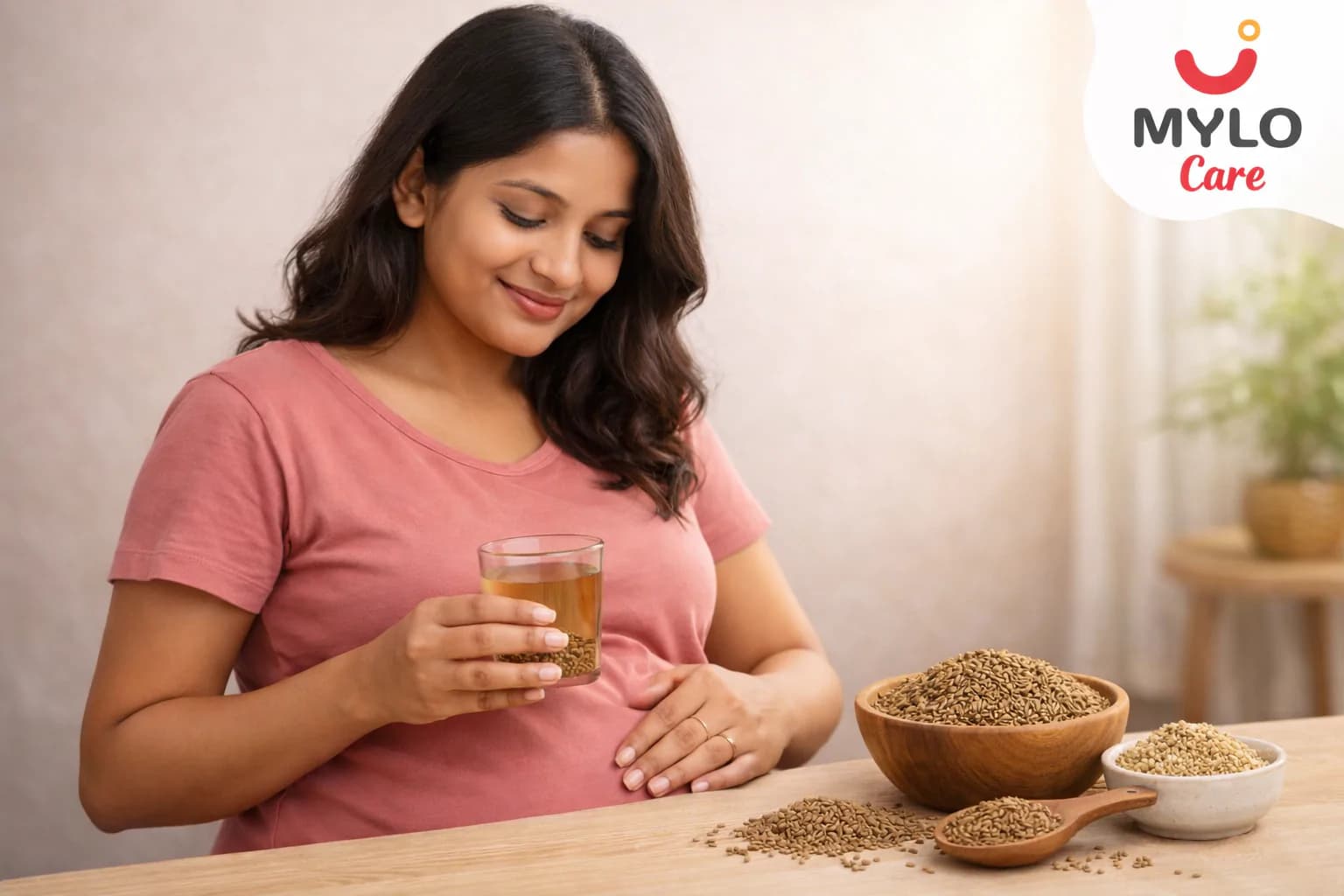
Jeera, or cumin, is one of the most common spices in Indian kitchens, used in dals, sabzis, tadka and jeera water. The good news is that in the small amounts used in everyday cooking, cumin is generally regarded as safe during pregnancy (Healthline).
The caution is about quantity and form. Normal culinary amounts and a mild glass of jeera water are fine for most people. What is not well studied, and therefore best avoided, is cumin in large "medicinal" quantities: strong concentrated decoctions, cumin oil, or cumin supplements and tablets. The safety of these higher doses in pregnancy has not been properly established (WebMD). When in doubt, treat jeera as a food, not a medicine.
What Are the Benefits of Jeera in Pregnancy?
Used as a normal part of your food, jeera can be a pleasant and helpful addition. Commonly reported benefits include:
Benefit | How Jeera May Help |
|---|---|
Eases digestion | May relieve bloating, gas and indigestion, which are common in pregnancy (Healthline) |
Settles nausea | A mild glass of jeera water is a traditional remedy for queasiness |
Adds antioxidants | Cumin contains plant antioxidants that support overall health (Healthline) |
Small iron contribution | Cumin seeds contain some iron, adding a little to your daily intake (ICMR) |
Flavour without extra salt or sugar | Helps make simple, home-cooked food tasty during pregnancy |
Remember, these are gentle, everyday benefits from using jeera as a spice. Jeera is not a treatment for any medical condition in pregnancy.
How Much Jeera Is Safe During Pregnancy?
Moderation is the key. As a general guide:
Form | Sensible Amount |
|---|---|
Cumin in cooking | Normal recipe amounts (about a teaspoon in a dish) are fine |
Mild jeera water | Around one glass a day, made from roughly a teaspoon of cumin steeped or boiled in water, then strained |
Concentrated decoctions, cumin oil, supplements | Best avoided in pregnancy unless your doctor advises otherwise |
If you have a medical condition, a high-risk pregnancy, or you are unsure, check the amount with your doctor first.
What Are the Risks of Too Much Jeera?
Jeera is safe as a food, but very large amounts are not better. Possible issues with excess include:
Heartburn or acidity, especially if you are prone to reflux or GERD
A feeling of increased body heat in some women
In very large, medicinal quantities, a theoretical risk of stimulating uterine activity, which is why concentrated doses are avoided (WebMD)
None of these are a concern with the small amounts used in normal cooking. They are reasons to avoid heavy, medicinal use, not reasons to cut jeera out of your food.
Jeera Is Tasty, But It Is Not Protein: Meeting Your Pregnancy Nutrition Needs
Here is an important point that is easy to miss. Jeera makes food tasty and can help digestion, but it is a spice, not a source of protein or of the key nutrients your body needs more of in pregnancy. During pregnancy and breastfeeding, your need for protein, iron, folic acid, vitamin C, vitamin B12 and other nutrients rises to support your baby's growth and your own health (ICMR).
Many Indian mothers fall short of the extra protein pregnancy demands, especially on busy days or when appetite is low. Alongside dals, dairy, eggs, nuts and other protein foods, a convenient high-protein snack can help bridge part of that daily protein gap in an easy, snackable form.
Mylo High-Protein Snack for Moms
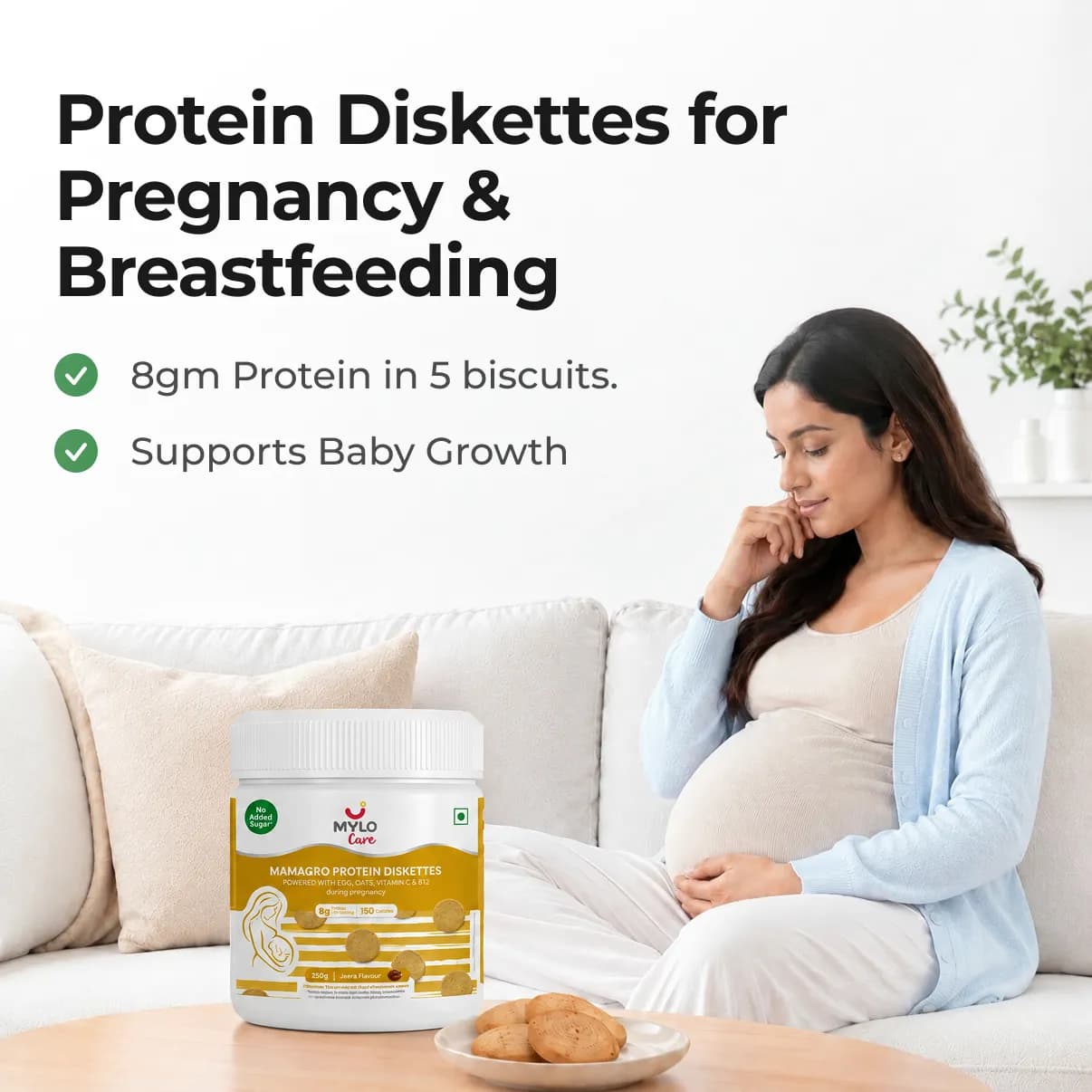
Mylo's high-protein snack is designed for pregnancy and breastfeeding, to help moms add daily protein and key nutrients in an easy, light and snackable format:
Feature | What It Offers |
|---|---|
High protein, snackable format | 5 diskettes provide 8g protein, helping bridge part of the daily protein gap during pregnancy and lactation |
Fortified with key nutrients | Iron, Folic Acid, Vitamin C, Vitamin B12 and Phosphorus to support pregnancy and postpartum nutrition |
Cleaner everyday choice | No added sugar, no preservatives and no refined maida |
Easy to eat | Light and snackable, a simple way to add nutrition on busy days |
Key ingredients and nutrients:
Ingredient / Nutrient | Why It Matters |
|---|---|
Casein (milk protein) | The core hero ingredient, supporting mom's strength, daily nutrition and pregnancy/lactation protein needs |
Iron | Important for blood health and supports the increased iron needs of pregnancy and postpartum |
Folic Acid | A key pregnancy nutrient that supports the baby's growth and development |
Vitamin C | Supports immunity and helps the body absorb iron |
Vitamin B12 | Supports energy metabolism and overall maternal nutrition |
Phosphorus | Supports bone health and growth nutrition |
A high-protein snack like this is meant to complement a balanced diet, not replace it, and it does not replace any iron, folic acid or other supplement your doctor has prescribed. As always, check with your doctor about your overall pregnancy nutrition plan.
Indian Context: What Indian Mothers Should Know
Jeera is a kitchen staple: You do not need to avoid cumin in your normal cooking; it is safe and can help with digestion
Jeera water in moderation: One mild glass a day is a comforting, traditional option; avoid strong, concentrated versions
Skip the "medicinal" doses: Be cautious with cumin capsules, oils or heavy decoctions, which lack pregnancy evidence
Mind the protein gap: Indian pregnancy diets, especially vegetarian ones, can fall short on protein; plan protein at every meal (ICMR)
Keep taking prescribed supplements: Food and snacks support your nutrition, but do not replace your doctor-prescribed iron and folic acid (FOGSI)
When unsure, ask: Check any herb, home remedy or new supplement with your gynaecologist
Myths vs Facts About Jeera in Pregnancy
Myth | Fact | Source |
|---|---|---|
"Jeera must be avoided completely in pregnancy" | In normal food amounts it is generally safe and can aid digestion | |
"More jeera water means more benefit" | Excess can cause heartburn; moderation (about one glass a day) is best | |
"Jeera water gives me enough nutrition for pregnancy" | Jeera is a spice, not protein or a nutrient source; you still need a balanced diet and supplements | |
"Cumin supplements are just like eating jeera" | Concentrated supplements and decoctions are not well studied in pregnancy and are best avoided | |
"A tasty diet covers my protein needs automatically" | Many mothers fall short on protein; plan protein foods and snacks deliberately |
FAQs: Jeera (Cumin) in Pregnancy
Is jeera water safe during pregnancy?
Yes, in moderation. A mild glass of jeera water a day, made from about a teaspoon of cumin, is generally fine and may help with digestion and nausea. Avoid strong, concentrated versions and large amounts (Healthline).
Pregnancy mein jeera khana safe hai? (Hinglish)
Haan, normal cooking amounts mein jeera (cumin) pregnancy mein aam taur par safe hai aur digestion mein madad kar sakta hai (Healthline). Ek glass halka jeera water din mein theek hai. Lekin bahut zyada ya "medicinal" doses, strong decoction, jeera oil ya supplements se bachein, kyunki inka pregnancy mein evidence nahi hai (WebMD). Yaad rakhein, jeera protein nahi deta, isliye apni protein aur nutrient needs balanced diet aur doctor ki batayi supplements se poori karein.
Can jeera cause miscarriage or early labour?
In normal food amounts, no. The concern is only with very large, concentrated medicinal doses, which theoretically could stimulate uterine activity and are therefore avoided. Culinary amounts of cumin are considered safe (WebMD).
Does jeera give protein for pregnancy?
No. Jeera is a spice that adds flavour and may aid digestion, but it is not a protein source. Your higher pregnancy protein needs come from foods like dal, dairy, eggs, nuts and, if helpful, a high-protein snack, along with any supplements your doctor prescribes (ICMR).
Pregnancy mein protein ki kami kaise poori karein? (Hinglish)
Pregnancy aur breastfeeding mein protein ki zaroorat badh jaati hai (ICMR). Har meal mein protein shaamil karein: dal, doodh-dahi-paneer, ande, nuts aur seeds. Busy dinon mein ya jab bhookh kam ho, ek high-protein snack (jaise Mylo ka high-protein snack, jismein 5 diskettes se 8g protein milta hai aur jo Iron, Folic Acid, Vitamin C, B12 aur Phosphorus se fortified hai) daily protein gap ko poora karne mein madad kar sakta hai. Ye balanced diet ka replacement nahi hai, aur doctor ki di gayi supplements ki jagah nahi leta.
How much jeera water can I drink in a day?
About one glass of mild jeera water a day is enough for most people. It is a strong-flavoured spice, so there is no benefit to drinking large amounts, and excess may cause acidity (WebMD).
Should I ask my doctor before using jeera?
For normal cooking amounts, this is not usually necessary. But do check with your doctor if you want to use jeera in large or medicinal amounts, if you have a medical condition or high-risk pregnancy, or before starting any new supplement (FOGSI).
References
Healthline. "Cumin: Benefits and Side Effects." https://www.healthline.com/health/cumin-benefits
WebMD. "Cumin, Uses, Side Effects and Safety." https://www.webmd.com/vitamins/ai/ingredientmono-604/cumin
ICMR / NIN. "Dietary Guidelines for Indians." https://www.nin.res.in/dietaryguidelines/pdfjs/locale/DGI07052024P.pdf
FOGSI (Federation of Obstetric and Gynaecological Societies of India). https://www.fogsi.org/



Article Posted Under
Related Articles



Related Topics
.webp&w=32&q=75)
Medical Disclaimer
This content is for informational purposes only and should not replace professional medical advice. Consult with a physician or other health care professional if you have any concerns or questions about your health. If you rely on the information provided here, you do so solely at your own risk.


AWARDS AND RECOGNITION

Mylo wins Forbes D2C Disruptor award

Mylo wins The Economic Times Promising Brands 2022
AS SEEN IN













- Mylo Care: Effective and science-backed personal care and wellness solutions for a joyful you.
- Mylo Baby: Science-backed, gentle and effective personal care & hygiene range for your little one.
- Mylo Community: Trusted and empathetic community of 10mn+ parents and experts.


Product Categories
Baby Carrier | Baby Soap | Baby Wipes | Stretch Marks Cream | Baby Cream | Baby Shampoo | Baby Massage Oil | Baby Hair Oil | Stretch Marks Oil | Baby Body Wash | Baby Powder | Baby Lotion | Diaper Rash Cream | Newborn Diapers | Teether | Baby Kajal | Baby Diapers Pants | Cloth Diapers | Laundry Detergent | Lactation Granules |