


Orders
.png&w=48&q=75 "login")
Profile


Wallet

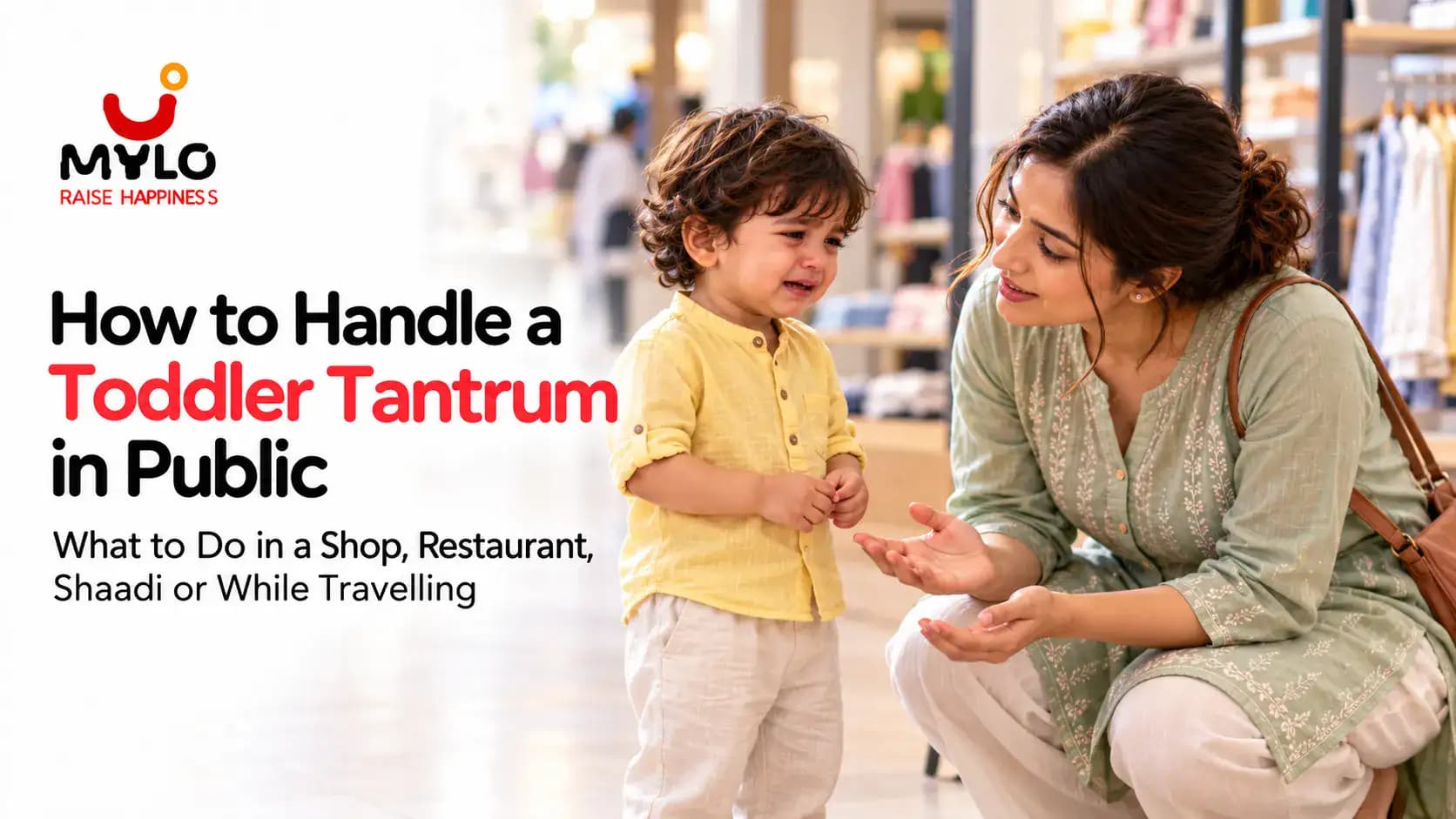
How to Handle a Toddler Tantrum in Public: What to Do in a Shop, Restaurant, Shaadi or While Travelling, and How to Prevent It (2026)
 17 min
Quick Answer
To handle a toddler tantrum in public, stay calm, keep your child safe, and move to a quieter spot if you can. Name the feeling, hold your limit without giving in, and wait for the storm to pass. Ignore staring strangers. Most public tantrums are over in a few minutes.
What to Do During a Public Tantrum at a Glance
Step | What to Do | What You Can Say |
|---|---|---|
1. Breathe | Take a slow breath and lower your voice | (To yourself) "This is normal. It will pass." |
2. Keep safe | Move your toddler away from roads, stairs, crowds or shelves | "I'm going to keep you safe." |
3. Move | Go to a quieter corner, outside, or to the car if possible | "Let's go somewhere quiet." |
4. Name the feeling | Get down to their level and say what they feel | "You're angry because we can't buy the chocolate." |
5. Hold the limit | Calmly keep the "no", without long explanations | "I know you want it. We're not buying it today." |
6. Wait | Stay close and quiet until the crying slows down | "I'm here when you're ready." |
7. Reconnect | Offer a hug, water, and praise for calming down | "You calmed down. Let's finish shopping together." |
Key Facts Every Parent Should Know
Public tantrums are normal: Almost every toddler has one, usually between 18 months and 3 years
Most are short: Most tantrums last only a few minutes, even if it feels much longer in a busy shop
Giving in makes more tantrums: If a tantrum gets your toddler the chocolate, they learn tantrums work
Your calm is the most powerful tool: Toddlers calm down faster when the adult stays calm
Never hit: The American Academy of Pediatrics (AAP) advises against spanking, because it increases aggression
Most tantrums can be prevented: Planning outings around naps and meals stops many public tantrums before they start
Why Do Toddlers Have Tantrums in Public?
Short answer: Public places are full of tantrum triggers: noise, crowds, tempting things to touch and buy, waiting, and broken routines. Toddlers also get tired and hungry faster when they're out.
Public Trigger | Example |
|---|---|
Tempting things | Chocolates and toys at the shop counter |
Being told "no" | Not allowed to touch the glass bangles or run in the mall |
Too much noise and crowd | Shaadi music, a busy market, a crowded train station |
Waiting | Restaurant queues, doctor's clinic, billing counters |
Tiredness and hunger | Long outings that cut into nap time or meal time |
Leaving something fun | Leaving the park, the play area or a cousin's house |
New place, new people | Relatives' homes, functions, travel |
For more on why toddlers have tantrums, read toddler tantrums: meaning and why they happen.
How to Handle a Tantrum in Public: 8 Calm Steps
Short answer: Stay calm, keep your toddler safe, move somewhere quieter, name the feeling, hold your limit, and wait. Don't give in, don't shout, and don't worry about the people watching.
Stay calm first. Take a slow breath. Your calm voice and body help your toddler calm down faster.
Make it safe. Move your toddler away from traffic, stairs, shelves or crowds. If they're hitting or throwing things, gently hold their hands or pick them up.
Move to a quieter spot. Step outside, find a corner, or sit in the car. Less noise and fewer eyes help both of you.
Get down to their level. Kneel or sit so you're face to face, and speak softly.
Name the feeling. "You're upset because we have to leave the park." Toddlers calm down faster when they feel understood.
Hold your limit. Calmly repeat the "no" in a few words. Don't argue, bargain or explain at length during the tantrum.
Wait it out. Stay close and quiet. Some toddlers want a hug; others need a little space. Both are fine.
Reconnect after. When the storm passes, offer a hug and some water, and praise them for calming down: "You calmed your body. Well done."
What should I say during a public tantrum?
Instead of Saying | Try Saying |
|---|---|
"Stop crying right now!" | "You're really upset. I'm here." |
"Log dekh rahe hain! (People are watching!)" | "Let's go somewhere quiet." |
"Okay, take the chocolate, just stop!" | "I know you want it. Not today." |
"I'm leaving you here!" | "I'll stay with you until you feel better." |
"Bad boy" or "bad girl" | "That was a big feeling. You're okay now." |
How to Handle Tantrums in Different Places
Short answer: The same calm steps work everywhere, but a little planning for each place prevents many tantrums.
Place | Common Trigger | What Helps |
|---|---|---|
Shop or supermarket | Sweets and toys at the counter | Agree beforehand what you'll buy; give your toddler a job, like holding the list or picking the tomatoes |
Mall | Noise, crowds, toy shops, play areas | Keep trips short; tell them before you leave the play area: "5 more minutes" |
Restaurant | Waiting, sitting still, hunger | Go early, order quickly, carry a small snack, crayons or a book; step outside if needed |
Shaadi or family function | Loud music, late nights, too many people | Find a quiet room; keep naps and meals on time; leave early if your toddler is exhausted |
Temple, gurudwara, church or mosque | Being asked to stay quiet and still | Keep visits short; step outside for a walk when your toddler gets restless |
Train, bus or flight | Long waits, small spaces, broken sleep | Carry snacks, water, a favourite toy and new small activities; walk in the aisle if allowed |
Car | Car seat, long rides | Stop safely if needed; never take your toddler out of the car seat while the car is moving |
Relatives' house | New rules, new people, getting overexcited | Stick to your usual routine as much as possible; take quiet breaks |
Leaving the park | Stopping something fun | Give warnings: "2 more slides, then home" |
Doctor's clinic | Waiting, fear of injections | Bring a book or toy; stay close and calm; praise after |
How to Deal With People Staring or Commenting
Short answer: Focus on your child, not the crowd. Most people watching are parents who've been there too. A short, calm reply to unhelpful comments is enough.
Situation | What You Can Do or Say |
|---|---|
Strangers staring | Turn your back to the crowd and focus on your toddler |
A stranger offers unhelpful advice | "Thank you, we're okay." |
A relative says "Bachche ko kuch sikhaya nahi?" | "Toddlers have big feelings at this age. We're handling it calmly." |
Someone offers your toddler a sweet to stop crying | "Thank you, but we're not giving sweets right now." |
Someone kindly offers help | Accept it if it helps, like holding your bags |
You feel embarrassed | Remind yourself: a calm parent with a crying toddler is a parent doing a good job |
What Not to Do During a Public Tantrum
Don't | Why |
|---|---|
Give in to stop the noise | Your toddler learns that public tantrums get results |
Hand over the phone every time | Screens become the reward for tantrums |
Hit or slap | Increases aggression and doesn't teach self-control (AAP) |
Shout or threaten to leave them behind | Makes your toddler more scared and upset |
Shame them ("Sab hans rahe hain") | Hurts their confidence and doesn't calm them |
Argue or explain at length | A toddler mid-tantrum can't listen yet |
Bring it up again and again later | Once it's over, let it go and move on |
How to Prevent Tantrums Before You Go Out
Short answer: Most public tantrums can be prevented with good timing, clear expectations, snacks, and something to keep little hands busy.
Before You Go | Why It Helps |
|---|---|
Plan outings after a nap and a meal | Tired, hungry toddlers have more tantrums |
Tell your toddler the plan | "We're going to buy milk and bread, then come home" |
Set the rule before you enter | "We're not buying toys today. You can hold the bread." |
Carry snacks and water | Hunger is one of the biggest triggers |
Pack a small busy bag | A board book, crayons, a small toy or stickers |
Give your toddler a job | Holding the list, choosing the apples, pressing the lift button |
Offer small choices | "Do you want to hold the bag or push the trolley?" |
Keep trips short | Toddlers can only handle so much |
Give warnings before leaving | "5 more minutes, then we go home" |
Praise good behaviour | "You waited so nicely in the queue!" |
Is My Toddler's Public Tantrum Normal, or Should I Worry?
Short answer: Public tantrums are a normal part of toddlerhood. Talk to your doctor if tantrums often last more than 25 minutes, happen many times a day, involve your child hurting themselves or others, or come with speech delays or other concerns.
Usually Normal | Talk to Your Doctor If |
|---|---|
Happens when tired, hungry or told "no" | Happens many times a day for no clear reason |
Lasts a few minutes | Often lasts more than 25 minutes |
Calms down with comfort or time | Can't calm down even with help |
Becomes less frequent as speech improves | Still frequent and intense after 4 to 5 years |
Upset by a busy, noisy place | Very upset by noise, lights or crowds every time, along with other concerns |
What Should I Do After a Public Tantrum?
Short answer: Reconnect, move on, and talk about it briefly later when everyone is calm. Look for the trigger so you can plan better next time.
Reconnect: Hug your toddler and tell them you love them
Move on: Don't keep repeating what went wrong
Talk later, simply: At home, you can say: "You felt angry in the shop. Next time you can say, 'I'm angry.'"
Spot the trigger: Was your toddler tired, hungry or bored? Plan around it next time
Look after yourself: Public tantrums are stressful. Take a few deep breaths and be kind to yourself
What Should Indian Parents Keep in Mind?
Short answer: Public tantrums happen in every family. Stay calm, ignore the audience, agree on rules as a family, and don't use sweets or phones to stop tantrums.
Common Practice | Better Approach |
|---|---|
Buying the toy or chocolate to stop the crying | Set the rule before entering the shop and hold it calmly |
Giving the phone in restaurants and functions | Carry a small busy bag with books and crayons |
A slap in front of everyone "so they learn" | The AAP advises against spanking; stay calm instead |
"Log kya kahenge?" (What will people say?) | Your toddler matters more than strangers' opinions |
Grandparents or relatives giving in | Agree on the same simple rules before outings |
Keeping a toddler up late at a shaadi | Take a quiet room break, or leave early |
Taking toddlers to long shopping trips | Keep outings short and plan around naps |
Myths vs Facts About Public Tantrums
Myth | Fact |
|---|---|
"Public tantrums mean I'm a bad parent" | Public tantrums happen to almost every family |
"My toddler does it on purpose to embarrass me" | Toddlers don't yet have the self-control to stop big feelings |
"Giving in is the fastest way to stop a public tantrum" | Giving in teaches that tantrums work, so they happen more often |
"A slap will stop it quickly" | Hitting increases aggression and doesn't teach self-control (AAP) |
"Everyone watching is judging me" | Most onlookers are parents who've been in your shoes |
"Ignoring the tantrum means ignoring my child" | You can stay close and calm while not giving in to the demand |
Frequently Asked Questions About Tantrums in Public
How do you handle a toddler tantrum in public?
Stay calm, keep your toddler safe, move to a quieter spot, name the feeling, hold your limit without giving in, and wait for the tantrum to pass. Reconnect with a hug afterwards.
What should I do if my toddler throws a tantrum in a store?
Stay calm, move away from the shelves or counter, name the feeling ("You really want that toy"), and calmly keep your "no". Next time, agree on what you'll buy before you enter, and give your toddler a job.
How do I handle a toddler tantrum in a restaurant?
Step outside or to a quiet corner until your toddler calms down. To prevent it, go early, order quickly, and carry snacks and a small activity.
Bacha bahar zid kare to kya kare? (Hinglish)
Shaant rahiye, bachche ko surakshit jagah par le jaiye aur uski feeling ko naam dijiye, jaise "Tumhe gussa aa raha hai kyunki chocolate nahi mili." Zid ke aage mat jhukiye, maar-peet mat kariye aur logon ki parwah mat kariye. Kuch minute mein tantrum khatam ho jata hai.
Should I leave the shop if my toddler has a tantrum?
If you can, stepping outside or to the car for a few minutes often helps. If you can't leave, move to a quieter corner and stay calm.
Should I give my toddler what they want to stop a public tantrum?
No. Giving in teaches your toddler that tantrums work, so they'll happen more often. Stay calm and hold your limit.
How do I deal with people staring when my child has a tantrum?
Focus on your child, not the crowd. Turn your back to onlookers if it helps. A short "Thank you, we're okay" is enough for unhelpful comments.
Jab bacha function ya shaadi mein ro-ro kar zid kare to kya kare? (Hinglish)
Bachche ko kisi shaant kamre ya bahar le jaiye. Paani ya snack dijiye, aur use thoda aaram karne dijiye. Shaadi aur function mein shor aur der raat bachche ko thaka dete hain, isliye nap aur khane ka time na chhodein, aur zaroorat ho toh jaldi nikal jaiye.
How can I prevent tantrums when we go out?
Plan outings after naps and meals, tell your toddler the plan, set rules before you go in, carry snacks and a small busy bag, give them a job, and keep trips short.
When should I worry about my toddler's tantrums?
If tantrums often last more than 25 minutes, happen many times a day, involve hurting themselves or others, or come with speech delays or other concerns, talk to your pediatrician.
Related Reads on Mylo
References
American Academy of Pediatrics (AAP). "Temper Tantrums." HealthyChildren.org. https://www.healthychildren.org/English/family-life/family-dynamics/communication-discipline/Pages/Temper-Tantrums.aspx
American Academy of Pediatrics (AAP). "Where We Stand: Spanking." HealthyChildren.org. https://www.healthychildren.org/English/family-life/family-dynamics/communication-discipline/Pages/Where-We-Stand-Spanking.aspx
Sege RD, Siegel BS, AAP Council on Child Abuse and Neglect. "Effective Discipline to Raise Healthy Children." Pediatrics, 2018.
NHS (UK). "Temper Tantrums." https://www.nhs.uk/conditions/baby/babys-development/behaviour/temper-tantrums/
Belden AC, Thomson NR, Luby JL. "Temper Tantrums in Healthy Versus Depressed and Disruptive Preschoolers." Journal of Pediatrics, 2008.
Ministry of Health and Family Welfare, Government of India. "Tele-MANAS" (14416). https://telemanas.mohfw.gov.in/
Medical Disclaimer
This article is for information only and does not replace professional medical advice. Every toddler is different. If you're worried about your toddler's tantrums or behaviour, please consult your pediatrician.

Article Posted Under
Related Articles
How to Handle a Toddler Tantrum in Public: What to Do in a Shop, Restaurant, Shaadi or While Travelling, and How to Prevent It (2026)
 17 min
 Toddler Attention Span by Age: How Long Should a 2-Year-Old Focus, and How Can I Increase It? A Guide for Indian Parents (2026)
 18 min
 How Toddlers Learn to Count: When Will My Child Count to 10 and Understand Numbers? An Age-by-Age Guide for Indian Parents (2026)
 18 min
 What Are the Developmental Red Flags From 1 to 3 Years? An Age-by-Age Checklist for Parents (2026)
17 min
Related Topics
.webp&w=32&q=75)
Medical Disclaimer
This content is for informational purposes only and should not replace professional medical advice. Consult with a physician or other health care professional if you have any concerns or questions about your health. If you rely on the information provided here, you do so solely at your own risk.


AWARDS AND RECOGNITION

Mylo wins Forbes D2C Disruptor award

Mylo wins The Economic Times Promising Brands 2022
AS SEEN IN













- Mylo Care: Effective and science-backed personal care and wellness solutions for a joyful you.
- Mylo Baby: Science-backed, gentle and effective personal care & hygiene range for your little one.
- Mylo Community: Trusted and empathetic community of 10mn+ parents and experts.


Product Categories
Baby Carrier | Baby Soap | Baby Wipes | Stretch Marks Cream | Baby Cream | Baby Shampoo | Baby Massage Oil | Baby Hair Oil | Stretch Marks Oil | Baby Body Wash | Baby Powder | Baby Lotion | Diaper Rash Cream | Newborn Diapers | Teether | Baby Kajal | Baby Diapers Pants | Cloth Diapers | Laundry Detergent | Lactation Granules |