


Orders
.png&w=48&q=75 "login")
Profile


Wallet

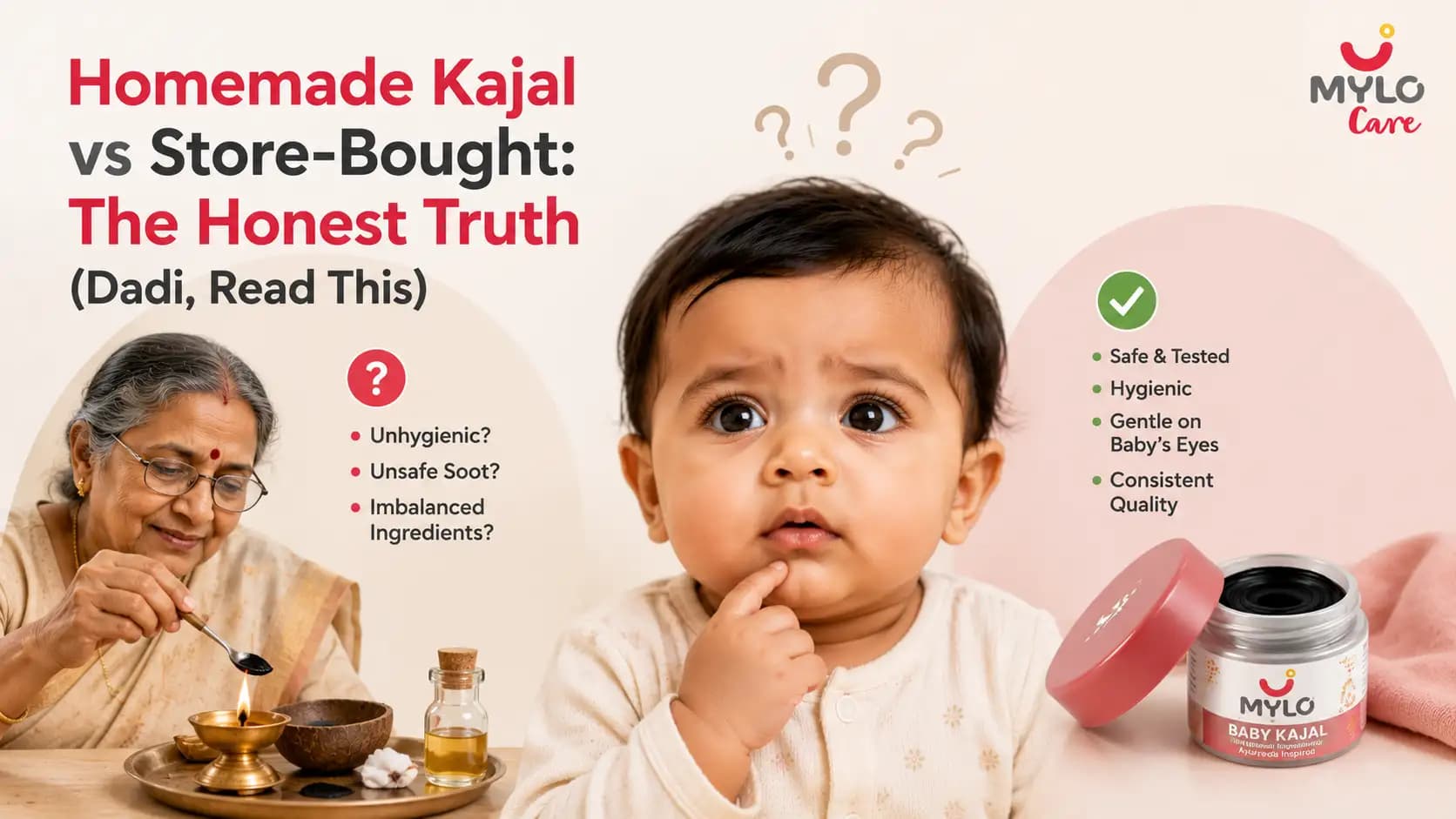
Homemade Kajal vs Store-Bought: The Honest Truth (Dadi, Read This)
 12 min
TL;DR
Many grandmothers lovingly make kajal at home, believing homemade is purer and safer than anything from a shop. Here is the honest truth: homemade kajal is not automatically safe (WHO, CDC). It can pick up lead from certain ingredients or surfaces, it is never tested for heavy metals, and being made and applied by hand raises the risk of infection. Store-bought kajal is not automatically safe either, cheap or unbranded ones can also contain lead. The real difference is not homemade versus store-bought; it is tested-and-lead-free versus untested. A certified, lead-free, dermatologically-tested store product is generally safer than untested homemade surma. Whatever you choose, keep it away from your baby's eyes, and read the label.
Quick Answer
Homemade kajal made by dadi feels safer, but it is never tested for lead and can carry contamination and germs. Store-bought kajal is not automatically safe either, so the real question is whether a product is certified lead-free and tested, not whether it is homemade or shop-bought. A certified, lead-free product is the safer choice. (55 words)
Medical Disclaimer: This article is for informational purposes only and is not a substitute for professional medical advice. If your baby shows any eye redness, swelling, discharge or signs of lead exposure, consult your pediatrician promptly.
Author: Mylo Editorial Team, Mylo Parenting Desk Medically reviewed by: Mylo Editorial Board, aligned with WHO, CDC, US FDA and IAP guidance Last updated: 10 July 2026
Key Takeaways
- Homemade kajal feels safe and pure, but it is not automatically safe (CDC)
- Homemade kajal is never tested for lead or other heavy metals
- Certain ingredients, soot or metal surfaces can add lead to homemade kajal (WHO)
- Hand-making and finger application raise the risk of infection
- Store-bought kajal is not automatically safe either; cheap or unbranded ones can contain lead
- The real divide is tested-and-lead-free versus untested, not homemade versus store-bought
- A certified, lead-free, tested product is generally the safer choice (US FDA)
- Whatever you choose, keep kajal away from your baby's eyes and read the label
Dadi's Homemade Kajal: Why It Feels Safer
For generations, grandmothers have made kajal at home with love, often using ghee or oils and the soot from a diya (oil lamp). To many families, this homemade kajal feels pure, natural and far safer than anything sold in a shop (IAP). The effort and affection behind it are real and beautiful. But feeling safe and being safe are not always the same, and this is where an honest, caring conversation matters, especially for the grandmothers who make it.
Is Homemade Kajal Actually Safe?
Featured answer: No, homemade kajal is not automatically safe. Even lovingly made kajal is never tested for lead or other heavy metals, and it can pick up lead from certain ingredients or surfaces. Being made and applied by hand also raises the risk of eye infection. The safest kajal is one that is certified lead-free and tested, whether homemade feels purer or not. Keep any kajal away from your baby's eyes.
The belief that "homemade means safe" is understandable, but it is not supported by science. Traditional surma has long been a major source of lead poisoning in children, precisely because it is untested (WHO, US FDA).
What Are the Real Risks of Homemade Kajal?
Homemade kajal carries hidden risks that no one can see just by looking (CDC, WHO).
| Risk in homemade kajal | Why it happens |
|---|---|
| Lead contamination | Some ingredients, soot or metal surfaces can add lead |
| No testing | Nobody checks it for heavy metals or safety |
| Germs and infection | Non-sterile making, storage and finger application |
| Inconsistent quality | Every batch is different and unpredictable |
| False sense of safety | "Natural" and "homemade" feel safe but may not be |
Is Store-Bought Kajal Automatically Safe?
No, and this is important to be honest about too. Not every store-bought kajal is safe. Cheap, loose or unbranded kajal sold in markets can also contain lead and untested ingredients (US FDA, CDC). Buying from a shop is not a guarantee. The difference is that a good, reputable brand can offer something homemade kajal cannot: lead-free testing, hygienic manufacturing, a clear ingredient list, and compliance with cosmetic safety standards. So store-bought is only safer when you choose a certified, tested product and read the label.
Homemade vs Store-Bought Kajal: An Honest Comparison
| Factor | Homemade kajal (dadi's) | Certified store-bought kajal |
|---|---|---|
| Lead testing | None | Lead-free, heavy-metal tested |
| Hygiene | Non-sterile, hand-applied | Hygienically made and sealed |
| Ingredient clarity | Not documented | Full ingredient list and expiry |
| Regulation | None | Meets cosmetic standards (CDSCO, BIS) |
| Made with love | Yes, deeply | Yes, and safety-tested |
What Actually Matters: Tested and Lead-Free
Here is the heart of the honest truth. The real question is not "homemade or store-bought." It is "tested-and-lead-free, or untested" (WHO, US FDA). Untested homemade surma is risky because no one knows if it contains lead. A certified, lead-free, dermatologically-tested store product removes that biggest unknown. So the safest choice is a properly tested product, and the most important label check for any kajal is that it is clearly lead-free.
How to Choose a Safe Store-Bought Kajal
If you decide to use kajal, choosing well makes all the difference (US FDA, BIS).
How to Pick a Safe Baby Kajal
Look for these on the pack:
- Lead-free and heavy-metal tested: The single most important check
- Dermatologically tested: Safer for delicate baby skin
- Full ingredient list: Clear names, not vague "herbal blend" only
- Trusted brand and details: Manufacturer, batch number and expiry date
- Standards compliance: Meets Indian cosmetic rules (CDSCO) and BIS standards
- Hygienic, sealed packaging: Not loose or unbranded market kajal
- Keep it away from the eyes: Apply any kajal away from the eyes and waterline
If you prefer a tested, transparent option over homemade surma, a certified, lead-free baby kajal such as Mylo Baby Kajal shows the kind of labelling to look for. Whatever you choose, stop if your baby reacts.
Myths vs Facts About Homemade and Store-Bought Kajal
| Myth | Fact | Source |
|---|---|---|
| "Homemade kajal is always pure and safe" | It is untested and can contain lead | CDC |
| "Store-bought kajal is always chemical and unsafe" | A certified, tested product can be safer than homemade surma | US FDA |
| "Natural or homemade means lead-free" | Lead is common in traditional surma; only testing confirms it | WHO |
| "If dadi made it, there is no risk" | Love does not remove the risk of lead or infection | IAP |
| "Any shop kajal is fine" | Cheap or unbranded kajal can also contain lead; read the label | US FDA |
Indian Context: A Gentle Note for Families and Dadi
- Your love is never in question: Making kajal at home comes from deep affection; this is only about safety (IAP)
- Homemade surma carries the biggest lead risk: Because it is untested, it is best avoided
- Store-bought is not a free pass: Loose or unbranded market kajal can also contain lead, so choose a certified brand
- Read the label together: Look for lead-free and dermatological testing, and clear brand and expiry details
- Bridge the generations kindly: Share this information with respect, and agree on a safe choice as a family
- Keep it away from the eyes: Whatever you use, do not apply it inside the eyes or on the waterline
- Emergency number: Dial 108 for ambulance services across most states
When Should You See a Doctor?
Contact your pediatrician promptly if your baby has (AAP, NHS):
- Redness, swelling or discharge from the eyes
- Constant watering or a blocked tear duct
- Rubbing the eyes, discomfort or an allergic reaction after applying kajal
- Symptoms that could suggest lead exposure, such as poor feeding, constipation, tiredness or irritability
If you have used homemade or unbranded kajal regularly, tell your doctor, who may advise a blood lead test.
FAQs About Homemade vs Store-Bought Kajal
Is homemade kajal safer than store-bought? Not necessarily. Homemade kajal is never tested for lead and can carry contamination and germs (CDC). A certified, lead-free, tested store product is generally the safer choice.
Kya ghar ka bana kajal store wale se safe hota hai? (Hinglish) Zaroori nahi. Ghar ka bana kajal kabhi lead ke liye test nahi hota aur usme germs ya contamination ho sakta hai. Store ka kajal bhi apne aap safe nahi hota, kyunki sasta ya khula kajal bhi lead wala ho sakta hai. Asli baat yeh hai ki kajal lead-free aur tested ho, chahe woh ghar ka ho ya store ka. Certified, lead-free product sabse safe hai.
Why is homemade surma considered risky? Homemade and traditional surma is untested and often contains lead, a toxic metal that babies absorb easily (US FDA, WHO). This can harm the brain, blood and development.
Kya har store ka kajal safe hota hai? (Hinglish) Nahi. Har store ka kajal safe nahi hota. Sasta, khula ya unbranded kajal bhi lead wala ho sakta hai. Isliye sirf certified, lead-free aur tested brand chunein, aur label zaroor padhein.
What is the real difference that matters? The real difference is tested-and-lead-free versus untested, not homemade versus store-bought (WHO). A certified, tested product removes the biggest unknown, which is lead.
How do I choose a safe baby kajal? Look for lead-free and heavy-metal testing, dermatological testing, a full ingredient list, a trusted brand with batch and expiry details, and compliance with cosmetic standards (BIS). Keep it away from the eyes.
How do I explain this to my mother or dadi without hurting her feelings? Acknowledge the love behind her homemade kajal, then share that doctors now know traditional surma often contains lead (IAP). Suggest a certified, lead-free product together, as a family choice made out of the same love.
When should I worry about lead exposure? If you have used homemade or unbranded kajal regularly and your baby has poor feeding, constipation, tiredness or irritability, talk to your doctor, who may suggest a blood lead test (WHO).
Final Thoughts: Love Made It, but Safety Should Guide It
Dadi, if you are reading this, please know your homemade kajal comes from a place of pure love, and that love is precious. This is not about doubting you. It is about something we simply did not know before: traditional homemade kajal is never tested, and it can contain lead that quietly harms a baby.
The honest truth is that the safest kajal is a tested, lead-free one, whether that reassures you to choose a certified product or to place a small protective dot away from the eyes. Store-bought is not automatically better, and homemade is not automatically safe. What matters is testing, transparency and keeping it away from the eyes. When love is paired with this knowledge, our babies get the very best of both, cherished tradition and real safety.
References
- World Health Organization (WHO). "Lead Poisoning and Health." https://www.who.int/news-room/fact-sheets/detail/lead-poisoning-and-health
- U.S. Food and Drug Administration (FDA). "Kohl, Kajal, Al-Kahal, or Surma: By Any Name, Beware of Lead Poisoning." https://www.fda.gov
- Centers for Disease Control and Prevention (CDC). "Lead in Cosmetics and Folk Remedies." https://www.cdc.gov
- Bureau of Indian Standards (BIS). "Standard for Kohl (IS 9339) and Cosmetic Labelling." https://www.bis.gov.in
- American Academy of Pediatrics (AAP). "Healthy Children: Eye Care and Lead Exposure." https://www.healthychildren.org
- Indian Academy of Pediatrics (IAP). "Child Safety and Lead Exposure Guidance." https://www.iapindia.org
- NHS UK. "Eye Problems in Babies and Children." https://www.nhs.uk
- Mylo. "Mylo Baby Kajal (5g)." https://mylofamily.com/product/mylo-baby-kajal-5g-3498
Article Posted Under
Related Articles
Mylo: The Made-in-India Pregnancy and Parenting App Built for Indian Parents
 7 min
7 min Diwali During Pregnancy: Safety Tips for Pregnant Women on Crackers, Sweets and Diet
 17 min
 Best Pregnancy and Parenting App in India: 5 Must-Have Features to Look For (2026)
 20 min
 Best Hairstyles for Postpartum Hair Loss and Regrowth
 10 min
Medical Disclaimer
This content is for informational purposes only and should not replace professional medical advice. Consult with a physician or other health care professional if you have any concerns or questions about your health. If you rely on the information provided here, you do so solely at your own risk.


AWARDS AND RECOGNITION

Mylo wins Forbes D2C Disruptor award

Mylo wins The Economic Times Promising Brands 2022
AS SEEN IN












- Mylo Care: Effective and science-backed personal care and wellness solutions for a joyful you.
- Mylo Baby: Science-backed, gentle and effective personal care & hygiene range for your little one.
- Mylo Community: Trusted and empathetic community of 10mn+ parents and experts.


Product Categories
Baby Carrier | Baby Soap | Baby Wipes | Stretch Marks Cream | Baby Cream | Baby Shampoo | Baby Massage Oil | Baby Hair Oil | Stretch Marks Oil | Baby Body Wash | Baby Powder | Baby Lotion | Diaper Rash Cream | Newborn Diapers | Teether | Baby Kajal | Baby Diapers Pants | Cloth Diapers | Laundry Detergent | Lactation Granules |