


Orders

Profile

How Does Cerelac Maintain Its Shelf Life Without Added Preservatives?
 7 min
7 minIf you have ever bought a box of Cerelac, you may have looked at the expiry date and wondered how it stays safe for so many months without any added preservatives.
For many parents, this question comes naturally. Homemade baby foods like porridge, dalia, or khichdi can spoil within a day or two, so it is easy to assume that any packaged food with a long shelf life must contain preservatives.
But is that really the case?
Well, not necessarily.
That is because the shelf life of packaged food does not depend only on what is added to it. It also depends on how the product is made, processed, dried, and packed.
In this article, we will look at how Nestle Cerelac maintains its shelf life of around 12 months, whether preservatives play a role, and which manufacturing and packaging techniques help keep it safe for longer.
How Does Nestle Cerelac Maintain Its 12-Month Shelf Life?
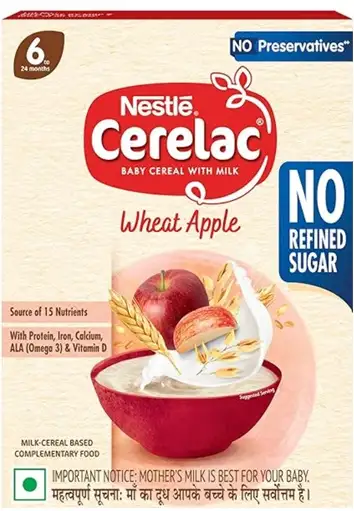
The shelf life of Nestle Cerelac can range up to 12 months. However, since it doesn’t contain any added preservatives, it is only natural to question how it manages to maintain its quality for so long.
The answer simply lies in the way it is made: right from ingredient sourcing & manufacturing, right till packaging & quality checks.
According to Nestlé, Cerelac’s shelf life is maintained by controlling the factors that usually lead to food spoilage, such as moisture, heat, and oxygen.
Food products often spoil when microorganisms grow in them or when they come in contact with moisture and oxygen for a long time. To reduce this risk, Cerelac goes through controlled sourcing, manufacturing, and packaging processes that help maintain its quality and freshness for the defined shelf life.
This means its long shelf life is not a result of adding preservatives. It is also about reducing the conditions that allow food to spoil.
During Sourcing: How Are Cerelac Ingredients Checked for Quality?
The safety of any packaged food begins with its raw materials. Before the product reaches the manufacturing stage, the ingredients used in Cerelac go through quality checks to help ensure they meet safety standards.
According to Nestlé, different ingredients are screened for different safety parameters.
Milk
Tested for aflatoxins
Checked for heavy metals
Screened for antibiotics
Tested for pesticide residues
Grains and other ingredients
Screened for microbial purity
Checked for possible chemical contaminants
Tested to help ensure ingredient safety and quality
These checks help ensure that quality control starts at the source itself, before the ingredients are processed into the final product.
During Manufacturing: How Do Processing and Drying Help Extend Freshness?
Once the ingredients are sourced and checked, the manufacturing process plays an important role in maintaining Cerelac’s shelf life.
Two key steps help naturally extend freshness: heat treatment and dehydration.
Heat Treatment
Cerelac goes through high-temperature processing during manufacturing. This helps eliminate harmful bacteria and supports the safety of the product.
Dehydration
The cereal is dried to reduce its moisture content. This is important because bacteria and other microorganisms need moisture to grow.
When moisture levels are reduced, the chances of bacterial growth also decrease. This helps the product remain stable for a longer period when it is packed and stored properly.
During Packaging: How Does Cerelac Stay Fresh Inside the Pack?
Packaging is another important step in maintaining the freshness and quality of Cerelac.
Even after proper processing and drying, exposure to oxygen and moisture can affect the quality of packaged food over time. To help prevent this, Cerelac uses protective packaging techniques.
One such technique is nitrogen flushing.
During packaging, oxygen inside the pack is replaced with a non-reactive, food-grade inert gas called nitrogen.
Nitrogen does not react with food the way oxygen can. This helps reduce oxidation and rancidity, which can otherwise affect the taste, smell, texture, and nutritional quality of the product.
By reducing oxygen exposure inside the pack, nitrogen flushing helps keep Cerelac fresh and nutrient-dense without the need for chemical antioxidants.
Are Quality and Safety Checks Done for Cerelac?
Yes, quality and safety checks are an important part of the process.
For baby food, safety is especially critical because the product is meant for young children. That is why checks are done at multiple stages — from raw materials to manufacturing and the finished product.
These checks may include ingredient testing, monitoring during production, and evaluation of the final packed product to ensure that it meets defined quality and food safety standards.
Nestlé also states that consumers can scan the QR code on the pack to access testing-related information from independent NABL-certified labs.
This gives parents an additional way to understand the quality checks associated with the product they are using.
How Should Parents Judge the Safety of Packaged Baby Food?
Parents should not judge baby food only by its shelf life.
A long shelf life does not automatically mean a product contains preservatives or harmful chemicals. It can also be the result of controlled processing, drying, oxygen reduction, and protective packaging.
At the same time, it is important to be careful while choosing any packaged baby food.
Parents should always check:
Ingredient list
Nutritional information
Age recommendation
Expiry date
Preparation instructions
Storage instructions
Pack condition before purchase
Do not use the product if the pack looks damaged, swollen, leaking, or tampered with. Once opened, always follow the storage instructions mentioned on the pack.
Most importantly, baby food should be chosen based on the child’s age, nutritional needs, and a paediatrician's advice.
Conclusion: How Cerelac Stays Safe Without Added Preservatives
It is natural for parents to wonder how Cerelac maintains a shelf life of up to 12 months without added preservatives.
The answer lies in the overall process itself. From ingredient sourcing and quality checks to heat treatment, drying, nitrogen flushing, and protective packaging, each step helps control the factors that usually cause food to spoil.
So, Cerelac’s long shelf life is not simply about what is added to it. It is also about how moisture, oxygen, heat, and microbial growth are controlled during manufacturing and packaging.
However, parents should always read the product label, follow preparation and storage instructions, and consult a paediatrician before making decisions about their baby’s diet.
A child’s health depends not on one product alone, but on balanced nutrition, safe feeding practices, and informed choices by parents.
Article Posted Under
Related Articles
⌛The giveaway ends TODAY, and moms are making their final moves. 👀
7·
Janani Suraksha Yojana (JSY): Benefits, Eligibility, Amount and How to Apply (2026 Guide)
11 min Breast Pumps, Manual vs Electric: When Each One Actually Wins
19 min Pregnancy Stretch Marks Oil: Sea Buckthorn and Rosehip Explained for Tropical Climates
 10 min
Medical Disclaimer
This content is for informational purposes only and should not replace professional medical advice. Consult with a physician or other health care professional if you have any concerns or questions about your health. If you rely on the information provided here, you do so solely at your own risk.


AWARDS AND RECOGNITION

Mylo wins Forbes D2C Disruptor award

Mylo wins The Economic Times Promising Brands 2022
AS SEEN IN












- Mylo Care: Effective and science-backed personal care and wellness solutions for a joyful you.
- Mylo Baby: Science-backed, gentle and effective personal care & hygiene range for your little one.
- Mylo Community: Trusted and empathetic community of 10mn+ parents and experts.


Product Categories
Baby Carrier | Baby Soap | Baby Wipes | Stretch Marks Cream | Baby Cream | Baby Shampoo | Baby Massage Oil | Baby Hair Oil | Stretch Marks Oil | Baby Body Wash | Baby Powder | Baby Lotion | Diaper Rash Cream | Newborn Diapers | Teether | Baby Kajal | Baby Diapers Pants | Cloth Diapers | Laundry Detergent | Lactation Granules |