


Orders

Profile

Basal Body Temperature (BBT): How to Track Ovulation and Detect Early Pregnancy (2026 Complete Guide)
 13 Likes|
 15 min

Obstetrician & Gynecologist · 41 years experience
AI-Generated Summary
Quick overview in 30 seconds.webp&w=32&q=75)
Summary
- Basal body temperature (BBT) is your body's temperature at rest, measured every morning before any activity, offering valuable insights into your menstrual cycle and fertile window.
- Before ovulation, BBT typically ranges between 97-97.5°F, but rises by 0.5-1°F after ovulation due to progesterone, signaling your most fertile days.
- To track BBT accurately, use a dedicated thermometer, measure at the same time daily after adequate sleep, record readings consistently, and identify patterns over cycles.
- Which ovulation tracking tools can support your conception journey? Explore our Baby Wellness Kit | Skincare Gift Set for Newborns.
 4.9
4.9TL;DR
Basal body temperature (BBT) is your body's lowest resting temperature, measured first thing in the morning before any activity. Tracking BBT helps you identify ovulation and may indicate early pregnancy. Before ovulation, BBT typically ranges between 97.0 to 97.5°F (36.1 to 36.4°C); after ovulation, it rises by 0.5 to 1.0°F (0.3 to 0.5°C) due to progesterone and stays elevated (Mayo Clinic) (Cleveland Clinic). If BBT remains elevated for more than 18 days after ovulation, pregnancy is likely. BBT is a free, natural fertility tracking method, but it confirms ovulation after it happens, not before.
Quick Answer
Basal body temperature (BBT) is your resting body temperature measured each morning. After ovulation, BBT rises 0.5 to 1.0°F due to progesterone and stays elevated. Sustained elevation beyond 18 days post-ovulation may indicate pregnancy. BBT charting helps women identify their fertile window naturally and confirms ovulation occurred, but cannot predict ovulation in advance.
Author: Priyanka Verma, Senior Fertility Content Editor, Mylo Parenting Desk Medically reviewed by: Dr. Kusum Sabharwal, MBBS, DGO, Obstetrician & Gynaecologist (41 years experience) Last updated: 11 June 2026
Medical Disclaimer: This article is for informational purposes only and is not a substitute for personalised medical advice. If you are trying to conceive, suspect pregnancy or have irregular cycles, please consult your gynaecologist or fertility specialist for diagnosis and treatment.
Key Takeaways
- BBT is the body's resting temperature measured immediately upon waking, before any activity (Mayo Clinic)
- Pre-ovulation BBT: 97.0 to 97.5°F (36.1 to 36.4°C)
- Post-ovulation BBT: Rises 0.5 to 1.0°F due to progesterone (Cleveland Clinic)
- BBT confirms ovulation AFTER it happens, not before
- Sustained high BBT beyond 18 days post-ovulation may suggest pregnancy (American Pregnancy Association)
- Use a digital BBT thermometer (accurate to 0.1°F)
- Measure at the same time daily after at least 3 hours of uninterrupted sleep
- BBT can be affected by illness, alcohol, stress, travel and poor sleep (NHS)
What Is Basal Body Temperature (BBT)?
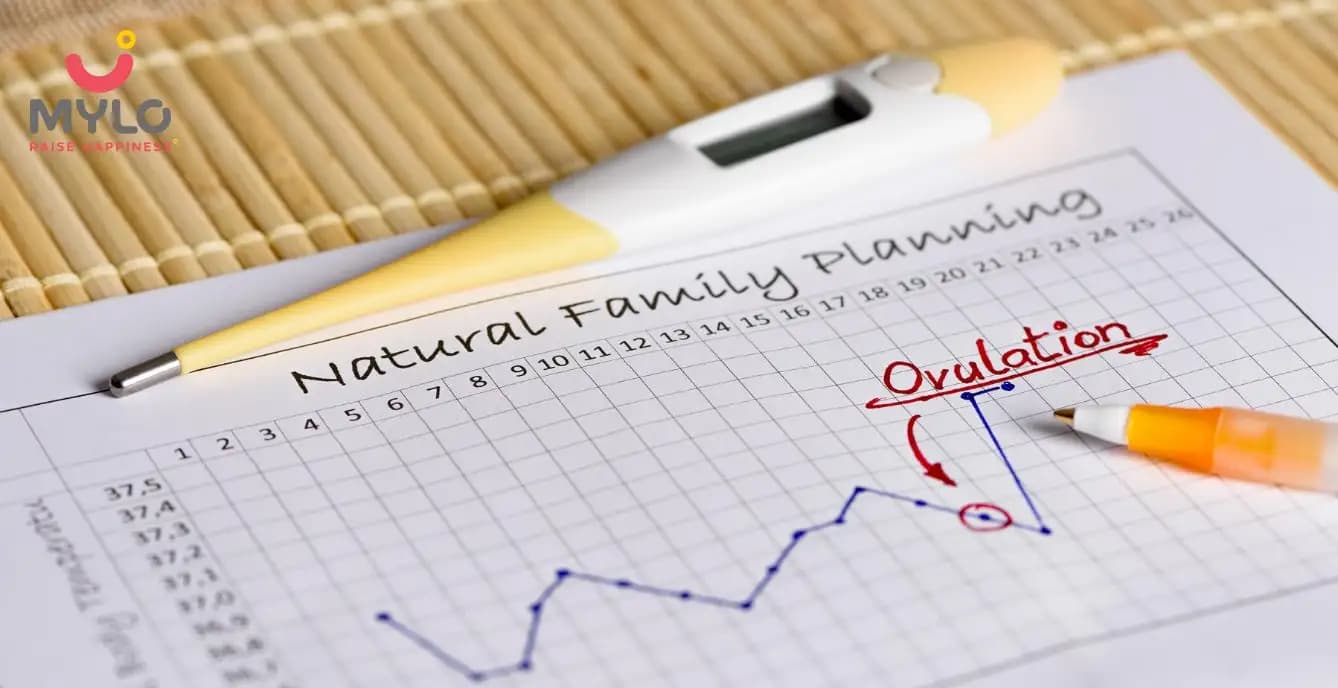
Basal body temperature is your body's lowest temperature in a 24-hour period, typically taken first thing in the morning, before you sit up, drink water or speak (Mayo Clinic).
BBT is slightly different from your "normal" temperature because:
- It is taken at complete rest (after at least 3 hours of sleep)
- It uses a basal thermometer sensitive to 0.1°F variations
- It tracks subtle hormonal shifts invisible to a regular thermometer
BBT charting is a centuries-old natural family planning technique now widely used by women trying to conceive (TTC) and those practising fertility awareness (Office on Women's Health, US).
How Does Basal Body Temperature Change During Your Menstrual Cycle?
Your BBT changes in two distinct phases (Cleveland Clinic):
Phase 1: Follicular Phase (Day 1 to Ovulation)
- BBT stays low and stable (typically 97.0 to 97.5°F or 36.1 to 36.4°C)
- Estrogen is the dominant hormone
Phase 2: Luteal Phase (After Ovulation to Period)
- BBT rises by 0.5 to 1.0°F within 24 to 48 hours of ovulation
- This rise is caused by progesterone from the corpus luteum
- BBT stays elevated until just before your next period
| Cycle Phase | BBT Range | Hormone |
|---|---|---|
| Follicular (Pre-ovulation) | 97.0 to 97.5°F | Estrogen dominant |
| Ovulation day | Slight dip possible (not reliable) | LH surge |
| Luteal (Post-ovulation) | 97.6 to 98.6°F | Progesterone dominant |
| Just before period | Drops back to baseline | Progesterone falls |
| If pregnant | Stays elevated past day 18 | Sustained progesterone |
How Do You Use BBT to Track Ovulation?
BBT helps you identify when ovulation has occurred (not when it will occur). Here is how (American Pregnancy Association):
Step-by-Step BBT Charting
- Buy a basal body thermometer (digital, accurate to 0.1°F or 0.01°C)
- Take your temperature at the same time every morning before getting out of bed
- Get at least 3 hours of uninterrupted sleep before measurement
- Record the reading immediately in a chart or app
- Plot daily readings on a graph to identify the temperature shift
- Look for a sustained rise of at least 0.4°F over 3 consecutive days
- Repeat for at least 3 to 4 cycles to identify a personal pattern
Ovulation has typically occurred 1 to 2 days BEFORE the temperature rise is detected. So your most fertile window is the 5 days leading up to ovulation and the day of ovulation itself.
Can BBT Predict Ovulation in Advance?
No. BBT confirms ovulation has already occurred (Mayo Clinic). To predict ovulation IN ADVANCE, you would need:
- Ovulation predictor kits (OPKs) that detect the LH surge 24 to 36 hours before ovulation
- Cervical mucus monitoring (egg-white, slippery mucus signals approaching ovulation)
- Fertility apps with multi-symptom tracking
- Ultrasound follicular monitoring (clinical setting)
Best practice for TTC: Combine BBT charting WITH ovulation predictor kits and cervical mucus tracking to maximise accuracy (Office on Women's Health).
Can BBT Detect Early Pregnancy?
Yes, sometimes. A sustained elevated BBT for more than 18 days after ovulation is one of the earliest possible signs of pregnancy (American Pregnancy Association).
What Happens to BBT If You Are Pregnant?
- Without pregnancy: Progesterone drops 12 to 14 days after ovulation, BBT falls and period starts
- With pregnancy: The corpus luteum keeps producing progesterone, supported by hCG hormone, so BBT stays elevated
Sometimes a Second BBT Rise (Triphasic Pattern)
About a week after ovulation, some women see a third temperature rise of 0.3 to 0.4°F. This is called a triphasic pattern and is associated with implantation. However, it does NOT confirm pregnancy (NCBI).
Important: BBT alone CANNOT confirm pregnancy. A home pregnancy test or blood beta-hCG test is required for confirmation (NIH/NICHD).
How Do You Measure BBT Correctly?
Accuracy matters. Follow these rules (Cleveland Clinic):
| Rule | Why It Matters |
|---|---|
| Use a basal thermometer (digital) | More sensitive than regular thermometers |
| Measure before sitting up | Movement changes temperature |
| Measure at the same time daily | Even small time changes affect readings |
| Get 3+ hours uninterrupted sleep first | Short sleep gives false readings |
| Place thermometer under tongue, in vagina, or rectum | Choose ONE method and stick with it |
| Record reading immediately | Memory is unreliable for 0.1°F accuracy |
| Note disrupting factors | Alcohol, illness, travel, late sleep affect BBT |
What Tools Help You Track BBT?
You can chart BBT using:
1. Paper Charts
- Free printable templates available
- Slow but reliable
2. Fertility Tracking Apps
- Many automatically calculate ovulation
- Charts patterns over multiple cycles
- Examples: Femometer, Kindara, Natural Cycles, Flo
3. Smart Basal Thermometers
- Bluetooth-enabled thermometers sync to apps
- Memory function stores readings
- Useful for women with busy mornings
4. Wearables
- Ovulation tracker rings and bracelets measure overnight BBT continuously
- More expensive but require less manual effort
What Causes Inaccurate BBT Readings?
Several factors can disrupt BBT and give false readings (NHS) (American Pregnancy Association):
- Less than 3 hours of sleep before measurement
- Drinking alcohol the previous night
- Illness or fever
- Stress and anxiety
- Travel and jet lag
- Medications (antibiotics, antidepressants, hormones)
- Sleeping later or earlier than usual
- Using a regular (non-basal) thermometer
- Eating, drinking or talking before measuring
- Heated waterbeds or electric blankets
What Other Symptoms Should You Track Alongside BBT?
For best results, combine BBT with these signs (Office on Women's Health):
| Symptom | What It Tells You |
|---|---|
| Cervical mucus changes | Egg-white mucus = high fertility |
| Cervical position | High, soft, open = fertile |
| Ovulation pain (mittelschmerz) | One-sided lower abdominal pain mid-cycle |
| Breast tenderness | Hormonal shifts |
| Increased libido | Estrogen peak |
| Light spotting | Possible ovulation or implantation |
| OPK positive result | LH surge 24 to 36 hours before ovulation |
What Are the Pros and Cons of BBT Tracking?
| Pros | Cons |
|---|---|
| Free and natural | Confirms ovulation AFTER it happens |
| No side effects | Requires daily commitment |
| Identifies anovulation patterns | Affected by many lifestyle factors |
| Useful for natural family planning | Not reliable as sole contraceptive |
| Helps doctors diagnose fertility issues | Takes 3+ months to identify clear pattern |
| Inexpensive (thermometer + app) | Cannot detect early pregnancy alone |
When Should You See a Fertility Specialist?
Consult a specialist if (ACOG):
- You have tracked BBT for 6+ months with NO clear ovulation pattern
- Your BBT chart shows no temperature rise (possible anovulation)
- Your luteal phase is shorter than 10 days
- You are under 35 and have been trying to conceive for 12 months
- You are over 35 and have been trying for 6 months
- You have irregular cycles (less than 21 or more than 35 days)
- You experience severe period pain or heavy bleeding
- You have a history of pelvic infections, surgeries or PCOS
Indian Context: BBT Tracking for Indian Women
- BBT thermometers are affordable in India (INR 500 to INR 2,500)
- Many Indian fertility clinics encourage BBT charting alongside medical treatment
- FOGSI guidelines recommend lifestyle changes plus tracking for couples trying to conceive (FOGSI)
- Cultural challenge: Many Indian women are unfamiliar with BBT; education and support are improving
- PCOS is common in Indian women (affects 9 to 22%); BBT helps identify anovulatory cycles for PCOS management (ICMR)
- AIIMS and government hospitals offer free fertility counselling for couples
Myths vs Facts About BBT
| Myth | Fact | Source |
|---|---|---|
| "BBT predicts ovulation in advance" | False. BBT confirms ovulation AFTER it occurs | Mayo Clinic |
| "A regular thermometer is enough" | False. You need a basal thermometer with 0.1°F sensitivity | Cleveland Clinic |
| "BBT confirms pregnancy" | False. Only home pregnancy test or beta-hCG confirms | American Pregnancy Association |
| "One month of charting is enough" | False. Tracking 3 to 4 cycles is recommended | Office on Women's Health |
| "BBT is reliable for contraception" | False. Used alone, it has high failure rate; combine with other methods | ACOG |
| "PCOS women cannot use BBT" | False. BBT helps identify anovulatory cycles in PCOS | NICHD |
FAQs: Basal Body Temperature
What is the ideal BBT for pregnancy?
There is no single "ideal" BBT for pregnancy. What matters is the pattern. Before ovulation, BBT is typically 97.0 to 97.5°F. After ovulation, it rises 0.5 to 1.0°F. If BBT stays elevated for more than 18 days after ovulation, pregnancy is likely (American Pregnancy Association).
BBT kya hota hai aur isse ovulation kaise track karte hain? (Hinglish)
Basal body temperature (BBT) aapke body ka sabse kam resting temperature hai, jo subah uthne ke turant baad measure kiya jata hai. Ovulation ke baad BBT 0.5 se 1.0°F badh jata hai progesterone ke karan. Daily morning thermometer se BBT measure karein aur 3 to 4 cycles tak chart banayein. Iss se aap apna ovulation pattern samajh sakti hain.
Can BBT confirm pregnancy?
No. BBT alone cannot confirm pregnancy. A sustained high BBT beyond 18 days post-ovulation MAY suggest pregnancy, but a home pregnancy test (urine hCG) or blood beta-hCG test is required to confirm (NIH).
What is the normal BBT during early pregnancy?
In early pregnancy, BBT typically remains elevated between 97.7 to 99.0°F (36.5 to 37.2°C) due to sustained progesterone production. It stays elevated throughout the first trimester (Cleveland Clinic).
How long should you track BBT to identify ovulation?
Most fertility experts recommend tracking BBT for at least 3 to 4 complete menstrual cycles before drawing conclusions. This allows you to identify your unique pattern, average luteal phase length and confirm consistent ovulation (American Pregnancy Association).
Can BBT be used as contraception?
BBT alone is not reliable as contraception. When used as part of a comprehensive fertility awareness method (combining BBT, cervical mucus and calendar tracking), it can be effective but has a higher failure rate than hormonal methods (ACOG).
What if my BBT does not rise after ovulation?
A flat BBT pattern with no clear rise may indicate anovulation (no egg released), low progesterone or measurement errors. If you observe this for 2 to 3 cycles, consult your gynaecologist (Mayo Clinic).
Does PCOS affect BBT?
Yes. Women with PCOS often have anovulatory cycles (no ovulation), so BBT may not show a clear post-ovulation rise. BBT charting can help PCOS patients and their doctors identify which cycles are ovulatory (NICHD PCOS).
Pregnancy test kab karna chahiye agar BBT high hai? (Hinglish)
Agar aapka BBT ovulation ke baad 16 to 18 din tak high rehta hai aur period nahi aa raha, toh aap home pregnancy test kar sakti hain. Best result ke liye missed period ke 1 to 2 din baad test karein. Confirmation ke liye doctor se beta-hCG blood test bhi karwa sakti hain.
Can stress affect BBT?
Yes. Stress, poor sleep, illness, travel and alcohol consumption can all affect BBT readings (NHS). Note any disruptions on your chart so you can interpret patterns correctly.
What time of day should I take my BBT?
Take your BBT first thing in the morning, before getting out of bed, drinking water, eating or even speaking. Try to measure at the same time every day, ideally after at least 3 hours of uninterrupted sleep (Cleveland Clinic).
Is digital or mercury thermometer better for BBT?
A digital basal thermometer is recommended. It is safer (no mercury), more accurate (reads to 0.1°F or 0.01°C) and has memory features. Avoid regular oral thermometers, which lack the required sensitivity (American Pregnancy Association).
Can I take BBT vaginally or rectally?
Yes, all three methods (oral, vaginal, rectal) work. Vaginal and rectal readings tend to be slightly higher and more consistent because they are less affected by mouth-breathing or congestion. Choose ONE method and stick with it for consistency.
References
- Mayo Clinic. "Rhythm Method for Natural Family Planning." https://www.mayoclinic.org/tests-procedures/rhythm-method/about/pac-20384541
- Cleveland Clinic. "Pregnancy, Fertility and Ovulation." https://my.clevelandclinic.org/health/articles/9701-pregnancy-fertility-and-ovulation
- American Pregnancy Association. "Charting Basal Body Temperature." https://americanpregnancy.org/getting-pregnant/infertility/charting-bbt/
- Office on Women's Health (US Department of Health). "Trying to Conceive." https://www.womenshealth.gov/pregnancy/you-get-pregnant/trying-conceive
- American College of Obstetricians and Gynecologists (ACOG). "Treating Infertility." https://www.acog.org/womens-health/faqs/treating-infertility
- ACOG. "Fertility Awareness Based Methods of Family Planning." https://www.acog.org/womens-health/faqs/fertility-awareness-based-methods-of-family-planning
- NHS UK. "Trying to Get Pregnant." https://www.nhs.uk/conditions/baby/preparing-for-pregnancy/trying-to-get-pregnant/
- National Institute of Child Health and Human Development (NICHD). "Pregnancy." https://www.nichd.nih.gov/health/topics/pregnancy
- NICHD. "PCOS (Polycystic Ovary Syndrome)." https://www.nichd.nih.gov/health/topics/pcos
- NCBI Bookshelf. "Endotext: Female Reproductive Endocrinology." https://www.ncbi.nlm.nih.gov/books/NBK279054/
- FOGSI (Federation of Obstetric and Gynaecological Societies of India). https://www.fogsi.org/
- Indian Council of Medical Research (ICMR). https://www.icmr.gov.in/
Trusted by Mamas Charting Their Fertility Journey
Reliable ovulation tracking essentials to help you understand your cycle and confidently plan for conception every month.
Mylo Ovaluna Female Fertility Capsules - 120 Capsules
Promote Natural Conception | Improve egg quality | Hormone Balance | Cycle Consistency | Aid Ovulation | Vegetarian Capsules



Article Posted Under
Related Articles

Related Topics
.webp&w=32&q=75)
Medical Disclaimer
This content is for informational purposes only and should not replace professional medical advice. Consult with a physician or other health care professional if you have any concerns or questions about your health. If you rely on the information provided here, you do so solely at your own risk.


AWARDS AND RECOGNITION

Mylo wins Forbes D2C Disruptor award

Mylo wins The Economic Times Promising Brands 2022
AS SEEN IN












- Mylo Care: Effective and science-backed personal care and wellness solutions for a joyful you.
- Mylo Baby: Science-backed, gentle and effective personal care & hygiene range for your little one.
- Mylo Community: Trusted and empathetic community of 10mn+ parents and experts.


Product Categories
Baby Carrier | Baby Soap | Baby Wipes | Stretch Marks Cream | Baby Cream | Baby Shampoo | Baby Massage Oil | Baby Hair Oil | Stretch Marks Oil | Baby Body Wash | Baby Powder | Baby Lotion | Diaper Rash Cream | Newborn Diapers | Teether | Baby Kajal | Baby Diapers Pants | Cloth Diapers | Laundry Detergent | Lactation Granules |