


Orders
.png&w=48&q=75 "login")
Profile


Wallet

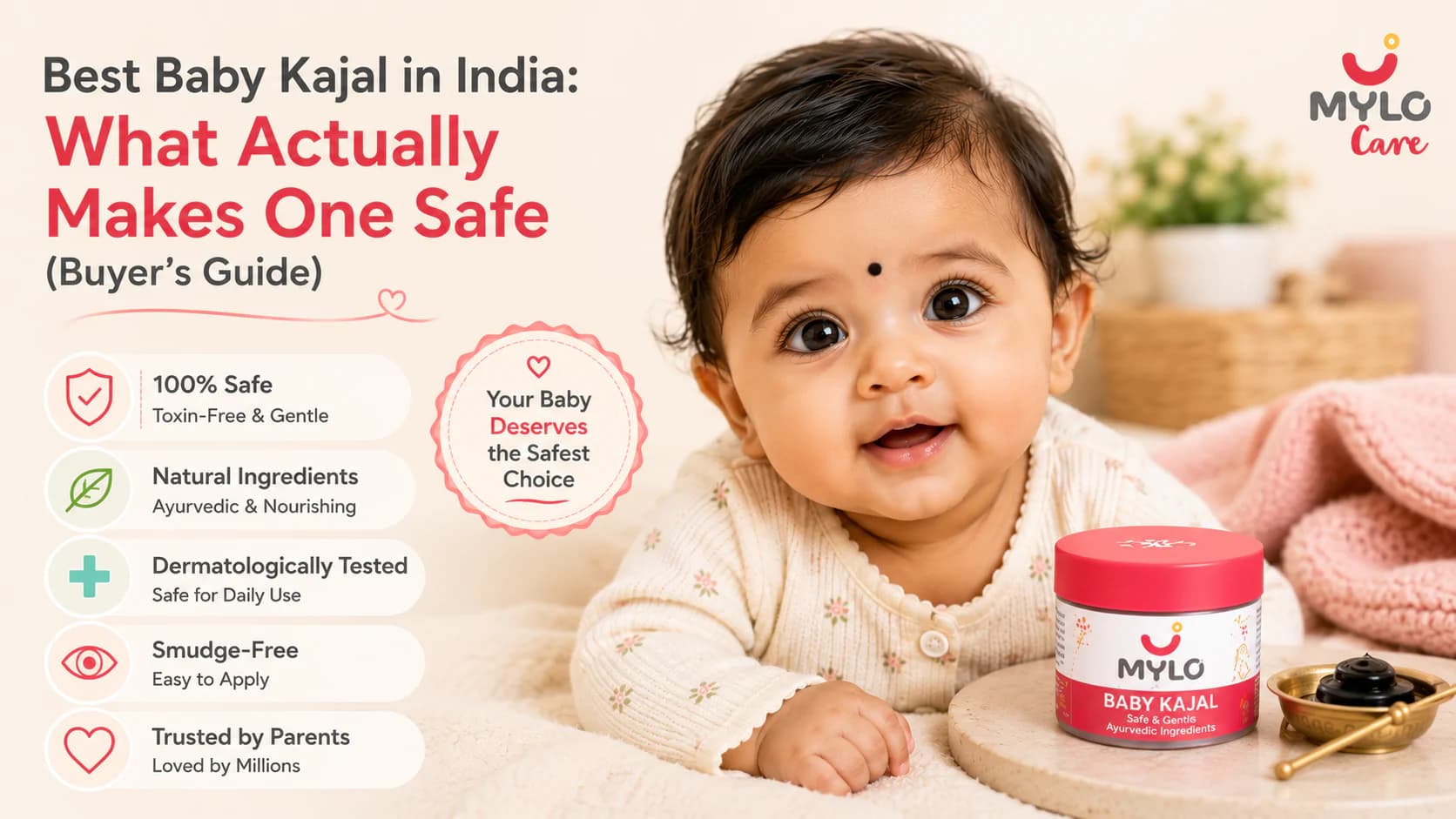
Best Baby Kajal in India: What Actually Makes One Safe (Buyer’s Guide)
 11 min
TL;DR
Choosing the best baby kajal in India is less about the brand on the front and more about what makes a kajal genuinely safe (WHO, US FDA). The single most important thing is that it is lead-free and heavy-metal tested, because traditional and untested kajal often contains toxic lead. Beyond that, look for dermatological testing, natural gentle ingredients, a full transparent ingredient list, compliance with Indian cosmetic standards (CDSCO and BIS), a trusted brand with batch and expiry details, and hygienic sealed packaging. Avoid homemade surma and loose, unbranded market kajal, which carry the highest risk. Price is not a reliable guide to safety, testing and transparency are. And whatever you buy, keep it away from your baby's eyes.
Quick Answer
The best baby kajal in India is one that is clearly lead-free and heavy-metal tested, dermatologically tested, made with gentle ingredients, fully transparent about its contents, and compliant with Indian cosmetic standards. Avoid homemade surma and unbranded market kajal. Safety comes from testing and transparency, not the price or the brand name alone. (52 words)
Medical Disclaimer: This article is for informational purposes only and is not a substitute for professional medical advice. If your baby shows any eye redness, swelling, discharge or signs of lead exposure, consult your pediatrician promptly.
Author: Mylo Editorial Team, Mylo Parenting Desk Medically reviewed by: Mylo Editorial Board, aligned with WHO, CDC, US FDA and IAP guidance Last updated: 10 July 2026
Key Takeaways
- Safety, not the brand name, is what makes a baby kajal "best" (US FDA)
- Lead-free and heavy-metal testing is the single most important check (WHO)
- Look for dermatological testing and gentle, natural ingredients
- Choose products with a full, transparent ingredient list
- Prefer compliance with Indian cosmetic standards (CDSCO, BIS)
- Check for a trusted brand, batch number and expiry date
- Avoid homemade surma and loose, unbranded market kajal (CDC)
- Price is not a reliable guide to safety, and any kajal should be kept away from the eyes
What Makes a Baby Kajal "Safe"?
Featured answer: A safe baby kajal is one that is clearly lead-free and heavy-metal tested, dermatologically tested, made with gentle ingredients, fully transparent about its contents, and compliant with Indian cosmetic standards such as CDSCO and BIS. It should come from a trusted brand with a batch number and expiry date, in hygienic sealed packaging. Avoid homemade surma and unbranded kajal, and keep any kajal away from your baby's eyes.
The word "safe" here has a specific meaning: no lead, no harmful chemicals, tested for delicate skin, and honestly labelled. That is what you are really shopping for.
Why Does Safety Matter More Than the Brand Name?
A pretty package or a familiar name does not guarantee safety. The real danger in baby kajal is lead, which is common in traditional, homemade and unbranded products and is toxic to a baby's developing brain (WHO, US FDA). A cheap or unverified kajal can contain lead regardless of how it is marketed. So the smartest way to choose is to judge a kajal by its testing and transparency, not by its advertising.
What Should You Look for in a Safe Baby Kajal?
Use these criteria to compare products before you buy (US FDA, BIS).
| What to look for | Why it matters |
|---|---|
| Lead-free, heavy-metal tested | The most important safety check |
| Dermatologically tested | Gentle on delicate baby skin |
| Natural, gentle ingredients | Plant oils and ghee are milder |
| Full ingredient transparency | You know exactly what you apply |
| Trusted brand with clear details | Batch, expiry and manufacturer listed |
| Standards compliance (CDSCO, BIS) | Meets Indian cosmetic safety rules |
| Hygienic, sealed packaging | Reduces the risk of contamination |
What Ingredients Should a Safe Baby Kajal Avoid?
Steer clear of a kajal that contains or hides these (WHO, US FDA):
- Lead or galena (lead sulfide), the biggest hazard
- Other untested heavy metals
- Artificial colours and synthetic dyes
- Synthetic fragrance or perfume
- Harsh preservatives and parabens
- Vague, unlisted ingredients with no transparency
If a product does not clearly state it is lead-free and tested, treat that as a warning sign.
Which Certifications and Standards Matter in India?
A trustworthy baby kajal shows its credentials clearly (BIS, CDSCO):
- Lead-free and heavy-metal tested (lab or third-party tested)
- Dermatologically tested
- Compliance with Indian cosmetic regulations under CDSCO and relevant BIS standards for kohl
- A full ingredient list with cosmetic-grade components
- Manufacturer name and address, batch number and expiry date
- Clear usage and safety instructions
Transparency is itself a mark of trust, and brands that hide information rarely deserve your confidence.
What Is Your Baby Kajal Buying Checklist?
Keep this simple checklist handy while shopping (US FDA, BIS).
Baby Kajal Buying Checklist
Before you buy, confirm the kajal:
- Says lead-free and heavy-metal tested: The number one must-have
- Is dermatologically tested: Safer for delicate skin
- Lists all ingredients clearly: No vague "herbal blend" only
- Uses gentle, natural bases: Such as almond or castor oil
- Comes from a trusted brand: With batch number and expiry date
- Meets Indian standards: Complies with CDSCO and BIS
- Has hygienic, sealed packaging: Not loose or market-made
- Is not homemade surma: Untested surma is the biggest risk
A certified, lead-free, dermatologically-tested option such as Mylo Baby Kajal reflects the kind of testing and transparency to look for. Whatever you choose, keep it away from your baby's eyes.
What Should You Avoid When Buying?
These are the biggest red flags to walk away from (CDC, WHO):
- Homemade surma or kajal, however lovingly made, because it is untested
- Loose, unbranded or market-stall kajal with no label
- Products with no lead-free or testing claim
- Vague ingredient lists or no ingredient list at all
- No manufacturer, batch number or expiry date
- Very cheap kajal from unknown sources
Does a Higher Price Mean a Safer Kajal?
No. Price is not a reliable guide to safety (US FDA). A more expensive kajal is not automatically lead-free, and an affordable one from a reputable, tested brand can be perfectly safe. What matters is the testing, ingredients, transparency and standards compliance, not the price tag. Read the label and the credentials, not just the cost.
Myths vs Facts About Choosing a Baby Kajal
| Myth | Fact | Source |
|---|---|---|
| "The best-known brand is automatically safe" | Safety depends on testing and transparency, not fame | US FDA |
| "Homemade kajal is safer than any product" | Untested homemade surma can contain lead | CDC |
| "Natural on the label means lead-free" | Only lead-free testing confirms it | WHO |
| "A higher price means a safer kajal" | Price does not guarantee safety | US FDA |
| "Any kajal is fine if applied carefully" | Lead-based kajal is unsafe however it is applied | WHO |
Indian Context: What Indian Parents Should Know
- Lead-free is the top priority: It is the most important thing to check on any Indian baby kajal (WHO)
- Avoid loose market kajal: Unbranded, loose kajal is the most likely to contain lead
- Look for CDSCO and BIS compliance: These signal that the product meets Indian cosmetic safety rules
- Do not judge by price or fame: A tested, transparent brand matters more than cost or advertising
- Gently guide elders: If the family prefers homemade surma, share why a tested product is safer
- Keep it away from the eyes: Even the safest kajal should not go inside the eyes or on the waterline
- Emergency number: Dial 108 for ambulance services across most states
When Should You See a Doctor?
Contact your pediatrician promptly if your baby has (AAP, NHS):
- Redness, swelling or discharge from the eyes
- Watering, itching or an allergic reaction after applying kajal
- Skin irritation where kajal was applied
- Symptoms that could suggest lead exposure, such as poor feeding, constipation, tiredness or irritability
If you have used homemade or unbranded kajal regularly, tell your doctor, who may advise a blood lead test.
FAQs About Buying a Safe Baby Kajal
What makes a baby kajal safe? A safe baby kajal is lead-free and heavy-metal tested, dermatologically tested, made with gentle ingredients, fully transparent, and compliant with Indian cosmetic standards (US FDA). Avoid homemade surma and unbranded products.
Safe baby kajal kaise chunein? (Hinglish) Sabse pehle "lead-free" aur heavy-metal tested dekhein, yeh sabse zaroori hai. Phir dermatologically tested hona, natural aur gentle ingredients, poori ingredient list, aur trusted brand jismein batch number aur expiry ho, yeh sab check karein. CDSCO aur BIS standards ka paalan bhi dekhein. Ghar ka surma ya khula, unbranded kajal na lein.
Is a more expensive baby kajal safer? No. Price does not guarantee safety (US FDA). A tested, transparent, affordable product can be safer than an expensive untested one. Judge by testing and ingredients, not cost.
Kya mehnga kajal zyada safe hota hai? (Hinglish) Nahi. Keemat safety ki guarantee nahi hai. Ek tested aur transparent affordable product, ek mehnge untested product se zyada safe ho sakta hai. Faisla testing, ingredients aur transparency par karein, sirf keemat par nahi.
What is the most important thing to check? That the kajal is clearly lead-free and heavy-metal tested (WHO). Lead is the biggest hazard in baby kajal, so this check comes first.
Which certifications should a baby kajal have in India? Look for lead-free and heavy-metal testing, dermatological testing, and compliance with Indian cosmetic rules (CDSCO) and relevant BIS standards, plus clear brand, batch and expiry details (BIS).
Is homemade kajal a safe choice instead of buying one? No. Homemade surma is untested and can contain lead (CDC). A certified, lead-free product is the safer option.
Can I apply even a certified kajal to my baby's eyes? It is safest to keep any kajal away from the eyes and waterline, where infections and irritation are most likely (AAP). If you use kajal, apply it away from the eye and stop if your baby reacts.
Final Thoughts: Buy Smart, Keep Baby Safe
The "best" baby kajal in India is not defined by the biggest brand or the highest price, but by what actually makes it safe: lead-free and heavy-metal testing, dermatological testing, gentle ingredients, full transparency and compliance with Indian standards.
Use the checklist, read the label rather than the advertising, and avoid homemade surma and loose, unbranded kajal. When you choose a tested, transparent product, and keep any kajal away from your baby's eyes, you can shop with confidence, knowing you have put your baby's safety first.
References
- World Health Organization (WHO). "Lead Poisoning and Health." https://www.who.int/news-room/fact-sheets/detail/lead-poisoning-and-health
- U.S. Food and Drug Administration (FDA). "Kohl, Kajal, Al-Kahal, or Surma: By Any Name, Beware of Lead Poisoning." https://www.fda.gov
- Centers for Disease Control and Prevention (CDC). "Lead in Cosmetics and Folk Remedies." https://www.cdc.gov
- Bureau of Indian Standards (BIS). "Standard for Kohl (IS 9339) and Cosmetic Labelling." https://www.bis.gov.in
- Central Drugs Standard Control Organisation (CDSCO). "Cosmetics Regulation in India." https://cdsco.gov.in
- American Academy of Pediatrics (AAP). "Healthy Children: Eye Care and Lead Exposure." https://www.healthychildren.org
- Indian Academy of Pediatrics (IAP). "Child Safety and Lead Exposure Guidance." https://www.iapindia.org
- NHS UK. "Eye Problems in Babies and Children." https://www.nhs.uk
- Mylo. "Mylo Baby Kajal (5g)." https://mylofamily.com/product/mylo-baby-kajal-5g-3498
Article Posted Under
Related Articles
Mylo: The Made-in-India Pregnancy and Parenting App Built for Indian Parents
 7 min
7 min Diwali During Pregnancy: Safety Tips for Pregnant Women on Crackers, Sweets and Diet
 17 min
 Best Pregnancy and Parenting App in India: 5 Must-Have Features to Look For (2026)
 20 min
 Best Hairstyles for Postpartum Hair Loss and Regrowth
 10 min
Medical Disclaimer
This content is for informational purposes only and should not replace professional medical advice. Consult with a physician or other health care professional if you have any concerns or questions about your health. If you rely on the information provided here, you do so solely at your own risk.


AWARDS AND RECOGNITION

Mylo wins Forbes D2C Disruptor award

Mylo wins The Economic Times Promising Brands 2022
AS SEEN IN












- Mylo Care: Effective and science-backed personal care and wellness solutions for a joyful you.
- Mylo Baby: Science-backed, gentle and effective personal care & hygiene range for your little one.
- Mylo Community: Trusted and empathetic community of 10mn+ parents and experts.


Product Categories
Baby Carrier | Baby Soap | Baby Wipes | Stretch Marks Cream | Baby Cream | Baby Shampoo | Baby Massage Oil | Baby Hair Oil | Stretch Marks Oil | Baby Body Wash | Baby Powder | Baby Lotion | Diaper Rash Cream | Newborn Diapers | Teether | Baby Kajal | Baby Diapers Pants | Cloth Diapers | Laundry Detergent | Lactation Granules |